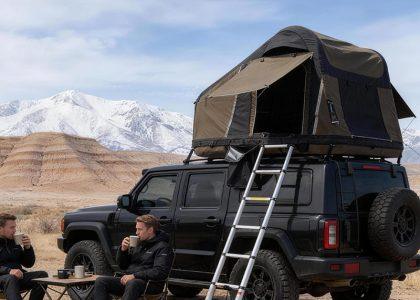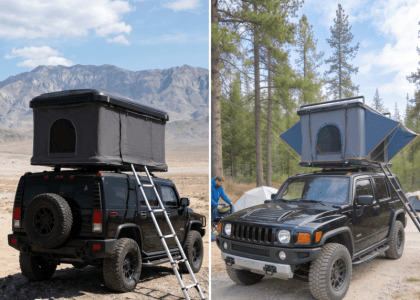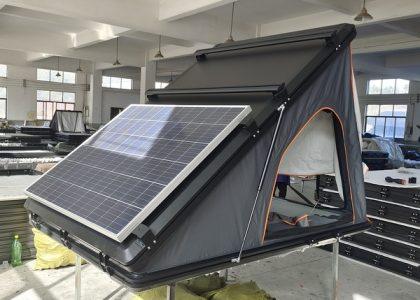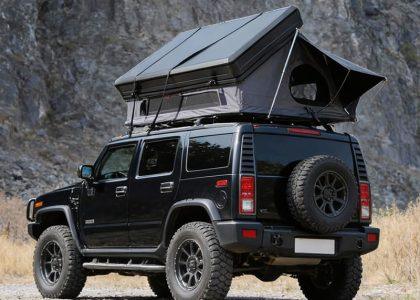
Buyers obsess over dynamic load capacities and aluminum extrusions, yet the most common field failure for rooftop tents isn’t structural—it’s water ingress through improperly sealed seams and over-coated fabrics. For genuine four-season overlanding, a 3000mm waterproof rating on 280G polycotton canvas is the optimal engineering standard. This specific hydrostatic head rating provides sustained protection against driving rainstorms while maintaining enough microscopic porosity to vent human breath and prevent severe interior condensation.
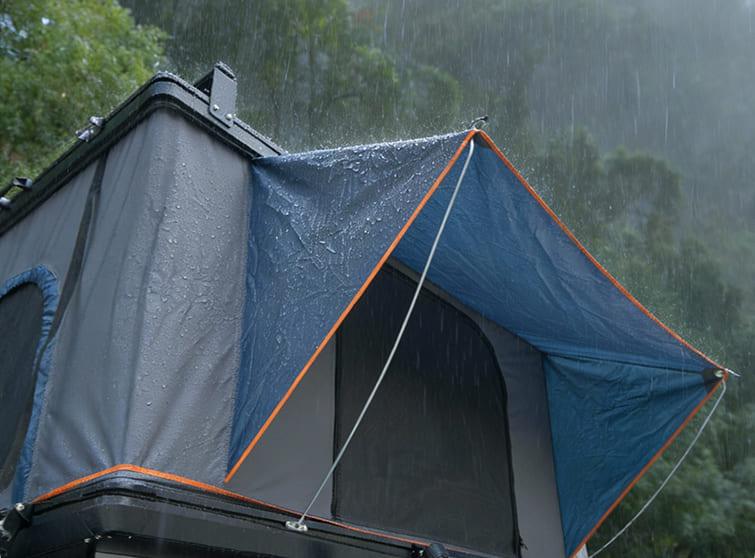
In the outdoor manufacturing sector, specifying a higher number does not equate to a better product. Pushing the canvas to a 5000mm rating requires applying thick, non-breathable polyurethane (PU) back-coatings, effectively turning the tent into a plastic bag that guarantees a damp, mold-prone mattress.
This technical guide explores the operational realities of hydrostatic testing, PU coating trade-offs, heat-taped seam failures, and what procurement managers must demand from textile suppliers to ensure dry, reliable off-grid shelters.
Table of Contents
- What does a 3000mm waterproof rating actually mean for a roof tent?
- Why is a higher waterproof rating not always better for canvas tents?
- How do PU (Polyurethane) coatings affect polycotton fabric breathability?
- What are the most common causes of water leaks in hard shell rooftop tents?
- How do OEM manufacturers test the waterproof capability of tent fabrics?
- What is the difference in waterproofing between the main tent body and the rainfly?
What does a 3000mm waterproof rating actually mean for a roof tent?
A 3000mm waterproof rating, or hydrostatic head, indicates that a fabric can hold a localized column of water 3,000 millimeters (3 meters) tall before a single drop penetrates the weave. For a rooftop tent, this specification guarantees protection against sustained, heavy downpours and wind-driven rain in exposed overland environments.
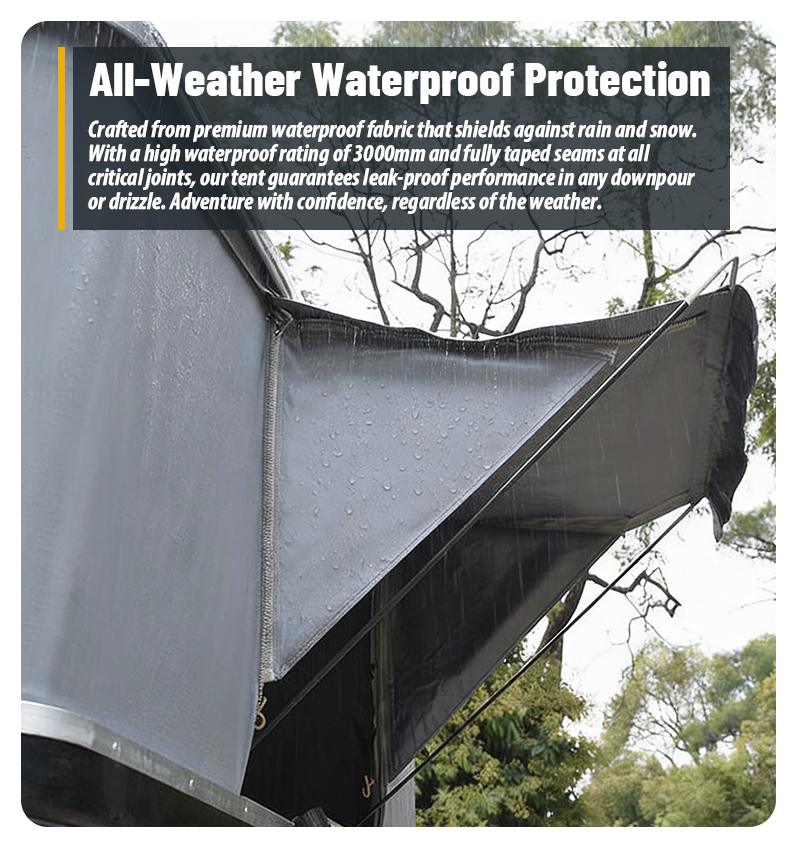
The hydrostatic head test is the global standard for measuring textile water resistance. When specifying a Best Roof Top Tent for SUV or heavy-duty overland rig, 3000mm is the targeted engineering sweet spot. Anything below 2000mm will eventually wet-out during a multi-day storm, allowing moisture to seep into the living quarters.
Achieving this 3000mm rating on a 280G to 320G ripstop polycotton canvas requires precision chemical application at the textile mill. The raw canvas isn’t inherently waterproof; it relies on a liquid polyurethane (PU) back-coating. If the factory applies a cheap, uneven PU layer to cut costs, the hydrostatic rating will be inconsistent across the fabric roll, leading to unpredictable leak points during field use.
Why is a higher waterproof rating not always better for canvas tents?
A higher waterproof rating, such as 5000mm, requires thicker layers of polyurethane coating, which completely eliminates the polycotton fabric’s natural breathability. Without breathability, vapor from human breath becomes trapped inside the tent, causing severe interior condensation that drips onto the mattress, soaking the occupants.
In the quest for marketing dominance, many brands demand 4000mm+ ratings from their Roof Top Tent Manufacturer. This is a critical product development mistake. A rooftop tent is a small enclosed volume. Two adults exhale roughly one liter of water vapor overnight.
If the canvas is sealed tight like a plastic tarp to achieve a massive hydrostatic rating, that vapor condenses instantly on the cold interior walls.
| Waterproof Rating | Fabric Breathability | Ideal Use Case | Field Result |
| 1500mm | Very High | Dry, arid climates | Leaks during heavy storms |
| 3000mm | Moderate / Balanced | 4-Season Overlanding | Dry interior, manageable condensation |
| 5000mm+ | Zero (Impermeable) | Marine covers, tarps | Severe condensation, dripping ceiling |
How do PU (Polyurethane) coatings affect polycotton fabric breathability?
Polyurethane (PU) coatings provide the actual waterproof barrier on polycotton tents by sealing the microscopic gaps between the woven threads. However, applying too much PU chemically blocks the fabric’s pores, stopping moisture vapor transmission (MVT) and converting a breathable canvas shelter into a sealed condensation trap.
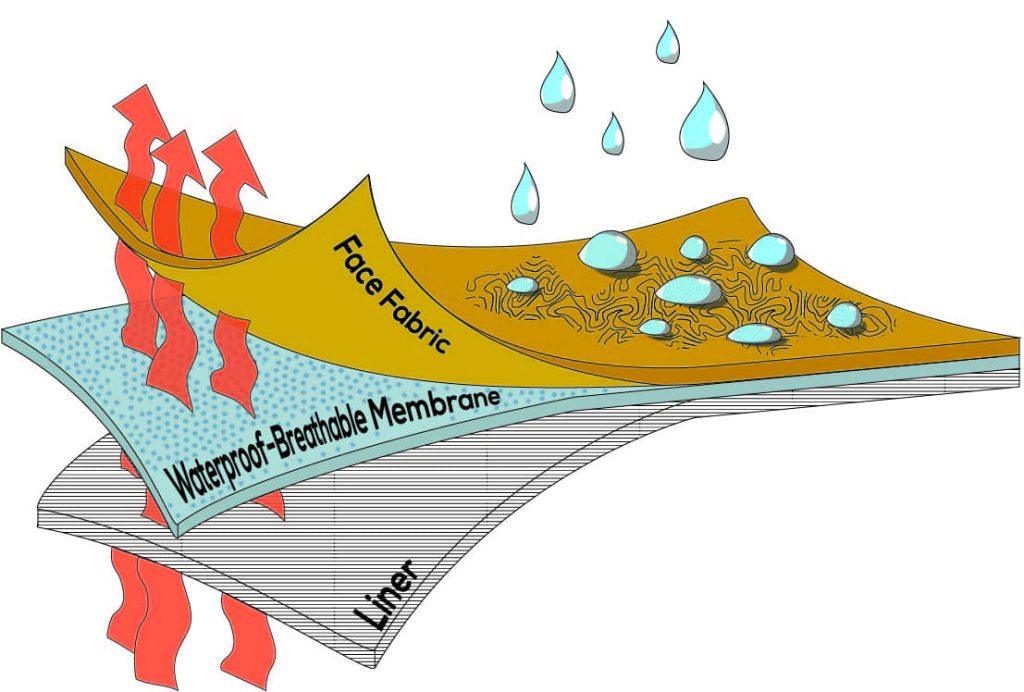
Overlanding buyers often mistakenly assume the canvas itself repels water. In reality, a DWR (Durable Water Repellent) treatment on the outside makes water bead up, while the invisible PU coating on the inside prevents penetration. When comparing a Hard Shell vs Soft Shell Roof Top Tent, condensation management is paramount because hard shells naturally have less fabric surface area to breathe.
High-end textile mills use a multi-pass, micro-porous PU coating technique. This allows vapor molecules—which are smaller than liquid water drops—to escape. Cheaper factories use a single, thick, monolithic PU pass to hit a 3000mm rating quickly. This ruins the MVT rate and leads to high warranty return rates for “leaking” tents that are actually just suffering from extreme internal condensation.
What are the most common causes of water leaks in hard shell rooftop tents?
The most common water leaks in hard shell rooftop tents occur at the needle puncture holes along the structural seams, not through the fabric itself. When factories use cheap seam-sealing tape or fail to calibrate their heat-press machinery correctly, the tape peels away, allowing wind-driven rain to enter.
Waterproof fabric ratings mean nothing if the manufacturing assembly is flawed. Every time a sewing machine needle pierces the PU-coated canvas to attach YKK zippers or mesh windows, it creates a permanent hole. These seams must be sealed with specialized, heat-activated polyurethane tape.
If an OEM brand orders a small MOQ from a generic trading company, the factory often skips changing the heat-press die to match the exact thickness of the 280G canvas. Consequently, the tape delaminates after its first summer of high UV and heat exposure. Furthermore, leaks frequently occur where the canvas track meets the aluminum extrusions; if marine-grade silicone isn’t properly cured inside the extrusion track, capillary action will draw standing water straight into the mattress area.
How do OEM manufacturers test the waterproof capability of tent fabrics?
OEM manufacturers test fabric waterproof capabilities using a hydrostatic head testing machine, which clamps a fabric sample over a water chamber and slowly increases the water pressure. The pressure is recorded in millimeters the exact moment the third droplet of water penetrates the fabric’s PU coating.
Reputable factories do not rely on supplier marketing claims; they conduct batch testing upon receiving fabric rolls. This prevents a disastrous scenario where a full container of tents is manufactured with defective PU coatings or fails to meet CPAI-84 fire retardancy compliance.
In procurement, consistency is harder to achieve than peak performance. A textile mill might provide a golden sample that tests at 3500mm, but the mass production run might dip to 1500mm if the coating machines were run too fast to save electricity. OEM buyers must demand independent laboratory testing reports for the exact batch of fabric being used for their production run.
What is the difference in waterproofing between the main tent body and the rainfly?
The main tent body uses 280G polycotton canvas with a 3000mm rating to prioritize breathability and retain interior heat. Conversely, the rainfly is typically constructed from lightweight 210D or 420D ripstop polyester with a much higher 4000mm+ PU coating, acting as an impermeable shield against direct rainfall.
This dual-layer design is the cornerstone of premium overland engineering. The polyester rainfly takes the brunt of the hydrostatic pressure and UV abuse. Because it sits a few inches above the main canvas via spring steel tension rods, it does not need to breathe—air circulates freely between the two fabric layers.
This separation allows the inner polycotton tent to breathe out human vapor, which then escapes from beneath the rainfly. If an OEM attempts to cut costs by eliminating the rainfly and relying solely on heavily coated canvas, they fundamentally break the shelter’s microclimate, guaranteeing a miserable user experience in humid or freezing conditions.
Conclusion
Specifying the correct waterproof rating for a rooftop tent requires balancing hydrostatic resistance against essential fabric breathability. A 3000mm rating on 280G ripstop polycotton remains the industry benchmark for reliable 4-season overland shelters. Pushing beyond this specification with cheap, heavy PU coatings will inevitably trap moisture and cause severe internal condensation.
Procurement managers and product developers must look beyond the spec sheet. Demand rigorous batch testing of hydrostatic heads, verify the application of DWR treatments, and ensure the factory’s seam-taping machinery is precisely calibrated to the canvas thickness. By controlling these manufacturing variables, brands can eliminate the true sources of field leaks and drastically reduce warranty claims.
About Everlead Outdoor
Developing a weatherproof overland shelter demands strict supply chain oversight and precision textile engineering. As an ISO9001-certified manufacturer, Everlead Outdoor specializes in OEM/ODM production of heavy-duty expedition tents. We utilize rigorously batch-tested 280G polycotton canvas and precisely calibrated seam-sealing technology to guarantee a true 3000mm waterproof rating without sacrificing vital breathability.Whether you are developing a new aerodynamic clamshell, sourcing structural aluminum honeycomb panels, or exploring options for a Stargazing Rooftop Tent, our engineering team provides honest technical feedback on fabric coatings, hardware selection, and condensation management. To learn more about navigating material specifications and production realities, explore The Ultimate Roof Top Tent Guide or contact our procurement specialists to discuss your next custom manufacturing run.