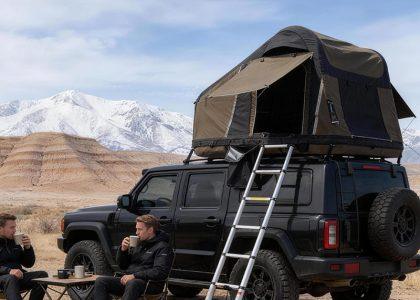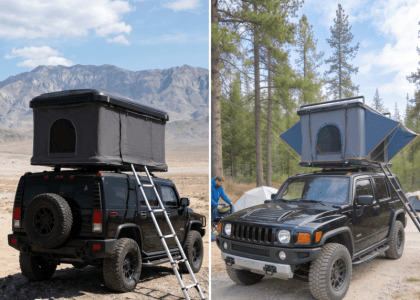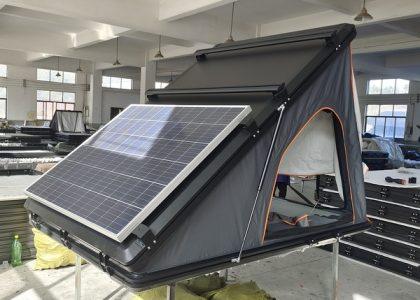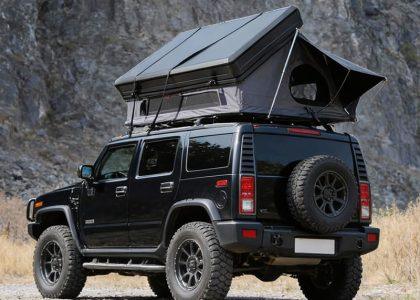
Searching “best roof top tent for SUV” and getting a generic roundup of the top 10 tents with a brief note about “checking your load rating” is the standard experience. It’s also nearly useless. A Toyota RAV4 has a 100 lb dynamic roof rating and 68 inches of usable roof length. A Jeep Wrangler JL has a 330 lb rating and an open roof structure that accepts virtually anything on the market. These are not the same buying decision wearing the same label.
The problem is that “SUV” covers three distinct vehicle tiers with fundamentally different constraints — and the tent that’s perfect for one tier is physically incompatible with another. Most buyers discover this after purchasing, not before.
This guide is organized by SUV size tier. Each section includes the actual weight budget calculation, specific tent recommendations with reasoning, and the SUV-specific concerns — liftgate clearance, panoramic sunroofs, factory crossbar limitations — that generic roundups consistently skip.
Before You Calculate: The Number That Governs Everything
The dynamic roof load rating — not the static rating on your door jamb — determines what your SUV can carry while driving. This is the binding constraint for every recommendation in this guide. Your usable tent weight budget is:
Vehicle dynamic rating − rack/crossbar weight = maximum tent weight
For a RAV4 at 100 lbs with a 35 lb crossbar set, that leaves 65 lbs for the tent. For a Wrangler JL at 330 lbs with a 48 lb rack, that’s 282 lbs — essentially the entire market. The tier you’re in changes the conversation completely.
For a complete breakdown of how this three-variable calculation works across different rack types and off-road scenarios, see our guide on how much weight can a roof rack hold.
Key Takeaways
- “SUV” covers three tiers with dynamic ratings ranging from 100 lbs (RAV4) to 330 lbs (Wrangler JL) — the same tent recommendation cannot serve both.
- Compact SUV owners (RAV4, CR-V, Forester) are limited to lightweight hard shells under 80 lbs — this eliminates most of the market by default.
- Panoramic sunroofs on modern SUVs eliminate center-mounting and require forward or rear-biased tent placement — a constraint that affects millions of vehicles.
- Factory crossbars on most SUVs are not rated for RTT use and require aftermarket replacement before any tent can be safely installed.
- Liftgate clearance is an SUV-specific concern — tent overhang position must be calculated against your specific door swing radius before purchase.
- The Jeep Wrangler JL is the most capable RTT platform in the SUV category; the Toyota 4Runner is the most practical mid-size option for most buyers.
1. Why “SUV” Isn’t a Single Category for Roof Top Tent Shopping
Before evaluating any specific tent, the buyer’s SUV tier determines which section of this guide is relevant — and which tents are even physically viable. The range within the “SUV” category is wider than most buyers realize.
The Three SUV Tiers
| SUV Category | Example Vehicles | Dynamic Roof Rating | Usable Roof Length | Tent Weight Budget (after 35 lb rack) |
|---|---|---|---|---|
| Compact SUV | RAV4, CR-V, Forester, Escape, Rogue | 100–165 lbs | 60–72 inches | 65–130 lbs |
| Mid-Size SUV | 4Runner, Bronco, Highlander, Explorer, Passport | 150–220 lbs | 72–90 inches | 115–185 lbs |
| Large / Truck-Based SUV | Wrangler JL, Gladiator, Defender, Expedition, Land Cruiser | 220–330 lbs | 80–100+ inches | 185–295 lbs |
The compact tier is where most buyers hit a wall. A 100 lb dynamic rating sounds workable until you subtract the rack — leaving 65 lbs for the tent itself, which eliminates soft shells, most hard shells, and every premium model in the market. The only viable options are purpose-built lightweight hard shells, and there are fewer than ten models that genuinely qualify.
The large/truck-based tier is essentially unconstrained by weight. Selection criteria here shift entirely from “what fits” to “what camping style suits you” — a completely different buying conversation.
2. Best Roof Top Tent for Compact SUVs (RAV4, CR-V, Forester, Escape)
Compact SUV buyers face the most constrained RTT market of any vehicle category. The combination of a tight weight budget and a shorter roof footprint eliminates roughly 70% of available models before brand or feature preferences even enter the conversation.
The Weight Reality for Compact SUVs
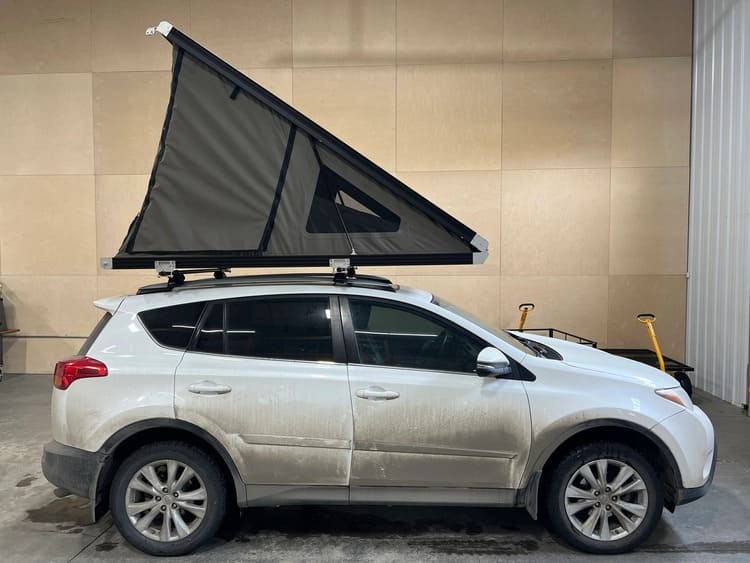
Using a Toyota RAV4 (100 lb dynamic rating) as the reference vehicle:
| Component | Weight | Running Total |
|---|---|---|
| Vehicle dynamic rating | — | 100 lbs available |
| Yakima JetStream crossbars (recommended) | 32 lbs | 68 lbs remaining |
| Tent weight budget | ≤68 lbs | — |
At 68 lbs maximum tent weight, the following models are eliminated: iKamper Skycamp 3.0 (145 lbs), Thule Approach M (132 lbs), Roofnest Falcon 3 EVO (155 lbs), and virtually every soft shell over 55 lbs.
What Actually Fits
| Tent Model | Packed Weight | Packed Length | Setup Time | Price |
|---|---|---|---|---|
| iKamper Skycamp 3.0 Mini | 120 lbs | 54 × 47 inches | ~90 sec | ~$3,299 |
| Roofnest Condor 2 | 118 lbs | 48 × 48 inches | ~60 sec | ~$2,795 |
| Tuff Stuff Alpha | 78 lbs | 50 × 48 inches | 3–5 min | ~$1,099 |
| Tepui Foothill | 95 lbs | 48 × 27 inches | 4–6 min | ~$1,495 |
Wait — the iKamper Mini and Roofnest Condor 2 both exceed the RAV4’s 68 lb budget after rack deduction. This is the reality that most “best for RAV4” articles gloss over: even the tents marketed as compact SUV-friendly may push or exceed the actual weight budget on the most constrained platforms.
For a true RAV4 installation within spec, the Tuff Stuff Alpha at 78 lbs is the most commonly recommended option that fits within the math. Some RAV4 owners accept the marginal overage of the Condor 2 for highway-only use — but this is a trade-off to make consciously, not accidentally.
The Hitch Alternative: For compact SUV owners who want a full-featured RTT without the weight constraint, a hitch-mounted tent platform bypasses the roof load entirely. The hitch receiver on most compact SUVs handles 350–500 lbs — more than enough for any tent on the market. It’s a legitimate solution, not a compromise.
If you’re still evaluating which tent type best suits your vehicle and camping style before committing, our roof top tent buying guide covers the full decision framework including vehicle compatibility, tent type, and total cost of ownership.
Compact SUV-Specific Considerations
Roof footprint: The RAV4 has approximately 68 inches of usable roof length between the front and rear crossbar positions. Tents with a packed length over 60 inches may overhang the rear and create liftgate clearance issues. Measure usable roof length (front mounting position to rear liftgate clearance line) before ordering.
Liftgate: Compact SUVs have rear liftgates that swing upward on a hinge — a tent mounted too far rearward will contact the opening door. Position the tent’s rear edge at least 4–6 inches forward of the liftgate hinge point to maintain full door clearance.
3. Best Roof Top Tent for Mid-Size SUVs (4Runner, Bronco, Highlander, Explorer)
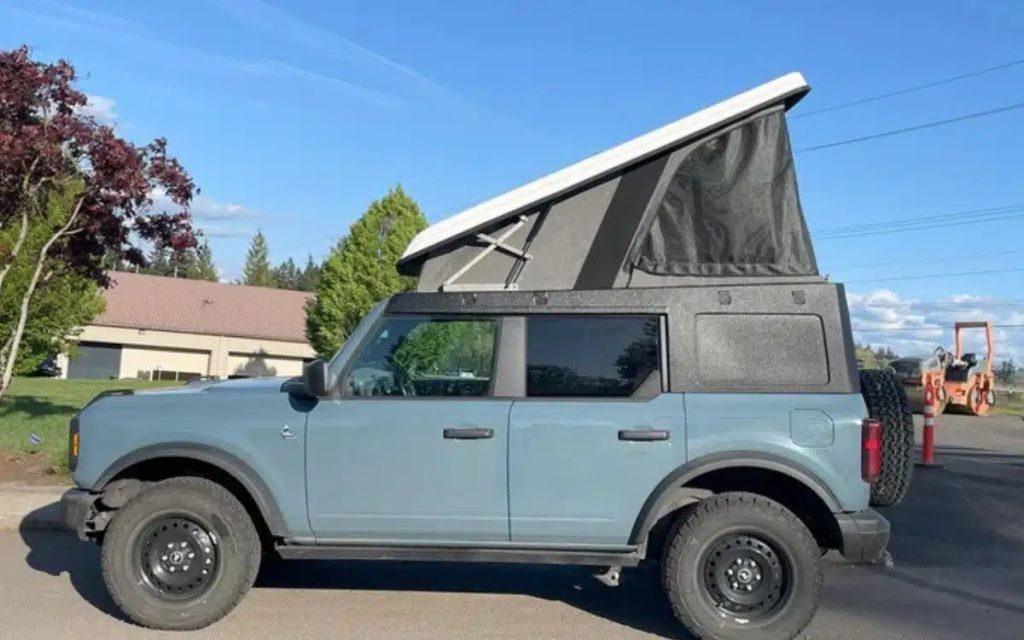
Mid-size SUVs represent the mainstream RTT market — most tent manufacturers design around this vehicle category, and the 150–220 lb dynamic rating range opens up the majority of hard shell options and many quality soft shells. The constraints are real but manageable with informed selection.
Weight Budget by Popular Mid-Size Model
| Vehicle | Dynamic Rating | Rack Weight (typical) | Tent Budget |
|---|---|---|---|
| Toyota 4Runner | 165 lbs | 40–55 lbs | 110–125 lbs |
| Ford Bronco (2021+) | 150 lbs | 35–45 lbs | 105–115 lbs |
| Toyota Highlander | 165 lbs | 35–45 lbs | 120–130 lbs |
| Ford Explorer | 165 lbs | 35–45 lbs | 120–130 lbs |
| Honda Passport | 165 lbs | 35–45 lbs | 120–130 lbs |
The 4Runner’s 165 lb dynamic rating with a platform rack at 55 lbs leaves only 110 lbs for the tent — tighter than it appears. Using lightweight crossbars (35 lbs) instead of a heavy platform rack opens the budget to 130 lbs, which is the single most impactful decision a 4Runner buyer can make before selecting a tent.
Mid-size SUVs open up the majority of the hard shell market and a meaningful portion of soft shell options. If you’re undecided between tent types at this tier, the hard shell vs soft shell roof top tent comparison covers how weight, setup speed, and interior space differ — all variables that matter differently depending on your SUV’s specific constraints.
Top Picks for Mid-Size SUVs
iKamper Skycamp 3.0 Mini (~$3,299) — Best Overall At 120 lbs, the Mini sits at the upper edge of the weight budget for most mid-size platforms, but its low rack weight requirement (crossbars work fine) and minimal packed height make it the most practical premium option. Deploys in 90 seconds. The 48″ × 96″ sleeping area is comfortable for two adults. Confirmed compatible with 4Runner, Highlander, and Explorer when paired with crossbars rather than a heavy platform rack.
Roofnest Condor 2 (~$2,795) — Best Hard Shell Under 120 lbs At 118 lbs, the Condor 2 fits mid-size SUV budgets with modest rack setups. Colorado-built with a lifetime structural warranty. The 48″ × 96″ platform and 2.5-inch mattress are well-matched to the mid-size SUV use case — couples who move camp frequently and need consistent setup speed.
Thule Approach M (~$2,500) — Best Soft Shell for Mid-Size At 132 lbs, the Approach M exceeds the Bronco’s budget but works on 4Runner, Highlander, and Explorer with crossbars. The 3-inch mattress is the most comfortable included mattress in its price tier. The trade-off vs. hard shells: 8–10 minute setup and a taller packed profile that creates more highway noise and fuel economy impact.
The Panoramic Sunroof Problem
Many mid-size SUVs sold from 2018 onward include panoramic sunroofs that occupy 50–70% of the usable roof surface. This creates a specific mounting constraint: the tent cannot be centered on the roof without the mounting brackets sitting directly over the glass panel.
The solution: Bias the tent toward the front of the roof, using the forward crossbar as the primary load point and placing the rear crossbar just rearward of the glass panel. This shifts the tent 6–12 inches forward of center and may require verifying ladder angle (should remain ~60 degrees from horizontal after repositioning).
Vehicles commonly affected: Ford Explorer (2020+), Toyota Highlander (2020+), Honda Passport (2019+), Hyundai Santa Fe (2019+).
4. Best Roof Top Tent for Large and Truck-Based SUVs (Wrangler, Expedition, Land Cruiser, Defender)
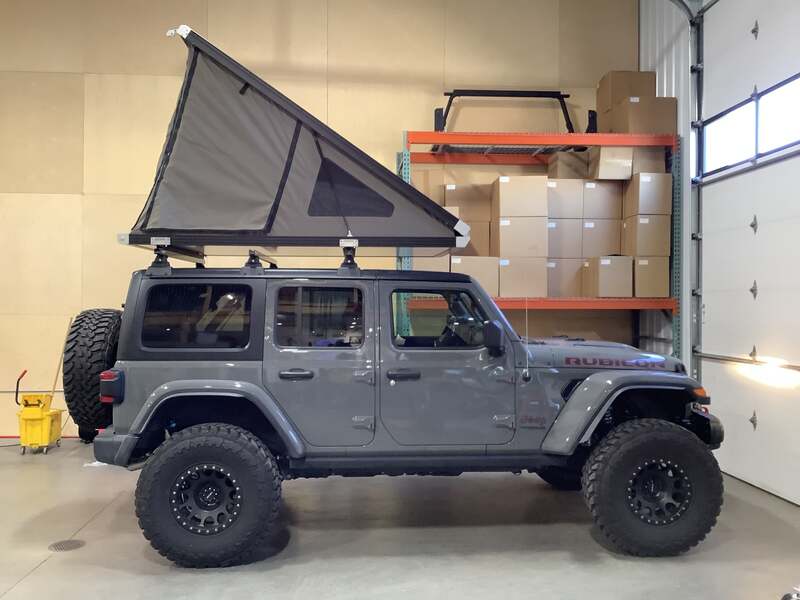
At this tier, the weight budget conversation is largely over. A Wrangler JL’s 330 lb dynamic rating with a 48 lb rack leaves 282 lbs for the tent — more than enough for the heaviest production RTT on the market. Selection criteria shift entirely from compatibility to camping style, mattress preference, and feature priorities.
Top Picks for Large SUVs
iKamper Skycamp 3.0 (~$3,999) — Best for Families The full-size Skycamp deploys to 63 inches wide — enough for two adults with legitimate room to move. The 2.5-inch memory foam mattress holds its shape well over multi-season use. On a Wrangler JL with its open roof architecture and strong structure, this combination is one of the most capable overlanding setups available at this price point.
James Baroud Odyssey (~$4,200+) — Best for Four-Season Use On a Defender or Land Cruiser with a 330 lb rating, the Odyssey’s 190 lb weight is fully viable. The French-manufactured aluminum shell, 3.5-inch mattress, and integrated cold-weather ventilation design make it the choice for buyers who camp year-round including sub-freezing conditions. Weight and price are only justified at this tier.
Roofnest Falcon 3 EVO (~$3,595) — Best Hard Shell Overall On any large SUV platform, the Falcon 3 EVO’s aerodynamic profile, 2.5-inch mattress, and lifetime structural warranty represent the best combination of performance and long-term ownership value in the hard shell category. At 155 lbs, it fits mid-size budgets too — but on a large platform, it’s completely unconstrained and performs at its best.
Why the Wrangler JL Is the Best RTT Platform in the Category
The Wrangler JL’s 330 lb dynamic rating is more than double most mid-size SUVs. Combined with a boxy roof with straightforward mounting geometry, no panoramic glass, and a wide aftermarket rack ecosystem, it’s the vehicle that RTT manufacturers design around when they want to showcase their products without constraint. If you own a Wrangler JL and are considering an RTT, the decision is simply about which tent you want — not whether one will fit.
5. The Factory Crossbar Problem — What Most SUV Owners Discover Too Late
This is the most common and most preventable expensive mistake in the SUV RTT buying process. Factory crossbars — the ones that came with the vehicle or are sold by the vehicle manufacturer as accessories — are adequate for luggage, bikes, and ski carriers. They are not designed for roof top tent loads, and most are not rated for the dynamic forces an RTT generates.
Factory Crossbar Viability by Common SUV
| Vehicle | Factory Bars Status | Issue | Recommended Aftermarket |
|---|---|---|---|
| Toyota RAV4 | ⚠️ Marginal | Dynamic rating not published; not recommended for RTTs | Yakima JetStream, Thule WingBar Evo |
| Toyota 4Runner | ❌ Not adequate | Low published dynamic rating; ARB factory rack limits tent options | Prinsu Design Studio, Rhino-Rack Pioneer |
| Ford Bronco | ⚠️ Marginal | OEM Modular Roof Rack has limited dynamic data | Yakima LockNLoad, Front Runner |
| Toyota Highlander | ❌ Not adequate | Flush rail system not rated for RTT point loads | Thule Evo Flush Rail, Yakima TimberLine |
| Jeep Wrangler JL | ✅ Adequate (some configs) | Freedom Top panels complicate mounting; verify configuration | Smittybilt Overlander rack, Rhino-Rack |
| Honda CR-V | ❌ Not adequate | Integrated flush rails only; factory bars not RTT-rated | Thule Evo Flush Rail system |
The practical impact: For most SUVs, budget $300–$700 for aftermarket crossbars before evaluating tent options. This is not an optional upgrade — it’s a prerequisite. Many buyers discover mid-installation that their factory bars are incompatible, resulting in a second purchase and significant delay.
Why this matters for weight budget: A quality aftermarket crossbar set weighs 30–45 lbs. A heavy platform rack weighs 50–80 lbs. On a vehicle with a 165 lb dynamic limit, the difference between a crossbar set and a platform rack is 15–35 lbs of tent weight budget. On constrained vehicles, this choice determines which tent models are viable.
6. SUV-Specific Clearance Issues — Liftgates, Sunroofs, and Antennas
Trucks have tailgates. SUVs have liftgates — and that distinction creates a set of mounting geometry constraints that generic RTT guides never address. These are the three clearance issues that affect most modern SUVs.
Issue 1: Rear Liftgate Clearance
An SUV’s rear liftgate opens on a hinge at the top of the door, sweeping upward and forward. A tent mounted too far rearward will contact the opening door before it reaches full travel — either scratching the tent shell or preventing the door from fully opening.
How to check before buying:
- Measure from your rear crossbar position to the top hinge point of the liftgate
- Find the tent’s rear overhang dimension (packed length minus mounting span)
- If rear overhang exceeds the distance to the hinge point, you have a clearance conflict
Solution: Position the tent further forward on the roof, or choose a shorter-packed-length tent. Most compact and mid-size SUVs need the tent positioned with its rear edge at least 4–6 inches ahead of the liftgate hinge centerline.
Issue 2: Panoramic Sunroof Conflict
| Sunroof Type | Impact | Solution |
|---|---|---|
| Small moonroof (under 24 inches) | Minimal — crossbars clear the glass easily | Standard center mounting |
| Mid-size sunroof (24–36 inches) | May conflict with center crossbar position | Forward-bias mounting; verify clearance |
| Panoramic glass (36+ inches) | Significant — eliminates center mounting | Forward or rear mounting; bracket spacers |
For panoramic-equipped SUVs, position the front crossbar just ahead of the glass panel (or just rearward, depending on roof geometry). The goal is to ensure crossbar feet bear on the metal roof structure, not on or adjacent to the glass frame.
Issue 3: Shark-Fin and Roof-Mounted Antennas
Modern SUVs almost universally feature shark-fin antennas mounted at the center rear of the roof — directly where many tents’ rear mounting bracket needs to position. Solutions:
- Antenna relocation kit ($25–$60): Moves the antenna to a fender or bumper position permanently
- Rubber spacer pad: Raises the tent slightly above the antenna (only viable for antennas under 1.5 inches tall)
- Tent repositioning: Bias the tent forward of the antenna; verify the ladder angle remains viable
7. The Weight Budget Calculation for Your SUV
Rather than presenting a single worked example, here is the complete calculation for the three most common SUV platforms in the RTT market — showing how dramatically the usable tent weight varies within the same vehicle category label.
Three-Vehicle Worked Calculation
| Toyota RAV4 | Toyota 4Runner | Jeep Wrangler JL | |
|---|---|---|---|
| Dynamic roof rating | 100 lbs | 165 lbs | 330 lbs |
| Crossbar set weight | 32 lbs | 40 lbs | 48 lbs |
| Tent weight budget | 68 lbs | 125 lbs | 282 lbs |
| iKamper Mini (120 lbs) | ❌ Over by 52 lbs | ✅ 5 lbs margin | ✅ Unconstrained |
| Roofnest Condor 2 (118 lbs) | ❌ Over by 50 lbs | ✅ 7 lbs margin | ✅ Unconstrained |
| Thule Approach M (132 lbs) | ❌ Over by 64 lbs | ❌ Over by 7 lbs | ✅ Unconstrained |
| Tuff Stuff Alpha (78 lbs) | ✅ 10 lbs margin | ✅ Comfortable | ✅ Unconstrained |
The table reveals three useful insights. First, the RAV4’s weight budget is so constrained that only a handful of tents genuinely qualify — and most articles recommending the iKamper Mini or Condor 2 for a RAV4 are recommending tents that exceed the safe dynamic limit. Second, the 4Runner’s budget is tight enough that rack selection (crossbars vs. platform rack) materially affects which tents are viable. Third, on a Wrangler JL, the calculation is essentially irrelevant — choose the tent that suits your camping style.
8. Quick Picks by SUV Model — The Direct Answer Section
For readers who want a fast, specific recommendation for their exact vehicle:
| Vehicle | Dynamic Rating | Top Tent Pick | Why It Fits | Starting Price |
|---|---|---|---|---|
| Toyota RAV4 | 100 lbs | Tuff Stuff Alpha | 78 lbs — fits within budget; decent hard shell quality | ~$1,099 |
| Honda CR-V | 100 lbs | Tuff Stuff Alpha | Same constraint as RAV4; lightest viable option | ~$1,099 |
| Subaru Forester | 176 lbs | Roofnest Condor 2 | 118 lbs within budget with crossbars; excellent build | ~$2,795 |
| Toyota 4Runner | 165 lbs | iKamper Skycamp Mini | 120 lbs — fits with crossbars (not platform rack) | ~$3,299 |
| Ford Bronco | 150 lbs | Roofnest Condor 2 | 118 lbs — tight but within spec with light crossbars | ~$2,795 |
| Toyota Highlander | 165 lbs | iKamper Skycamp Mini | 120 lbs with crossbars; verify sunroof clearance | ~$3,299 |
| Ford Explorer | 165 lbs | Roofnest Condor 2 | 118 lbs; check panoramic sunroof mounting position | ~$2,795 |
| Jeep Wrangler JL | 330 lbs | iKamper Skycamp 3.0 | Best platform + best tent = best RTT setup in class | ~$3,999 |
| Jeep Gladiator | 330 lbs | Any — bed rack preferred | Bed rack removes constraint; Skycamp 3.0 on roof viable | ~$3,999 |
| Land Rover Defender | 330 lbs | James Baroud Odyssey | Premium vehicle deserves premium tent; 4-season capable | ~$4,200+ |
| Ford Expedition | 220 lbs | Thule Approach M | 132 lbs well within budget; excellent soft shell for families | ~$2,500 |
For deeper coverage of the top-performing models across all vehicle types and price tiers, our roof top tent guide covers everything from tent type selection to long-term ownership considerations.
Final Word
The SUV tier you’re in determines the entire buying conversation. If you drive a compact SUV, start with the weight budget calculation before looking at any tent — most of the market isn’t available to you, and knowing that upfront saves significant research time. If you drive a mid-size SUV, rack selection is your most important pre-purchase decision: the difference between crossbars and a platform rack can determine which tents are viable. If you drive a large or truck-based SUV, choose the tent that matches your camping style — the vehicle will handle whatever you put on it.
For all three tiers: verify your factory crossbar situation before ordering anything, check liftgate clearance geometry if your tent will be rear-biased, and address the panoramic sunroof mounting offset if your vehicle has one.
Get those variables right, and the tent that works best for your SUV becomes an easy choice rather than an expensive guess.
Frequently Asked Questions
Can I put a roof top tent on a Toyota RAV4?
Yes, but options are severely limited by the RAV4’s 100 lb dynamic roof rating. After subtracting crossbar weight (32–40 lbs), you have roughly 60–68 lbs for the tent itself — which eliminates most of the market. The Tuff Stuff Alpha (78 lbs) is the most commonly viable option. Many RAV4 owners opt for a hitch-mounted tent platform instead, which bypasses the roof load constraint entirely.
What is the best roof top tent for a Toyota 4Runner?
The iKamper Skycamp 3.0 Mini is the most recommended option — at 120 lbs, it fits within the 4Runner’s 165 lb dynamic rating when paired with crossbars (not a heavy platform rack). The Roofnest Condor 2 at 118 lbs is the alternative for buyers prioritizing a Colorado-built product with a lifetime structural warranty.
Do roof top tents work with a panoramic sunroof?
Yes, with adjusted mounting position. The tent must be positioned forward or rearward of the glass panel — crossbar feet should bear on metal roof structure, not on or adjacent to the glass frame. For most panoramic-equipped SUVs, positioning the tent 6–12 inches forward of center resolves the conflict. Verify that the adjusted position maintains a ~60 degree ladder angle before finalizing installation.
Can I still open my SUV liftgate with a roof top tent installed?
It depends on the tent’s rear overhang and mounting position. Most liftgate conflicts are caused by tents mounted too far rearward — the tent’s rear edge contacts the door before it reaches full travel. Position the tent so its rear edge sits at least 4–6 inches ahead of the liftgate hinge centerline, and confirm clearance by measuring before the tent is fully torqued down.
Do I need to replace my factory crossbars for a roof top tent?
For most SUVs, yes. Factory crossbars are designed for luggage, bikes, and ski racks — not for the sustained dynamic loads of a roof top tent. Most OEM crossbar systems lack published dynamic ratings adequate for RTT use. Budget $300–$700 for aftermarket crossbars from Thule, Yakima, or Rhino-Rack before purchasing a tent. This is a prerequisite, not an optional upgrade.
What is the lightest roof top tent for a compact SUV?
Among quality brands, the Tuff Stuff Alpha at 78 lbs is one of the lightest viable hard shells. Inflatable RTTs from brands like Heimplanet reach 55–70 lbs and are the lightest option of all — viable for vehicles where every pound of weight budget matters. Soft shells can be light but their packed height and aerodynamic drag make them a poor match for compact SUVs that already have tight performance trade-offs.
Is a Jeep Wrangler a good vehicle for a roof top tent?
The Wrangler JL is the best RTT platform in the entire SUV category. Its 330 lb dynamic roof rating, strong roof structure, wide aftermarket rack ecosystem, and absence of panoramic glass constraints make it compatible with virtually every tent on the market. If you own a Wrangler JL, tent selection is entirely a matter of camping style preference — not compatibility constraints.
How do I know what size roof top tent fits my SUV’s roof?
Measure your usable roof length — the distance between the forward and rearmost crossbar positions, minus any liftgate clearance needed at the rear. Compare this to the tent’s packed length. A packed tent should fit within your usable roof length with 4–6 inches of clearance at the rear for liftgate operation. Also verify your dynamic roof rating supports the tent weight plus rack weight combined.