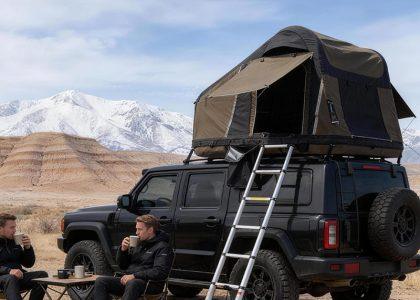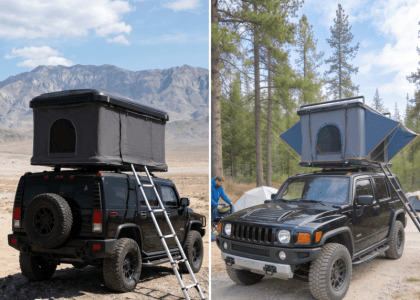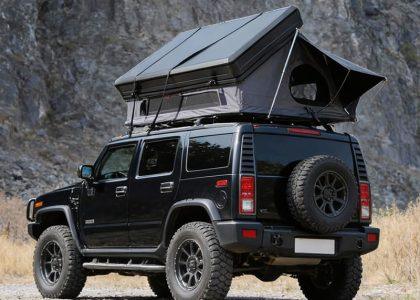
“165 pounds” is the figure repeated in almost every roof rack article on the internet. It appears on forums, in buying guides, and in manufacturer FAQs — presented as though it answers the question. It doesn’t. A 2017 Toyota RAV4 is rated to 100 lbs. A Jeep Wrangler JL handles 330 lbs. A Ford F-150 varies by trim from 150 to 250 lbs. The “165 lbs” figure is a statistical average masquerading as a safety specification.
The real answer requires three numbers, not one: your vehicle’s dynamic roof rating, your rack system’s dynamic rating, and the combined weight of everything mounted on it. The safe limit is always the lowest of those three — and most buyers only check one.
This guide provides the complete calculation framework, a vehicle reference table with published dynamic ratings for popular models, specific guidance for roof top tent buyers managing two separate limits, and a clear resolution of the off-road derating question that conflicting sources have never properly answered.
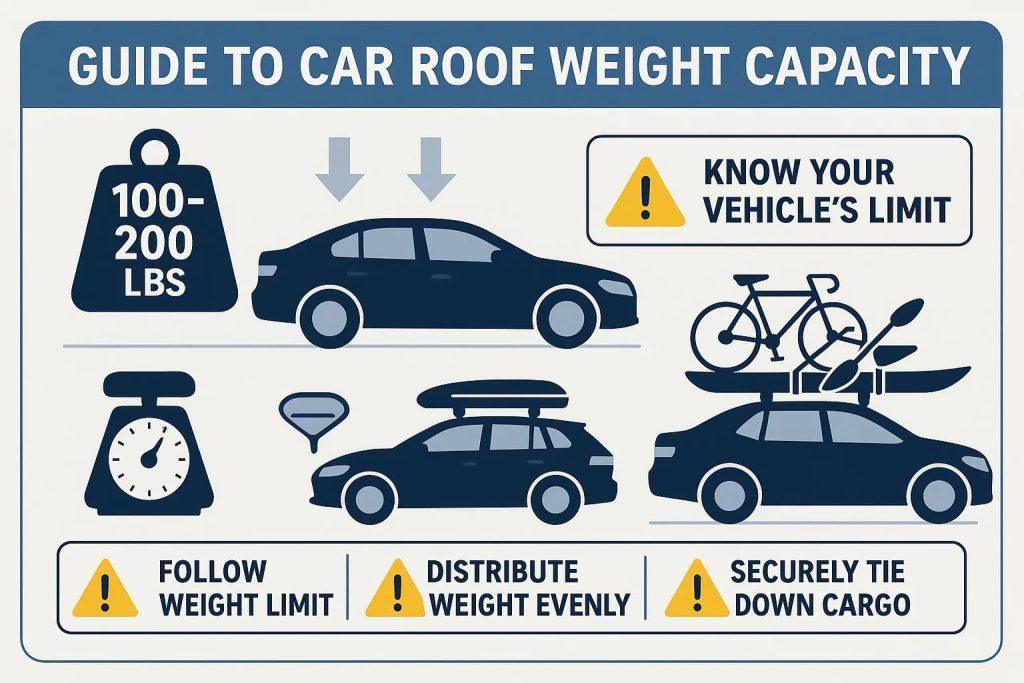
Before You Calculate “165 lbs” is the figure repeated everywhere — and it’s the wrong starting point for most vehicles. Your actual safe load requires three numbers, not one: your vehicle’s dynamic roof rating, your rack’s dynamic rating, and total system weight combined. The lowest of these three governs everything.
Key Takeaways
- The dynamic load rating governs driving — it’s 30–50% of the static rating and the only number that matters for safety on the road.
- Safe cargo weight = lowest of (vehicle dynamic rating, rack dynamic rating) minus rack weight minus mounted accessories.
- The rack manufacturer’s rating and the vehicle roof rating measure different things — the vehicle rating is almost always the binding constraint.
- Off-road use requires an additional 20–33% reduction from the on-road dynamic limit depending on terrain severity.
- RTT buyers must manage two separate limits: dynamic (driving with tent packed) and static (sleeping with occupants inside).
- Weight distribution affects handling as much as total weight — a poorly distributed 120 lb load can be more dangerous than a well-distributed 150 lb load.
1. Dynamic vs. Static Load Rating — The Distinction That Changes Everything
Most buyers encounter the terms “dynamic” and “static” load rating and treat them as interchangeable variations of the same limit. They aren’t. They measure fundamentally different physical scenarios, and using the wrong number leads directly to unsafe setups.
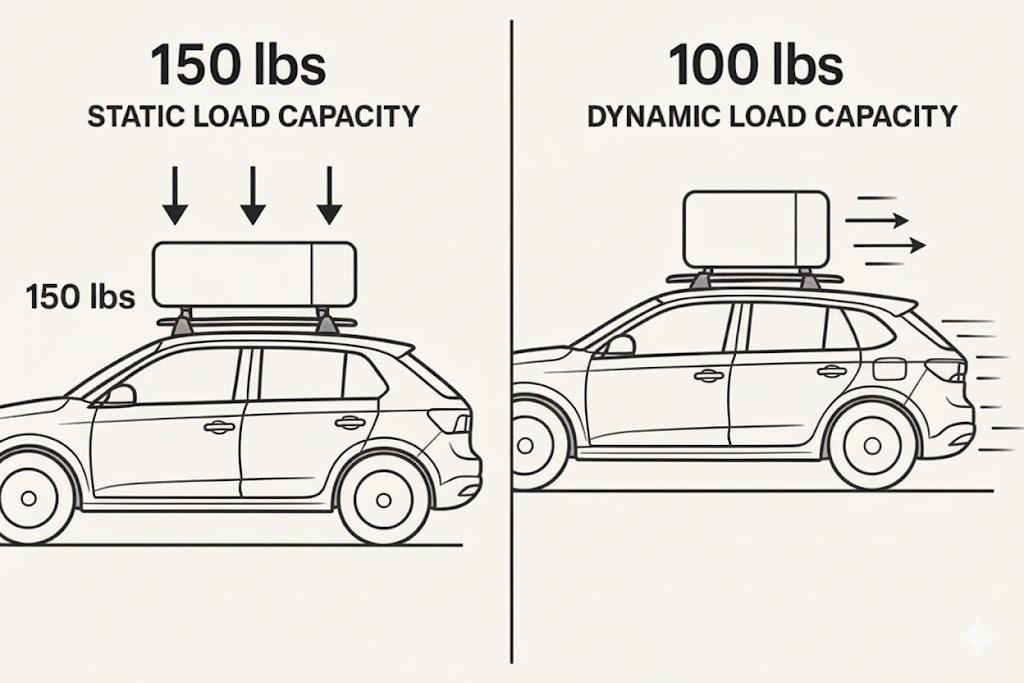
What Each Rating Actually Measures
| Factor | Dynamic Load Rating | Static Load Rating |
|---|---|---|
| Definition | Weight your roof carries while the vehicle is moving | Weight your roof supports while the vehicle is stationary |
| Forces included | Gravity + acceleration + braking + cornering + road vibration | Gravity only |
| Typical range | 100–330 lbs depending on vehicle | 300–700+ lbs |
| When it applies | Any time the vehicle is in motion | Parked loading, sleeping in an RTT |
| Found in | Owner’s manual under “roof load” or “load carrying capacity” | Door jamb sticker (sometimes), owner’s manual |
The static rating is typically 3–6× higher than the dynamic rating. This gap exists because driving multiplies the effective forces on the roof structure. At 60 mph with a loaded rack, braking hard generates deceleration forces that can momentarily increase effective roof load by 30–50% beyond the weight of the cargo itself.
The governing principle: Dynamic is the number for every driving decision. Static is only relevant when the vehicle is completely stationary — loading at a campsite, or sleeping in a roof top tent with occupants.
2. The Three-Variable Calculation — What Actually Limits Your Load
This is where most guides stop being useful. They explain the concept of dynamic load ratings but never show the complete calculation that produces your actual safe cargo limit. If you’re still deciding which rack or tent to buy before running these numbers, our roof top tent buying guide walks through compatibility decisions in full. Here is the complete calculation:
The Three Numbers You Need
Number 1 — Vehicle dynamic roof rating The maximum total weight the vehicle’s roof structure can carry while driving. This comes from the owner’s manual. It includes everything on the roof: rack, accessories, and cargo combined.
Number 2 — Rack system dynamic rating The maximum load the crossbars or platform rack can carry while moving. This comes from the rack manufacturer’s documentation. High-quality aftermarket racks often have ratings of 165–330 lbs — frequently higher than the vehicle’s own roof rating.
Number 3 — Total system weight The combined weight of the rack hardware itself, any permanently mounted accessories (light bars, awning mounts, antenna mounts), and all cargo.
The Formula
Safe cargo weight = MIN(vehicle dynamic rating, rack dynamic rating) − rack weight − accessory weightThe binding limit is whichever of the first two numbers is lower. Then subtract the weight of the hardware you’ve already committed to the roof.
Worked Example: Toyota 4Runner with RTT Setup
- Vehicle dynamic roof rating: 165 lbs
- Rhino-Rack Backbone platform rack: 165 lbs rated capacity / 48 lbs weight
- iKamper Skycamp 3.0 Mini tent: 120 lbs
- Awning mount bracket: 4 lbs
Calculation: MIN(165, 165) = 165 lbs system limit 165 − 48 (rack) − 4 (bracket) = 113 lbs remaining for cargo Tent weighs 120 lbs → Over the safe limit by 7 lbs
The solution isn’t a heavier rack — it’s a lighter rack (crossbars at 35 lbs instead of a platform at 48 lbs), which opens up 13 additional pounds of cargo budget and brings the tent within spec.
The key insight most buyers miss: Upgrading to a higher-rated rack does not increase your cargo capacity if the vehicle’s dynamic roof rating is already the binding constraint. The rack rating and vehicle rating are independent limits — both must be satisfied.
3. Vehicle Dynamic Load Ratings — A Reference Table for Popular Models
Every guide tells you to “check the owner’s manual.” None provides the data for common vehicles. Here it is — compiled from published manufacturer specifications.
| Vehicle | Years | Dynamic Roof Rating | Notes |
|---|---|---|---|
| Toyota Tacoma | 2016–2024 | ~165 lbs | Bed rack removes roof constraint entirely |
| Toyota 4Runner | 2010–2024 | ~165 lbs | Aftermarket rack required; factory bars not recommended for RTTs |
| Toyota RAV4 | 2019–2024 | ~100 lbs | Significantly lower than most buyers assume |
| Toyota Tundra | 2022–2024 | ~100–165 lbs | Varies by cab and trim; verify by VIN |
| Jeep Wrangler JL | 2018–2024 | ~330 lbs | Best factory roof rating in class; most RTTs viable |
| Jeep Gladiator | 2020–2024 | ~330 lbs | Bed rack preferred; roof rating is strong |
| Ford Bronco | 2021–2024 | ~150 lbs | Tight limit; lightweight hard shell only |
| Ford F-150 | 2021–2024 | 150–250 lbs | Varies by trim; bed rack strongly recommended |
| Subaru Outback | 2020–2024 | ~176 lbs | Factory rails rated; crossbar system required |
| Honda CR-V | 2017–2024 | ~165 lbs | Weight budget consumed quickly with heavy rack |
| Land Rover Defender | 2020–2024 | ~330 lbs | Strong roof structure; excellent RTT platform |
| Ford Expedition | 2018–2024 | ~220 lbs | Full-size capacity; good RTT platform |
Figures are compiled from published manufacturer specifications. Always verify with your specific model year, trim level, and owner’s manual — figures can vary within the same nameplate.
The RAV4 situation warrants specific attention. At 100 lbs dynamic rating, a quality crossbar rack (35–40 lbs) leaves only 60–65 lbs for cargo — which eliminates virtually every standard RTT from consideration. If you’re still evaluating which tent works within a tight weight budget, see our best roof top tent roundup, which flags weight and vehicle compatibility for each recommended model.
4. The Rack Manufacturer Rating — What It Measures and Why It’s Not Your Limit
One of the most persistent sources of buyer confusion is seeing aftermarket rack ratings of 300, 400, or even 500 lbs — numbers that dwarf most vehicle roof ratings — and concluding that the rack is the upgrade they need to carry more weight. This is a fundamental misunderstanding of what each rating measures.
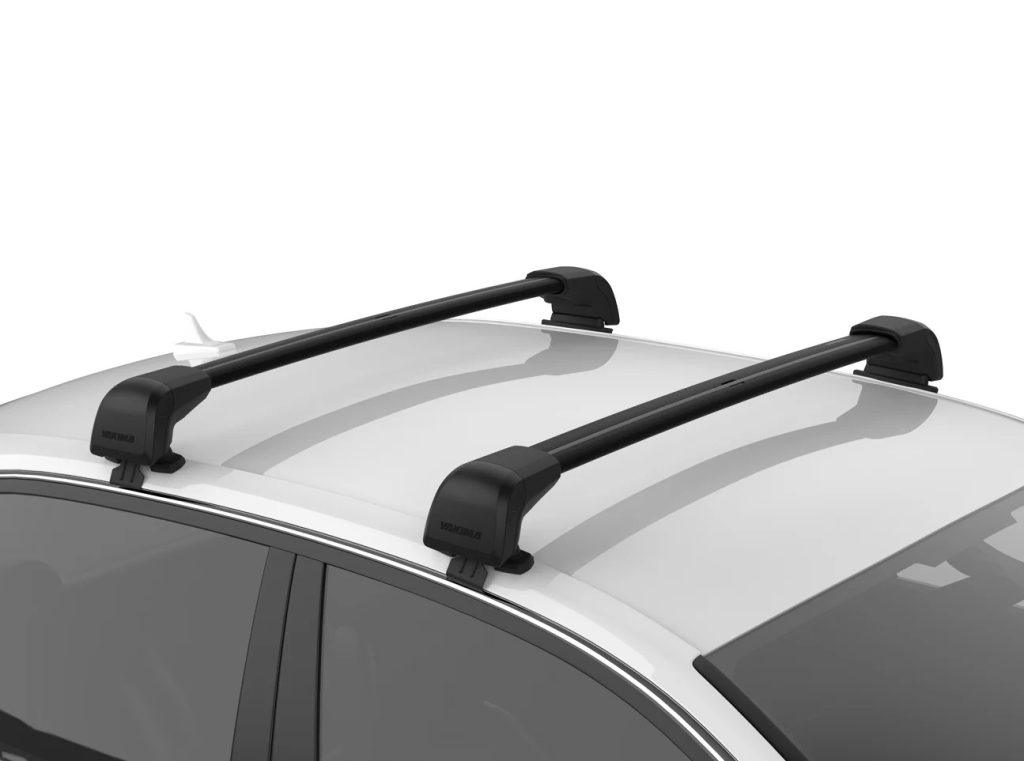
What the Rack Rating Actually Measures
A rack manufacturer’s dynamic load rating describes the structural capacity of the rack hardware itself — the strength of the crossbar extrusions, the clamping force of the feet, and the integrity of the mounting interface — tested in isolation from any specific vehicle. A Thule rack rated to 165 lbs will not fail structurally under that load. What it cannot guarantee is that the vehicle’s roof can absorb those same forces without deformation.
Think of it this way: a trailer rated to carry 5,000 lbs doesn’t mean any vehicle can tow 5,000 lbs. The trailer rating describes the trailer’s structural limit. The tow rating describes the vehicle’s limit. Both must be checked. The lower one governs.
The Practical Consequence
| Component | Rated Capacity | Governs? |
|---|---|---|
| Rhino-Rack Pioneer Platform | 330 lbs | Only if lower than vehicle rating |
| Toyota 4Runner roof | 165 lbs | Yes — this is the binding limit |
| Thule EVO WingBar | 165 lbs | Only if lower than vehicle rating |
| Honda CR-V roof | 165 lbs | Tied — both govern at 165 lbs |
| Eezi-Awn rack | 500 lbs | Vehicle rating governs in virtually every case |
Buying a rack rated higher than your vehicle’s roof doesn’t expand your capacity — it just ensures the rack isn’t the weak link. The vehicle roof rating remains fixed regardless of what you bolt to it.
The correct use of a high-rated rack: It provides a meaningful safety margin in rack-structural terms, reduces the risk of rack hardware failure as a failure mode, and may be necessary if you’re mounting heavy accessories on the rack itself (roof-mounted spares, heavy lighting). It does not increase how much your vehicle’s roof can safely carry.
5. Off-Road Load Reduction — The Calculation Most Overlanders Get Wrong
For anyone taking a loaded roof rack off pavement, the on-road dynamic rating is not the applicable limit. Off-road driving introduces impact loads, lateral forces from side slopes, and vertical shock loads from obstacles that amplify effective roof load far beyond what highway driving creates. Every credible source acknowledges this — but they disagree on the reduction factor, and none explains why.
Why the Numbers Conflict
The two figures commonly cited — 20% and 33% reduction — are both correct, applied to different scenarios:
20% reduction: Mild unpaved surfaces Gravel roads, packed dirt, maintained forest service roads with moderate washboarding. The additional dynamic forces are real but moderate. Reduce your on-road dynamic limit by 20% before calculating safe cargo weight.
33% reduction: Technical terrain Rocky trails, significant ruts, water crossings, significant chassis articulation. The impact and lateral forces in these conditions are substantially higher, and the 33% reduction reflects the meaningful additional stress on roof mounting points.
Off-Road Calculation Applied
Using the 4Runner example from Section 2 (165 lb vehicle dynamic rating):
| Terrain Type | Reduction | Adjusted Roof Limit | Available After Rack (48 lbs) |
|---|---|---|---|
| Highway | 0% | 165 lbs | 117 lbs |
| Mild gravel / forest road | 20% | 132 lbs | 84 lbs |
| Technical off-road | 33% | 110 lbs | 62 lbs |
An RTT weighing 120 lbs that fits within the on-road limit becomes a significant overload on technical terrain — 10 lbs over even before the rack weight is subtracted. This is why serious overlanders either choose lightweight tents, use truck bed racks to bypass the roof load constraint, or significantly reduce additional roof cargo when driving technical routes.
Field rule of thumb: If you’re on any surface where you’d engage 4WD Low, apply the 33% derating. If you’re on maintained unpaved roads, apply 20%. If you’re uncertain, use 33% — conservative calculation costs you nothing.
6. Rooftop Tent Weight Calculations — The Unique Two-Limit Scenario
RTT buyers represent a significant segment of this search, and their situation is unique: they’re the only common roof rack users who need to manage two entirely different weight calculations for the same product — one for driving, one for sleeping.
The Two Limits Explained
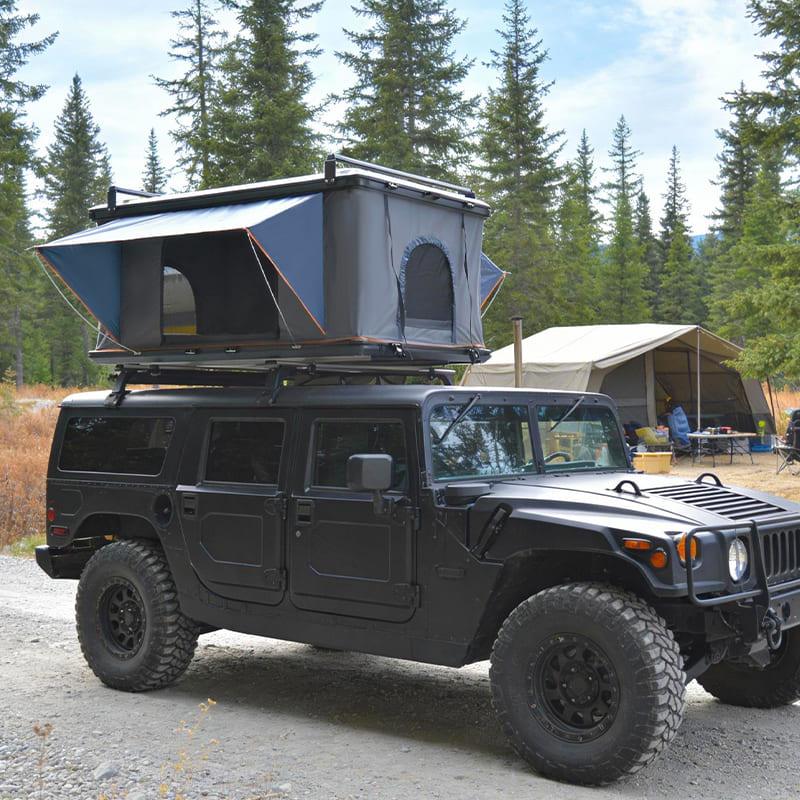
Limit 1: Dynamic (while driving) The tent is packed and closed. The load equals: rack weight + packed tent weight + any additional roof cargo. This total must fall below the vehicle’s dynamic roof rating.
Limit 2: Static (while camping with occupants) The tent is deployed. Occupants are inside. The load equals: rack weight + tent weight + combined occupant weight + sleeping bags and gear inside the tent. This total must fall below the vehicle’s static roof rating.
Why Static Is Rarely the Binding Constraint — But Still Matters
Static ratings run 3–6× higher than dynamic ratings. A vehicle with a 165 lb dynamic rating typically has a 400–500 lb static rating. Two adults at 160 lbs each, plus a 120 lb tent, plus a 48 lb rack, plus 20 lbs of gear = 508 lbs. This marginally exceeds a 500 lb static limit — which matters if you have a heavy tent, a heavy rack, and two large adults.
Worked RTT Calculation: Two Scenarios
Vehicle: Jeep Wrangler JL (Dynamic: 330 lbs, Static: ~825 lbs) Rack: Smittybilt Overlander rack: 95 lbs Tent: iKamper Skycamp 3.0: 145 lbs
| Scenario | Components | Total Weight | Limit | Result |
|---|---|---|---|---|
| Driving (dynamic) | Rack (95) + Tent (145) | 240 lbs | 330 lbs | ✅ 90 lbs margin |
| Camping — 2 adults (static) | Rack (95) + Tent (145) + 2 adults (340) + gear (25) | 605 lbs | ~825 lbs | ✅ 220 lbs margin |
| Camping — 2 adults + 1 child (static) | Above + child (80) | 685 lbs | ~825 lbs | ✅ 140 lbs margin |
The Wrangler’s exceptional roof rating makes it the most forgiving RTT platform. Now the same calculation on a Ford Bronco (dynamic: 150 lbs, static: ~375 lbs):
| Scenario | Components | Total | Limit | Result |
|---|---|---|---|---|
| Driving (dynamic) | Light rack (35) + Light tent (85) | 120 lbs | 150 lbs | ✅ 30 lbs margin |
| Camping — 2 adults (static) | Rack (35) + Tent (85) + 2 adults (320) + gear (20) | 460 lbs | ~375 lbs | ❌ 85 lbs over |
This is why Bronco owners frequently opt for a hitch-mounted tent platform that bypasses the roof constraint entirely. For a broader look at how tent type affects weight and vehicle fit, the hard shell vs soft shell roof top tent comparison covers how packed weight differs significantly across categories — a variable that directly affects whether your system calculation passes or fails.
7. Weight Distribution — The Variable That Affects Safety As Much As Total Weight
Staying within the total weight limit is necessary but not sufficient for safe roof loading. A 100 lb load concentrated over one crossbar creates more handling risk than a properly distributed 150 lb load. Weight distribution affects three aspects of vehicle dynamics independently of total weight.
The Three Effects of Poor Distribution
Braking distance: Forward-heavy loads shift the vehicle’s center of gravity forward and upward, reducing rear axle traction during hard braking. The result is extended stopping distance that the total weight number alone doesn’t predict.
Cornering stability: Side-heavy loads create asymmetric rollover risk — the vehicle resists roll differently in left vs. right turns. Even mild asymmetry (20 lb difference side-to-side) is measurable in dynamic handling.
Rollover threshold: Every pound added to the roof raises the vehicle’s center of gravity. Higher center of gravity reduces the lateral g-force required to initiate rollover — this compounds with speed in a non-linear way.
Correct Load Positioning by Cargo Type
| Cargo Type | Correct Position | Common Mistake |
|---|---|---|
| Cargo box | Centered between crossbars; heavier items low and rearward | Packing heaviest items at the top or front |
| Roof top tent | Manufacturer-specified position (follow manual) | Mounting too far forward; steep ladder angle |
| Kayaks / canoes | Centered longitudinally; symmetric side-to-side | Offset to one side for easier loading |
| Bikes (roof-mounted) | Alternating fork directions for weight balance | All bikes facing same direction — unbalanced |
| Lumber / long cargo | Even overhang front and rear; secured at multiple points | Overhang entirely at one end |
Speed guidance: At 45 mph with a moderate roof load, handling changes are noticeable but manageable for an attentive driver. At 70 mph, the same load meaningfully extends braking distance and reduces evasive maneuver capability. Reduce highway speed by 10 mph with any significant roof load — the physics compound faster than most drivers expect.
8. What Happens When You Exceed the Limit
Safety warnings about overloading roof racks are often vague. Here are the specific, concrete consequences — because understanding exactly what fails and why is more persuasive than a generic caution.
Structural Consequences
Roof rail deformation: Exceeding the dynamic limit under braking or cornering can permanently bend factory roof rails — the stamped steel channels that the rack feet clamp to. This damage is cosmetic initially but progressive: deformed rails create uneven clamping force that accelerates rack loosening.
Mounting point fatigue: The bolts, welds, or adhesive bonds that attach roof rails to the vehicle’s body structure experience cyclic stress with every mile driven under load. Chronic overloading accelerates fatigue failure at these points — a failure mode that may not become visible until a sudden dynamic event (emergency braking, pothole) triggers sudden mounting point failure.
Rack hardware failure: Even a correctly rated rack will fail under sufficient overload — crossbar deflection, foot clamp slippage, or T-bolt pull-through in the crossbar channel.
Handling and Legal Consequences
| Consequence | Specific Effect | Threshold |
|---|---|---|
| Extended braking distance | 10–20% longer stop at highway speeds | Any significant overload |
| Reduced evasive capability | Slower lane-change response, increased sway | Moderate overload at speed |
| Voided manufacturer warranty | Structural damage from overloading not covered | Any documented overload |
| Insurance liability | At-fault accident with overloaded vehicle may affect coverage | Legal overload threshold varies by state |
| Legal violation | Overloading is illegal in most US states | Varies; typically triggered by inspection |
What to Do If Your Current Setup Exceeds Limits
- Reduce cargo weight — the most direct solution
- Switch to a lighter rack — crossbars at 35 lbs vs. a platform at 80 lbs opens significant cargo budget
- Use a truck bed rack — eliminates the roof load constraint entirely for pickup owners
- Use a hitch-mounted tent platform — moves RTT weight to the hitch receiver, bypassing roof limits
- Choose a lighter tent — within the same tent type, weight varies significantly between models
Once your weight budget is confirmed and you’re ready to mount, the step-by-step install roof top tent guide covers torque specifications, crossbar spacing, and the re-torque schedule that keeps the setup road-safe long term.
Final Word
The “165 lbs” figure that dominates roof rack discussions is a starting point, not an answer. Your actual safe load capacity requires three numbers — vehicle dynamic rating, rack dynamic rating, and total system weight — with the lowest figure governing every decision.
Find your vehicle’s dynamic rating in the owner’s manual. Subtract your rack weight. What remains is your cargo budget. Apply the off-road derating if your route takes you off pavement. If you’re mounting an RTT, verify both the driving and the camping calculation.
Done correctly, this calculation takes about five minutes. Done incorrectly — or skipped entirely in favor of “it looks about right” — it’s the source of most preventable roof rack safety problems on the road.
For everything from tent selection to installation, the roof top tent guide covers the full decision from first principles — vehicle compatibility, tent type, cost of ownership, and where you can legally camp.
Frequently Asked Questions
How do I find the dynamic roof load rating for my specific vehicle?
Check your owner’s manual under “roof load,” “roof rack capacity,” or “load carrying capacity.” If it’s not listed, call the vehicle manufacturer’s customer support line with your VIN — they have the specification on file. Do not use the static load figure printed on the door jamb sticker, which is typically 3–6× higher than the dynamic limit.
Does a roof rack increase how much weight my roof can carry?
No. A rack provides a mounting platform and distributes load across crossbar contact points — it does not structurally reinforce the vehicle’s roof. The vehicle’s dynamic roof rating remains fixed regardless of which rack is installed. A higher-rated rack ensures the rack hardware isn’t the limiting factor, but the vehicle roof rating still governs total system weight.
Can I exceed the dynamic load rating if I drive slowly?
Partially. At very low speeds (under 15 mph) on smooth pavement, dynamic forces are minimal and the effective load approaches static loading conditions. However, even slow driving involves acceleration, braking, and road surface irregularities that create forces beyond static. Speed is not a reliable workaround — reduce total weight instead.
How much weight can I carry off-road on my roof rack?
Apply a 20% reduction to your on-road dynamic limit for mild unpaved surfaces (gravel, packed dirt). Apply a 33% reduction for technical terrain with significant impacts, articulation, or side slopes. If you’re engaging 4WD Low, use the 33% figure. Calculate cargo weight against the reduced limit after subtracting rack weight.
What is the weight limit for a roof rack with a rooftop tent?
Calculate: vehicle dynamic roof rating minus rack weight equals available tent weight budget. The tent’s packed weight must fall within this budget with margin. Separately, verify the static scenario: rack weight plus tent weight plus all occupant weight plus gear must fall below the vehicle’s static roof rating (typically 3–6× the dynamic rating).
Does the weight of the roof rack itself count toward my load limit?
Yes, always. The vehicle’s dynamic roof rating governs the total weight of everything on the roof — rack hardware, accessories, and cargo combined. A platform rack weighing 80 lbs on a vehicle with a 165 lb dynamic rating leaves only 85 lbs for cargo. This is one of the most common miscalculations buyers make.
What happens if my roof rack load is too heavy — will it fall off suddenly?
Sudden catastrophic failure is rare. The more common failure mode is progressive: deformed roof rails, loosening rack hardware, and degraded mounting point integrity that develops over time and distance. The acute risk is handling-related — extended braking distance and reduced cornering stability that matters most in emergency maneuvers. Both failure modes are avoidable by staying within limits.
How do I know if my load is distributed correctly?
Center the load’s weight midpoint between the front and rear crossbars. Verify that left-to-right weight is symmetric — if you can shift a 20+ lb difference to one side, repack. Carry the heaviest items as low as possible within the cargo container. After loading, walk around the vehicle and observe whether it sits level or leans — visible lean indicates meaningful asymmetry that should be corrected before driving.