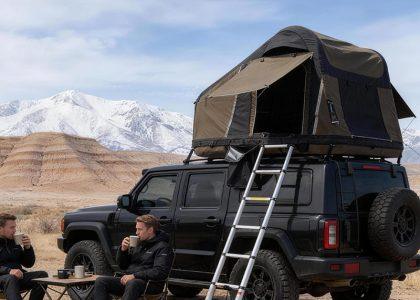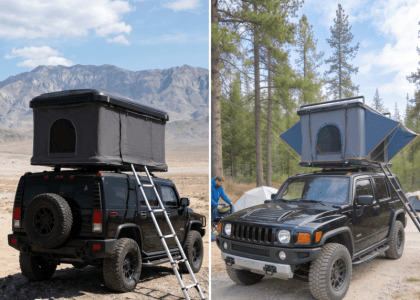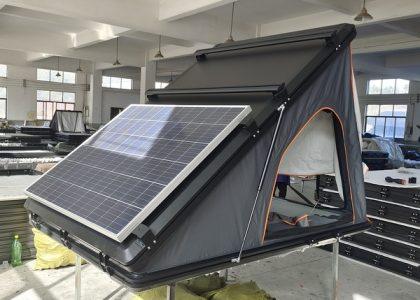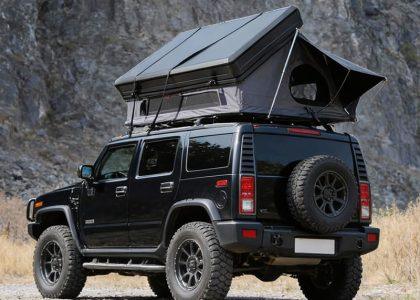
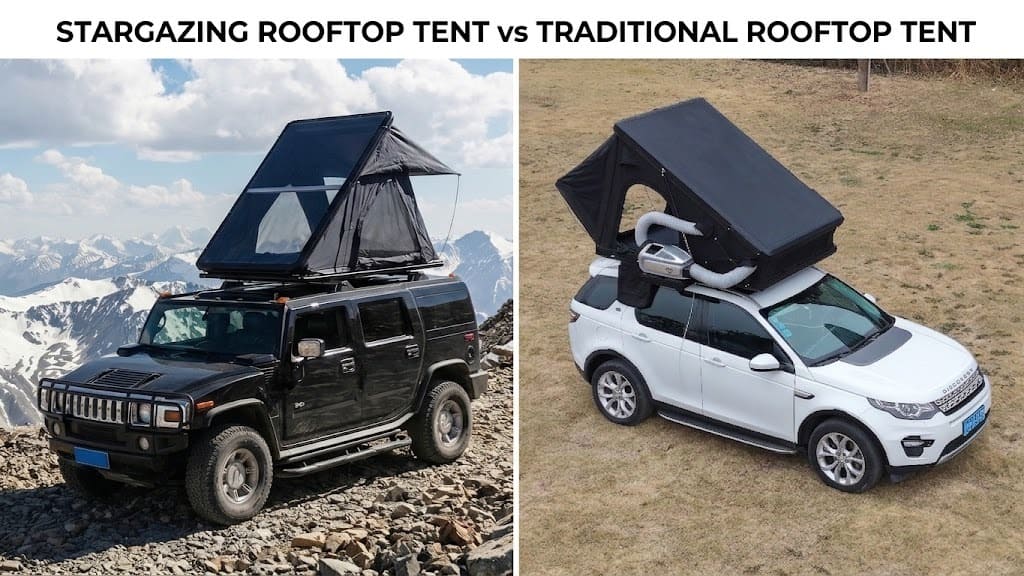
Choosing between a stargazing rooftop tent vs traditional rooftop tent depends entirely on your vehicle’s payload capacity and your tolerance for interior temperature swings. A standard aluminum hard shell offers superior thermal insulation for extreme weather, while a transparent roof tent delivers unmatched panoramic night views at the cost of heavier materials. You must weigh the structural reality of polycarbonate vs aluminum against your specific overlanding goals before spending thousands of dollars on a new shelter.
Quick-Reference Summary
- Weight Penalty: Expect a transparent rooftop tent to weigh 15 to 20 pounds more than a standard aluminum model due to dense polycarbonate panels.
- Thermal Reality: Solid roofs block 100% of solar radiation, while clear roofs create a greenhouse effect requiring active cross-ventilation.
- Material Lifespan: Cheap PVC skylights yellow rapidly; demand anti-UV hard coating on any panoramic acrylic.
- Cost Discrepancy: Traditional hard shells average $1,500, whereas retail panoramic models command a $1,000 to $1,500 premium.
- Best Middle Ground: Opting for an 8cm ultra-slim profile OEM model delivers stargazing capabilities without exceeding standard dynamic weight capacity limits.
What to Know Before You Decide
Before analyzing a transparent rooftop tent comparison, buyers must address three critical physical limitations. First, swapping an opaque insulated roof for a transparent panel severely impacts interior temperature regulation. Second, structural plastics weigh significantly more than honeycomb aluminum, threatening your roof rack’s dynamic weight capacity. Finally, prolonged sun exposure destroys cheap plastics, meaning you must verify the exact chemical composition of the clear roof before purchase.
| Feature | Traditional Hard Shell | Stargazing Rooftop Tent |
| Roof Material | Honeycomb Aluminum / ABS | Polycarbonate / Acrylic |
| Thermal Insulation | High (Foam-lined core) | Low (Prone to greenhouse effect) |
| Average Weight | 120 – 140 lbs | 135 – 160 lbs |
| Condensation Risk | Moderate (Managed by canvas) | High (Moisture gathers on cold plastic) |
| Retail Price Point | $1,200 – $2,500 | $2,500 – $4,000+ |
| Sky Visibility | 0% to 15% (Standard skylight) | 90% to 100% |
Head-to-Head: Hard Shell vs Panoramic Rooftop Tent
Evaluating a clear roof tent vs solid roof requires looking past marketing photos and examining the underlying material science. Here is how they compare across critical performance metrics.
Visual Experience and Setup Time
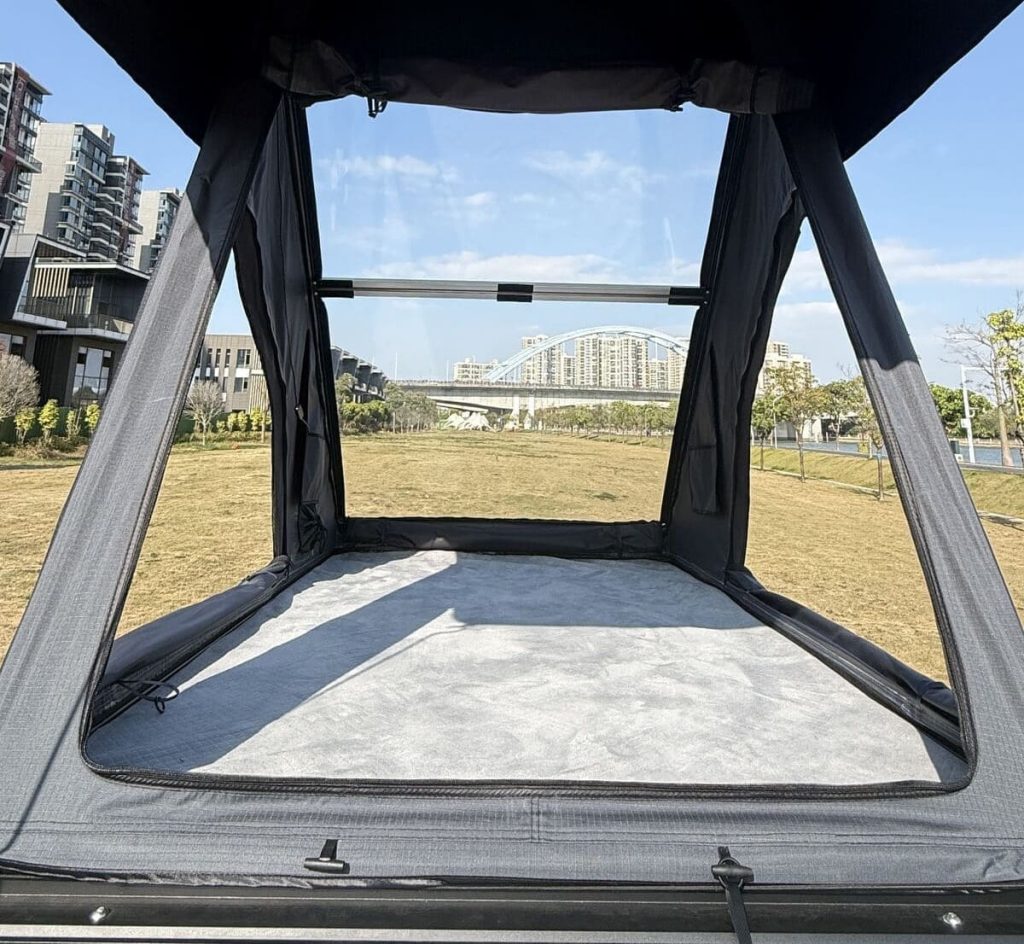
Traditional models utilize a standard skylight sewn into the canvas. When you deploy the rainfly or open the hard shell clamshell lid, this solid material completely blocks your upward view. A true stargazing rooftop tent integrates the viewing window directly into the structural lid. Both styles share an identical 60-second setup time, but the panoramic model provides an instant 120-degree vertical field of view the moment it opens.
Weight and Payload Penalty
Field experience consistently shows that replacing a 20mm aluminum honeycomb roof with an 8mm structural polycarbonate panel adds an immediate 15-pound payload penalty. This extra mass raises your vehicle’s center of gravity and reduces fuel efficiency. Buyers pushing the limits of their factory roof rails must calculate this penalty carefully. Choosing hard shell roof top tents built with standard aluminum often keeps you safely under the 150-pound dynamic limit.
Thermal Insulation and Condensation
A solid aluminum roof reflects solar heat and features an internal foam layer to trap body heat at night. Conversely, a clear roof acts precisely like a sunroom. It captures solar radiation, creating a severe greenhouse effect during the day. At night, warm breath hitting the freezing polycarbonate creates heavy condensation. Operating a panoramic tent requires strict cross-ventilation discipline, keeping opposing mesh windows open to cycle the moist air.
Sun Exposure and Material Longevity
In practice, what most buyers discover after their first season is that untreated plastic panels suffer severe UV degradation and yellowing. Retail brands often use cheap PVC or basic acrylic to save money, resulting in a brittle, cloudy roof within 18 months. True overlanding durability requires specifying an anti-UV hard coating applied directly to a polycarbonate shell during the manufacturing process.
OEM Manufacturing Cost vs Retail
Consumers face a massive markup on panoramic models. While retail brands charge upwards of $3,500 for a stargazing unit, the actual OEM manufacturing cost difference between polycarbonate and aluminum is only $200 to $300 per unit. Direct B2B buyers working with a reputable roof top tent manufacturer can source an 8cm ultra-slim profile stargazing tent for under $900 wholesale.
Verdict by Buyer Profile
| Buyer Profile | Recommendation | Why It Fits |
| Four-Season Overlander | Traditional Aluminum Hard Shell | Superior thermal insulation and snow-load capability prevent extreme winter heat loss. |
| Desert/Fair-Weather Camper | Stargazing Rooftop Tent | Maximizes night sky visibility in dry environments where condensation management is easier. |
| B2B Retailer / Distributor | OEM Ultra-Slim Panoramic | Offers high-margin retail potential by supplying the high-demand clear roof feature at wholesale costs. |
Common Mistakes When Choosing
- Ignoring Vehicle Dynamic Load Limits
- Cause: Looking only at static weight limits (parked capacity).
- Consequence: The extra 20 pounds of a clear polycarbonate roof causes the factory roof rack to fail during off-road vibrations.
- Correction: Verify your vehicle’s dynamic weight capacity exceeds the tent’s weight by at least 25 pounds to account for bedding and crossbars.
- Skipping the Blackout Liner
- Cause: Assuming you only need the tent at night.
- Consequence: The morning sun turns the transparent tent into a 110-degree oven by 7:00 AM, making sleeping impossible.
- Correction: Only purchase panoramic tents that include a custom-fitted, removable opaque interior headliner.
- Confusing PVC with Polycarbonate
- Cause: Buying the cheapest clear roof tent vs solid roof option available online.
- Consequence: The roof cracks under a minor hail storm because PVC lacks impact resistance.
- Correction: Demand exact material specifications; accept nothing less than 6mm structural polycarbonate.
- Trapping Winter Moisture
- Cause: Sealing all doors and windows tightly to retain heat under a clear roof.
- Consequence: You wake up soaked as liters of condensation rain down from the uninsulated plastic ceiling.
- Correction: Always leave top ventilation cowls open and utilize an anti-condensation mattress underlay.
Troubleshooting Rooftop Tent Issues
| Problem | Likely Cause | Solution |
| Clear roof turning yellow | UV degradation of uncoated plastic | Apply a specialized marine-grade UV protectant polish monthly to slow the aging process. |
| Water pooling inside tent | Severe condensation on cold plastic | Open dual side windows 2 inches to force cross-ventilation; run a small 12V fan. |
| Tent feels too heavy to lift | Polycarbonate weight penalty | Install gas strut assists on your roof rack or use a specialized mechanical hoist system. |
| Interior unbearably hot | Greenhouse effect from direct sun | Install the manufacturer-provided blackout thermal liner during daytime hours. |
| Micro-scratches on roof | Tree branches scraping the plastic | Polish with an acrylic-safe cutting compound; apply a clear protective vinyl wrap before trips. |
Frequently Asked Questions
Does a stargazing rooftop tent vs traditional rooftop tent get hotter in the summer?
Yes. A traditional aluminum roof reflects solar energy, whereas a transparent polycarbonate roof allows UV rays to penetrate and trap heat. You must use a removable blackout liner during daytime hours to maintain a survivable interior temperature.
Will the clear plastic roof break from hail or falling branches?
It depends entirely on the material. Cheap PVC will shatter under heavy impact. Premium models utilizing 6mm or 8mm polycarbonate possess extreme impact resistance and will survive heavy hail storms without cracking.
Why are transparent rooftop tents so much heavier?
Solid structural plastic is significantly denser than the hollow honeycomb aluminum panels used in standard hard shells. Achieving the same load-bearing rigidity with a clear material requires thicker construction, adding 15 to 20 pounds of payload penalty.
How do you stop condensation in a panoramic rooftop tent?
Condensation occurs when your warm breath hits the cold plastic roof. You stop this by opening opposite windows to establish active cross-ventilation, venting the humid air outside before it can settle and turn into water droplets.
Is the $1,500 retail price upgrade for a clear roof worth it?
For dedicated astrophotographers, yes. However, buyers should consult a comprehensive roof top tent guide to explore OEM purchasing channels. B2B buyers can acquire these identical premium features without the massive retail markup.
About Everlead Outdoor
Solving the extreme temperature fluctuations inherent in panoramic shelters requires precision material engineering. As an ISO 9001-certified OEM/ODM roof top tent manufacturer, Everlead Outdoor delivers factory-direct pricing without sacrificing premium quality. We eliminate traditional manufacturing barriers by offering a highly flexible 1-piece minimum order quantity (MOQ), making direct-from-factory purchasing accessible to everyone. To further streamline your logistics, full local US inventory will be officially available starting this June, ensuring rapid domestic fulfillment. Whether you need a single ultra-slim stargazing tent or a wholesale container, we provide industry-leading shelter solutions without the massive retail markups.
Final Verdict
The definitive winner in the stargazing rooftop tent vs traditional rooftop tent debate hinges on your specific environmental demands. Choose a traditional honeycomb aluminum shell for maximum durability and thermal control in freezing weather. Buy a transparent panoramic roof only if you are willing to manage the heavier payload penalty and actively mitigate interior condensation in exchange for an unparalleled nighttime view.