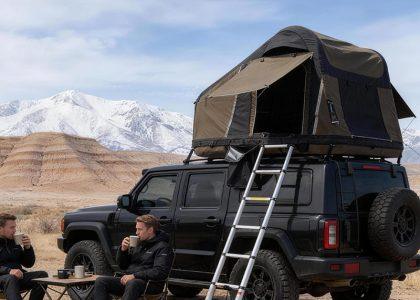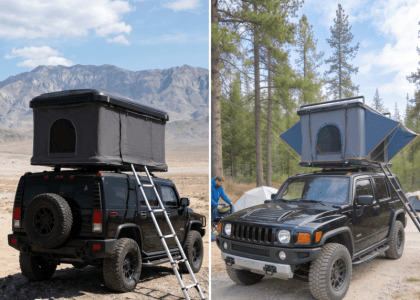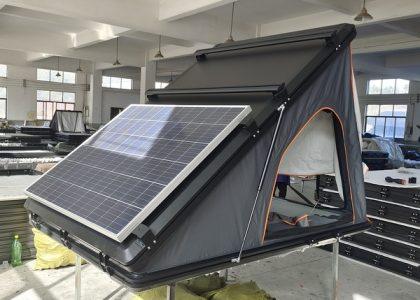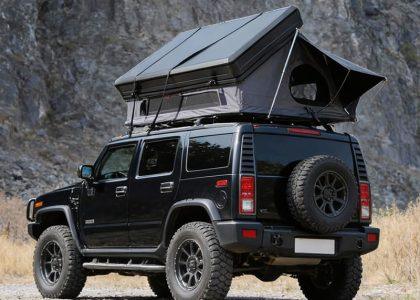
For product developers and sourcing managers in the outdoor industry, selecting the right roof top tent fabric is a critical balancing act between field survival and production margin. In extreme weather—ranging from sub-zero alpine blizzards to high-UV desert gales—fabric failure directly translates to brand erosion and costly warranty claims.
The best fabric for extreme weather rooftop tents is heavyweight polycotton blend canvas (typically 280G to 320G) treated with a high-performance Polyurethane (PU) coating. This material provides the optimal compromise between breathability, tear strength, thermal insulation, and hydrostatic resistance, far outperforming standard synthetic fabrics in long-term exposure.
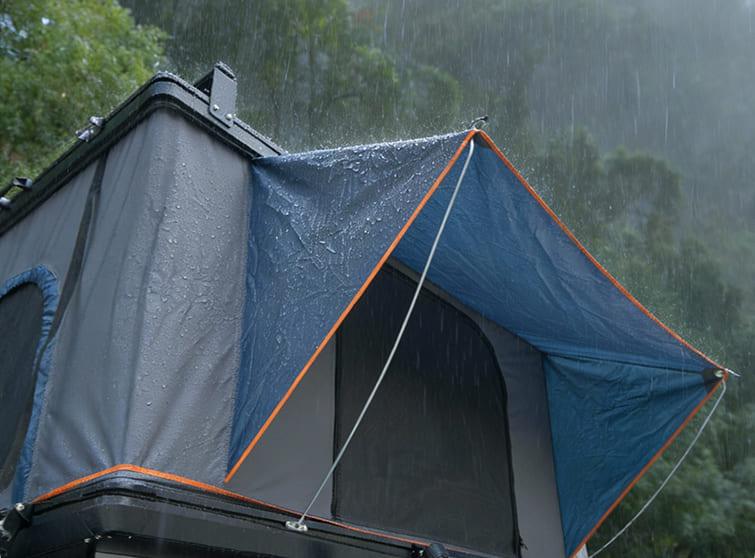
When engineering a premium product line, a superficial understanding of textiles will inevitably lead to field failures. Product managers must evaluate exact material specifications, weave densities, coating chemistry, and production scalability. This technical analysis explores the engineering trade-offs of premium fabrics, helping you optimize your next manufacturing run for harsh environments.
Why is 280G or 320G polycotton canvas preferred over pure polyester for extreme weather?
Heavyweight polycotton canvas (280G to 320G) is preferred because it combines the breathability and thermal mass of cotton with the tensile strength and mildew resistance of polyester. Unlike pure polyester, polycotton expands slightly when wet to seal the weave naturally, while significantly reducing internal condensation in sub-zero environments.
| Technical Metric | 280G/320G Polycotton Blend | 600D Ripstop Polyester |
| Thermal Insulation | Excellent (High Loft) | Poor (High Conductivity) |
| Breathability | High (Reduces Condensation) | Low (Prone to Frosting) |
| Wind Flap Noise | Minimal (Damped Elasticity) | High (Sharp Cracking) |
| Tensile Strength (Warp) | Very High (>1800N) | High (>1400N) |
From an engineering perspective, pure synthetics like 600D Oxford polyester or nylon suffer from high thermal conductivity. In cold climates, warm breath hits the cold synthetic wall, instantly freezing into an internal frost layer. Polycotton canvas buffers this moisture. Furthermore, in high wind scenarios, light polyester fabrics flex violently, creating a loud, disruptive flapping noise that ruins the end-user experience. The higher mass and structural dampening of a 280G or 320G canvas absorb wind energy, stabilizing the tent structure. For brands developing premium products outlined in a comprehensive roof top tent guide, polycotton is the baseline standard for true four-season performance.
What hydrostatic head waterproof rating is required for four-season rooftop tents?
An extreme weather rooftop tent body requires a minimum hydrostatic head rating of 2000mm to 3000mm, complemented by a separate 3000mm to 5000mm polyester rainfly. Ratings exceeding 5000mm on the main tent body should be avoided, as excessive PU coating seals the fabric pores completely, destroying breathability and inducing heavy condensation.
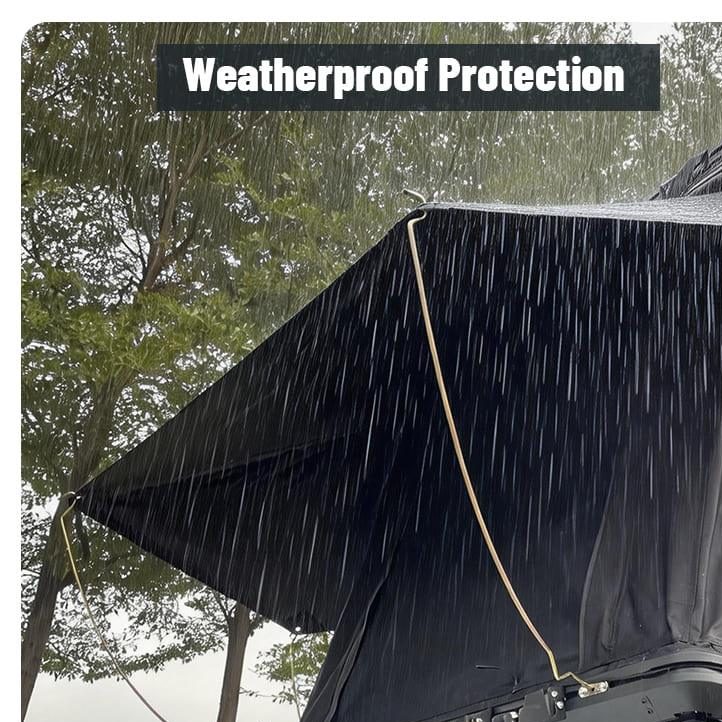
Engineering Note: Hydrostatic head measures the water column pressure a fabric can withstand before leaking. While a higher number sounds better in marketing collateral, thick chemical coatings harden in extreme cold, making the fabric brittle and prone to cracking along fold lines during packing.
For procurement managers, verifying the application methodology of the water-repellent layer is essential. A durable water repellent (DWR) surface finish must be paired with an internal, multi-pass polyurethane (PU) coating. During bulk quality control, ensure your supplier conducts hydrostatic testing post-creasing, as inferior PU coatings delaminate rapidly when the tent is repeatedly folded into a hard shell roof top tent or soft shell roof top tent configuration.
How do UV degradation and ripstop tear strength impact long-term warranty claims?
High UV environments rapidly degrade synthetic fibers, causing polymers to become brittle and lose up to 50% of their tear strength within 12 months of continuous exposure. Polycotton canvas inherently resists UV degradation better than polyester, but both require advanced UV-inhibiting chemical stabilizers to prevent wind-ripping failures and subsequent warranty claims.
When specifying fabrics for a high-end stargazing rooftop tent or overland shelter, you must balance clear viewing panels with heavy-duty structural textiles. Ripstop encapsulation—where thicker yarns are interwoven into a crosshatch pattern—is non-negotiable for mitigating field failures. If a branch punctures the tent body, the ripstop grid isolates the damage, preventing a minor tear from unzipping completely under high wind loads.
- Failure Scenario: Inferior fabrics omit UV stabilizers to cut costs. Within one season, the fabric fades, and wind stress causes the stitching at major tension points (such as the bow attachment sleeves) to pull through the degraded material.
- OEM Specification: Always mandate a minimum UV rating of UPF 50+ and require ISO 13937-2 trouser tear testing during the material sourcing phase.
What are the manufacturing trade-offs between CPAI-84 fire retardancy and fabric longevity?
Meeting CPAI-84 fire retardancy standards requires treating the tent fabric with specialized chemical compounds. While mandatory in regions like Canada and several US states, these fire-retardant (FR) additives can accelerate the degradation of PU waterproof coatings and reduce the fabric’s overall flex life, leading to premature aging if the formulation is unoptimized.
For an OEM brand, navigating global compliance is a complex procurement challenge. FR treatments change the tactile feel (“hand”) of the fabric, often making it stiffer. This stiffness introduces manufacturing complexities during the sewing process, particularly when binding tight radiuses around windows and doors.
| Sourcing Choice | CPAI-84 Compliant Fabric | Non-FR Treated Fabric |
| Regulatory Compliance | Legal for sale in all NA markets | Restricted in specific states |
| Coating Longevity | Reduced (Chemical interaction) | Maximum (Pure PU bonding) |
| Material Flexibility | Stiffer; higher wear on folds | Pliable; easier packing |
| Sourcing Cost | +10% to 15% premium | Baseline pricing |
To balance these trade-offs, product developers should work with suppliers to utilize advanced, non-brominated FR formulations that bond cleanly with polycotton fibers without breaking down the waterproof backing.
How does fabric weight impact shipping volume, containerization, and production costs?
Upgrading from a 200D polyester to a 320G polycotton canvas increases the fabric weight per tent by roughly 4 to 6 kilograms. For bulk shipments, this added mass changes the containerization strategy from volume-limited (cubing out) to weight-limited (weighing out), directly increasing the landed cost per unit.
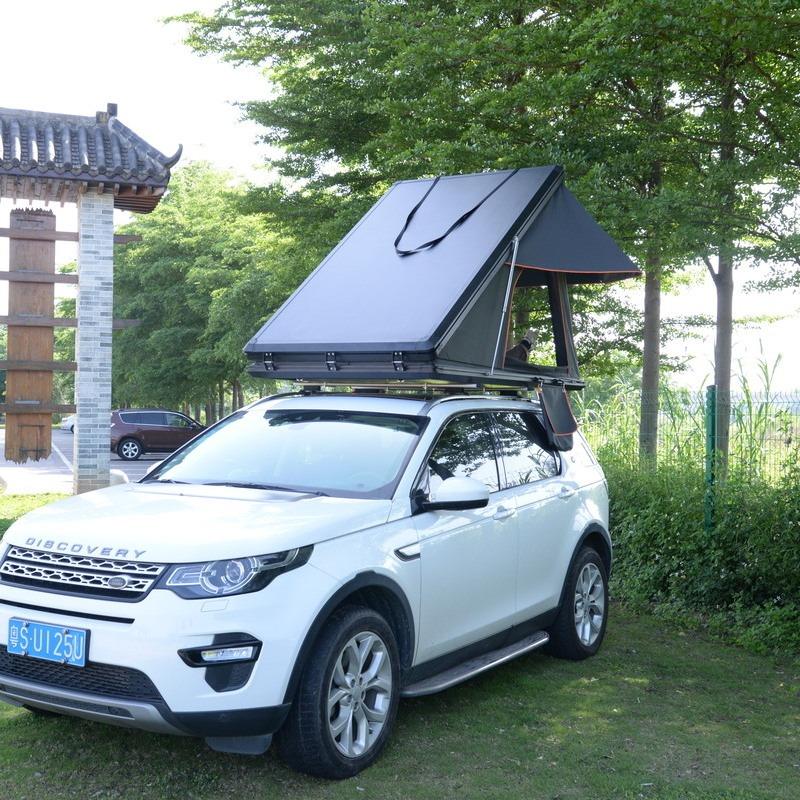
When manufacturing a soft shell roof top tent, a heavier fabric dictates a more robust internal frame structure. The aluminum bows must be up-gauged to prevent buckling under the weight of wet canvas, which adds further material cost and tooling investment.
- Defect Risk: Heavy canvas requires specialized industrial walking-foot sewing machines and heavy-gauge needles. If a factory uses standard machines, inconsistent needle penetration creates uneven stitch tension, leading to seam leakage in heavy storms.
- Logistics Realities: A standard 40-foot HQ container can hold significantly fewer units of heavy-canvas hard shell roof top tents due to payload weight restrictions, forcing logistics managers to optimize regional distribution carefully.
Conclusion and Procurement Recommendations
Selecting the ideal fabric for extreme weather rooftop tents requires moving past generic marketing claims and enforcing strict engineering metrics. For true four-season reliability, a 280G to 320G Ripstop Polycotton Canvas with a 2000mm–3000mm PU coating offers the ultimate defense against wind, snow, and condensation.
When establishing your supply chain, prioritize suppliers that can provide verified technical data sheets confirming UPF 50+ ratings, CPAI-84 compliance without coating degradation, and consistent hydrostatic head performance. Balancing fabric weight with structural frame integrity will ensure your product line withstands the harshest environments while remaining financially viable to ship and distribute globally.
Partner with a Verified Roof Top Tent Manufacturer
Building an outdoor brand capable of surviving extreme weather requires a production partner who understands technical textiles and rigorous quality control. Everlead Outdoor is an ISO 9001-certified OEM/ODM partner backed by over 10 years of manufacturing expertise. We specialize in the design, development, and high-volume production of premium outdoor camping gear.
We manage everything from technical material sourcing—including premium aviation-grade T6 aluminum and custom technical fabrics—to a non-negotiable 100% full-unit in-house QC inspection before global dispatch. Whether you are expanding a premium hard-shell line or developing specialized soft-shell models, we provide end-to-end production solutions with predictable lead times. Secure your supply chain and explore how we can support your next manufacturing run by contacting Everlead Outdoor today.