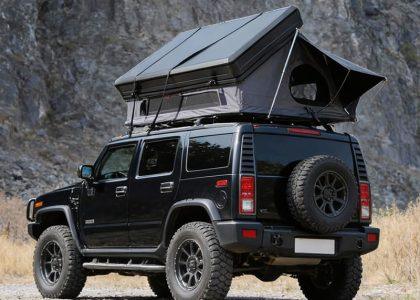
Sourcing a reliable manufacturing partner is the single highest-risk decision a startup outdoor brand will make. A poorly vetted supplier can cripple a brand with inconsistent batch quality, delayed shipments, and catastrophic field failures resulting in massive warranty claims.
To choose a rooftop tent OEM factory, you must evaluate a supplier’s internal quality control infrastructure (specifically demanding 100% full-unit inspections rather than batch sampling), verify their ISO 9001 certification, assess their tooling capabilities for T6 aluminum and technical textiles, and ensure their MOQs align with your cash flow.
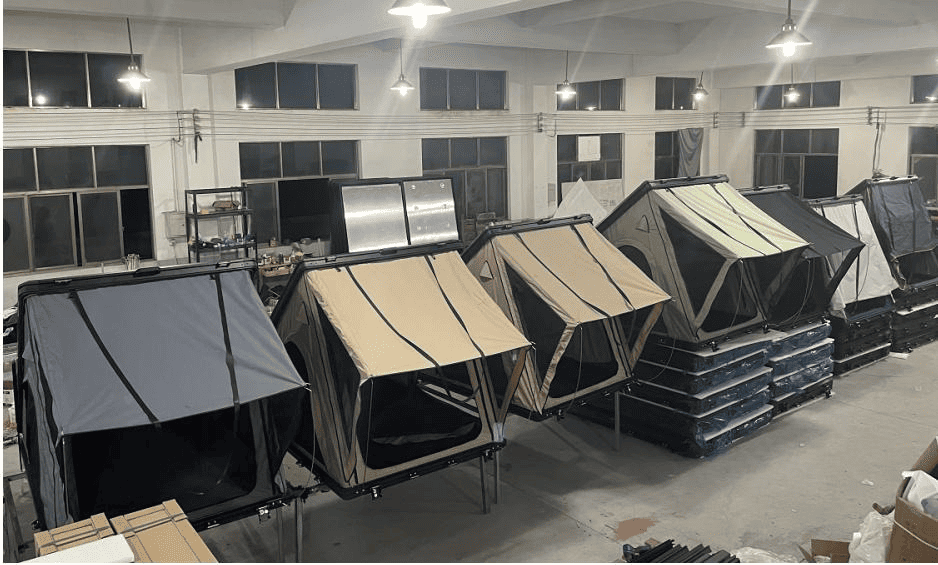
This guide breaks down the procurement realities of offshore manufacturing. We will explore how to audit production lines, negotiate realistic Minimum Order Quantities (MOQs), manage lead times, and mitigate defect risks before committing to a bulk container order.
Table of Contents
- Why is 100% full-unit inspection critical when choosing a rooftop tent OEM factory?
- How do production lead times and tooling investments impact startup outdoor brands?
- What are the realistic MOQ implications for custom hard shell and soft shell models?
- Why is material sourcing capability (T6 aluminum and PU textiles) a key supplier metric?
- How do shipping terms (FOB, CIF, DDP) and containerization affect landed costs?
Why is 100% full-unit inspection critical when choosing a rooftop tent OEM factory?
When selecting an OEM factory, demanding a 100% full-unit inspection is critical because statistical batch sampling often misses complex structural and textile defects. Full-unit assembly checks ensure every zipper, gas strut, and waterproof seam functions correctly before the tent is packed, drastically reducing field failures and warranty claims.
The reality of tent manufacturing involves heavy reliance on manual sewing and assembly. Even with advanced Japanese walking-foot sewing machines, varying operator tension can cause micro-leaks along the canvas seams. Many trading companies disguise themselves as factories and rely on generic 10% AQL (Acceptable Quality Limit) sampling. This leaves brands exposed to container-wide defect rates.
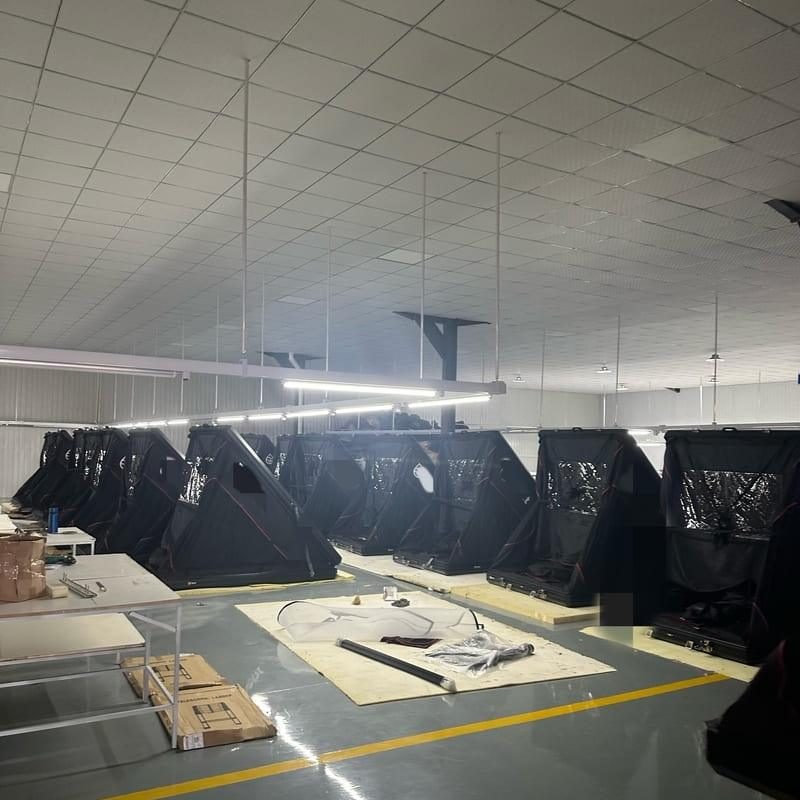
A true roof top tent manufacturer will physically erect and test every single unit on the factory floor. This rigorous process requires significant floor space and labor, which is why only established factories operating under strict 6S methodology can sustain it. Over 65% of dedicated production specialists at leading facilities have over a decade of experience, ensuring high craftsmanship and consistency during these final inspections.
How do production lead times and tooling investments impact startup outdoor brands?
Production lead times heavily impact cash flow and inventory forecasting. A reliable factory typically requires 4 to 6 weeks to engineer a custom prototype, followed by 8 to 12 weeks for mass production. Factoring in transit, brands must plan for a 5-to-6-month cycle from initial Tech Pack submission to warehouse delivery.
Tooling investments are a major hurdle for custom designs. If you are developing a proprietary aerodynamic profile for a hard shell roof top tent, creating custom aluminum extrusion molds or fiberglass/ABS molds requires significant upfront capital. It is crucial to partner with an OEM that has existing, adaptable tooling frameworks to minimize these initial R&D costs.
Unpredictable lead times are a notorious industry pain point. Delays often stem from a factory’s inability to secure raw materials on time. Verifying that a supplier uses a standardized production schedule managed under an ISO 9001:2015 framework ensures predictable output and protects your seasonal launch windows.
What are the realistic MOQ implications for custom hard shell and soft shell models?
Minimum Order Quantities (MOQs) dictate a brand’s scaling strategy. While standard catalog models might allow MOQs as low as 10 to 20 units to test the market, heavily customized OEM projects requiring proprietary fabrics or custom frame geometries often demand higher MOQs to offset tooling and setup costs.
Negotiating MOQs is a balancing act between unit cost and inventory risk. Startup brands often push for the lowest possible MOQ, but this increases the per-unit cost and reduces the factory’s prioritization of the order. Conversely, over-ordering ties up capital in heavy, space-consuming inventory.
| Production Stage | Typical MOQ Expectation | Strategic Purpose |
| Market Testing | 10–20 Units | Pilot run, media samples, field testing. |
| Initial Launch | 50 Units | Establish initial inventory, balance unit cost. |
| Volume Scaling | 40ft HQ Container | Maximize freight efficiency, achieve lowest landed cost. |
When launching a soft shell roof top tent, finding a manufacturing partner that offers scalable production is vital. A flexible supplier will support a low-volume pilot run for field testing before scaling up to global distribution volumes as your network expands.
Why is material sourcing capability (T6 aluminum and PU textiles) a key supplier metric?
A factory’s direct access to premium supply chains dictates the final product’s durability. Evaluating their ability to source aviation-grade T6 aluminum for structural integrity and high-performance, PU/Silicone coated waterproof fabrics ensures your tents will survive high wind loads and sub-zero condensation without catastrophic failure.
Many lower-tier assembly houses purchase off-the-shelf, non-certified materials from local spot markets. This results in inconsistent batch-to-batch quality, where one container features high UV resistance and the next fades within months. An expert-level OEM factory maintains direct contracts with certified textile mills and aluminum extruders.
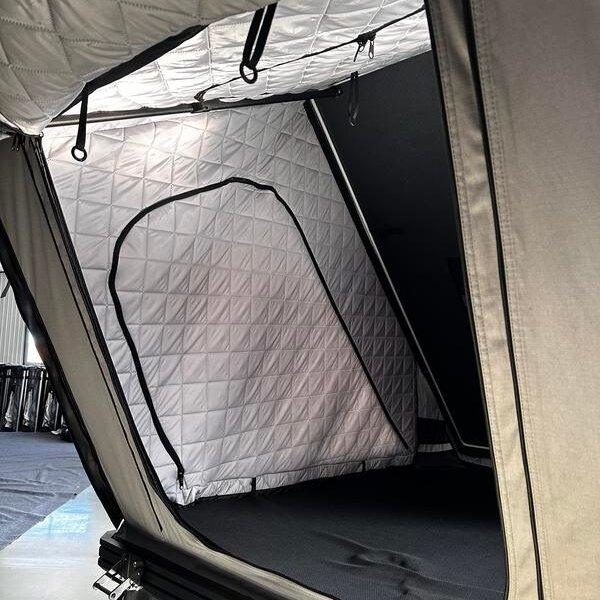
When submitting your Tech Pack, demand technical data sheets for all raw materials. The ability to substitute standard components with upgraded hardware—like aviation-grade aluminum frames or verified waterproof rated fabrics—separates a true ODM partner from a basic assembly line. Check a comprehensive roof top tent guide to benchmark standard material specifications against your supplier’s proposals.
How do shipping terms (FOB, CIF, DDP) and containerization affect landed costs?
Shipping terms directly impact your landed cost and logistical liability. FOB (Free On Board) gives buyers control over freight forwarding, while DDP (Delivered Duty Paid) places all shipping, customs, and tariff responsibilities on the factory, offering a hands-off solution for brands lacking dedicated import departments.
Rooftop tents are bulky, heavy freight. Container optimization is a critical engineering challenge. A factory must design packaging that maximizes the internal cube of a container without exceeding weight limits or risking transit damage. Poorly packed containers lead to crushed ABS shells and bent aluminum extrusions upon arrival.
When vetting a supplier, inquire about their logistics partnerships and export experience. A factory accustomed to global export to regions like the US, EU, and AU will provide accurate logistics data upfront, allowing procurement managers to precisely forecast landed margins and manage localized warehousing efficiently.
Conclusion and Procurement Recommendations
Choosing the right rooftop tent OEM factory requires looking beyond unit pricing and assessing the supplier’s engineering infrastructure, quality management systems, and supply chain maturity. The best partner for your brand is one that enforces 100% full-unit inspections, maintains ISO 9001 compliance, and offers scalable MOQs.
Moving forward, never rely solely on a sample unit. Request a full technical feasibility report during the RFQ stage and ensure your chosen factory operates under a documented 6S methodology. By prioritizing quality assurance and material traceability, you protect your brand reputation and ensure long-term profitability.
Partner with Everlead Outdoor for Your OEM Needs
Building a reputable outdoor brand requires a manufacturing partner with proven technical expertise and strict operational controls. Everlead Outdoor is an ISO 9001:2015 certified OEM/ODM partner with over 10 years of dedicated experience in high-volume production of premium camping gear.
We operate under strict 6S methodology and mandate a non-negotiable 100% full-unit in-house inspection for every final unit dispatched globally. From sourcing aviation-grade T6 aluminum to engineering custom proprietary designs, our seasoned production team delivers predictable lead times and reliable quality. Connect directly with our manufacturing specialists today to submit your Tech Pack and start your next project.