Over 60% of listed “manufacturers” on Alibaba and global sourcing platforms are actually trading companies with no direct control over production quality, material sourcing, or engineering timelines. For outdoor brand procurement managers and OEM buyers, confusing a middleman for a factory can result in inconsistent product runs, failed warranties, and compromised structural integrity.
To identify a real rooftop tent manufacturer in China, buyers must verify ISO9001 certifications, request specific OEM/ODM engineering capabilities (like aluminum honeycomb panel stamping), and audit their direct supply chain for critical components like 280G polycotton canvas and YKK zippers.
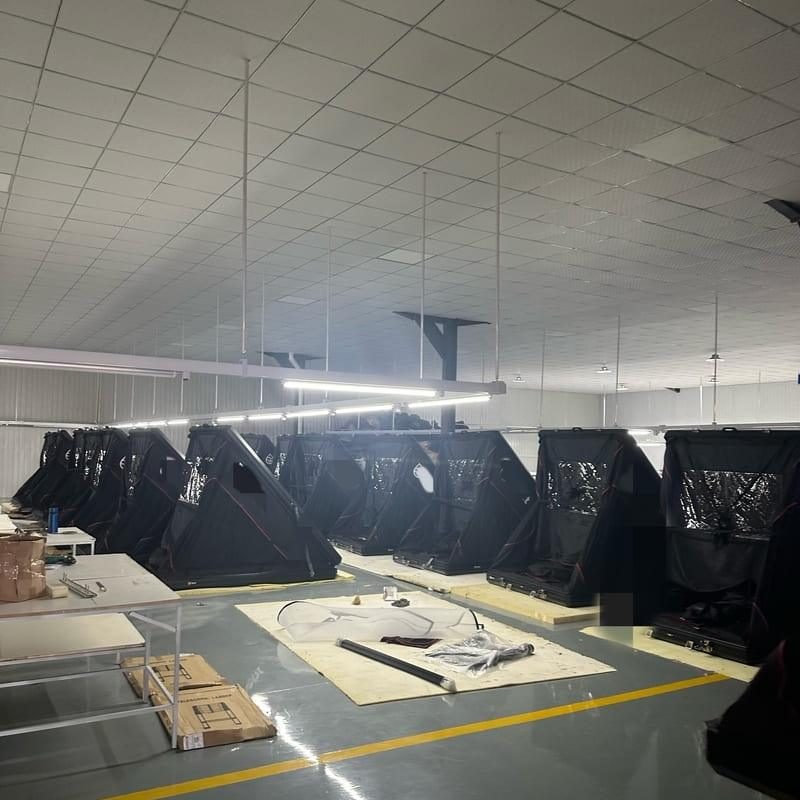
This technical guide outlines the exact procurement verification processes required to separate genuine production facilities from trading companies. By examining their structural testing protocols, minimum order quantities, and material specifications, you can build a resilient, high-quality off-grid supply chain.
Table of Contents
- How can you tell a rooftop tent trading company from a real manufacturer?
- What quality certifications should a genuine RTT factory hold?
- How do real manufacturers source their tent fabric and hardware?
- What is the typical MOQ (Minimum Order Quantity) for an OEM rooftop tent factory?
- How do you verify the structural integrity testing of a Chinese manufacturer?
- What are the common failure points in cheap rooftop tent manufacturing?
- How long is the standard lead time for a custom rooftop tent order?
How can you tell a rooftop tent trading company from a real manufacturer?
A genuine rooftop tent manufacturer possesses in-house R&D teams, physical metal fabrication machinery, and direct control over the assembly line. Trading companies typically rely on outsourced CAD files, refuse live video audits of the production floor, and lack deep technical knowledge of specific material tolerances.
When vetting a supplier, the initial engineering dialogue is the most reliable filter. A trading company will generally agree to any specification without question to secure the deposit. A genuine factory will push back on impossible specifications, offering technical limitations regarding fabric tension, gas strut lifting capacity, or ABS vacuum forming constraints.
For physical verification, require a live video audit specifically targeting the sewing lines and CNC aluminum cutting stations. Middlemen cannot provide spontaneous access to these areas.
| Verification Factor | Trading Company | Genuine Manufacturer |
| Engineering Support | Forwards questions to a third party; delayed technical responses. | In-house CAD/SolidWorks engineers; immediate feasibility feedback. |
| Facility Access | Refuses live video calls; only provides staged showroom photos. | Welcomes unannounced live video tours of the assembly floor. |
| Product Customization | Limited to logo printing on existing white-label designs. | Capable of custom shell tooling and unique floor plan extrusions. |
What quality certifications should a genuine RTT factory hold?
A verifiable rooftop tent manufacturer should hold an active ISO9001:2015 certification for quality management systems. Furthermore, their materials should possess independent testing reports for CPAI-84 (flammability), UV resistance (UPF 50+), and hydrostatic head tests proving at least a 3000mm waterproof rating.
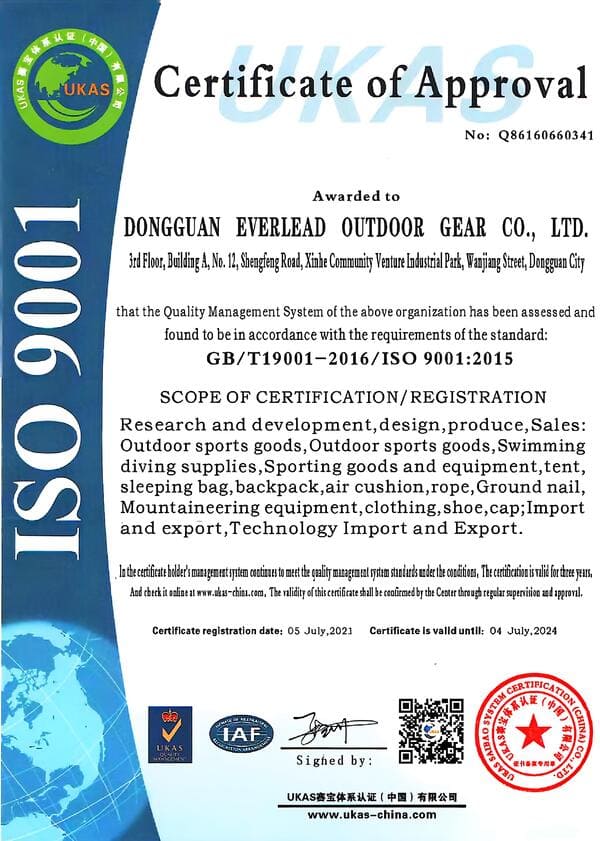
Do not accept a simple “CE” mark as proof of manufacturing excellence, as this is often self-certified for basic safety. Request specific SGS or TUV Rheinland testing reports for the raw materials.
The ISO9001 certification must be registered under the exact company name you are sending payment to. If the company name on the ISO certificate differs from the company on the Proforma Invoice, you are likely dealing with a trading company operating under an umbrella license.
How do real manufacturers source their tent fabric and hardware?
True OEM manufacturers maintain direct, long-term contracts with specialized textile mills and hardware brands. They do not buy off-the-market scrap fabric; they custom-order 280G to 320G ripstop polycotton canvas and specify SBS or YKK zippers with anti-corrosion marine-grade treatments.
Fabric sourcing is a critical differentiator. High-end manufacturers require their textile partners to apply specific polyurethane (PU) back-coatings to achieve a 3000mm waterproof rating without compromising the fabric’s breathability. Seam sealing is performed using specialized heat-taping machines calibrated to the exact thickness of the canvas.
Hardware procurement is equally strict. A true factory will utilize 304 stainless steel for all external hinges and fasteners to prevent oxidation. Floor panels are constructed from lightweight, high-strength aluminum honeycomb rather than cheap, heavy extruded aluminum profiles or low-grade plywood.
What is the typical MOQ (Minimum Order Quantity) for an OEM rooftop tent factory?
The standard MOQ for a genuine rooftop tent manufacturer ranges from 20 to 50 units for existing designs, scaling up to 100+ units for full custom OEM projects. Extremely low MOQs (1 to 5 units) often indicate a trading company selling excess retail stock.
Factories require these MOQs because their raw material suppliers—such as textile mills and aluminum foundries—enforce their own minimum run lengths. For example, custom dyeing a 280G polycotton canvas to a specific Pantone color requires a minimum batch size that typically yields enough fabric for 50 to 100 tents.
From a procurement standpoint, these MOQs align with container shipping logistics.
- 20ft Container: Holds approximately 30–45 hard shell tents (depending on profile).
- 40ft HQ Container: Holds approximately 70–100 hard shell tents.
- Custom Tooling: If new ABS molds or aluminum extrusion dies are required, the manufacturer may require a commitment of 200+ units annually to offset the R&D and tooling costs.
How do you verify the structural integrity testing of a Chinese manufacturer?
To verify structural integrity, request documentation on dynamic and static load capacity testing. A real manufacturer will provide data showing their roof tents support 300kg (660 lbs) static loads and endure rigorous vibration testing to simulate off-road washboard terrain.
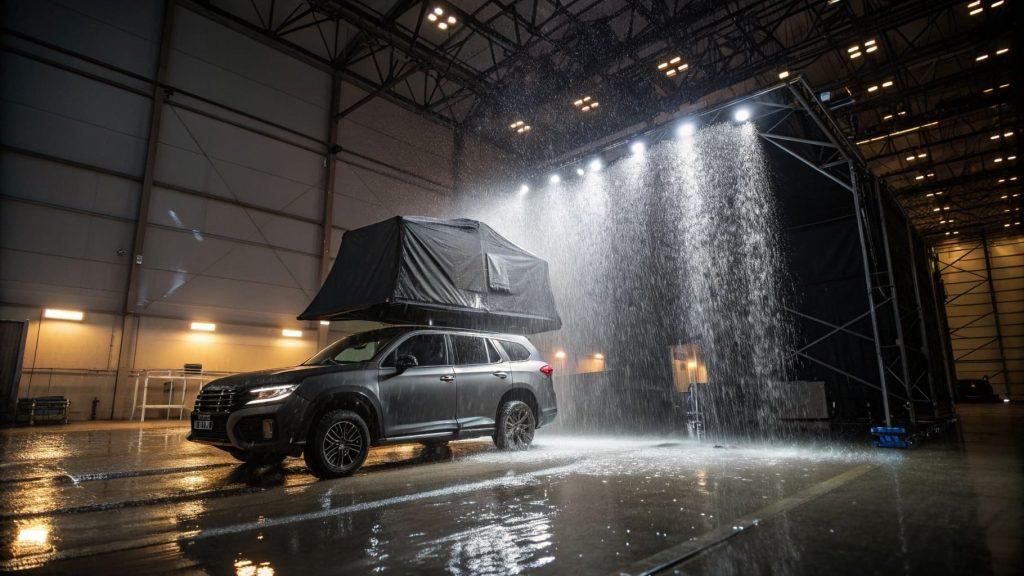
Manufacturers that supply serious overlanding brands utilize specific testing protocols before mass production. Gas struts must be cycle-tested for a minimum of 10,000 openings and closings at various temperature extremes to ensure the seals do not fail in freezing conditions.
Request engineering data on the X-frame or scissor-hinge stress points. The base plate must be tested for dynamic load handling to ensure the mounting tracks do not shear off the vehicle’s roof rack during emergency braking or high-speed off-road impacts.
What are the common failure points in cheap rooftop tent manufacturing?
Cheap manufacturing primarily fails at the waterproofing seams, hinge mechanisms, and shell materials. Inferior seam tape peels under high heat, low-grade ABS plastic degrades and cracks from UV exposure, and untreated zippers corrode rapidly in coastal environments.
Procurement managers must look for these specific cost-cutting measures during the sample evaluation phase.
- Shell Degradation: Un-stabilized fiberglass or thin ABS single-layer shells will warp under direct summer sunlight. Real manufacturers use dual-layer ABS with a reinforced aluminum sub-frame or automotive-grade aluminum.
- Condensation Management: Cheap tents lack anti-condensation mats and proper cross-ventilation geometry, leading to internal mold.
- Hardware Shearing: The use of 201 stainless steel or zinc-plated mild steel on external hinges will result in rust within a single season, eventually seizing the opening mechanism.
How long is the standard lead time for a custom rooftop tent order?
A standard production lead time for a genuine rooftop tent manufacturer is 35 to 45 days for existing models, and 60 to 90 days for new OEM designs requiring custom tooling. Lead times under 15 days strongly suggest you are buying pre-made, unbranded stock from a middleman.
A genuine factory operates on a strict production schedule. Upon receiving the initial deposit, the timeline generally breaks down into distinct phases:
- Days 1–15: Sourcing raw materials (fabric dyeing, aluminum extrusion, gas strut procurement).
- Days 16–30: Metal fabrication, shell molding, and CNC cutting.
- Days 31–40: Sewing, assembly, and waterproofing application.
- Days 41–45: Quality control, final inspection, and export packaging.
If an OEM buyer requires structural modifications, the prototyping and tooling phase will add an additional 30 days to the front end of this timeline to allow for testing and client approval.
Conclusion
Identifying a real rooftop tent manufacturer in China requires looking past polished websites and evaluating the supplier based on hard engineering capabilities and supply chain transparency. A genuine OEM partner will demonstrate deep technical expertise, hold verifiable ISO9001 certifications, and utilize industry-standard components like 280G polycotton, 304 stainless steel hardware, and aluminum honeycomb base panels.
When conducting your commercial investigation, bypass standard sales questions and immediately request structural testing data and a live video audit of the assembly line. By strictly verifying material sourcing and engineering feedback, procurement managers can successfully bypass trading companies and establish a reliable, high-performance manufacturing partnership.