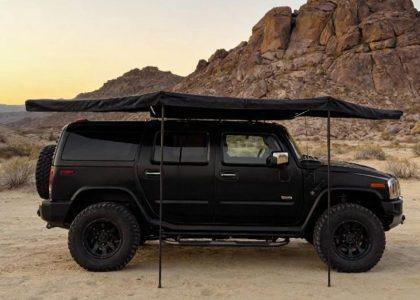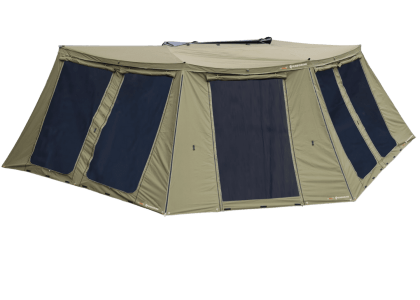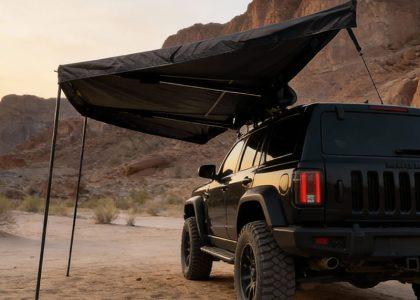
Investing in a vehicle shade system requires knowing exactly what kind of longevity you are buying. A high-quality vehicle awning typically lasts 5 to 10 years, depending heavily on fabric density, frame material, and post-rain maintenance.
This guide breaks down lifespan expectations across different outdoor materials, highlights the primary causes of premature failure, and provides exact maintenance protocols to maximize your awning’s survival in the wild.
Table of Contents
- How many years do awnings last on average?
- How does fabric material affect an awning’s lifespan?
- What frame components determine structural longevity?
- What are the most common causes of premature awning failure?
- How can you extend the life of your vehicle awning?
How many years do awnings last on average?
On average, a vehicle awning lasts between 5 and 10 years. Premium 280G poly-cotton canvas models often exceed 10 years of heavy use, while budget 420D polyester awnings typically degrade, fade, and tear within 2 to 3 seasons of harsh UV exposure.
Lifespan is not a static number; it is a direct result of manufacturing quality and environmental stress. A camper who deploys their shade structure twice a year in mild conditions experiences drastically different longevity than an overlander facing daily sun and wind. Industry data shows that the primary differentiator between a 3-year and a 10-year lifespan is the textile’s resistance to UV degradation.
How does fabric material affect an awning’s lifespan?
Fabric material dictates up to 80% of an awning’s lifespan. Heavy 280G poly-cotton ripstop canvas resists tearing and UV fading for over a decade, whereas standard synthetic fabrics like 420D polyester become brittle and crack after 24 to 36 months of sun exposure.
From our firsthand perspective as an ISO 9001-certified roof top tent manufacturer at Everlead Outdoor, factory UV-chamber testing reveals that lightweight polyester loses 40% of its tensile strength after just one year of simulated high-altitude sunlight. Genuine canvas blends incorporate natural cotton, which swells to seal out moisture while actively venting heat, preventing the textile from baking from the inside out.
What frame components determine structural longevity?
An awning’s structural longevity depends primarily on its pivot hinges and frame thickness. Frames built with T6 aviation aluminum and oversized stainless steel bolts survive decades of off-road vibration, while standard cast aluminum or plastic hinges snap rapidly under 15 mph wind loads.
The fabric only lasts as long as the frame holding it. Wind exerts massive upward force on deployed canopies, meaning the pivot brackets take the brunt of the abuse.
| Component | Budget Awning | Premium Awning | Lifespan Impact |
| Hinges | Plastic or Cast Alloy | T6 Aviation Aluminum | Prevents snapping in high winds |
| Hardware | Zinc-plated | 8mm Stainless Steel | Eliminates highway rust |
| Support Poles | Thin tubular aluminum | Extruded locking profiles | Prevents bending under water weight |
What are the most common causes of premature awning failure?
The most common causes of premature awning failure are structural damage from high winds, mold rot from wet storage, and UV degradation. Neglecting to deploy support legs in 15 mph winds destroys hinges, while storing canvas wet rots seams within weeks.
Field experience consistently shows that buyers who pack away wet gear suffer the highest replacement rates. When a damp awning is sealed inside a heavy PVC travel cover, the trapped moisture creates an active breeding ground for mildew. This fungus physically eats the waterproofing polyurethane (PU) coating and degrades the structural thread stitching.
How can you extend the life of your vehicle awning?
You can extend your awning’s life by drying it completely before storage, cleaning it with non-detergent soap, and always using support poles in windy conditions. Unrolling a wet awning within 48 hours to air dry prevents 90% of mold-related fabric failures.
Routine maintenance requires specific, consistent action. Follow these core steps to protect your investment:
- Air Dry Immediately: Never leave an awning rolled up wet for more than two days.
- Tension Properly: Always angle one leg downward during rain to prevent water from pooling and stretching the canvas.
- Lubricate Hardware: Spray a dry PTFE silicone lubricant on pivot joints every 6 months to prevent binding.
- Inspect Mounts: Check the torque on your L-brackets and hard shell roof top tents mounting channels before every major highway trip to prevent vibration fatigue.
Final Recommendations
A well-engineered vehicle awning lasts between 5 and 10 years, provided you invest in high-grade materials like 280G poly-cotton canvas and T6 aluminum frames. Standard polyester alternatives simply cannot match this longevity in harsh outdoor environments.
By committing to basic maintenance like proper tensioning and strict dry-storage protocols, you guarantee your investment survives the elements. If you are upgrading your overlanding setup, explore a comprehensive roof top tent guide to ensure your entire shelter ecosystem is built to last a lifetime.