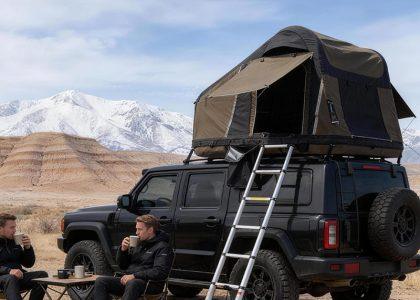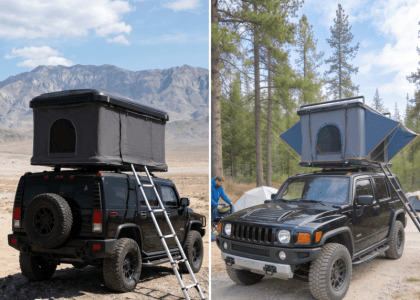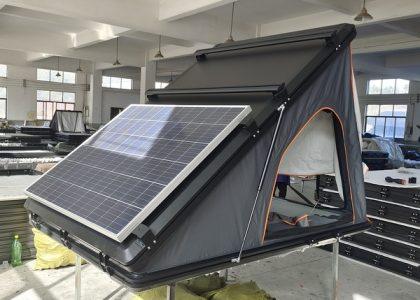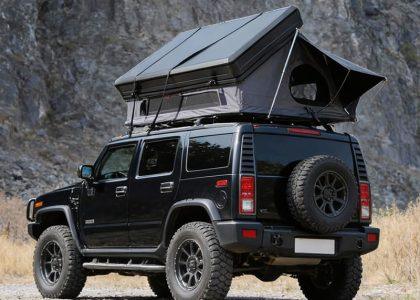
Every hard shell rooftop tent guide on the internet recommends the same four or five models. That’s not the problem. The problem is that none of them explain why a specific tent is right for your situation — because the design type question (wedge vs. pop-up vs. fold-out) matters more than brand, and it goes unanswered in virtually every roundup.
A daily driver who needs a low-profile tent that deploys in 60 seconds has completely different requirements from a couple who base camps for four nights and wants a wide sleeping platform. Both are searching for “best hard shell rooftop tent.” Both will find the same generic list — and one of them will make an expensive mistake.
This guide resolves that. It opens with a design type decision framework, covers shell material differences with manufacturing-level specificity, addresses the ventilation concerns that forum discussions reveal but editorial guides ignore, and ends with multi-year ownership data that launch-day reviews can’t provide.
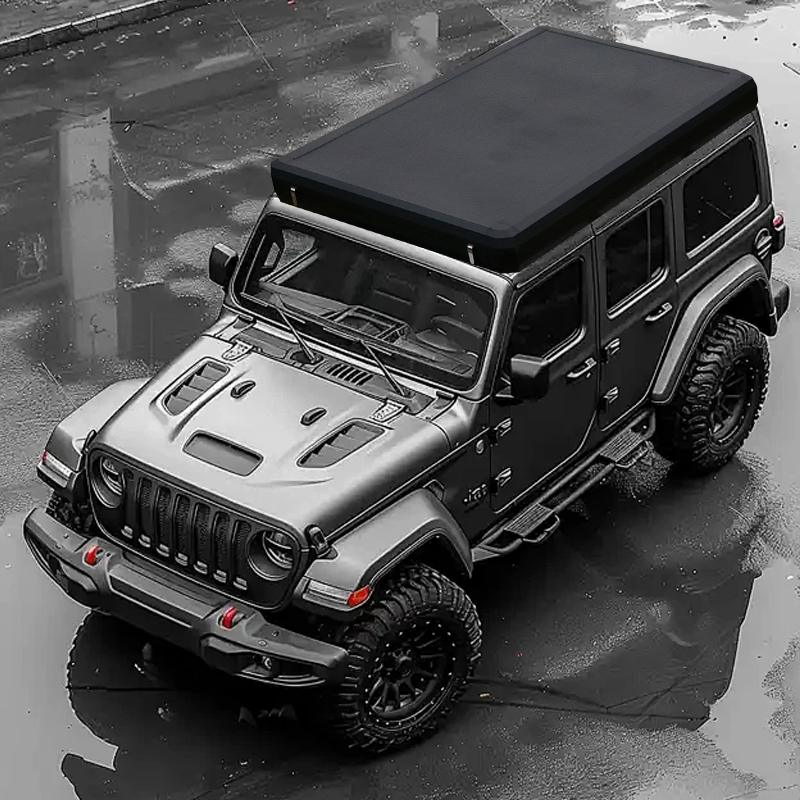
Before You Buy: The Decision That Determines Everything
The most important choice in the hard shell category isn’t brand. It’s design type. Hard shells come in three mechanically distinct configurations — wedge/clamshell, pop-up, and fold-out — and the wrong type will frustrate you regardless of build quality or price. Identify your type first. Then evaluate specific models.
Key Takeaways
- Design type — wedge, pop-up, fold-out — determines interior space and sleeping width more than brand or price. Choose type before choosing model.
- ABS/PC-ABS shells are lighter and more aerodynamic; aluminum shells support cargo rail mounting and offer superior long-term UV durability.
- Ventilation is the most underrated hard shell selection factor — models vary significantly in window count and heat management capability.
- The Roofnest Falcon 3 EVO leads the wedge category; the iKamper Skycamp 3.0 Mini leads fold-out; James Baroud Odyssey leads four-season premium.
- At a 5-year ownership horizon, premium hard shells justify their price through lower maintenance costs, better resale value, and superior gas strut longevity.
- Vehicle weight budget determines which models are even viable — compact SUV owners (65–85 lb tent budget) have fewer than 10 qualifying hard shell options.
1. The Three Hard Shell Design Types — Which One Is Right for You
Before evaluating any specific model, understanding the mechanical difference between hard shell design types determines which tent category applies to your situation. Buyers who skip this step often end up with a tent that’s well-built but wrong for their use case.
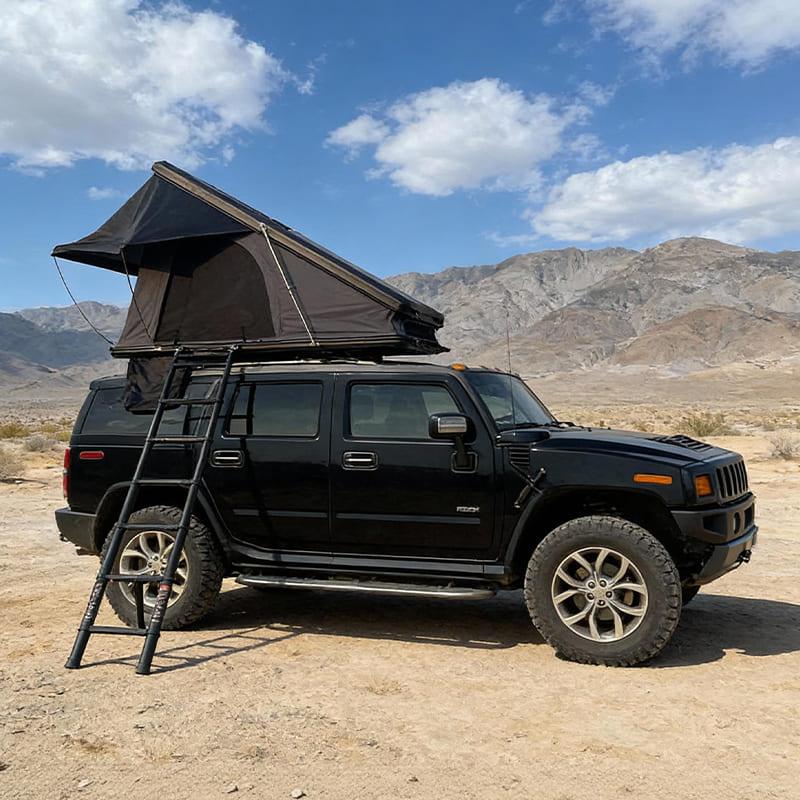
Wedge / Clamshell
The tent opens on a single hinge, with one panel lifting while the other remains flat — creating a wedge or A-frame interior geometry. The result is the lowest packed profile of any hard shell design (typically 8–10 inches) and the fastest deployment (30–60 seconds). The trade-off: the A-frame interior means less usable headroom at the sides, and the sleeping area is constrained to the shell’s footprint.
Best for: Daily drivers who prioritize aerodynamics and fuel economy. Frequent movers who deploy and pack down multiple times per week. Buyers where vehicle load ratings are tight and packed weight matters.
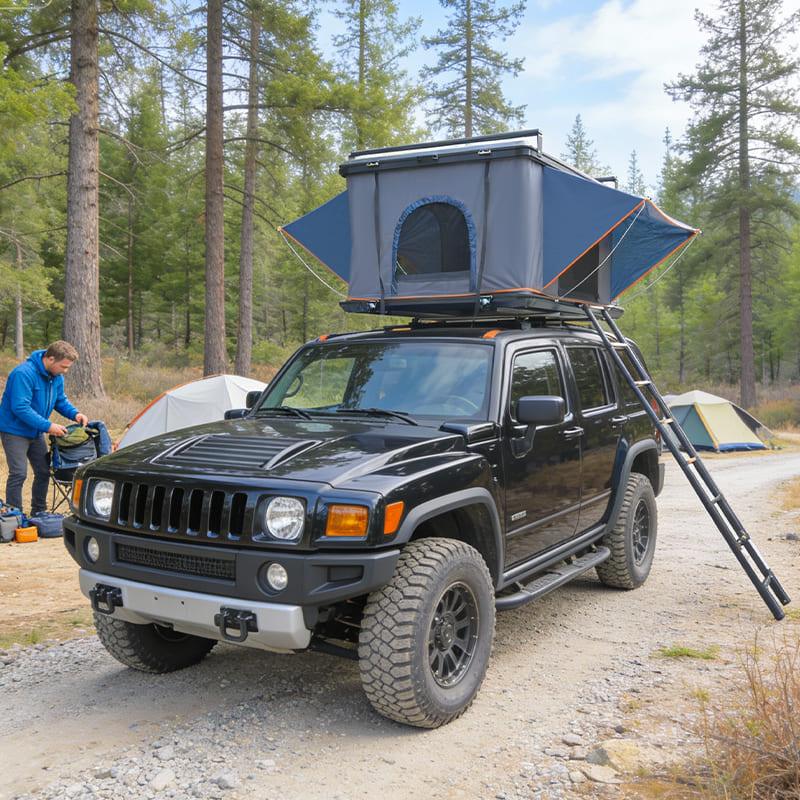
Pop-Up
The top panel lifts vertically on all four sides, creating a box-shaped interior with consistent headroom across the full sleeping platform. Superior livability vs. wedge designs — you can sit upright anywhere in the tent, not just at the peak. Packed height is slightly higher than wedge designs (10–14 inches). Setup remains fast at 60–90 seconds.
Best for: Buyers who spend multiple nights per site and prioritize in-tent comfort. Taller sleepers who find A-frame geometry limiting. Buyers who want to sit up, read, or change clothes comfortably.
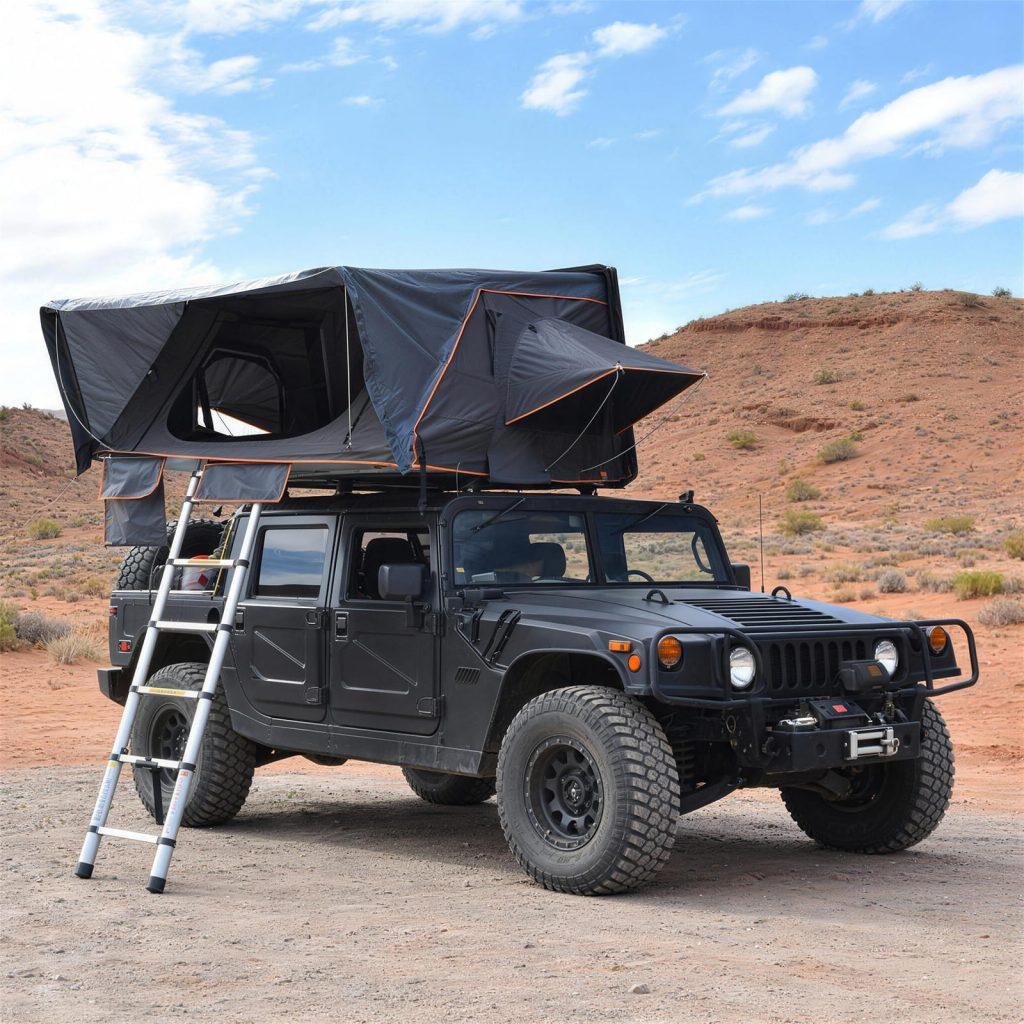
Fold-Out Hard Shell
A rigid outer shell that opens to reveal a fold-out fabric interior extending significantly beyond the shell’s footprint — delivering a sleeping area larger than the packed dimensions suggest. Combines hard shell deployment speed (2–3 minutes) with a sleeping platform closer to soft shell dimensions. Heavier than wedge and pop-up designs at equivalent footprints.
Best for: Couples who need more sleeping width (60″+) without accepting soft shell setup time. Buyers who move camp every 1–2 days but want genuine interior space.
Design Type Comparison
| Design | Packed Height | Deployed Width | Setup Time | Headroom | Best For |
|---|---|---|---|---|---|
| Wedge / Clamshell | 8–10 inches | = Shell width | 30–60 sec | A-frame (varies) | Aerodynamics, daily drivers |
| Pop-Up | 10–14 inches | = Shell width | 60–90 sec | Consistent / full box | Comfort, multi-night stays |
| Fold-Out Hard Shell | 9–12 inches | Extends beyond shell | 2–3 min | A-frame extended | Width + speed compromise |
Still deciding between hard shell and soft shell entirely? Our hard shell vs soft shell roof top tent comparison covers the full trade-off analysis — including aerodynamics, interior space, and long-term maintenance costs — before you commit to either category.
2. Quick Picks — Best Hard Shell Rooftop Tent by Category
For buyers who want the direct answer before reading further:
| Category | Top Pick | Price | Why It Wins |
|---|---|---|---|
| Best Overall | Roofnest Falcon 3 EVO | ~$3,595 | Best aerodynamics, lowest drag profile, lifetime structural warranty, spacious for its footprint |
| Best Wedge / Clamshell | Roofnest Falcon 3 EVO | ~$3,595 | Class-leading packed profile; Colorado-built; best warranty program in the category |
| Best Fold-Out Hard Shell | iKamper Skycamp 3.0 Mini | ~$3,299 | Proven 5+ year track record; fits vehicles from Mini Cooper up; 2.5″ memory foam mattress |
| Best Four-Season | James Baroud Odyssey | ~$4,200+ | French-manufactured; 3.5″ mattress; best cold-weather ventilation design; 8+ year owner reports |
| Best Budget | OVS Mamba 3 | ~$1,299 | Genuine ABS hard shell at entry price; functional 2-inch mattress; viable for occasional use |
| Best Lightweight | Go Fast Campers Platform | ~$1,850 | 85 lbs for a hard shell platform; purpose-built for weight-constrained vehicles |
3. Shell Material Compared — ABS/PC-ABS vs. Aluminum vs. Fiberglass
This is the selection factor that separates informed buyers from buyers who discover material implications after purchase. Shell material affects weight, aerodynamics, long-term durability, cargo mounting capability, and thermal behavior — and the choice is not simply “cheaper material vs. premium material.”
PC-ABS / ABS Plastic
PC-ABS (polycarbonate-ABS blend) is the material choice of the Roofnest Falcon 3 EVO and several other premium wedge designs. The choice is deliberate, not a cost compromise.
What PC-ABS delivers:
- Natural flexibility that absorbs impact without cracking — important for off-road vibration
- Inherent weather resistance without surface coatings that can chip or peel
- Lower weight than aluminum at equivalent structural integrity for this application
- Excellent aerodynamic surface when formed into smooth compound curves
What PC-ABS sacrifices:
- UV resistance degrades over 8–10 years without protective treatment — ABS can yellow and become brittle
- Cannot structurally support T-slot cargo rails for on-shell gear mounting
- Lower perceived premium feel vs. brushed aluminum — affects resale psychology
Aluminum
Aluminum hard shells (James Baroud Odyssey, Trustmade Triangle, many Chinese-manufactured options) provide a different performance profile.
What aluminum delivers:
- Anodized finish is essentially permanent — no UV degradation, no color shift over decades
- Structural rigidity supports integrated T-slot rails for on-shell gear and solar mounting
- Higher perceived quality — stronger resale value signal
- Better thermal mass in cold weather — slower to reach interior temperature
What aluminum sacrifices:
- Heavier at equivalent size — often 15–30 lbs more than PC-ABS equivalents
- Conducts heat and cold — aluminum shell in direct sun heats the interior faster; in cold weather, cold aluminum conducts into the sleeping space
- Higher manufacturing cost — typically $500–$1,000 price premium vs. PC-ABS at equivalent quality tier
Fiberglass
A middle-ground material found in some mid-range options. Better impact resistance than ABS, better thermal properties than aluminum, but heavier than either and harder to repair if damaged. Less common in the current market.
| Factor | PC-ABS | Aluminum | Fiberglass |
|---|---|---|---|
| Weight | Lightest | Heaviest | Middle |
| UV durability | Moderate (degrades ~8–10 yrs) | Excellent (permanent anodize) | Good |
| Cargo rail support | No | Yes | Sometimes |
| Thermal performance | Neutral | Conducts (worse in extremes) | Best |
| Impact resistance | Good (flexible) | Moderate (dents) | Excellent |
| Price premium | Base | +$500–$1,000 | Middle |
| Long-term resale | Moderate | Strong | Moderate |
Choose aluminum if: You plan to mount gear, solar panels, or accessories on the shell exterior. You’re buying for a 10+ year horizon where UV durability matters. You camp in moderate temperatures where thermal conductivity isn’t a problem.
Choose PC-ABS if: Weight budget is a constraint. You camp in temperature extremes (hot or cold) where thermal neutrality is an advantage. You prioritize aerodynamics over cargo rail capability.
4. Ventilation and Heat Management — The Factor No Guide Takes Seriously
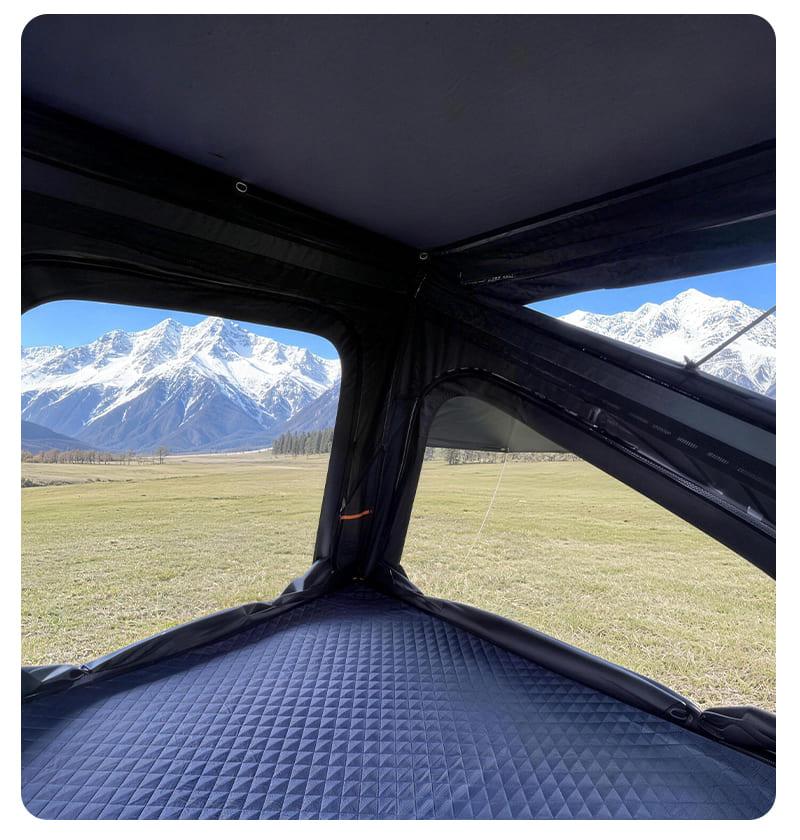
Hard shell ventilation is the most discussed concern in RTT forums and the least addressed factor in editorial buying guides. The problem is structural: a sealed hard shell is a more enclosed environment than a soft shell with fabric walls, and without adequate ventilation design, heat and condensation accumulate in ways that significantly degrade the sleeping experience.
Why Hard Shells Heat Up More Than Buyers Expect
A dark-colored hard shell in direct summer sun can reach interior temperatures 20–30°F above ambient within 30 minutes of closing. This is physics, not a product defect — dark surfaces absorb solar radiation, the rigid shell traps it, and limited airflow means heat has nowhere to dissipate. Light-colored shell options mitigate this significantly. Darker options require ventilation at all times.
How to Evaluate Ventilation Before Buying
Window count and placement: Minimum standard is two operable windows on opposing sides of the tent — required for cross-ventilation. Tents with a single window or windows only on one plane create dead air regardless of how much they’re opened.
Mesh coverage ratio: Windows with full mesh inserts allow ventilation while closed to rain. Windows that are either open or closed (no intermediate mesh position) force a choice between airflow and weather protection.
Dedicated ventilation ports: Some premium models include passive ventilation vents separate from windows — allowing airflow even with windows completely closed in rain. This is a meaningful design feature for humid or rainy climate campers.
HVAC / climate control port: A dedicated port for a portable A/C unit or diesel heater allows active climate management. Increasingly common in premium and mid-range models.
Ventilation Comparison Across Top Hard Shell Models
| Model | Windows | Mesh Coverage | Dedicated Vents | HVAC Port | Hot Climate | Cold Climate |
|---|---|---|---|---|---|---|
| Roofnest Falcon 3 EVO | 3 | Full mesh | No | No | Good | Good |
| iKamper Skycamp 3.0 Mini | 3 | Partial | No | No | Moderate | Good |
| James Baroud Odyssey | 4 | Full mesh | Yes | Yes | Excellent | Excellent |
| Thule Basin | 2 | Full mesh | No | No | Moderate | Moderate |
| OVS Mamba 3 | 2 | Partial | No | No | Basic | Basic |
| Go Fast Campers Platform | Open design | N/A | N/A | N/A | Excellent | Poor |
Condensation Management
Condensation inside hard shells is caused by the temperature differential between the warm interior (body heat, breath) and the cold shell surface. It’s not a defect — it’s thermodynamics. Manageable with the right approach:
- Keep at least one vent cracked even in cold weather — airflow is the primary condensation solution
- Anti-condensation mat under the tent base — prevents cold shell conducting through to the interior floor surface
- Wipe interior shell surfaces before closing — moisture left on interior surfaces migrates to bedding during transport
- Tents with interior fabric liners (like the James Baroud) create a thermal break between shell and sleeping space — significantly reducing condensation vs. bare-shell interiors
5. In-Depth Reviews — The Top Hard Shell Rooftop Tents
Roofnest Falcon 3 EVO (~$3,595) — Best Overall Wedge
The Falcon 3 EVO’s defining characteristic is its packed profile — lower and more aerodynamically optimized than any other production wedge hard shell. The PC-ABS shell forms compound curves that actively manage airflow rather than just sitting as a blunt obstruction on the roof.
Interior space expands significantly beyond what the packed footprint suggests — the innovative U-bar and expanded canopy design creates usable standing and dressing space at the tent sides. The 2.5-inch high-density foam mattress is comfortable for most sleepers on 1–4 night trips.
Warranty: Lifetime structural warranty. Roofnest’s Colorado-based customer service has a consistently strong reputation in multi-year owner reports — parts are available domestically with reasonable response times.
- Best for: Daily drivers, frequent movers, highway road trippers
- Not ideal for: Buyers who camp in hot sun and want maximum ventilation; families needing more than 48″ sleeping width
iKamper Skycamp 3.0 Mini (~$3,299) — Best Fold-Out Hard Shell
The Mini’s fold-out mechanism deploys the sleeping surface beyond the shell’s footprint — providing 48″ × 96″ of sleeping area from a shell that packs to 54″ × 47″. This is the practical advantage that distinguishes fold-out designs: more sleeping space per inch of roof footprint than any wedge.
Korean manufacturing quality is consistently high — tolerances are tight, hinge mechanisms remain smooth after multiple seasons, and the 2.5-inch memory foam mattress holds its shape over years of use. The Mini fits vehicles with dynamic roof ratings as low as 165 lbs, making it compatible with more platforms than larger fold-out designs.
Weight note: At 120 lbs, the Mini is heavier than most wedge designs at equivalent sleeping capacity. This matters on vehicles with tight load budgets — verify your calculation before ordering.
- Best for: Couples who move camp every 1–2 days and want fold-out space; vehicles from compact SUVs upward with 165+ lb dynamic ratings
- Not ideal for: Buyers wanting maximum aerodynamics; vehicles with load budgets under 100 lbs after rack deduction
James Baroud Odyssey (~$4,200+) — Best Four-Season Premium
The Odyssey is the tent that long-term overlanders consistently recommend when the conversation turns to four-season use and decade-long ownership. French-manufactured aluminum construction with a 3.5-inch mattress, the best included mattress of any production hard shell RTT. Four full-mesh windows provide genuine cross-ventilation. Dedicated climate ports allow heater or A/C unit integration.
Multi-year owners (8+ years documented in forums) report virtually no structural degradation — hinge mechanisms remain tight, aluminum surface shows weathering but no UV degradation, mattress holds shape without compression.
The price is significant. At $4,200+, it’s 30–40% more expensive than the Falcon 3 EVO. The justification is build longevity and cold-weather capability — for a buyer camping 30+ nights annually in variable conditions, the Odyssey is the defensible long-term choice.
- Best for: Year-round overlanders; cold weather specialists; buyers with a 10+ year ownership horizon
- Not ideal for: Buyers camping fewer than 20 nights per year; compact SUV owners (190 lbs — exceeds most compact vehicle budgets)
Thule Basin (~$2,495) — Best Mid-Range Pop-Up
The Basin’s pop-up design creates box-shaped interior geometry with consistent headroom across the full sleeping platform — a meaningful comfort advantage over wedge designs for taller sleepers or anyone who spends time reading or changing clothes in the tent. The 3-inch high-density foam mattress is one of the better included mattresses at this price tier.
Thule’s 5-year warranty and large brand infrastructure (established domestic service network, straightforward warranty claims) make the Basin a lower-risk purchase than smaller brands at equivalent prices. The trade-off vs. wedge designs: higher packed profile and slightly more aerodynamic drag.
- Best for: Couples who base camp and want genuine interior comfort; buyers who value established brand warranty infrastructure
- Not ideal for: Daily drivers prioritizing aerodynamics; compact SUV owners (132 lbs may exceed load budget)
OVS Mamba 3 (~$1,299) — Best Budget Hard Shell
At $1,299, the Mamba 3 is one of the few genuine hard shell options under $1,500. The ABS shell is functional — deployment is consistent and the mechanism holds up for occasional use. The 2-inch foam mattress is the primary quality compromise vs. mid-range options, noticeable after the second consecutive night.
Warranty support is basic (1 year, limited domestic parts availability) and hardware tolerances are looser than premium options — the latching mechanism requires more deliberate operation and shows wear faster.
Right for: First-time RTT buyers testing the format before a larger investment. Buyers camping 10–15 nights per year in mild conditions. A legitimate entry point — not a permanent solution for serious overlanders.
- Not ideal for: Frequent use (30+ nights/year); cold weather; buyers who want the tent to last 5+ years with minimal maintenance
Go Fast Campers Platform (~$1,850) — Best Lightweight Option
The GFC Platform is a design outlier — an open-sided hard shell platform that prioritizes weight (85 lbs) and airflow over weather enclosure. The fabric walls are removable, making it the best-ventilated hard shell option on the market by a significant margin. In hot climates, nothing else compares.
The trade-off is weather exposure — the GFC Platform is genuinely not suitable for cold, rainy, or windy conditions without supplementary sheltering. It’s purpose-built for dry, warm climate camping where ventilation matters and weight budgets are tight.
- Best for: Desert and summer camping; weight-constrained compact vehicles; buyers in consistently warm, dry climates
- Not ideal for: Cold weather, rain, or wind; buyers who camp in variable conditions
6. Budget Tier Analysis — What You Actually Get at Each Price Point
Price differences in the hard shell category translate to specific, identifiable differences in components — not vague “quality” improvements.
| Tier | Price Range | Shell Quality | Mattress | Hardware | Warranty | Best For |
|---|---|---|---|---|---|---|
| Entry | Under $1,500 | ABS, basic formation | 1.5–2 inches standard foam | Functional; looser tolerances | 1 year, limited | Testing RTT lifestyle; under 15 nights/year |
| Mid-Range | $1,500–$3,000 | PC-ABS or aluminum; better forming | 2–2.5 inches; higher density | Tighter; longer service life | 2–3 years | Most buyers; 15–30 nights/year |
| Premium | $3,000–$5,000+ | Premium PC-ABS or aluminum | 2.5–3.5 inches; memory foam | Best in class | 3 years to lifetime | Year-round users; 30+ nights/year |
If you’re still building your full budget picture — including rack costs, fuel penalty, and accessories — the roof top tent buying guide walks through total cost of ownership across all tent types and price tiers.
5-Year Cost of Ownership Comparison
| Component | Entry ($1,299) | Mid-Range ($2,795) | Premium ($4,200) |
|---|---|---|---|
| Purchase price | $1,299 | $2,795 | $4,200 |
| Gas strut replacement (yrs 3–4) | $80–$150 | $60–$100 | Unlikely needed |
| Mattress topper (comfort upgrade) | $60–$80 | $0–$40 | $0 |
| Weatherproofing maintenance | $40–$80 | $20–$40 | $0–$20 |
| Resale value (yr 5) | -$800 | -$1,500 | -$2,000 |
| Net 5-year cost | ~$679–$809 | ~$1,415–$1,475 | ~$2,220–$2,270 |
The gap between entry and mid-range is significant in per-dollar value delivered. The gap between mid-range and premium is narrower at the 5-year horizon — the premium tent costs roughly $800 more net over five years while delivering meaningfully better sleep quality, weather performance, and user experience throughout.
7. Vehicle Compatibility — Weight Budgets for Popular Platforms
Hard shell tents range from 85 lbs (Go Fast Campers Platform) to 190 lbs (James Baroud Odyssey). The right tent for your camping style may not be the right tent for your vehicle — verifying this before purchase prevents the most expensive common buying mistake.
| Vehicle | Dynamic Rating | Rack Weight | Tent Budget | Recommended Hard Shell |
|---|---|---|---|---|
| Toyota RAV4 (2019+) | 100 lbs | 32 lbs | ~68 lbs | Go Fast Campers Platform (85 lbs, marginal) |
| Toyota 4Runner (2010+) | 165 lbs | 40 lbs | ~125 lbs | iKamper Skycamp Mini (120 lbs) ✅ |
| Ford Bronco (2021+) | 150 lbs | 35 lbs | ~115 lbs | Roofnest Condor 2 (118 lbs) ✅ |
| Jeep Wrangler JL | 330 lbs | 48 lbs | ~282 lbs | Any model — unconstrained |
| Land Rover Defender | 330 lbs | 50 lbs | ~280 lbs | James Baroud Odyssey (190 lbs) ✅ |
| Subaru Outback (2020+) | 176 lbs | 35 lbs | ~141 lbs | Thule Basin (132 lbs) ✅ |
For buyers on compact or mid-size SUVs where weight budget is the binding constraint, see our dedicated best rooftop tent for SUV guide — it maps specific hard shell models to popular platforms with vehicle-by-vehicle weight calculations already done.
The fold-out weight penalty: The iKamper Skycamp 3.0 Mini weighs 120 lbs vs. the Roofnest Falcon 3 EVO at 155 lbs for comparable sleeping capacity. On a 4Runner with a 125 lb tent budget, the Mini is viable — the Falcon 3 EVO is not. Design type choice and vehicle load budget are directly linked.
8. Long-Term Ownership — What Multi-Year Owners Actually Report
Most RTT reviews are written after 6–18 months of use. The picture looks different at year 3, 5, and 8 — and for a $3,000–$5,000 investment, that longer horizon matters.
Component Longevity by Type
Gas struts: The mechanism that assists lifting the shell. On entry-level tents, gas struts typically weaken noticeably at 2–4 years of regular use — the shell becomes harder to open and doesn’t hold position as firmly. On mid-range and premium tents, quality struts last 5–8 years. Replacement cost: $60–$150 depending on brand parts availability.
Latch and hinge hardware: Entry-level tents show latch slop (imprecise, rattly closure) within 2 seasons of regular use. Mid-range and premium hardware retains tight tolerance for 5+ years. Hinge pivot points on quality aluminum tents are essentially indefinitely durable.
Shell surface: PC-ABS shells in direct UV exposure show minor yellowing at 7–10 years — cosmetic but real. Aluminum anodized shells show weathering (minor oxidation marks) but no structural or color degradation. Fiberglass is intermediate.
Mattress: Standard foam compresses noticeably at 4–6 years of 30+ nights/year use. Memory foam holds shape significantly longer. Entry-level foam mattresses often need replacement at year 3–4 for regular users.
Brand Warranty and Service Track Record
| Brand | Warranty Length | Parts Availability | Service Response | Owner Rating (forum consensus) |
|---|---|---|---|---|
| Roofnest | Lifetime structural | Excellent (Colorado-based) | Fast | ⭐⭐⭐⭐⭐ |
| iKamper | 3 years | Good (US distributor) | Moderate | ⭐⭐⭐⭐ |
| James Baroud | 5 years | Good (US distributors) | Variable | ⭐⭐⭐⭐ |
| Thule | 5 years | Excellent (large brand) | Fast | ⭐⭐⭐⭐ |
| OVS | 1 year | Moderate | Variable | ⭐⭐⭐ |
| Go Fast Campers | 3 years | Good (Montana-based) | Good | ⭐⭐⭐⭐ |
What to expect at each ownership milestone:
- Year 1: No issues expected regardless of brand. All mechanisms function as delivered.
- Year 3: Entry-level gas struts show weakening. Budget brand latch hardware develops slop. Mid-range and premium tents: minimal change.
- Year 5: Entry-level foam mattresses need replacement. ABS shells show first UV hints. Premium tents: essentially unchanged.
- Year 8+: Only premium brands (Roofnest, James Baroud, iKamper) have substantial documented multi-year owner populations. Reports consistently describe tents “still performing like new” with normal maintenance.
Final Word
The hard shell category has genuine quality options at every price tier — the challenge is matching design type and material to your specific situation before evaluating brands.
If you’re a daily driver or frequent mover who values aerodynamics and fast deployment: the Roofnest Falcon 3 EVO is the clear leader. If you need fold-out sleeping width without accepting soft shell setup time: the iKamper Skycamp 3.0 Mini is the proven choice. If you camp year-round in demanding conditions and want a tent you won’t replace in a decade: the James Baroud Odyssey earns its premium.
Everything else — brand, color, accessories — comes after those decisions, not before.
For a broader view of the rooftop tent market beyond the hard shell category — including soft shell comparisons, vehicle compatibility, and the complete buying framework — our roof top tent guide covers the full decision from first principles.
About Everlead Outdoor
Many of the hard shell tents in this guide share the same supply chain origin: OEM manufacturing in China, where the majority of the world’s rooftop tents are produced — including those sold under well-known Western brand names.
Everlead Outdoor is one of those manufacturers. With over 10 years of experience producing hard shell and soft shell rooftop tents for brands across the US, Europe, and Australia, we bring factory-level knowledge to every product we build — the same knowledge that informed the material and design analysis in this guide.
Every unit ships after a 100% full-unit quality inspection. OEM and ODM support is available from a minimum order of one piece, making it accessible for emerging brands and established buyers alike.
If you’re sourcing rooftop tents for a brand or evaluating a manufacturing partner, contact us to discuss your requirements.
Frequently Asked Questions
What is the best hard shell rooftop tent for a compact SUV?
The Go Fast Campers Platform at 85 lbs is the lightest viable hard shell option and fits within most compact SUV budgets after rack deduction (typically 60–68 lbs). For vehicles with a slightly higher budget (around 100 lbs), the Roofnest Condor 2 at 118 lbs may be marginal. Most buyers on truly constrained compact platforms should consider a hitch-mounted tent system rather than accepting a roof-mounted tent that exceeds safe dynamic limits.
Is ABS or aluminum better for a hard shell rooftop tent shell?
Neither is universally better — they serve different priorities. Choose aluminum if you plan to mount gear or solar on the shell exterior, prioritize long-term UV durability, or want the strongest resale signal. Choose PC-ABS if weight budget is a constraint, if you camp in temperature extremes where thermal neutrality matters, or if you want the aerodynamic advantages of compound-curve forming.
Which hard shell rooftop tent has the best ventilation for hot weather?
The Go Fast Campers Platform — its open-sided design provides ventilation that no enclosed hard shell can match. Among conventional enclosed hard shells, the James Baroud Odyssey leads with four full-mesh windows, dedicated passive vents, and HVAC port integration. The Roofnest Falcon 3 EVO performs well at moderate temperatures. Avoid dark-colored hard shells in consistently hot climates regardless of model.
How long do hard shell rooftop tents last with regular use?
Premium hard shells (iKamper, Roofnest, James Baroud) have documented 8–10+ year service lives with normal maintenance. Mid-range tents typically deliver 5–7 years before meaningful component degradation (gas struts, mattress). Entry-level tents show noticeable hardware wear at 2–4 years of regular use (30+ nights/year). The 5-year net cost gap between entry and premium is narrower than the sticker price difference suggests.
What is the difference between a wedge and a pop-up hard shell rooftop tent?
A wedge hard shell opens on a single hinge creating an A-frame interior — lowest packed profile, fastest deployment, best aerodynamics, but sloped headroom at tent sides. A pop-up hard shell lifts its top panel vertically, creating a box-shaped interior with consistent standing headroom across the full sleeping platform. Wedge suits frequent movers and daily drivers; pop-up suits buyers who prioritize in-tent comfort for multi-night stays.
Can I mount gear on top of a hard shell rooftop tent?
Yes, on aluminum-shell models that include integrated T-slot rails — these can support lightweight gear, solar panels, or small accessories rated to the rails’ capacity (typically 20–50 lbs). PC-ABS shells generally cannot support integrated cargo rails and are not rated for on-shell gear mounting. Check the specific model’s specification — not all aluminum shells include rails, and rail capacity varies significantly.
Is the James Baroud Odyssey worth the premium price?
For buyers camping 30+ nights per year in variable or cold conditions with a 10+ year ownership horizon — yes. The Odyssey’s 3.5-inch mattress, four-season ventilation design, aluminum construction, and documented multi-year owner satisfaction make the $4,200+ price justifiable when amortized over a decade of use. For buyers camping 10–20 nights annually in mild weather, the Roofnest Falcon 3 EVO or iKamper Skycamp Mini deliver 85% of the experience at 70% of the price.
Which hard shell rooftop tent is best for cold weather and winter camping?
The James Baroud Odyssey leads for serious cold weather — HVAC port compatibility, four-season ventilation design, and documented cold-weather performance from multi-year owners. The iKamper Skycamp 3.0 and Roofnest Falcon 3 EVO are viable for temperatures down to approximately 25°F with appropriate sleeping bags. Below that, a dedicated heater (diesel or catalytic, properly vented) is required regardless of tent model — the tent itself provides minimal insulation; the sleeping system and heat source do the work.