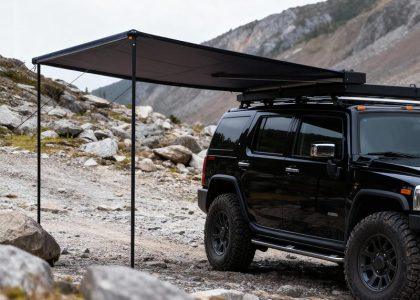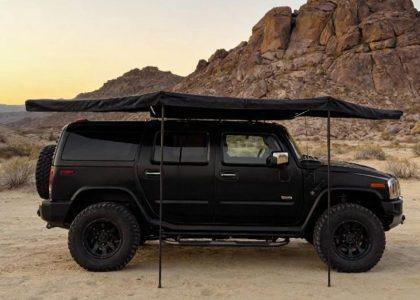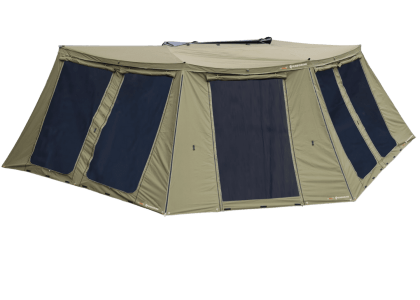
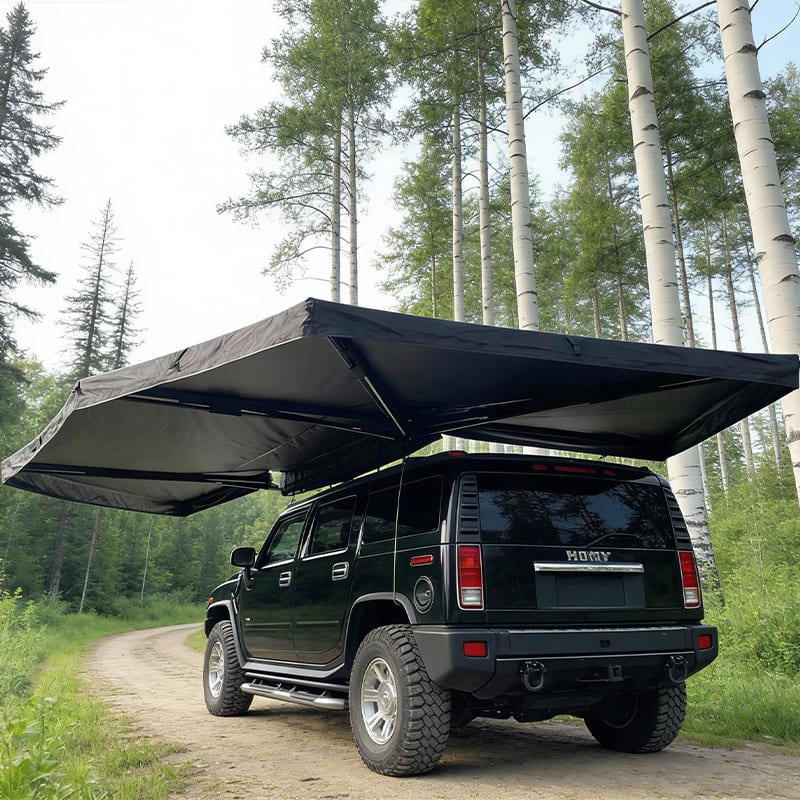
The best car and truck awnings feature free-standing structural framing made from high-tensile T6 aluminum and heavy-duty polycotton canvas with a minimum 3,000mm hydrostatic head rating to survive sudden wind shear and torrential rainfall. Your ultimate choice depends strictly on your vehicle type, your roof rack dynamic load rating, and your typical camping style environment. Selecting an incorrect awning model risks permanently warping your mounting crossbars or snapping structural hinge pins during off-road travel over washboard terrain. For true remote overlanding, prioritizing mechanical shear strength over basic cosmetic appeal ensures your shelter setup survives harsh backcountry expeditions.
Quick-Reference Roundup Winners
- Best Overall 270° Awning: OVS Nomadic 270 — Offers a sprawling 125 sq. ft. freestanding layout with heavy-duty boxed aluminum truss arms.
- Best Value Pull-Out Option: Rhino-Rack Sunseeker 2.5m — Budget-friendly side protection that integrates safely into slim factory utility crossbars.
- Best High-Wind Performer: Bush Company 270 XT — Premium overlanding architecture featuring reinforced dual-axis heavy-cast steel hinge blocks.
- Best Rapid Setup for SUVs: Kammok Crosswing — Spring-loaded deployment mechanism inside a weather-tight metal case setups up in under 10 seconds.
- Best Full-Enclosure Basecamp: 23Zero Peregrine 270 — Utilizes advanced light-suppression canvas fabric and accepts matching zippered drop walls.
- Best Lightweight Minimalist: Front Runner Easy-Out — Low-profile, 27-pound construction designed specifically to maximize vehicle fuel economy.
Critical Pre-Purchase Structural Considerations
Before bolting any new truck awning or car side awning system to your overland rig, you must analyze structural vehicle limits and storage space. Heavy overlanding shelters exert massive torque stress on vehicle roof rails when traveling through bumpy terrain. You must match the physical configuration of your awning to your actual camping style, your exact roof load limitations, and your existing setup, such as a roof top tent.
Review these critical engineering comparisons across the six primary configurations before selecting your system:
| Awning Model | Static Weight | Recommended Rack System | Wind Limit (Freestanding) | Setup Time | Shade Footprint | Shade-per-Dollar Value |
| OVS Nomadic 270 | 72 lbs | Aftermarket Platform | 30 mph | 60 sec | 129 sq. ft. | High ($8.50 per sq. ft.) |
| Rhino-Rack Sunseeker | 26 lbs | Factory Crossbars | 15 mph (Poles Req.) | 180 sec | 55 sq. ft. | High ($6.30 per sq. ft.) |
| Bush Company 270 XT | 84 lbs | Heavy steel bed bars | 40 mph | 45 sec | 118 sq. ft. | Premium ($12.70 per sq. ft.) |
| Kammok Crosswing | 46 lbs | Steel Overland Rack | 25 mph | 10 sec | 60 sq. ft. | Medium ($14.10 per sq. ft.) |
| 23Zero Peregrine 270 | 41 lbs | Reinforced HD Steel | 30 mph | 90 sec | 120 sq. ft. | Premium ($8.33 per sq. ft.) |
| Front Runner Easy-Out | 27 lbs | Front Runner Platform | 15 mph (Poles Req.) | 120 sec | 54 sq. ft. | Medium ($7.00 per sq. ft.) |
Vehicle Compatibility and Roof Load Calculations
Evaluating vehicle compatibility requires strict mathematical precision rather than guesswork. A vehicle roof rail system possesses two distinct load capacities: static and dynamic. The static rating dictates how much weight the parked vehicle can support, which is critical when using a soft shell roof top tent occupied by campers. However, the dynamic rating defines the maximum safe mass allowable while the vehicle is in motion at highway velocities.
To perform accurate roof load calculations, you must add the dry weight of your selected vehicle awning, the total weight of its mounting brackets, and the mass of your roof rack platform. For example, installing a 75-pound 270 degree awning onto a 65-pound platform rack yields a total moving mass of 140 pounds. If your vehicle manufacturer specifies a maximum dynamic load limit of 150 pounds, you possess a narrow safety margin of only 10 pounds. Exceeding this value alters the vehicle’s center of gravity, risking roll instability during emergency avoidance maneuvers or buckling factory crossbar tracks on corrugated off-road trails. Mid-size platforms like a short-bed Tacoma require reinforced bed racks or canopy bars rather than factory utility rails to anchor long cantilever structures safely.
Wind Performance and Real-World Failure Points
Wind speed ratings are frequently misrepresented in outdoor retail listings, leading to critical hardware failure in remote locations. A true freestanding awning can withstand constant winds up to 25 or 35 mph without vertical support poles, provided it utilizes thick T6 aluminum truss frames and reinforced gusseted hinges. However, sudden crosswind gusts generate a severe aerodynamic lifting force, acting like an airplane wing to twist aluminum framing members and bend mounting plates.
Field observations across off-road communities reveal that the primary structural failure point occurs at the pivot hinge assembly. When a high-velocity gust catches an unanchored canopy sheet, the arm operates as a high-leverage lever, fracturing cast-aluminum joints or snapping the securing M8 grade bolts. Fabric pooling under intense precipitation represents another significant vulnerability. If the rain runoff design lacks built-in pitch parameters, rainwater collects in pockets, stretching out the technical fibers of 600D polycotton canvas and permanently twisting horizontal support arms. Deploying vertical telescoping poles and pinning adjustable guylines remains mandatory whenever local forecasts predict unpredictable mountain weather patterns.
Price vs. Performance and Shade-per-Dollar Analysis
Determining whether a premium overlanding awning priced between $800 and $1,500 justifies the expenditure over an entry-level $200 pull-out model requires a strict shade-per-dollar analysis. Cheap utility canopies rely on lightweight polyester sheets and thin aluminum tubes, delivering roughly 50 square feet of shade at an affordable cost efficiency of $4 per square foot. However, these budget options require multiple people for setup, struggle in light breezes, and suffer fast fabric breakdown under sustained UV blast.
Premium freestanding platforms command a higher initial investment but deliver up to 125 square feet of true pole-free shade, yielding a ratio of approximately $10 to $12 per square foot. The increased cost pays directly for high-tolerance manufacturing standards: heavy 280G or 320G polycotton canvas treated with advanced silicone treatments, 4mm gusseted powder-coated steel brackets, and dual-axis brass or stainless steel hinge points. For a casual user executing two beach trips per year, an entry-level pull-out canopy provides acceptable service. Conversely, dedicated overlanders, hunters, and commercial operators require heavy-duty freestanding construction to guarantee operational reliability over a multi-year awning lifespan.
Meticulous Technical Reviews of the Top 8 Vehicle Awnings
OVS Nomadic 270 Awning
The OVS Nomadic 270 is a heavy-duty, passenger-side wraparound shelter designed to provide complete pole-free coverage without a mandatory secondary support configuration.
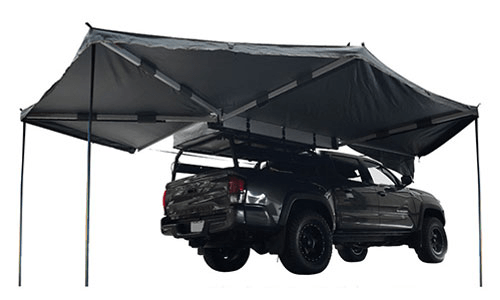
- Verdict: The premier freestanding overlanding canopy for full-size build owners who demand vast physical protection and integrated bracing.
| Evaluation Criteria | Technical Specification Measure |
| Shade Coverage Area | 129 Square Feet |
| Static Structural Weight | 72 Pounds |
| Fabric Denier & Composition | 600D Ripstop Polycotton Canvas Matrix |
| Frame Structural Core | Heavy-Duty Boxed T6 Aluminum Truss Arms |
- Best For: Full-size overland builds, truck bed rack mount arrays, and extended remote off-grid basecamp operations.
- Hidden Limitation: The massive 72-pound frame length generates immense highway wind drag, which significantly drops vehicle fuel economy metrics on long highway transits.
Rhino-Rack Sunseeker 2.5m
The Sunseeker 2.5m is a traditional straight-pull side canopy that extends outwards via a roll-away sheet housed inside a heavy-duty storage bag.
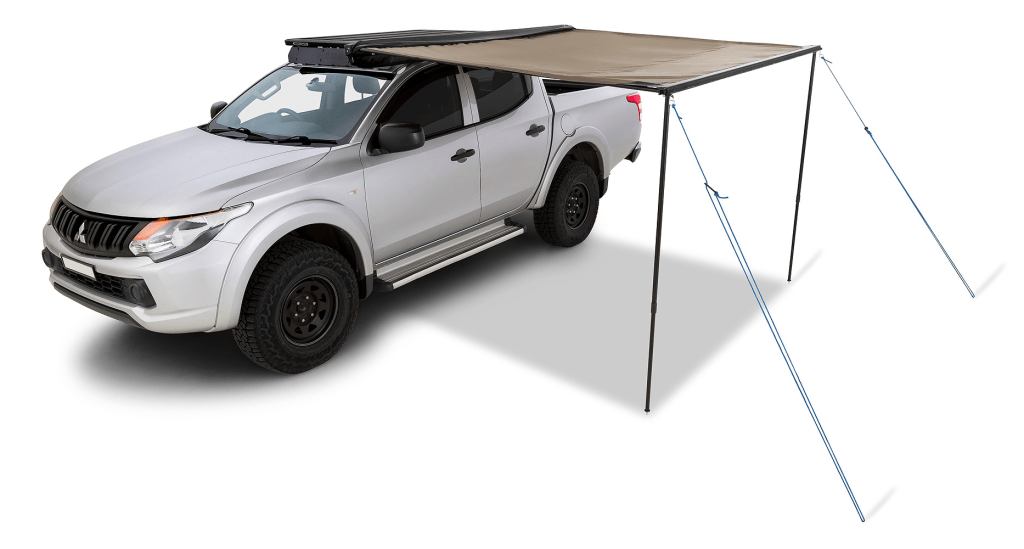
- Verdict: A highly dependable, lightweight, budget-conscious choice for casual weekend campers and daily driven SUVs.
| Evaluation Criteria | Technical Specification Measure |
| Shade Coverage Area | 54.3 Square Feet |
| Static Structural Weight | 26 Pounds |
| Fabric Denier & Composition | 210D Oxford Ripstop Polyester Canvas |
| Frame Structural Core | 22mm/25mm Telescoping Anodized Aluminum Poles |
- Best For: Small crossovers, commuter wagons, and standard factory utility crossbars with strict weight limits.
- Hidden Limitation: It lacks an internal freestanding frame layout; attempting a single-person deployment in any breeze over 12 mph risks dropping the framing directly onto your vehicle door panels.
Bush Company 270 XT Awning
The Bush Company 270 XT is a high-end overlanding shelter that relies on massive structural aluminum profiles and heavy steel hinge welds to achieve class-leading stability.
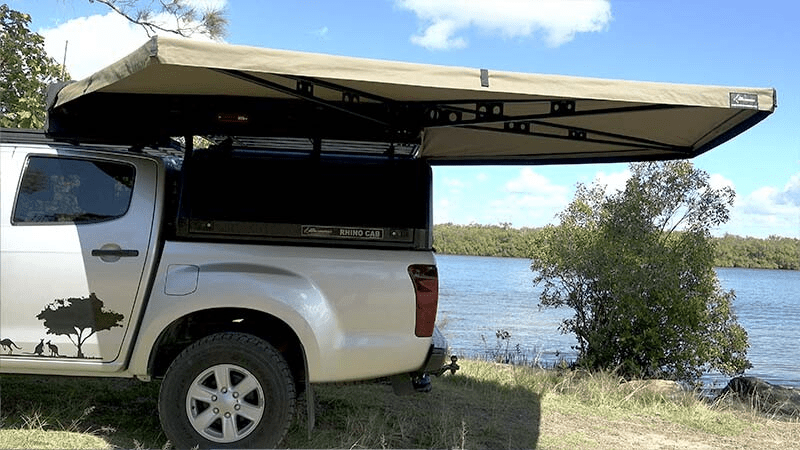
- Verdict: The ultimate high-wind freestanding canopy for extreme geographic regions where standard pivot pins snap.
| Evaluation Criteria | Technical Specification Measure |
| Shade Coverage Area | 118 Square Feet |
| Static Structural Weight | 84 Pounds |
| Fabric Denier & Composition | 320G Triple-Loop Poly-Cotton Canvas |
| Frame Structural Core | 4mm Oversized Box-Section Extruded Aluminum |
- Best For: Heavy-duty full-size pickup trucks, custom service canopies, and commercial remote work vehicles.
- Hidden Limitation: The extreme 84-pound structural mass requires heavy steel bed bars or a reinforced steel platform rack, making it entirely incompatible with factory crossbars.
Kammok Crosswing
The Kammok Crosswing features a spring-loaded self-deploying canopy layout contained in an impact-resistant anodized aluminum storage case.
- Verdict: The fastest deploying side shelter available, activating in seconds to eliminate the frustration of manual zippers and loose support poles.
| Evaluation Criteria | Technical Specification Measure |
| Shade Coverage Area | 60 Square Feet |
| Static Structural Weight | 46 Pounds |
| Fabric Denier & Composition | 150D X-Ply Waterproof Technical Polyester |
| Frame Structural Core | Spring-Tensioned Dual Stage Cantilever Arms |
- Best For: Fast daily trail check-ins, remote workspace lunch breaks, and quick rain detours.
- Hidden Limitation: Because the shade panel relies on internal dual-stage spring tension to counter wind loads, it cannot accept full-enclosure drop walls or heavy winter annex panels.
23Zero Peregrine 270
The 23Zero Peregrine 270 features a broad wraparound profile built with specialized Light Suppression Technology (LST) fabric to reduce interior temperatures.
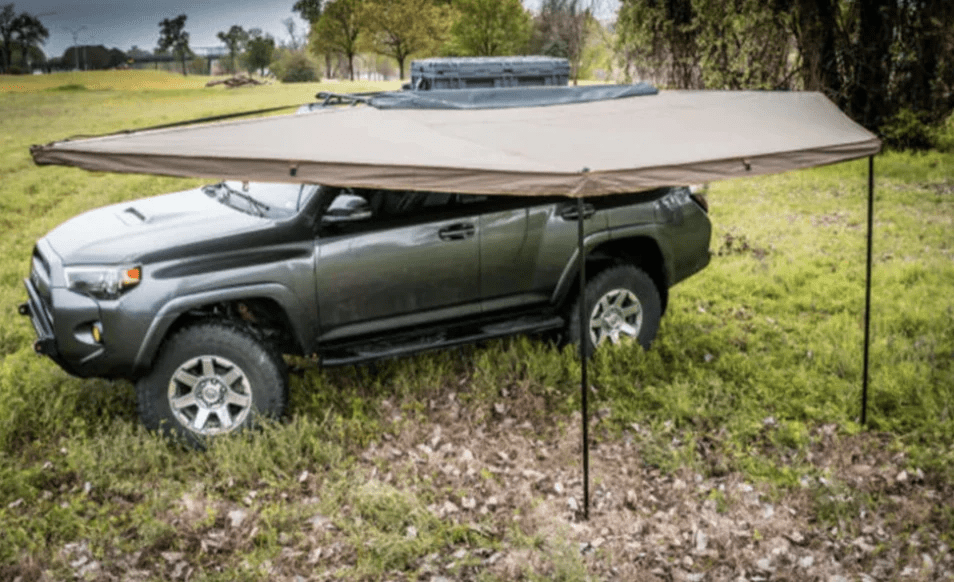
- Verdict: The top selection for desert overlanders and summer explorers who require maximum thermal deflection and deep shade.
| Evaluation Criteria | Technical Specification Measure |
| Shade Coverage Area | 120 Square Feet |
| Static Structural Weight | 41 Pounds |
| Fabric Denier & Composition | 280G Polycotton Canvas with Back LST Layer |
| Frame Structural Core | Extruded Aluminum Truss Frame with Nylon Joint Hubs |
In practice, what most buyers discover after their first season is that while the thermal blocking works flawlessly to lower underneath heat readings by up to 15% under direct summer sun, the specialized dark backing material makes identifying small fabric snags or tracking dust accumulation along internal folds difficult during cleaning schedules.
- Best For: Desert base camping, long overland expeditions, and high-temperature mid-summer off-road trips.
- Hidden Limitation: The structural pivot joints rely on compound nylon composite hubs that can warp out of true alignment if you tighten the hinge tension fasteners past factory torque specifications.
Front Runner Easy-Out Awning (2M)
The Front Runner Easy-Out is a low-profile side shade configured to bolt flush along the structural outer perimeter of modular aluminum flat racks.
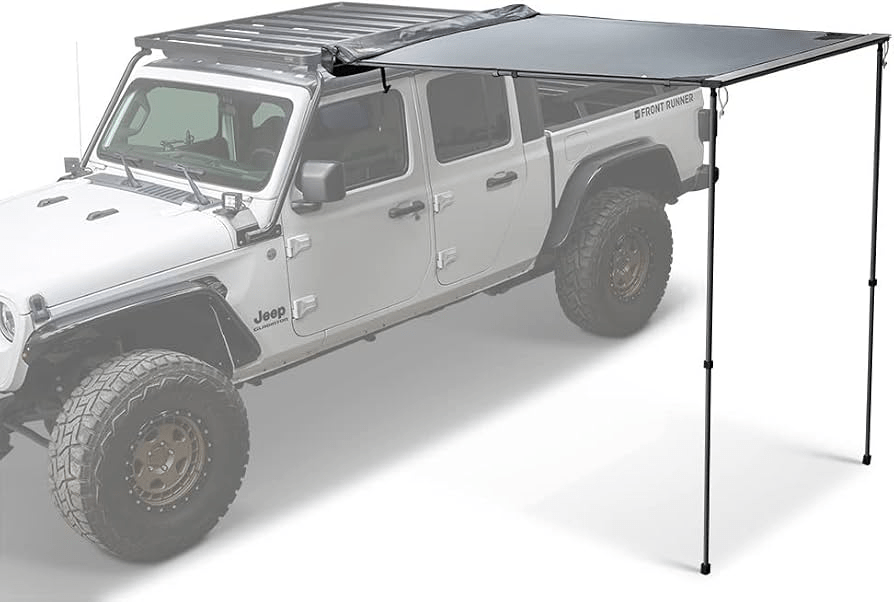
- Verdict: A sleek, streamlined utility shade that provides standard protection without adding significant aerodynamic bulk.
| Evaluation Criteria | Technical Specification Measure |
| Shade Coverage Area | 43 Square Feet |
| Static Structural Weight | 27 Pounds |
| Fabric Denier & Composition | 400D Oxford Waterproof Poly-Cotton Blend |
| Frame Structural Core | Slotted Track Channel Guide with Twist-Lock Poles |
Field experience consistently shows that matching this style with low-profile rack rails minimizes overhead branch snags on heavily wooded trails.
- Best For: Mid-size SUVs and trucks already mounting flat modular platform rack assemblies.
- Hidden Limitation: The narrow length limits total side coverage area, meaning wind shifts easily push driving rain or sun underneath the protection zone during camp cooking.
Alu-Cab Shadow 270° Awning
The Alu-Cab Shadow is a heavy-duty, driver-side freestanding batwing awning that swings open on a single heavy center hinge block to protect the side and rear of a vehicle.
- Verdict: A premier overlanding shelter option praised for uncompromised material strength and high wind resilience.
| Evaluation Criteria | Technical Specification Measure |
| Shade Coverage Area | 107 Square Feet |
| Static Structural Weight | 53 Pounds |
| Fabric Denier & Composition | 315G Acrylic Aluminized Technical Material |
| Frame Structural Core | Gusseted Center Pivot Hinge with 3 Articulated Arms |
- Best For: Hard-sided expedition campers, high-clearance overland truck boxes, and hard shell roof top tents setups.
- Hidden Limitation: The reflective aluminized surface material requires dedicated cleaning routines to avoid salt staining if deployed near ocean beach camp zones.
Dometic HUB 2 Redux
The Dometic HUB 2 Redux is a modular, free-standing shelter enclosure that can function as a drive-away tent or attach to the back of passenger vehicles via custom connection tunnels.
- Verdict: The most versatile multi-panel modular system for vanlifers and car campers needing an adaptable ground room solution.
| Evaluation Criteria | Technical Specification Measure |
| Shade Coverage Area | 110 Square Feet (Variable Ground Grid) |
| Static Structural Weight | 31 Pounds |
| Fabric Denier & Composition | 300D Recycled Ocean-Bound Polyester Thread |
| Frame Structural Core | Multi-Point Quick Expansion Single Inflation Air Frame |
- Best For: Conversion vans, stock camper SUVs, and multi-day family park encampments.
- Hidden Limitation: Setting up this drive-away system requires finding level ground clear of sharp trail debris, or you risk puncturing the primary inflation bladder during air frame expansion phases.
Common Vehicle Awning Deployment Mistakes
- Ignoring Dynamic Crossbar Torque Metrics: Overlanders frequently bolt heavy, high-leverage 270-degree freestanding awnings onto thin, factory-installed aluminum crossbars. The intense vibration from off-road washboard trails generates extreme kinetic torque that deforms factory roof tracks or snaps mounting hardware. Check your vehicle’s manual to ensure your rack system supports a minimum 150-pound dynamic load limit before installation.
- Neglecting Fabric Seam-Tape Degradation: Packing away a wet canvas awning inside a heavy-duty PVC storage cover creates a humid microclimate when exposed to direct sunlight. This trapped moisture initiates a chemical breakdown of the internal polyurethane waterproofing layers, causing seam-tape thickness to peel off completely. Always deploy and air-dry your awning within 24 hours after a rainstorm.
- Improper Rain Runoff Calibration: Setting up your canopy frame perfectly flat creates a hazardous water trap. Rainfall quickly pools in the center fabric sections, stretching out the technical fibers of your canvas sheet and permanently bending the aluminum support arms. Always drop at least one vertical telescoping pole downward by 6 to 10 inches to form a sharp water runoff angle.
- Solo Opening in Heavy Storms Without Hinge Support: Attempting to swing open a freestanding 270-degree awning single-handedly during a heavy wind storm places immense shear load on the primary pivot joint before it is pinned. A sudden 30-mph crosswind gust can snap cast-aluminum hinges instantly. Always point your truck into the wind so the vehicle’s body acts as a physical windbreak during deployment.
Troubleshooting Guide
| Component Issue | Likely Mechanical Cause | Tactical Solution |
| Water leaks along stitching seams | UV degradation of factory seam tape or worn polyurethane layer. | Clean the inner seam thoroughly and apply a continuous layer of aftermarket polyurethane seam sealer. |
| Awning arms sag or twist off-center | Pivot assembly hinge pins have loosened from rough washboard vibration. | Tighten all structural hinge fasteners to your manufacturer’s exact torque spec; inspect castings for hairline cracks. |
| Telescoping support poles slip out of lock | Fine trail dust or sand grit has jammed the internal split-cam friction rings. | Extend the pole completely, flush the internal collar mechanisms with clean water, and dry before collapsing. |
| Heavy PVC outer storage bag refuses to zipper | Canvas fabric was rolled up unevenly, or tensioning straps were left loose. | Unroll the canopy fully, pull the fabric taut along the main structural rails, and roll up tightly before zipping. |
| Awning rattles loudly during highway travel | Mounting bracket U-bolts have loosened over time from road vibration. | Apply a blue thread-locking compound to all mounting threads and torque fasteners to 35 ft-lbs. |
Frequently Asked Questions
Can I install a heavy 270-degree freestanding awning on standard factory crossbars?
No, standard factory crossbars are engineered primarily for balanced vertical loads and lack the lateral structural rigidity to counter the torsional forces generated by heavy, free-standing vehicle roof rack awnings. You must upgrade your vehicle to an aftermarket platform rack or heavy-duty steel bed bars to safely distribute the leverage across your vehicle’s frame.
How do I make sure my car side awning doesn’t block my rooftop tent?
When mounting your shelter beside hard shell roof top tents, utilize low-profile drop brackets that position the awning housing 2 to 3 inches below the tent’s lower hinge line. This prevents the heavy PVC storage bag from interfering with the tent shell casing when it opens its entry panels or gas-strut doors.
What is the advantage of polycotton canvas over basic polyester fabric?
Polycotton canvas features an organic cotton-polyester weave that expands when wet to seal stitching holes naturally, offering superior long-term insulation and UV degradation resistance. Basic polyester is lighter and dries faster but degrades quickly under continuous UV exposure and lacks insulation value on hot summer trail deployments.
Can a freestanding vehicle awning really handle high winds without its vertical support poles?
While high-end 270-degree frameworks built with heavy-duty T6 aluminum truss arms can survive steady 30-mph winds freestanding, unexpected shear gusts can easily damage vehicle mounting brackets. We always recommend deploying your integrated telescoping poles and staking down your guy lines whenever you leave camp unattended for extended hours.
How do I clean mold out of my truck awning fabric?
Scrub any affected spots gently using a soft bristle brush, warm water, and a specialized deep-cleaning canvas solution. Never use chlorine bleach or harsh dish detergents, as these chemicals strip the fabric’s factory polyurethane waterproofing layer and accelerate UV thread rot along critical structural corner points.
About Everlead Outdoor
Sourcing high-durability overlanding vehicle awnings requires matching precise structural metallurgy with advanced technical textile manufacturing.
As an ISO9001-certified OEM/ODM manufacturer specializing in rooftop tents and vehicle awnings, Everlead Outdoor brings over 10 years of professional manufacturing experience to the global outdoor industry. Our expansive catalog features everything from aluminum hard-shell rooftop tents to advanced 180° and 270° freestanding vehicle awnings, all constructed with high-tolerance components like aviation-grade T6 aluminum and premium weatherproofing textiles. We maintain an uncompromising commitment to quality through a mandatory 100% final-unit QC inspection process on our factory floor for every item dispatched globally. Designed to serve growing outdoor brands and distributors, we offer flexible low MOQs—including 1-piece sample capability—and maintain US local stock ready to secure your supply chain with fast product customization and predictable factory-direct pricing.
Summary of Core Takeaways
Selecting the best car and truck awnings requires balancing your vehicle’s dynamic load capacity with your specific camping style requirements. Prioritizing high-tolerance T6 aluminum components and premium polycotton fabrics protects your investment from premature trail failures. Whether you are outfitting your personal truck build with a soft shell roof top tent setup, or you are an outdoor brand looking for an expert roof top tent manufacturer to develop custom inventory, contact Everlead Outdoor today to request a factory-direct technical quote.