Many outdoor brands only find out their roof top tents lack structural integrity when a customer’s shell cracks on a washboard road miles from cell service. For procurement teams and product developers, understanding hard shell rooftop tent load capacity isn’t just about passing a static weight test in a factory—it’s about engineering a product that survives dynamic off-road stress.
How strong should a hard shell rooftop tent be? A premium hard shell must safely support a static load of 300kg to 400kg (660–880 lbs) and a dynamic load of at least 75kg to 100kg (165–220 lbs) to withstand the kinetic energy of heavy off-road travel without compromising the vehicle’s roof rack.
This article breaks down the technical realities of load-bearing structures, from the limitations of ABS plastics to the engineering necessity of aluminum honeycomb panels, helping you make informed OEM sourcing decisions for your next manufacturing run.

Table of Contents
- What is the difference between dynamic and static load capacity for a hard shell rooftop tent?
- How does the choice of shell material (ABS vs. aluminum honeycomb) affect structural integrity?
- What engineering specifications are required to prevent base plate flex under heavy loads?
- How do mounting channels and hardware size impact the tent’s survival in extreme crosswinds?
- What are the common failure points in gas struts and hinges on overweight hard shell tents?
- How does up-gauging materials for load capacity impact MOQs, tooling costs, and shipping logistics?
What is the difference between dynamic and static load capacity for a hard shell rooftop tent?
Dynamic load capacity refers to the weight a rooftop tent can safely support while the vehicle is in motion (typically 75kg to 100kg). Static load capacity measures the weight the tent can hold when parked and fully deployed, usually requiring a minimum of 300kg to support occupants and heavy winter bedding.
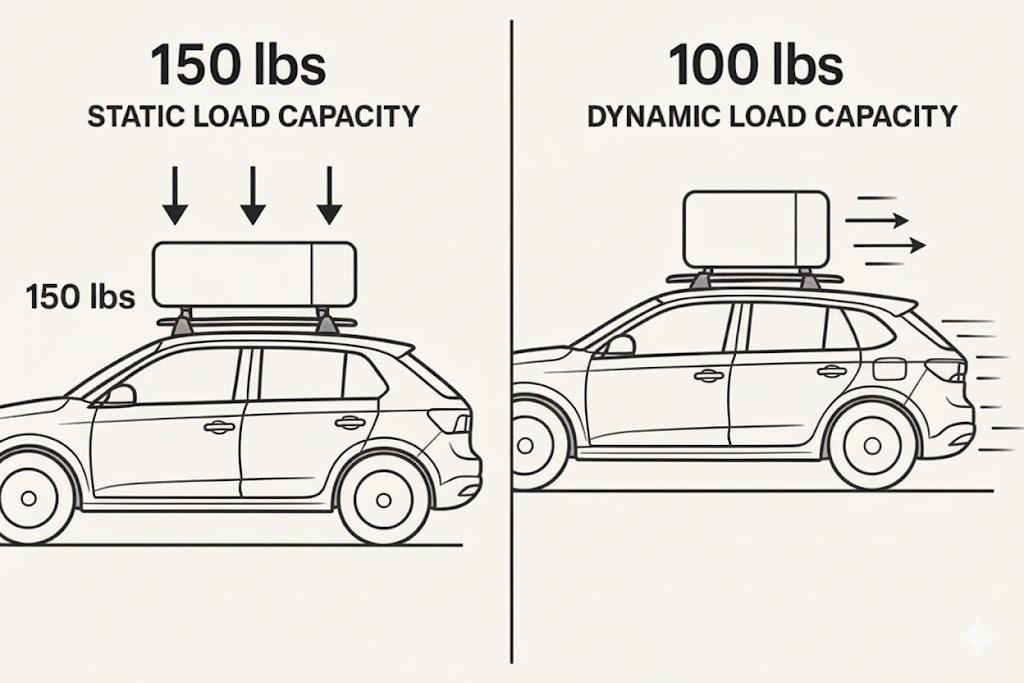
The distinction between these two metrics is critical for field survival. When an overland rig hits a pothole at 60 km/h, the kinetic energy multiplies the effective weight of the tent, transferring massive sheer forces through the mounting channels. If a hard shell roof top tent is not engineered for high dynamic loads, the floor will warp, or worse, the mounting bolts will pull directly through the extrusion.
Procurement teams must demand mechanical stress test data, rather than relying solely on static load marketing claims. A tent that easily holds 300kg statically may suffer catastrophic structural failure under a 75kg dynamic load if the internal aluminum framing is poorly reinforced.
How does the choice of shell material (ABS vs. aluminum honeycomb) affect structural integrity?
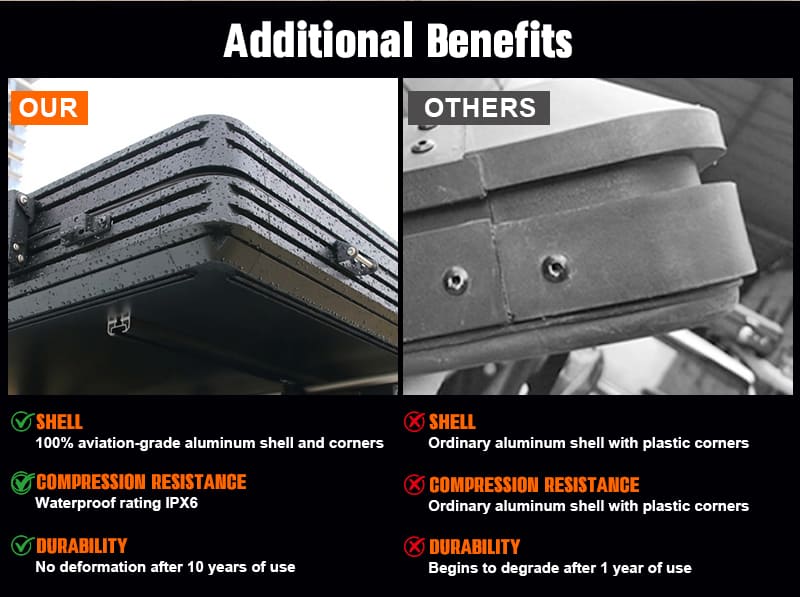
Aluminum honeycomb panels provide superior structural integrity, offering a significantly higher strength-to-weight ratio and resisting UV degradation compared to ABS plastic. While ABS shells are cost-effective for entry-level models, they become brittle in sub-zero temperatures and are highly prone to cracking under top-loading scenarios.
Engineering a hard shell involves imperfect trade-offs. ABS plastic allows for aerodynamic, molded shapes and lower tooling costs, making it an attractive material for budget-conscious sourcing. However, ABS suffers from thermal expansion and contraction. In extreme cold, a minor impact from a low-hanging branch can shatter an ABS shell.
| Shell Material | Dynamic Load Capacity | UV Resistance | Tooling Cost | Impact Resistance (Cold) |
| ABS Plastic | Low (Requires internal support) | Moderate (Fades over time) | Lower (Molded forms) | Poor (Becomes brittle) |
| Aluminum Honeycomb | High (Allows top-loading gear) | Excellent (No degradation) | Higher (Custom extrusions) | Excellent (Highly rigid) |
Conversely, aviation-grade T6 aluminum honeycomb panels offer incredible rigidity, allowing users to mount solar panels or recovery gear directly to the roof. This increases the dynamic load capacity but requires more expensive extrusion tooling and results in a heavier final product, slightly reducing vehicle fuel efficiency.
What engineering specifications are required to prevent base plate flex under heavy loads?
To prevent base plate flex under loads exceeding 300kg, a rooftop tent requires an internal framework of precision-extruded T6 aluminum crossbars. The base must utilize a double-layer insulated aluminum panel system rather than a single sheet, ensuring weight is evenly distributed across the vehicle’s roof rack.
Base plate flex is a known industry pain point. If the floor flexes when occupants move inside the tent, the internal hinges and gas struts experience uneven, asymmetrical tension, leading to premature wear. OEM product developers must specify high-density aluminum cross-bracing in their Tech Packs.
A common manufacturing mistake is using thin-gauge aluminum or omitting internal support struts entirely to cut costs. In the field, this results in a sagging floor that permanently deforms after a single season of use. Ensuring your factory partner enforces tight structural tolerances during assembly is vital for long-term product viability.
How do mounting channels and hardware size impact the tent’s survival in extreme crosswinds?
Universal mounting channels must be extruded from heavy-duty aluminum to prevent tearing under the lateral stress of crosswinds. Utilizing M8 or larger stainless steel hardware ensures the mounting brackets remain securely clamped to the roof rack, preventing the tent from shifting or launching off the vehicle at highway speeds.
A tent is only as strong as its weakest connection point. During high-speed driving or severe crosswinds, the aerodynamic drag acts like a parachute, attempting to rip the tent upward. Inferior mounting tracks made from soft aluminum alloys will deform under this pressure, allowing the bolt heads to slip entirely through the channel.
Brands must specify marine-grade stainless steel hardware and reinforced track sliders in their product outlines. This is a critical liability and warranty issue; failure at the mounting point means the total loss of the tent and severe danger to following vehicles.
What are the common failure points in gas struts and hinges on overweight hard shell tents?
Heavy hard shell tents frequently suffer from blown gas struts and bent aluminum hinges. If the gas struts are not industrially rated for the specific dynamic weight of the top shell (often requiring capacities exceeding 600N), they will freeze in cold weather or fail to keep the tent open under snow loads.
When users strap extra gear to the top of an aluminum hard shell, they often exceed the lifting capacity of standard factory struts. A 30kg load of recovery boards means the struts must work significantly harder to deploy the tent.
Furthermore, the pivot hinges at the rear of wedge-style tents bear massive amounts of torque. If these hinges are cast rather than CNC-machined from solid billet aluminum, they are highly susceptible to shearing off. Sourcing managers should verify that the factory conducts repetitive cycle testing on all mechanical lift systems before bulk order approval.
How does up-gauging materials for load capacity impact MOQs, tooling costs, and shipping logistics?
Up-gauging to T6 aluminum and heavy-duty hardware increases the unit weight, which shifts shipping constraints from container volume to payload weight limits. This raises landed costs and typically requires higher Minimum Order Quantities (MOQs) to justify the custom extrusion molds and specialized tooling investments.
For distributors and importers, demanding higher load capacities changes the entire procurement math. A heavier, structurally reinforced tent means fewer units will fit into a standard 40-foot HQ container before hitting legal weight restrictions on the highway, inherently inflating the freight cost per unit.
Additionally, custom aluminum extrusions require bespoke tooling. Factories will often offset this upfront manufacturing risk by demanding higher MOQs. Sourcing managers must conduct a rigorous cost-performance analysis, balancing the need for a bulletproof product against the realities of cash flow, inventory management, and global shipping efficiency.
Conclusion and Procurement Recommendations
Determining the correct hard shell rooftop tent load capacity is a critical engineering decision that dictates product lifespan, brand reputation, and user safety. By prioritizing high dynamic load limits, utilizing rigid aluminum honeycomb panels, and enforcing strict hardware specifications, outdoor brands can effectively mitigate field failures and costly warranty claims. Moving forward, procurement teams must look beyond superficial static weight claims and partner with suppliers capable of delivering transparent technical data and rigorous mechanical testing.
Partner with Everlead Outdoor for Your Next Manufacturing Run
Building a robust outdoor brand requires a manufacturing partner who understands structural engineering and strict quality control. Everlead Outdoor is an ISO 9001-certified OEM/ODM partner backed by over 10 years of manufacturing experience.
We manage everything from sourcing aviation-grade T6 aluminum profiles to executing a non-negotiable 100% full-unit in-house QC inspection on every tent before global dispatch. Whether you are expanding a line of heavy-duty hard shell models or exploring lightweight soft shell roof top tents, our flexible production lines and extensive roof top tent guide knowledge ensure your products survive the harshest environments. Secure your supply chain and discuss your next custom project by connecting with our technical production team today.