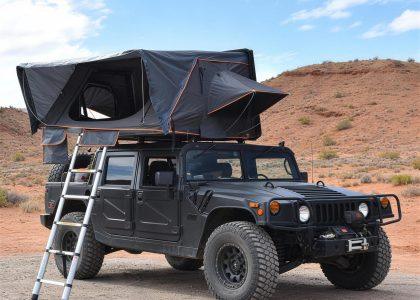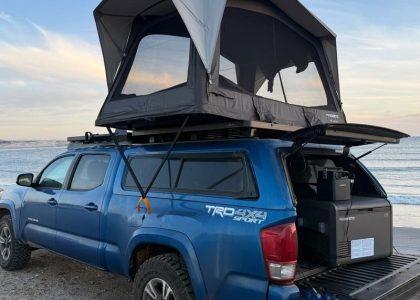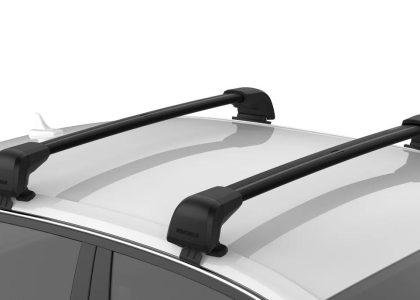
Every premier rooftop tent manufacturer Germany relies on local R&D, strict TÜV safety certifications, and specialized overseas ISO-certified OEM production to deliver storm-worthy overlanding shelters. Your ideal brand choice depends heavily on your vehicle’s static and dynamic roof load limit, alongside your need for Autobahn-rated aerodynamic travel profiles.
B2B importers and serious campers often assume native European brands manufacture their hard shell units domestically. In reality, over 90% of German-engineered models utilize global OEM fabrication partners. You secure maximum structural durability and condensation prevention by evaluating T6 aluminum frame engineering, 280G poly-cotton canvas density, and Amann sewing thread specifications rather than relying on brand heritage alone.
Q uick-Reference Summary
- TÜV Safety Compliance: Require DIN-tested mounting hardware and T6 aviation aluminum frames to withstand 130 km/h Autobahn wind drag.
- Global OEM Sourcing: Verify that German-designed brands partner with ISO 9001:2015 certified facilities enforcing 100% final-unit QC inspection.
- Textile Specifications: Demand 280G to 320G poly-cotton ripstop canvas stitched with German Amann threads to prevent seam leakage during heavy European rain.
- Aerodynamic Profiles: Select a closed hard shell tent height under 25 centimeters to minimize high-speed vibration and reduce vehicle fuel consumption by up to 15%.
- Weight Budgeting: Ensure your selected shelter leaves at least a 15-kilogram safety margin below your vehicle’s dynamic roof rack load limit.
What to Know Before Selecting a German Market Rooftop Tent
Before investing in a European overlanding shelter or selecting a wholesale supplier, you must understand the engineering realities separating native German branding from physical manufacturing. Most European outdoor brands design their product lines in Germany while outsourcing physical fabrication to specialized OEM partners in Asia or Southern Europe.
Navigating this market requires looking past marketing claims to examine TÜV compliance, aerodynamic drag at high driving speeds, and raw textile durability. Evaluate these critical technical distinctions before committing your sourcing budget.
| Specification | Generic Budget Import | German Engineering Standard | Premium ISO OEM/ODM Partner |
| Frame Material | 1.2mm Standard Aluminum | 1.5mm Reinforced T6 Aluminum | 2.0mm T6 Aviation Aluminum |
| Canvas Density | 420D Polyester (PU2000mm) | 280G Poly-Cotton Ripstop | 280G–320G Poly-Cotton Ripstop |
| Seam Waterproofing | Standard Glue Tape | Amann Thread + Heat Seal | Amann Thread + Double Welded |
| Speed Rating | 100 km/h Max (Vibrates) | 130 km/h Aerodynamic | 130+ km/h Tested Wind Drag |
| Quality Control | 5–10% Random Sampling | 100% Final-Unit Inspection | ISO 9001:2015 100% Floor QC |
| Cost Range (Retail) | €800 – €1,200 | €2,200 – €3,800 | Direct Factory FOB Pricing |
1. The Reality of “Made in Germany” vs. Global OEM Fabrication
Very few brands manufacture rooftop tents entirely within German borders due to prohibitive local labor and material costs. When a company markets a “German engineered roof top tent,” they typically mean the structural design, prototyping, and DIN safety testing occur in Europe, while mass production takes place in specialized overseas factories.
For B2B importers and retail buyers, fabrication geography matters less than the supplier’s quality control framework. You must verify whether the brand works with an ISO 9001:2015 certified OEM partner that enforces continuous factory-floor testing rather than relying on random post-production batch checks.
2. TÜV Compliance and Autobahn Aerodynamic Demands
German road regulations impose unique structural demands on vehicle camping gear. Driving on the Autobahn exposes rooftop cargo to sustained wind speeds exceeding 130 km/h, creating intense aerodynamic lift and vibration fatigue. A standard soft shell tent engineered for low-speed trail driving will suffer rapid hinge failure under these conditions.
German-market shelters must utilize low-profile aerodynamic fiberglass or T6 aviation aluminum shells. Furthermore, mounting hardware must meet strict DIN standards, utilizing 8mm high-tensile stainless steel T-slot bolts that prevent structural shifting during emergency high-speed braking. Consult our comprehensive roof top tent guide to calculate your vehicle’s exact dynamic weight limits.
3. Material Science for Severe European Weather
European weather shifts rapidly from alpine snow to damp coastal rain, making interior condensation prevention a mandatory engineering requirement. Budget polyester fabrics trap heat and moisture, causing severe internal dripping and mold growth after a single weekend.
German engineering benchmarks require breathable 280G to 320G poly-cotton ripstop canvas paired with integrated anti-condensation floor mats. To prevent water ingress during freezing winter downpours, top-tier brands mandate the use of swelling German Amann sewing threads and double-welded polyurethane seam tapes that expand to seal needle holes permanently.
Evaluating the Top 10 Rooftop Tent Brands Dominating Germany
1. Vickywood
Vickywood combines Bavarian design engineering with eco-friendly textile innovation to deliver versatile hard-shell and hybrid rooftop shelters.
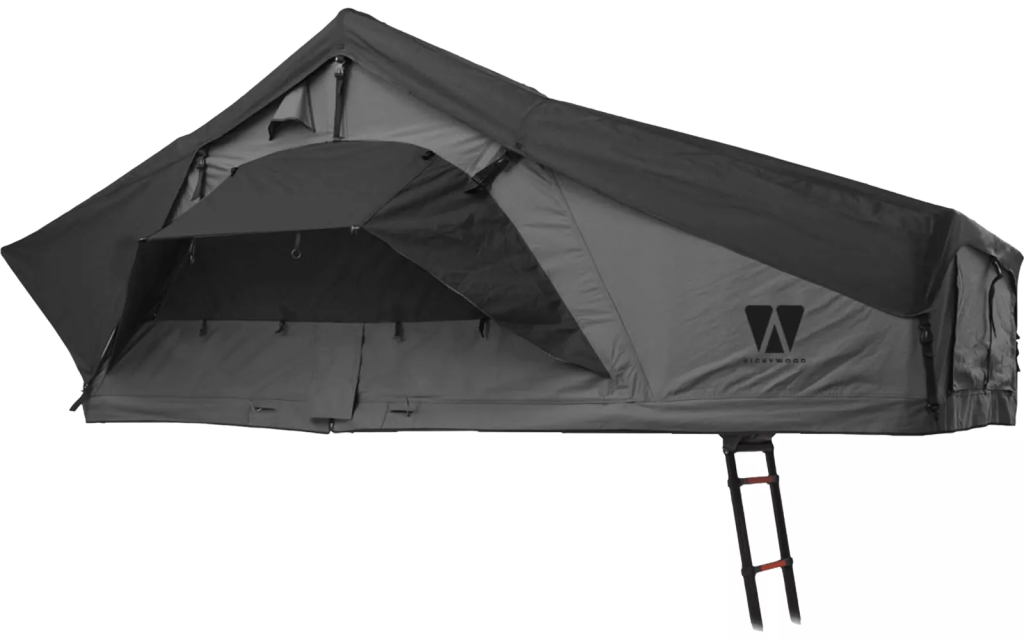
| Specification | Technical Value |
| Primary Shell Type | Hybrid Fold-Out & Aluminum Clamshell |
| Canvas Specification | 320G Recycled Poly-Cotton Ripstop (PU3000mm) |
| Total Unit Weight | 55 kg – 78 kg |
| Manufacturing Origin | German R&D / Global OEM Fabrication |
| Average Price Tier | Mid-to-High (€1,800 – €3,200) |
Vickywood stands out in the German market by utilizing recycled polyester-cotton blends without sacrificing tensile tear strength. Their shelters feature integrated LED lighting, German Amann sewing threads, and optimized gas struts for rapid deployment. The brand focuses heavily on family-friendly floor plans and dark-coated interiors that block early morning summer sun.
Best For: Discerning overlanders and environmentally conscious campers seeking spacious, fast-pitching hybrid shelters with premium interior comfort features.
Limitation: The heavier 320G canvas and expanded floor footprints push total unit weights near the 80-kilogram dynamic load limit of smaller European compact SUVs.
2. Roof Lodge by Nakatanenga
Nakatanenga engineered the Roof Lodge series in Neumarkt to serve heavy-duty 4×4 expedition vehicles operating in severe remote environments.
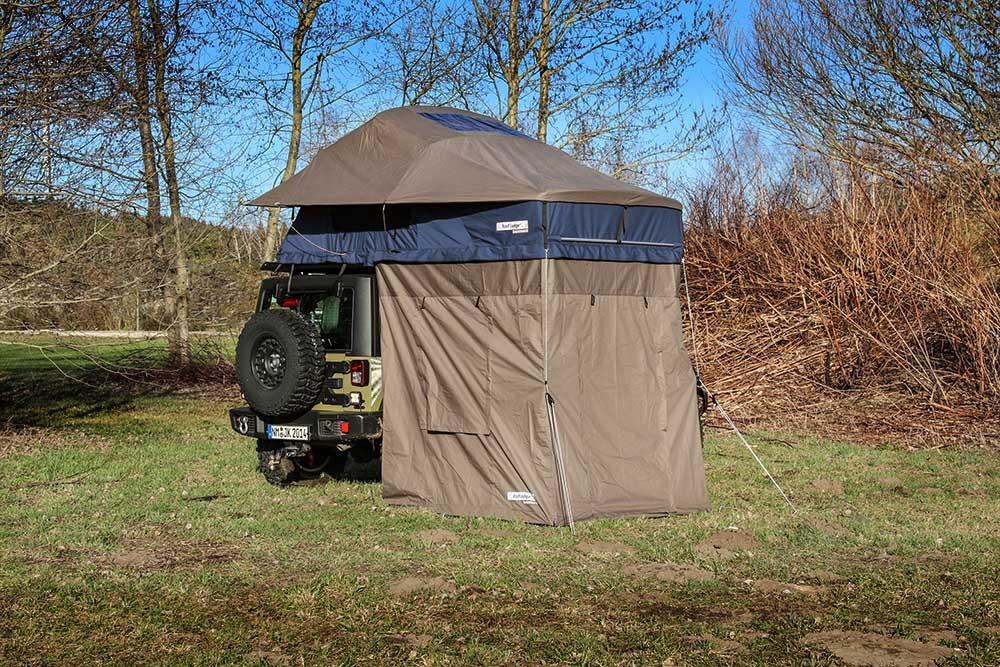
| Specification | Technical Value |
| Primary Shell Type | Heavy-Duty Soft Shell & Fold-Out |
| Canvas Specification | 320G Poly-Cotton Ripstop Canvas |
| Total Unit Weight | 45 kg – 65 kg |
| Manufacturing Origin | German Engineering / Specialized Import |
| Average Price Tier | Mid-Range (€1,500 – €2,500) |
Roof Lodge shelters prioritize mechanical reliability and storm resistance over sleek aesthetics. Built with reinforced aluminum floor panels and oversized stainless steel pivot hinges, these units withstand severe gale-force winds. The brand integrates specialized tropical rain flies and thermoregulation liners, making them a staple among European Land Rover Defender and INEOS Grenadier owners.
Best For: Hardcore 4×4 expedition drivers needing a rugged, field-repairable soft shell tent capable of surviving extreme alpine and desert storms.
Limitation: Manual fold-out setup and travel cover strapping require significantly more time and physical effort than modern gas-strut hard shell models.
3. Gordigear
Gordigear applies German engineering heritage combined with brutal Australian Outback field testing to construct highly reliable traditional roof tents.
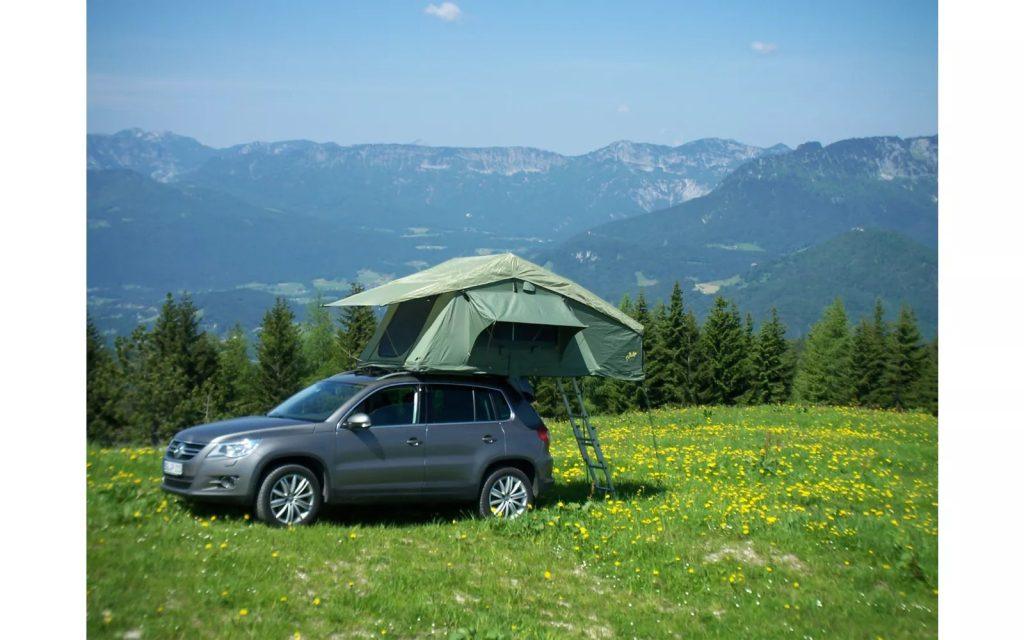
| Specification | Technical Value |
| Primary Shell Type | Traditional Fold-Out Soft Shell |
| Canvas Specification | 280G Poly-Cotton Ripstop Canvas |
| Total Unit Weight | 48 kg – 60 kg |
| Manufacturing Origin | German-Australian R&D / Global OEM |
| Average Price Tier | Accessible Mid-Range (€1,400 – €2,200) |
Gordigear builds some of the most proven soft-shell shelters in the European camping gear landscape. By eliminating complex mechanical mechanisms, they reduce potential failure points. Their tents feature German-engineered polyurethane waterproofing, oversized anodized aluminum framing poles, and thick high-density foam mattresses designed for extended multi-week living.
Best For: Traditional overlanders and long-distance travelers prioritizing proven mechanical simplicity, superior breathability, and long-term textile durability.
Limitation: The boxy PVC travel cover creates noticeable aerodynamic wind drag and noise at sustained Autobahn driving speeds above 120 km/h.
4. Roof Space
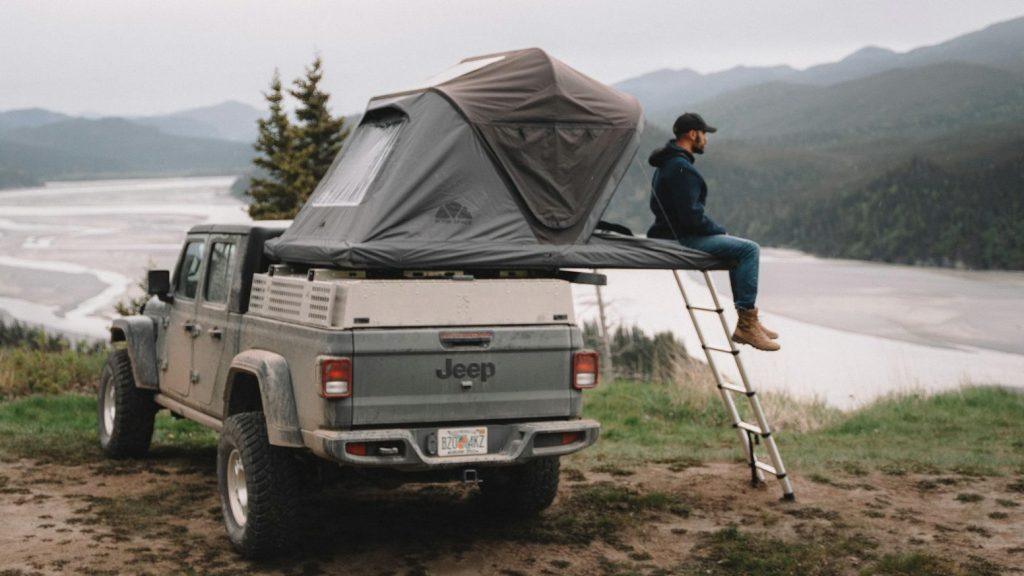
Roof Space represents a new wave of German startup engineering, introducing patented hybrid fold-out mechanisms that maximize living space.
| Specification | Technical Value |
| Primary Shell Type | Innovative Hybrid Fold-Out Hard Shell |
| Canvas Specification | 250G Breathable Polycotton Ripstop |
| Total Unit Weight | 67 kg |
| Manufacturing Origin | Developed in Germany / ISO OEM Production |
| Average Price Tier | Premium (€2,800 – €3,500) |
The Roof Space 2 combines the compact transport profile of an aluminum hard shell with the expansive sleeping footprint of a fold-out tent. Employing internal gas struts and a precision-engineered folding hinge, the unit deploys a full 250cm x 150cm mattress in under two minutes while maintaining an ultra-flat aerodynamic travel casing.
Best For: Compact vehicle owners who demand double-bed sleeping dimensions without exceeding the roof width of mid-size station wagons or CUVs.
Limitation: The specialized folding mechanism requires strict adherence to folding sequences, and the complex hinge commands a significant price premium over standard clamshells.
5. Qeedo
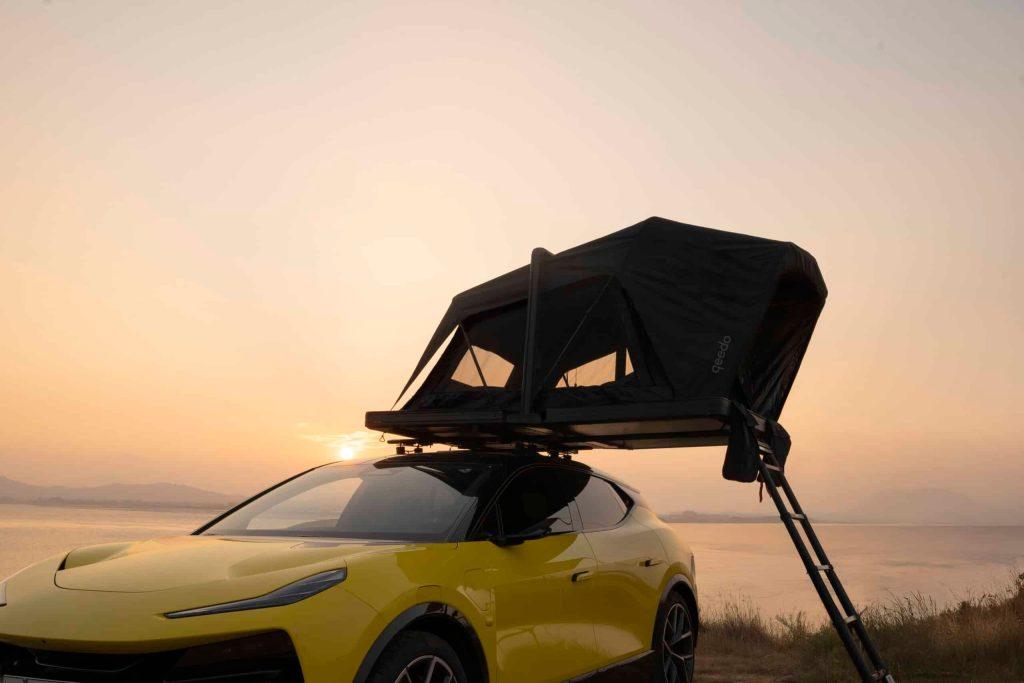
Qeedo dominates the accessible German consumer market by delivering intuitive, quick-pitching vehicle shelters optimized for weekend leisure camping.
| Specification | Technical Value |
| Primary Shell Type | Lightweight Soft Shell & ABS Clamshell |
| Canvas Specification | 210D to 420D Polyester Ripstop |
| Total Unit Weight | 38 kg – 58 kg |
| Manufacturing Origin | German Brand / Contract Asian Sourcing |
| Average Price Tier | Entry-to-Mid Range (€1,100 – €2,100) |
Qeedo focuses on user-friendly accessibility and lightweight structural design. Their Freedom series utilizes streamlined aluminum tubing and fast-action telescoping ladders that allow solo campers to set up camp in minutes. By keeping gross unit weights exceptionally low, Qeedo opens the rooftop tent lifestyle to standard European passenger cars with lower roof load limits.
Best For: Weekend campers, beginners, and small hatchback owners seeking an affordable, lightweight shade and sleep solution for fair-weather travel.
Limitation: Lightweight synthetic polyester fabrics offer lower thermal insulation and degrade faster under continuous UV exposure than heavy poly-cotton canvas blends.
6. Autohome
While founded in Italy, Autohome holds a massive share of the German market as the historical pioneer of aerodynamic hard shell rooftop shelters.
| Specification | Technical Value |
| Primary Shell Type | Insulated Fiberglass & Carbon Fiber Clamshell |
| Canvas Specification | Dralon Acrylic Waterproof Textile |
| Total Unit Weight | 52 kg – 76 kg |
| Manufacturing Origin | 100% European Fabrication (Italy) |
| Average Price Tier | Ultra-Premium (€3,200 – €5,000+) |
Autohome models like the Maggiolina and Airtec set the benchmark for Autobahn aerodynamic efficiency. Constructed from hand-laid insulated fiberglass, these shells eliminate wind fluttering and resist extreme winter hail. From our perspective as an ISO 9001-certified OEM/ODM roof top tent manufacturer with over a decade of production experience, we know that surviving Autobahn wind speeds requires testing strut hinges against sustained 130 km/h aerodynamic drag in factory simulation chambers.
Best For: All-weather highway tourers and luxury vehicle owners demanding quiet high-speed transit, rapid crank-handle deployment, and decades of structural longevity.
Limitation: Interior vertical headroom is restricted compared to fold-out designs, and the premium European fiberglass construction represents a massive capital investment.
7. iKamper
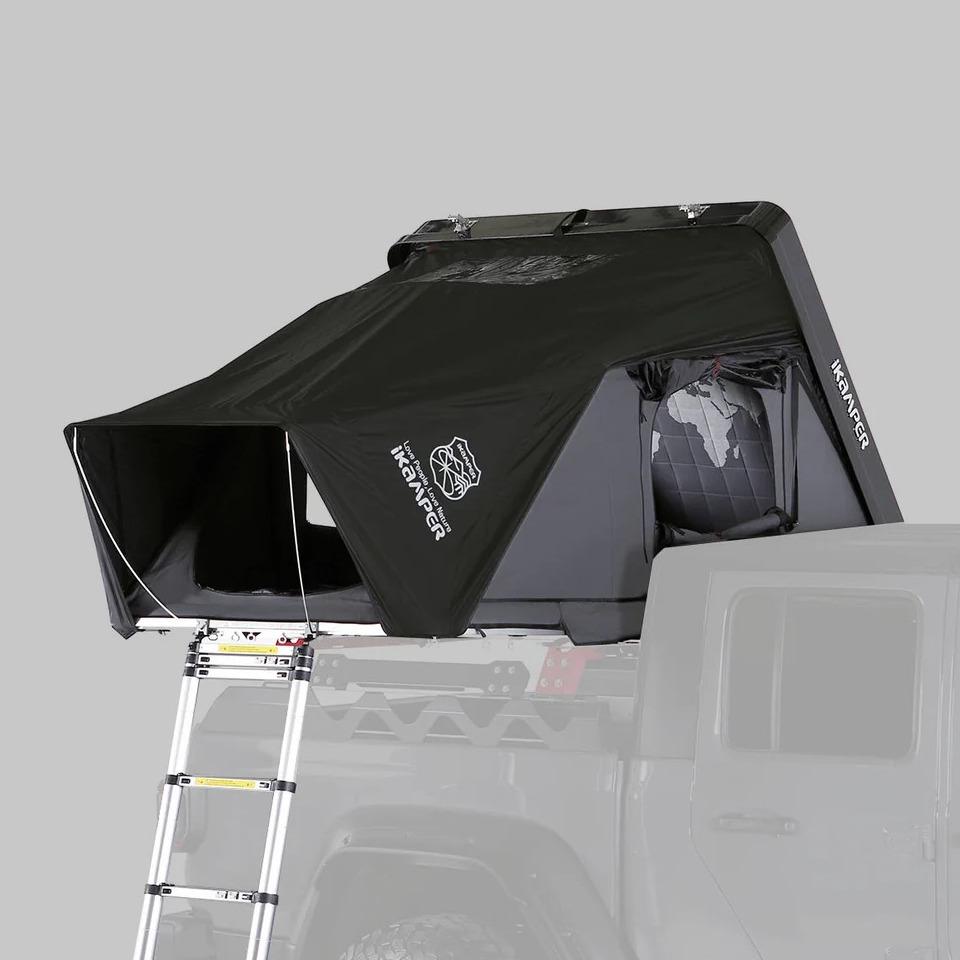
iKamper operates out of South Korea and the Netherlands, capturing significant German market share with their patented Skycamp expandable hard-shell designs.
| Specification | Technical Value |
| Primary Shell Type | Expandable ABS Hard Shell |
| Canvas Specification | 300G Blackout Poly-Cotton Canvas |
| Total Unit Weight | 57 kg – 74 kg |
| Manufacturing Origin | South Korean R&D / Specialized Global OEM |
| Average Price Tier | Premium (€3,600 – €4,800) |
The iKamper Skycamp series resolves the classic dilemma between compact roof transport and family-sized sleeping capacity. Featuring a honeycomb aluminum fold-out floor panel housed within an aerodynamic double-layered ABS shell, it deploys a king-size mattress in sixty seconds. Their 300G blackout canvas provides exceptional thermal insulation during freezing central European winters.
Best For: Families of three or four who require a rapid-deployment hard shell shelter without sacrificing interior sleeping width or storm weather resistance.
Limitation: The glossy ABS outer shell is susceptible to tree branch scratching on tight forest trails compared to ruggedized aluminum or checker-plate housings.
8. James Baroud
James Baroud manufactures in Portugal, supplying the German overlanding community with extreme-weather hard shells tested to rigorous European safety benchmarks.
| Specification | Technical Value |
| Primary Shell Type | Reinforced Polyester Fiberglass Clamshell |
| Canvas Specification | Aluminized 6-Layer Tech Canvas |
| Total Unit Weight | 55 kg – 70 kg |
| Manufacturing Origin | 100% European Fabrication (Portugal) |
| Average Price Tier | Ultra-Premium (€3,500 – €4,900) |
James Baroud shelters survive catastrophic storm winds up to 120 km/h when deployed. Their proprietary six-layer aluminized fabric reflects solar heat while preventing condensation. Every unit incorporates a solar-powered mechanical ventilation fan into the roof shell, actively exhausting human respiration moisture during cold alpine nights in Southern Germany.
Best For: Four-season expedition campers and off-grid explorers who require absolute stormproof reliability, active solar ventilation, and zero canvas flapping in high winds.
Limitation: The internal scissor-lift arms and solar fan housings reduce interior storage space for leaving thick sleeping bags inside during transit.
9. Alu-Cab
Alu-Cab builds heavy-duty aluminum expedition gear in South Africa, serving as the top choice for German custom vehicle outfitters and extreme 4×4 builders.
| Specification | Technical Value |
| Primary Shell Type | Heavy-Duty Aluminum Clamshell |
| Canvas Specification | 400G Dual-Layer Rib-Lock Canvas |
| Total Unit Weight | 76 kg – 90 kg |
| Manufacturing Origin | South African Fabrication & Sourcing |
| Average Price Tier | Ultra-Premium (€4,000 – €5,500) |
The Alu-Cab Gen 3-R is an armored fortress designed for permanent vehicle mounting. Built entirely from laser-cut aluminum sheet metal, the outer shell features integrated T-slot cargo rails capable of carrying solar panels and recovery boards. Field experience consistently shows that enforcing 100% final-unit QC inspection on the factory floor is the only reliable way to catch micro-tears in heavy canvas before freezing temperatures cause water ingress to rot internal seams.
Best For: Heavy-duty overland vehicle builds (Land Cruisers, Defenders) needing a permanent, load-bearing aluminum roof shelter that supports heavy external cargo accessories.
Limitation: With weights exceeding 80 kilograms, this shelter requires heavy-duty aftermarket roof racks and exceeds the dynamic roof limits of standard passenger vehicles.
10. Everlead Outdoor
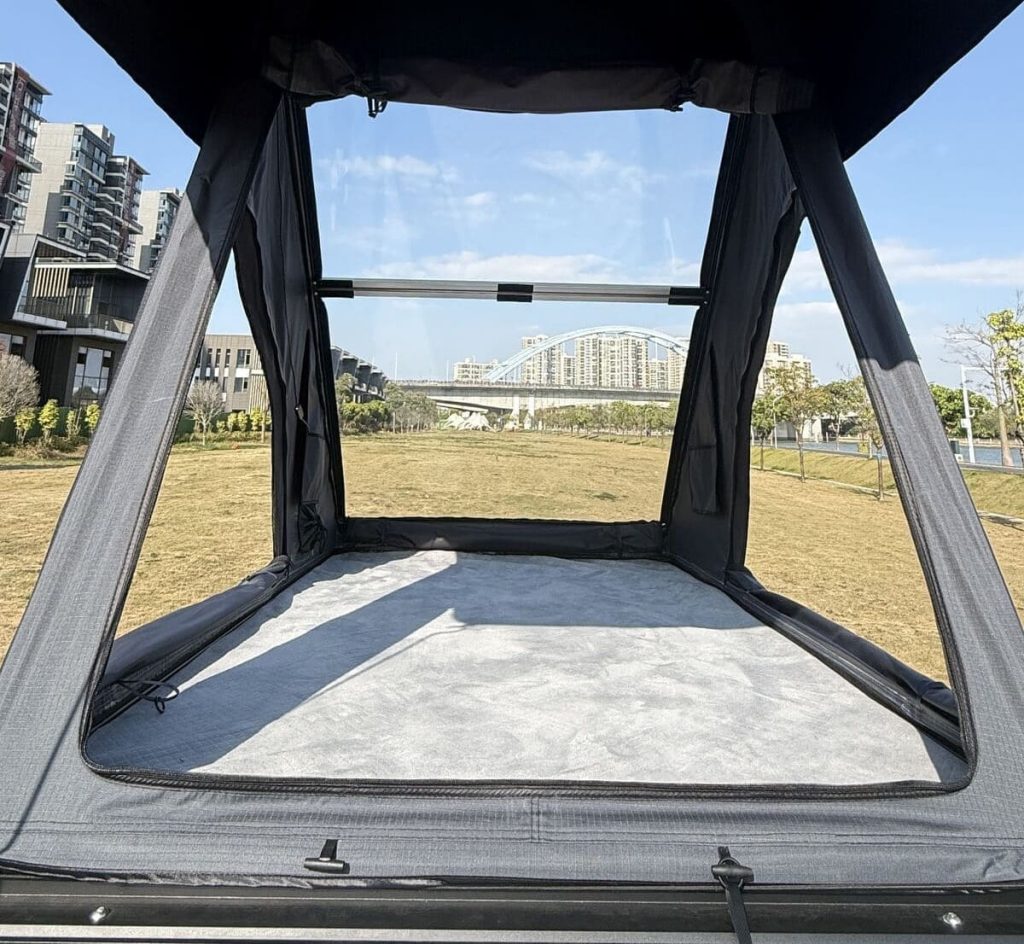
Everlead Outdoor operates as a premier global OEM/ODM manufacturing partner, supplying contract-grade rooftop shelters built to strict German engineering benchmarks.
| Specification | Technical Value |
| Primary Shell Type | Custom Aluminum Clamshell, ABS & Soft Shell |
| Canvas Specification | 280G–320G Poly-Cotton Ripstop (PU3000mm+) |
| Total Unit Weight | 45 kg – 85 kg (Customizable to spec) |
| Manufacturing Origin | ISO 9001:2015 Certified Advanced Facility |
| Average Price Tier | Direct Factory FOB & B2B Wholesale Pricing |
Everlead Outdoor bridges the gap between European design standards and scalable manufacturing efficiency. Operating advanced robotic welding and automated fabric cutting lines, Everlead produces custom hard shell roof top tents and durable soft shell roof top tents for leading international brands. Every unit undergoes strict 100% final-unit QC inspection, verifying Amann thread waterproofing, gas-strut fatigue limits, and Autobahn aerodynamic vibration resistance before container loading.
Best For: B2B brand managers, European importers, and gear distributors seeking an ISO-certified contract manufacturer capable of delivering custom-engineered tents with flexible sample MOQs.
Limitation: As a dedicated B2B manufacturer and wholesale supplier, Everlead focuses on trade supply chains and private labeling rather than single-unit B2C retail storefront distribution.
Common Rooftop Tent Selection Mistakes
1. Assuming “Designed in Germany” Means Domestic Fabrication
Cause: Confusing headquarters branding and marketing slogans with actual physical factory locations.
Consequence: Paying an unnecessary retail markup for generic import hardware that lacks genuine German quality control supervision.
Correction: Demand transparency regarding manufacturing origins and verify that the supplier enforces ISO 9001:2015 QC standards and 100% floor inspections.
2. Overlooking Vehicle Dynamic Roof Load Limits on Autobahn Transits
Cause: Calculating weight budgets using only the tent’s empty weight while ignoring mounting brackets, bedding, and high-speed aerodynamic drag forces.
Consequence: Permanent deformation of factory vehicle roof pillars and catastrophic mounting hardware failure during emergency highway braking.
Correction: Verify that your gross loaded weight remains 15% below the vehicle manufacturer’s dynamic rating.
3. Selecting Low-Denier Synthetic Fabrics for European Winter Camping
Cause: Prioritizing lightweight polyester fabrics and budget price points over breathable textile density.
Consequence: Severe internal condensation accumulation that drips onto sleeping gear, leading to rapid mold growth and fabric rot.
Correction: Specify genuine 280G to 320G poly-cotton ripstop canvas featuring a minimum PU3000mm waterproof rating and breathable weave structures.
4. Neglecting Seam Thread Quality in Wet Climates
Cause: Overlooking needle-hole sealing methods and accepting standard polyester sewing threads on heavy canvas assemblies.
Consequence: Rainwater wicks directly through stitching seams during continuous freezing winter downpours, saturating the mattress.
Correction: Ensure all primary fabric joints utilize German Amann swelling threads combined with heat-sealed, double-welded waterproof backing tape.
Troubleshooting Common Rooftop Tent Issues
| Problem | Likely Cause | Solution |
| Condensation dripping inside | Inadequate ventilation trapping human respiration moisture against cold walls. | Open side roof vents by 5 centimeters; install an anti-condensation mesh under-mattress airflow mat. |
| Whistling noise at 120 km/h | Square travel cover edges or unsealed gap between tent base and roof rack. | Install a front aerodynamic wind deflector; reposition crossbars rearward to alter airflow dynamics. |
| Mold odor after storage | Tent was folded and sealed inside cover while damp following rain or morning dew. | Open shelter fully in dry sun; scrub canvas with non-detergent canvas cleaner and allow 100% drying. |
| Struts fail to lift cold shell | Freezing winter temperatures reduce internal gas pressure within lifting cylinders. | Manually assist initial upward lift; upgrade to higher-Newton cold-weather rated stainless struts. |
| Water ingress along hinge zipper | Dirt and grit clogging zipper teeth, preventing waterproof PVC flaps from sealing. | Clean teeth with a stiff brush; apply silicone zipper lubricant; ensure external rain flaps overlap completely. |
Frequently Asked Questions About German Market Rooftop Tents
Are German-brand rooftop tents actually manufactured 100% in Germany?
No, over 90% of German rooftop tent brands outsource physical manufacturing to specialized OEM partners in Asia or Southern Europe. True German engineering is reflected in the product R&D, structural prototyping, material specification (like Amann threads), and adherence to strict TÜV safety and quality control verification frameworks.
Will these rooftop tents comply with strict German TÜV safety standards?
Yes, reputable German-market tents meet or exceed TÜV and DIN safety regulations. This requires utilizing high-tensile 8mm stainless steel mounting hardware, redundant secondary locking clasps, and structural framing capable of surviving sustained Autobahn wind drag without loosening or shifting on the crossbars.
Why are German-standard rooftop tents more expensive than budget imports?
German-standard shelters command higher prices due to premium raw materials and rigorous testing. Investing in 280G poly-cotton ripstop canvas, T6 aviation aluminum clamshells, German Amann sewing threads, and 100% final-unit factory quality control adds production cost but ensures survival in severe European winter weather.
What is the maximum safe driving speed with a rooftop tent on the Autobahn?
While many hard shell tents survive sustained aerodymanic wind speeds of 130 km/h in testing, most vehicle and roof rack manufacturers recommend not exceeding 120 km/h to 130 km/h. Driving faster increases aerodynamic lift, significantly elevates fuel consumption, and places severe stress on crossbar mounting feet.
How do I prevent condensation in a rooftop tent during German winter camping?
Preventing condensation requires active ventilation and thermal separation. Always leave roof vents or upper window zippers open at least three centimeters to allow warm, moist respiration air to escape. Additionally, install a 10mm 3D mesh anti-condensation mat beneath your foam mattress to promote continuous under-bed airflow.
About Everlead Outdoor
When sourcing premium overlanding shelters that meet strict European safety standards, partnering with an experienced source factory is essential. Everlead Outdoor is your ISO 9001-certified OEM/ODM manufacturing partner, delivering high-performance vehicle camping equipment and commercial outdoor shelters to leading global brands.
Operating with over a decade of international manufacturing expertise, our production facility integrates automated metal fabrication, precision canvas cutting, and custom engineering capabilities. We enforce a strict 100% final-unit quality control inspection protocol on the factory floor, verifying seam waterproofing, structural weld integrity, and assembly tolerances before shipping. Whether you require custom hard-shell clamshells, 270-degree vehicle awnings, or scalable private label manufacturing, Everlead secures your supply chain with direct factory pricing and dependable seasonal lead times.
Final Recommendations
Selecting or sourcing the premier rooftop tent manufacturer Germany comes down to demanding uncompromising material science, including T6 aviation aluminum framing, 280G ripstop canvas, and German Amann thread waterproofing. You ensure decades of reliable overlanding only when you match aerodynamic shell profiles to your vehicle’s specific dynamic roof load limits.
For B2B brand managers and gear importers, bypassing middlemen to collaborate directly with an ISO 9001-certified OEM production facility guarantees consistent quality control and competitive market pricing. Evaluate our technical manufacturing specifications online and upgrade your overlanding catalog with proven, storm-tested shelter engineering today.