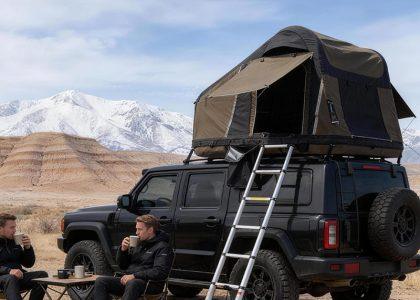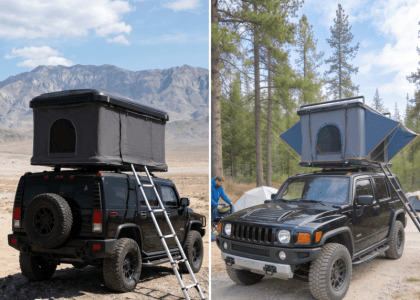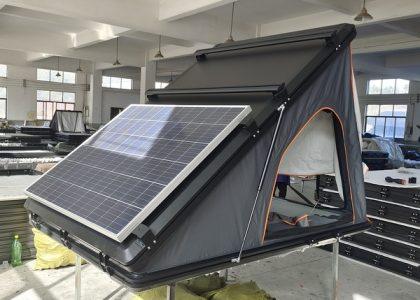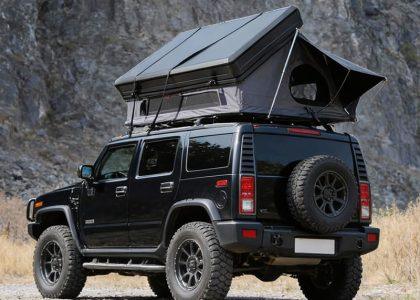
Learning how to import rooftop tents from China to Germany requires partnering with an ISO 9001-certified OEM manufacturer that provides full EU General Product Safety Regulation (GPSR EU 2023/988) compliance and REACH chemical test reports. Your landed margin depends on choosing between sea freight (20GP vs 40HQ) or railway transport and correctly applying the 12% EU customs tariff under HS code 6306.22 alongside Germany’s 19% import VAT (EUSt).
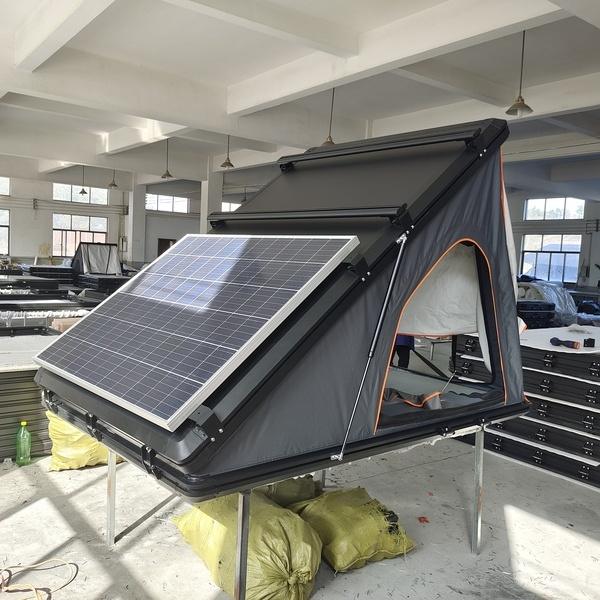
Navigating German customs requires registering an EORI number and verifying T6 aviation aluminum frame integrity before shipment. B2B importers eliminate hidden port costs and prevent customs seizures by enforcing 100% factory-floor quality control prior to container loading.
Quick-Reference Summary
- EORI & Customs Registration: Register for an EORI number with German Customs (Zoll) before booking cargo to clear EU import declarations legally.
- TARIC & HS Code Classification: Declare rooftop tents under HS code 6306.22 or 6306.29 to apply the standard 12% EU customs duty rate.
- GPSR & REACH Compliance: Require REACH test reports and a designated EU Responsible Person label on all master cartons to prevent port seizures under GPSR (EU 2023/988).
- Container Freight Optimization: Pack 40HQ containers with optimized master cartons to reduce per-unit sea freight costs by up to 35% over 20GP loads.
- Import VAT Deductions: Reclaim Germany’s 19% Einfuhrumsatzsteuer (EUSt) as an input tax credit (Vorsteuerabzug) through standard monthly tax filings.
- Factory Quality Control: Demand 100% pre-shipment inspections covering Amann thread weatherproofing and gas strut fatigue to eliminate European warranty returns.
What to Know Before Importing Rooftop Tents
Before placing bulk orders with a China rooftop tent supplier, B2B importers must evaluate legal EU compliance, customs duty math, and factory quality assurance. Purchasing through unverified trading channels often leads to hidden port fees, tariff misclassifications, and severe customs clearance delays in Hamburg or Bremerhaven.
German customs authorities enforce strict physical inspections for non-EU imports. Failing to secure accredited laboratory test reports before container departure puts your entire shipment at risk of port seizure or forced destruction.
| Sourcing Parameter | Direct FOB Importing | EXW Express Trading | Full DDP Sourcing |
| Customs Responsibility | Importer of Record (EU) | Importer of Record (EU) | Freight Forwarder |
| EUSt (19% VAT) Deductible | Yes (100% via Vorsteuerabzug) | Yes (If EORI linked) | No (Vendor absorbed) |
| Freight Cost per Unit | Low (€45–€70 via 40HQ) | High (€180–€250) | Medium (€90–€130) |
| Compliance Ownership | Importer + Designated EU RP | Importer + Designated EU RP | Forwarder (High Risk) |
| GPSR & REACH Documents | Direct Factory Test Reports | Third-Party Surcharges | Frequently Missing |
| Minimum Order Volume | 1 Container (50–120 units) | 1-Piece Sample MOQ | 10–20 Units Batch |
1. EU Compliance and Chemical Safety (GPSR and REACH)
The EU General Product Safety Regulation (GPSR EU 2023/988) mandates that all consumer products sold in Germany feature a designated EU-based Responsible Person address printed directly on the packaging. Additionally, textile fabrics, coatings, and zippers must comply with REACH regulations, containing less than 0.1% Substances of Very High Concern (SVHC).
2. Landed Cost Compounding in Germany
German customs calculates import duties using the CIF (Cost, Insurance, Freight) valuation method. The 12% tariff applies to the total CIF amount, and the 19% Import VAT (Einfuhrumsatzsteuer) is then calculated on the combined CIF value plus duty. Importers registered with an EORI number reclaim this 19% EUSt as an input tax credit (Vorsteuerabzug).
3. Structural Quality Verification Without Travel
B2B buyers can verify factory capabilities remotely by auditing ISO 9001:2015 certifications and ordering a 1-piece sample MOQ. Mandating T6 aviation aluminum frame extrusions and 320G poly-cotton canvas ensures that the tent hardware withstands sustained 130 km/h Autobahn wind drag.
Step-by-Step Guide to Importing Rooftop Tents from China to Germany
Step 1: Execute Supplier Audits and Order a 1-Piece Sample
Conduct a rigorous audit of the factory’s manufacturing credentials before placing bulk orders. Demand proof of ISO 9001:2015 quality management certification and request a 1-piece sample unit to test in local conditions. Inspect the T6 aviation aluminum frame extrusions, gas strut lifting tension, and 320G poly-cotton ripstop canvas density. Verify that the ladder mounting channels and T-slot brackets fit standard 8mm European roof rack hardware.
- PRO TIP: Test the sample’s waterproof rating against a minimum PU3000mm standard and verify that all interior seams feature heat-sealed polyurethane tape.
Step 2: Enforce European Compliance Standards (GPSR and REACH)
Ensure full legal compliance with the EU General Product Safety Regulation (GPSR EU 2023/988) and REACH chemical safety standards. Every imported roof top tent sold in Germany requires a designated EU Responsible Person listed on the master carton alongside the manufacturer’s address. Obtain accredited REACH laboratory test reports verifying that fabrics, coatings, and zippers contain less than 0.1% Substances of Very High Concern (SVHC).
- WARNING: German customs (Zoll) will seize and destroy non-compliant shipments that lack permanent fiber composition labels or required GPSR safety warnings translated into German.
Step 3: Negotiate Manufacturing Contracts and Select FOB Incoterms
Structure your purchasing contract using Free On Board (FOB Ningbo or Shanghai) Incoterms rather than EXW or DDP. FOB pricing establishes clear liability boundaries, placing freight loading risks on the China manufacturer while giving you full control over sea freight carrier selection and customs declarations. Specify 30% advance deposit terms with the 70% final balance payable only upon passing pre-shipment inspection.
- PRO TIP: Include a strict contract clause mandating that the factory packs all master cartons using double-wall 7-ply corrugated cardboard with reinforced corner guards.
Step 4: Implement 100% Pre-Shipment Quality Control Inspections
Never allow a container to lock without verifying physical build quality on the factory floor. Field experience consistently shows that 90% of structural frame failures in transit occur when suppliers use standard 1.2mm aluminum tubing instead of T6 aviation aluminum extrusions subjected to 10,000-cycle gas-strut fatigue testing. Instruct a third-party inspector or your factory QA team to perform 100% final-unit inspections covering stitch density, hinge alignment, and shell latch tension.
Step 5: Optimize Sea Freight vs. China-Europe Express Railway Logistics
Choose the optimal shipping lane based on seasonal lead times and volume math. Sea freight via 40HQ container remains the most cost-effective method for bulk volume, fitting roughly 55 to 65 hard shell roof top tents depending on carton dimensions. Alternatively, the China-Europe Express railway (Yiwu/Chongqing to Hamburg/Duisburg) reduces transit times from 35 days down to 18 days during peak European sales seasons.
- WARNING: Oversized master cartons exceeding 220cm in length trigger heavy port handling surcharges if your freight forwarder fails to palletize the cargo correctly.
Step 6: Clear German Customs and Calculate True Landed Cost
Complete customs clearance at German entry ports (Hamburg or Bremerhaven) by submitting your Bill of Lading, commercial invoice, packing list, and EORI number. Declare the cargo under HS code 6306.22 (synthetic fiber tents) or 6306.29 (poly-cotton canvas tents) to apply the 12% EU customs tariff. In practice, what most buyers discover after their first season is that unverified seam threads wick water during continuous European downpours, which is why our factory floor mandates German Amann thread weatherproofing and double-welded seam tape on all 320G poly-cotton canvas builds.
Example Mathematical Landed Cost Calculation (100 Hard Shell Units):
-------------------------------------------------------------------
FOB Invoice Price (100 units @ €300/unit):           €30,000.00
Ocean Freight & Insurance (CIF Hamburg):              €3,000.00
-------------------------------------------------------------------
Total CIF Value (Customs Valuation Base):            €33,000.00
EU Customs Duty (12% of €33,000):                     €3,960.00
-------------------------------------------------------------------
Import VAT Base (CIF + Duty):                        €36,960.00
German Import VAT / EUSt (19% of €36,960):            €7,022.40
-------------------------------------------------------------------
Total Cash Required at Customs Clearance:            €43,982.40
Net Landed Cost per Unit (After 19% EUSt Credit):       €369.60
Common Errors When Importing Chinese Rooftop Tents
1. Misclassifying HS Tariff Codes
- Cause: Declaring rooftop tents under general automotive accessories (HS 8708) instead of textile camping shelters (HS 6306.22 / 6306.29).
- Consequence: German customs reclassifies the cargo, levies retroactive tariff penalties, and audits historical imports.
- Correction: Always declare rooftop tents under HS code 6306.22 (synthetic) or 6306.29 (canvas) with the standard 12% duty rate.
2. Omitting German Safety Manuals and GPSR Labels
- Cause: Shipping master cartons with English-only labels and no designated EU Responsible Person details.
- Consequence: Market surveillance authorities block customs release, forcing expensive warehouse re-labeling in Hamburg.
- Correction: Print permanent German safety instructions, model numbers, and EU Responsible Person contact details directly on all packaging.
3. Ordering 20GP Containers for Oversized Cartons
- Cause: Failing to calculate master carton dimensions against container cubic capacity.
- Consequence: Shipping costs increase by 35% per unit because 20GP containers leave empty space around 220cm tent boxes.
- Correction: Implement 40HQ carton loading optimization to fit 55 to 65 units flush inside a single container.
4. Accepting Standard Sewing Threads on Heavy Canvas
- Cause: Relying on basic polyester stitching without specifying swelling waterproof threads.
- Consequence: Rainwater wicks through needle holes during prolonged European downpours, causing interior mattress mildew.
- Correction: Mandate German Amann thread weatherproofing and double-welded seam tape on all factory production runs.
Troubleshooting Import and Logistics Delays
| Problem | Likely Cause | Solution |
| Customs hold at Hamburg port | Missing REACH test reports or invalid EORI number. | Submit accredited laboratory test reports and verified EORI registration to Zoll. |
| Gas struts fail in German winter | Freezing temperatures reducing cylinder nitrogen pressure. | Specify cold-weather rated stainless steel struts with T6 aviation aluminum fatigue limits. |
| Mold odor upon opening cartons | Canvas packed damp or unvented ocean transit humidity. | Place industrial desiccant packs in every tent shell and enforce 100% dry factory packing. |
| Cracked ABS shells in transit | Master cartons crushed under container stacking weight. | Mandate double-wall 7-ply corrugated packaging with internal EVA foam blocks. |
| Demurrage fees at destination | Delayed Bill of Lading surrender by forwarder. | Utilize Telex release or electronic Seaway Bill to accelerate port cargo clearance. |
Frequently Asked Questions About Importing Rooftop Tents
How do I ensure imported Chinese tents comply with new EU GPSR and REACH standards?
You ensure compliance by requesting accredited laboratory test reports from your Chinese manufacturer before booking production. Under GPSR (EU 2023/988), your product must feature German safety instructions, a model identifier, and a designated EU Responsible Person address. Obtaining REACH test reports confirms that canvas dyes, PU coatings, and metal hardware contain less than 0.1% SVHC chemicals.
How do I calculate my true Landed Cost for rooftop tents imported into Germany?
Calculate your landed cost by adding Invoice Price, Ocean Freight, and Marine Insurance to determine the CIF Hamburg value. Apply Germany’s 12% customs duty (HS code 6306.22) to the CIF value. Then, calculate 19% Import VAT (EUSt) on the combined CIF plus duty amount. German business importers can reclaim the 19% EUSt as an input tax credit (Vorsteuerabzug).
What is the exact HS code and duty rate for rooftop tents in Germany?
Rooftop tents enter Germany under HS code 6306.22.00 (tents of synthetic fibers) or HS code 6306.29.00 (tents of other textile materials like poly-cotton canvas). Both subheadings carry a standard 12% EU customs duty rate. Incorrectly declaring tents as auto parts under HS 8708 risks heavy customs fines and audit penalties.
Is sea freight or railway freight better for shipping rooftop tents from China to Germany?
Sea freight via 40HQ container provides the lowest shipping cost per unit for planned bulk orders, taking roughly 35 days to reach Hamburg. Railway freight via the China-Europe Express takes 18 days to reach Duisburg, offering a faster alternative during peak autumn sales seasons despite costing 25% to 40% more per cubic meter.
How can I verify structural quality without traveling to China for every production run?
Verify structural quality by auditing the factory’s ISO 9001:2015 certification and commissioning a 1-piece sample unit for physical testing. Before shipping bulk orders, hire an independent third-party inspection agency to perform 100% final-unit QC checks covering T6 aluminum frame welds, gas strut fatigue, and seam tape adhesion.
About Everlead Outdoor
When sourcing European-compliant camping equipment, partnering directly with an experienced source factory ensures uncompromised quality control and smooth German customs clearance.
Everlead Outdoor is your ISO 9001-certified OEM/ODM partner, delivering your overlanding projects on time, on budget, and to the highest global quality standards. Operating state-of-the-art metal fabrication, automated welding, and precision canvas cutting facilities with over a decade of international export experience, we supply contract-grade hard shell roof top tents and soft shell roof top tents to leading outdoor brands across Europe, North America, and Australia. Every product batch undergoes rigorous 100% factory floor quality control—verifying T6 aluminum weld strength, REACH chemical compliance, and Amann thread weatherproofing before container loading. Partner with Everlead Outdoor as your dedicated roof top tent manufacturer to secure direct factory FOB pricing, 1-piece sample MOQs, and dependable seasonal lead times.
Final Recommendations for B2B Importers
Importing rooftop tents from China to Germany requires strict adherence to EU GPSR safety standards, REACH chemical testing, and 12% customs tariff calculations. You maximize wholesale profit margins and eliminate port delays when you partner directly with an ISO 9001-certified OEM manufacturer enforcing 100% factory-floor quality control. Review your dynamic vehicle load requirements and calculate your landed costs before booking cargo. Explore our comprehensive roof top tent guide online, request a custom sample unit, and launch your European overlanding catalog with confidence today.