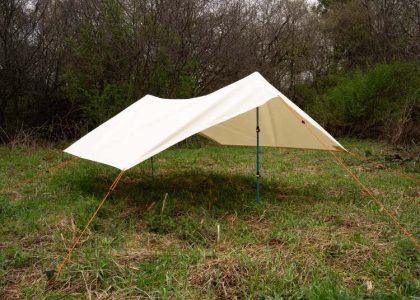
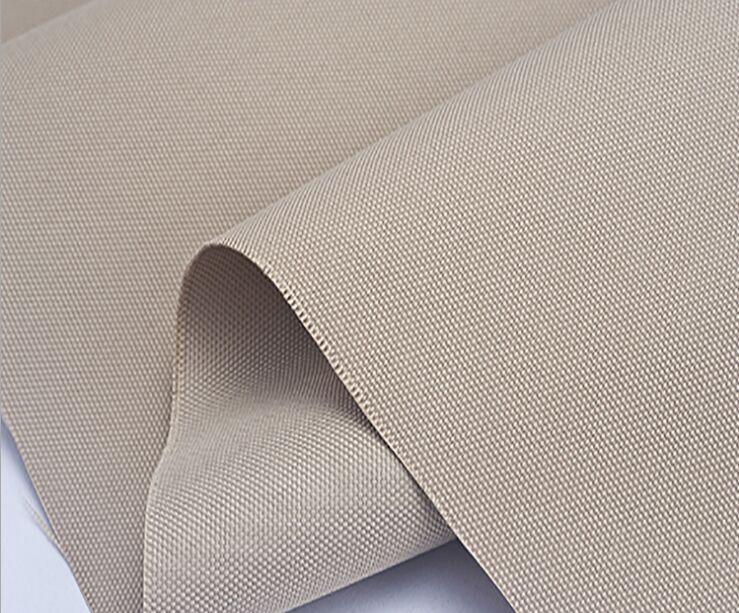
900D Oxford fabric uses yarn specified at 900 denier, a nominal linear density equivalent to 900 grams per 9,000 meters. That number describes yarn mass per length; it does not by itself specify the finished fabric’s grams per square meter (GSM), tear strength, abrasion resistance, or waterproof rating. Those properties depend on the complete fabric construction, fiber and yarn system, finishes or coatings where applicable, and the test method used to evaluate the finished material. Buyers sourcing materials for outdoor products must verify the construction, finish, and performance requirements in addition to the denier to ensure the fabric meets their engineering needs.
What Does 900D Actually Mean?
Denier is a measure of linear mass density, not finished-fabric weight per area. According to the National Institute of Standards and Technology (NIST), 900 denier corresponds to a nominal linear mass of 900 grams per 9,000 meters of yarn. ASTM D1907/D1907M provides the standard test method for determining this yarn linear density.
Therefore, 900D describes the yarn’s nominal linear mass density. It does not mean the yarn has a universally specific thickness, nor does it guarantee a specific finished fabric weight.
What Does “Oxford” Mean in a Commercial Fabric Specification?
In commercial sourcing, “Oxford” alone is not a complete construction specification. Fabrics sold under the Oxford label can differ in yarn arrangement, density, finished weight, and finishing, so buyers should confirm the actual construction on the supplier datasheet rather than inferring it from the trade name alone.
What 900D Tells You — and What It Doesn’t
Many commercial pages collapse fabric performance into a simple “higher denier equals tougher fabric” claim. In reality, product developers must separate the yarn specification from the finished product’s performance.
| Question | Does 900D answer it? | What actually answers it? |
| Yarn linear mass | Yes | Denier / linear-density measurement |
| Finished GSM | No | Fabric mass-per-area specification |
| Exact weave | No | Construction / supplier datasheet |
| Breaking strength | No | Actual fabric breaking-strength test |
| Tear strength | No | Actual tear test |
| Abrasion life | No | Controlled abrasion test |
| Waterproof rating | No | Hydrostatic-pressure test on finished fabric |
| Coating type | No | Material specification |
| Finished product durability | No | Complete material + construction + product validation |
Why Two 900D Oxford Fabrics Can Have Very Different Specifications
Denier describes mass per yarn length, while GSM describes fabric mass per area. They are different measurements. Because variables like fiber type, yarn construction, weave density, coatings, and chemical finishes all alter the final product, the same denier label can appear on fabrics with substantially different finished weights and constructions.
The table below highlights real commercial supplier examples to demonstrate why a full specification is necessary:
| Supplier Example | Yarn Specification | Coating / Backing | Published GSM | Published Construction / Style | What This Example Proves |
| Lean Textile | 900D | Unspecified | ~190 gsm | Not specified | This demonstrates product variation; it does not establish a universal 900D benchmark. |
| Redbud | 900D × 900D | Unspecified | 220–280 gsm | Not specified | This demonstrates product variation; it does not establish a universal 900D benchmark. |
| Luxuriant | 900D | PU Coating | 240 gsm | Not specified | This demonstrates product variation; it does not establish a universal 900D benchmark. |
| Unspecified Example | 900D × 900D | PVC Backing | 450–650 gsm | Not specified | This demonstrates product variation; it does not establish a universal 900D benchmark. |
These are individual commercial product examples, not a normalized market range for all 900D Oxford fabrics.
600D vs 900D: What Can You Compare Safely?
A 600D yarn has a nominal linear mass of 600 grams per 9,000 meters. A 900D yarn has a nominal linear mass of 900 grams per 9,000 meters. On the denier scale, a 900D yarn has 50% greater nominal mass per equal yarn length than a 600D yarn. However, this calculation applies only to nominal linear mass.
| Factor | 600D | 900D | Buyer Interpretation |
| Nominal yarn linear mass | 600 g/9,000 m | 900 g/9,000 m | 900D is 50% greater on the denier scale. |
| Finished GSM | Varies | Varies | Specify separately. |
| Weave/construction | Varies | Varies | Confirm datasheet. |
| Waterproofness | Not defined by denier | Not defined by denier | Specify coating + hydrostatic head (HH) target. |
| Tear strength | Test actual fabric | Test actual fabric | Do not infer from Denier alone. |
| Breaking strength | Test actual fabric | Test actual fabric | Use same test method for accurate comparison. |
| Abrasion | Test-dependent | Test-dependent | Compare only like-for-like data. |
How Should Strength, Tear, Abrasion, and Waterproofness Be Verified?
Buyers should not infer performance from denier. Finished fabric breaking strength, for example, depends on construction variables. Instead, use recognized standards to make a vague requirement measurable:
- Yarn Linear Density: Verified via ASTM D1907/D1907M.
- Fabric Breaking Strength: Verified via ASTM D5034. Note that construction variables affect results and different test configurations cannot simply be treated as equivalent.
- Tongue Tear Strength: Verified via ASTM D2261. Results reflect yarn components, fiber bonds, interlocks, and the actual tested construction.
- Martindale Abrasion: Verified via ASTM D4966. The current standard warns that abrasion results can vary considerably between operators, laboratories, abradants, conditions, and evaluation methods.
- Hydrostatic Water Resistance: Verified via AATCC TM127. Water resistance depends on fibers, yarns, and fabric construction. 900D does not specify a hydrostatic-head rating.
- Coated-Fabric Performance: Verified via ASTM D751, which covers test methods for hydrostatic resistance, breaking strength, puncture resistance, and tearing strength for coated fabrics.
Using a recognized test method does not mean that 900D has a standard result under that method. The test must be applied to the actual fabric construction, and comparisons should use materially comparable samples and test conditions.
How to Specify 900D Oxford in an OEM Tech Pack
Do not send an RFQ that says only: “900D Oxford, waterproof.” That leaves too many performance-defining variables uncontrolled. To properly specify a material for an outdoor product, translate textile theory into a practical procurement specification by including the following fields in your OEM Tech Pack. This ensures a clear distinction between the material specification (what should be supplied), the performance requirement (what the fabric must achieve), the test method (how that requirement will be evaluated), and the approval sample (the physical production reference).
- Fiber composition
- Nominal yarn specification (e.g., 900D)
- Warp/weft construction where relevant
- Actual weave / construction
- Fabric density or construction details
- Finished GSM + tolerance
- Coating / backing chemistry
- Functional finish requirements
- Target hydrostatic resistance if required
- Named hydrostatic test method
- Breaking-strength requirement + test method if relevant
- Tear-strength requirement + test method if relevant
- Abrasion requirement + test conditions/method if relevant
- UV / colorfastness requirement if relevant
- Color/Pantone
- Approved supplier datasheet
- Prototype / approved material sample
- Golden-sample / production approval criteria
When Does a 900D Specification Make Sense?
A 900D specification makes sense when it is part of a validated material construction or an explicit product requirement—not simply because a higher denier sounds more durable. If the real design requirement is tear strength, breaking strength, abrasion resistance, or water resistance, specify those performance targets separately and verify them on the finished fabric.
About Everlead Outdoor
Everlead Outdoor is an ISO 9001-certified OEM/ODM manufacturer of roof top tents and vehicle awnings. Its product-development workflow supports Tech Pack review, prototyping, and material verification before mass production, with 100% final-unit in-house inspection used as part of its quality-control process. Everlead also publishes current outdoor-product applications using 600D Oxford fabric, making its most relevant perspective here product specification and OEM integration rather than 900D textile testing.
Submit your technical specifications or Tech Pack for a feasibility review, OEM discussion, and quotation.