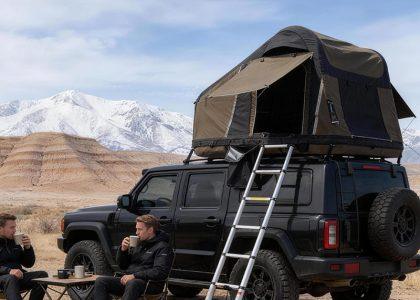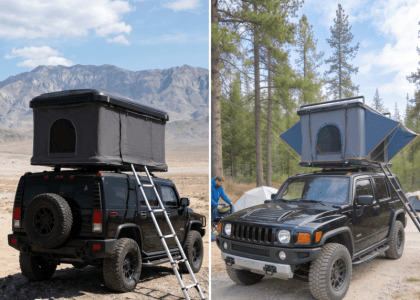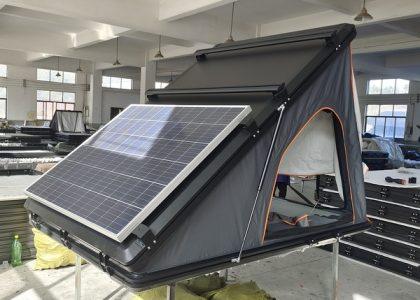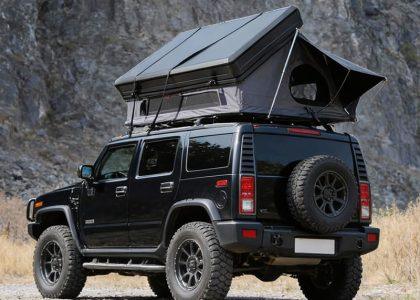
You must book LCL ocean freight and package your 150-pound plus unit in ISPM-15 compliant heat-treated wood to successfully handle shipping rooftop tents to France. Transit times and landing costs depend entirely on your chosen commercial Incoterm and the crate’s exact dimensional weight. Properly structuring your commercial invoice guarantees accurate tax assessment upon arrival at ports like Le Havre. Navigating French import regulations demands precise documentation to prevent expensive terminal storage fees.

Quick-Reference Summary
- HTS Code 6306.22: Use this exact Harmonized Tariff Schedule code for camping tents to ensure correct 12% duty assessment at French borders.
- ISPM-15 Crating Required: French border agents destroy untreated wood pallets; you must use stamped, heat-treated wood.
- CIF Taxation Method: France calculates your 20% TVA (VAT) based on the combined Cost, Insurance, and Freight total.
- DDP Over DDU: Select Delivered Duty Paid terms when importing to bypass surprise customs holding fees.
- Liftgate Necessity: Always specify liftgate service for the final residential drop-off, as European courier trucks lack ramps for 160-pound boxes.
What to Know Before You Decide
Before booking a freight forwarder, weigh the economics of shipping heavy camping gear to France against buying European inventory. You must calculate the exact base price, international freight charges, the 12% import duty, and the 20% French TVA.
As a manufacturer that exports high volumes globally, field experience consistently shows that importing a specialized unit from a dedicated Roof Top Tent Manufacturer yields higher quality materials, but only if you select the correct shipping terms. Choosing between DDP (Delivered Duty Paid) and DDU (Delivered Duty Unpaid) completely shifts your liability and upfront costs.
| Comparison Factor | Importing via DDP | Importing via DDU | Buying Locally in France |
| Upfront Costs | Highest (freight, duties & taxes prepaid) | Lowest (freight only paid upfront) | High (taxes baked into retail price) |
| French Import Duty | 12% (pre-calculated & paid) | 12% (billed to buyer upon arrival) | 0% (paid by the local retailer) |
| TVA (VAT) Payment | 20% cleared before port arrival | 20% due before port release | Included in final sale price |
| Customs Clearance | Handled directly by freight forwarder | Requires your direct intervention | None required |
| Damage Liability | Covered by shipper until delivery | Passes to buyer at origin port | Covered by local retailer |
Preparing Your Tent: A 6-Step Logistics Checklist
1. Secure ISPM-15 Compliant Crating
International maritime law prohibits the use of raw, untreated wood to prevent pest migration. You must crate your Hard Shell Roof Top Tents using wood bearing the official ISPM-15 wheat stamp. WARNING: French customs will quarantine and destroy untreated shipments at your expense.
2. Generate the Commercial Invoice
Customs agents do not guess product categories. Your commercial invoice must explicitly state the product value and list HTS code 6306.22 (Tents of synthetic fibers). This dictates your exact duty rate. Ensure the invoice clearly reflects your chosen Incoterm.
3. Calculate Taxes Using the CIF Method
France utilizes the CIF method to calculate import duties. They apply the 12% duty and 20% VAT to the sum of the product cost, marine insurance, and freight charges combined. Budget an extra 30% above your tent’s base price to cover this fully landed tax burden.
4. Book LCL Freight and Domestic LTL Transport
Unless filling a 20-foot container, you will book Less-than-Container Load (LCL) freight. Hire a domestic LTL freight carrier to move the tent to the departure port. Ensure the crate does not exceed the standard 2,000-pound LTL weight limit per pallet space.
5. Secure Comprehensive Marine Insurance
Ocean transit exposes cargo to rough seas, container shifting, and crane drops. Purchase comprehensive marine insurance covering 110% of the CIF value. Standard carrier liability pays pennies per pound and will not cover the replacement cost of premium aluminum extrusions.
6. Coordinate Final-Mile Liftgate Delivery
Once the tent clears customs, a regional carrier handles final delivery. You must request liftgate service and a pallet jack. As an OEM handling international damage claims, a common regret that only surfaces after purchase is failing to inspect the crate for forklift punctures before signing the final Bill of Lading, which immediately voids your claim ability.
Common Mistakes
1. Under-declaring dimensional weight: Caused by measuring the tent without the exterior pallet and crating materials. This results in the shipping line auditing the cargo and issuing a hefty chargeback penalty. Always measure the maximum exterior dimensions (L x W x H) of the fully sealed crate.
2. Miscalculating the CIF Value: Caused by calculating French TVA (20%) based only on the tent’s invoice price. This underfunds your customs payment, resulting in port delays and storage fees. Add your product cost, insurance premium, and ocean freight together before multiplying by 0.20.
3. Ignoring ECE safety norms: Caused by assuming US or Australian mounting hardware meets European road safety standards. This leads to failed vehicle inspections in France due to non-compliant roof load distributions. Verify that mounting brackets comply with European ECE dynamic load ratings.
4. Signing a clean Bill of Lading prematurely: Caused by feeling rushed by the delivery driver during drop-off. This assumes liability for internal fiberglass or canvas damage caused during transit. Perform a strict delivery inspection on the exterior packaging and note any scuffs on the paperwork before signing.
Troubleshooting
| Problem | Likely Cause | Solution |
| Cargo held at Le Havre port | Missing ISPM-15 stamp or incorrect HTS code. | Contact your customs broker to submit an amended commercial invoice. |
| Unexpected €300+ delivery fee | Port agent applied DDU terminal handling charges. | Pay the fee to release cargo; specify DDP terms on future orders. |
| LTL carrier refuses initial pickup | Crate exceeds tail lift weight limit or lacks banding. | Re-palletize using steel banding and book a specialized flatbed truck. |
| Forklift puncture through shell | Forklift operator missed pallet channels at cross-dock. | Refuse delivery, take date-stamped photos, initiate an insurance claim. |
| Tent delayed by 3 weeks | LCL freight missed the container consolidation window. | Track the new vessel sailing schedule via your forwarder’s portal. |
FAQ
Is it cheaper to ship my rooftop tent to France or buy a new one there?
Shipping an existing tent costs between $500 and $900 in freight, plus a 20% TVA and 12% duty based on value. If you own a premium $3,500 hard shell, shipping remains cost-effective. For entry-level Soft Shell Roof Top Tents, purchasing locally often saves money.
How do I calculate the exact France import duty on tents?
France applies a 12% customs duty on tents under HTS code 6306.22. Add the value of the tent, the shipping cost, and the insurance cost together to get the CIF value. Multiply that total figure by 0.12 to find your exact duty obligation.
What happens if my tent gets damaged during international roof tent shipping?
If you secured marine insurance and noted the damage on the Bill of Lading during delivery, you can file a claim. Photograph the damaged crate before opening it. The insurance provider reimburses you based on the declared CIF value.
How long does shipping RTT to Europe take via ocean freight?
Standard LCL ocean freight from the United States or Asia to France takes 30 to 45 days port-to-port. Add 7 to 10 days for customs clearance and final inland delivery, bringing the total transit time to roughly 6 weeks.
Can I ship my tent using standard courier services instead of freight?
No. Standard couriers enforce strict weight and girth limits that rooftop tents easily exceed. You must use specialized LTL and LCL freight networks equipped with forklifts and pallet jacks to move oversized 150-pound cargo safely.
About Everlead Outdoor
When sourcing durable gear for overseas overland travel, partnering with an experienced manufacturer eliminates compliance headaches. Everlead Outdoor is your ISO 9001-certified OEM/ODM partner. We specialize in custom-designed solutions for outdoor brands backed by over 10 years of manufacturing expertise.
From T6 aluminum fabrication to high-performance fabrics, we manage 4 scalable production lines. We maintain a non-negotiable standard of a comprehensive, in-house 100% QC inspection for every final unit dispatched globally. We leverage established logistics partnerships to handle worldwide shipping, offering flexible Incoterms like FOB, CIF, and DDP to ensure reliable delivery. Explore our complete Roof Top Tent Guide to find the exact specifications for your next build.
Final Verdict
You secure your investment and avoid customs delays by strictly adhering to ISPM-15 crating regulations and calculating your CIF-based import taxes accurately. Select exact DDP freight terms to eliminate unexpected terminal fees across the Atlantic. Review your commercial invoice today to guarantee HTS code 6306.22 is present, and contact a specialized freight forwarder immediately to lock in your LCL container space.