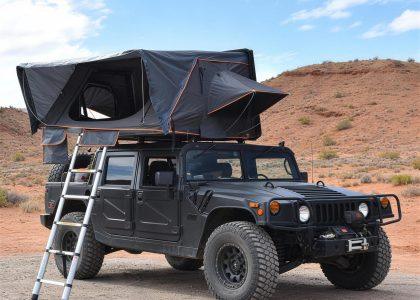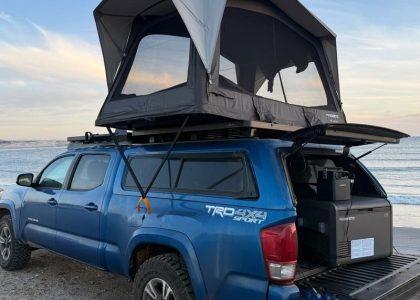
Few things test an overlander’s resolve quite like waking up to a torrential downpour miles from civilization. A high-quality rooftop tent is absolutely capable of surviving severe storms because its elevated design and heavy-duty poly-cotton canvas are engineered specifically to deflect heavy rain and wind. However, understanding the difference between true waterproofing, hydrostatic head ratings, and interior condensation is vital to staying dry. This comprehensive guide will explore how rooftop tents handle wet weather, decode waterproof ratings, diagnose common leaks, and provide actionable maintenance tips to protect your investment.
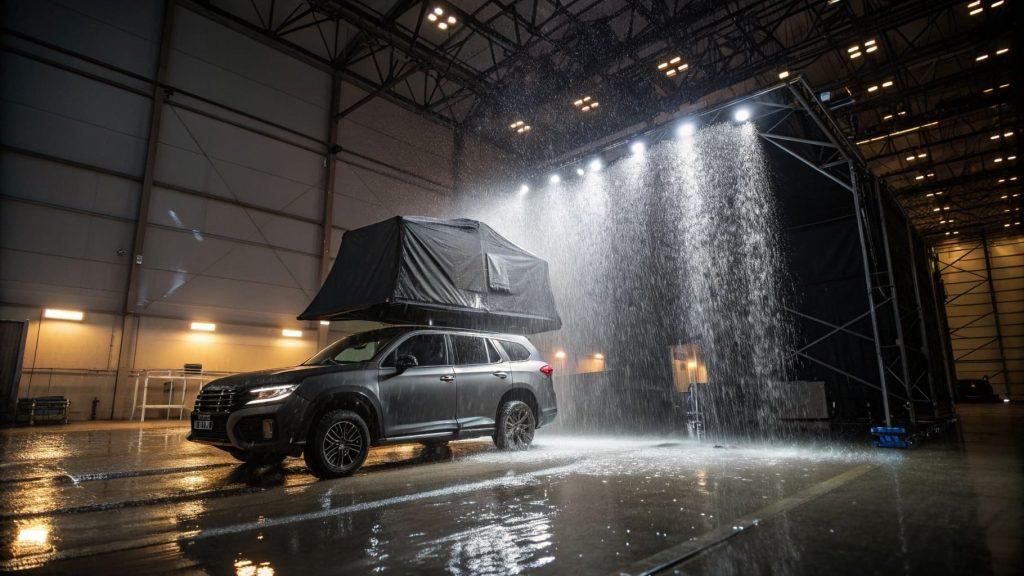
Table of Contents
- Are rooftop tents fully waterproof?
- Can rooftop tents handle heavy rain or storms?
- Why does my rooftop tent leak?
- What waterproof rating is good for RTT fabric?
- Does rain affect rooftop tent durability?
- Should I add a rainfly or extra cover?
Are rooftop tents fully waterproof?
Most premium rooftop tents are not 100% waterproof, but rather highly water-resistant. Because tents require breathable fabrics and stitched seams to prevent internal condensation, absolute waterproofing is impossible without creating a suffocating environment. However, high-quality canvas and polyurethane coatings will effectively keep you completely dry during normal rainfall.
Creating a completely waterproof environment would require using non-breathable materials like solid PVC or heavy rubber. While these materials block external rain entirely, they trap every ounce of moisture exhaled by the campers inside. Within hours, the interior walls would be dripping with sweat and condensation.
To solve this, manufacturers rely on tightly woven 280g to 400g poly-cotton canvas. This material swells slightly when wet, sealing the microscopic gaps between the threads. Combined with a factory-applied Polyurethane (PU) coating and a separate rainfly, the tent strikes the perfect balance between weather protection and necessary airflow.
Can rooftop tents handle heavy rain or storms?
Yes, rooftop tents can handle heavy rain and severe storms much better than traditional ground tents. Their elevated position prevents ground flooding, while heavy-duty aluminum frames, taut rainflies, and thick 280g to 400g canvas easily deflect torrential downpours and high-speed winds without collapsing.
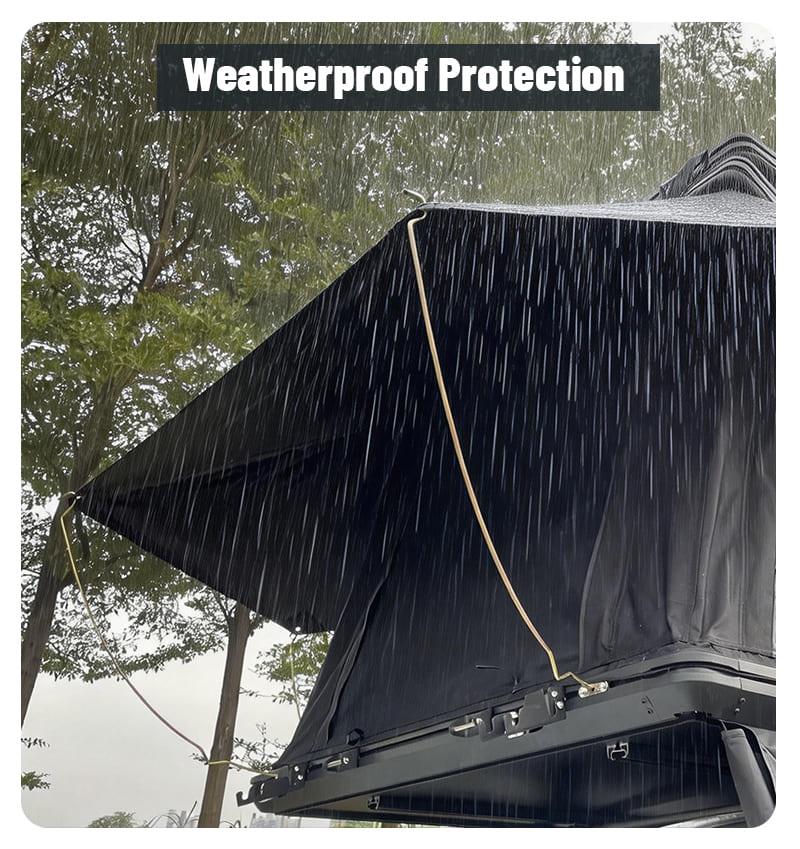
When camping on the ground, a severe storm often results in water pooling beneath the tent floor, eventually seeping through the base. Rooftop tents eliminate this risk entirely by keeping your shelter suspended safely above the mud, flowing water, and uneven terrain.
Furthermore, rooftop tents are built around rigid, expedition-grade frameworks. Structural advantages during a storm include:
- Aluminum Base Plates: Solid honeycomb aluminum or insulated bases prevent cold air and moisture from penetrating the floor.
- Tensioned Window Awnings: Metal spring rods keep window canopies taut, allowing you to leave windows partially open for ventilation without rain entering.
- Aerodynamic Shells: Hard shell tents can be pointed directly into the wind, deflecting high-speed gusts and driving rain over the roof.
Why does my rooftop tent leak?
Your rooftop tent leaks primarily due to failing seam tape, degraded fabric waterproof coatings from UV exposure, or improper setup that allows water to pool on the roof. Condensation buildup inside the tent is also frequently mistaken for a rain leak during humid or cold weather camping.
Over time, intense sun exposure degrades the factory polyurethane coating and causes the protective tape on the interior seams to peel. When water penetrates these compromised areas, capillary action draws the moisture directly into the fabric, eventually dripping onto your mattress. Additionally, if the tent is not pitched tightly, rain will pool in sagging areas of the canvas, eventually forcing water through the weave under its own weight.
However, industry experts note that the majority of reported “leaks” are actually severe condensation. Two adults exhale roughly one liter of water vapor overnight. If the tent is entirely zipped shut during a cold rainstorm, that vapor hits the cold canvas walls, condenses into water droplets, and rains back down.
| Issue | Identification | Immediate Solution |
| Seam Leak | Water dripping specifically from stitched joints or corners. | Apply a liquid seam sealer to the affected area. |
| Coating Failure | Canvas darkens, feels saturated, and drips from the ceiling. | Re-treat the exterior with a silicone/PU waterproofing spray. |
| Condensation | Walls are uniformly damp; mattress is wet underneath. | Open top vents; install an anti-condensation mesh mat. |
What waterproof rating is good for RTT fabric?
A waterproof rating between 2000mm and 3000mm is considered excellent for rooftop tent (RTT) fabric. This hydrostatic head rating means the material can withstand a 2- to 3-meter column of water before leaking, which is more than sufficient for sustaining prolonged, heavy rainstorms during off-road expeditions.
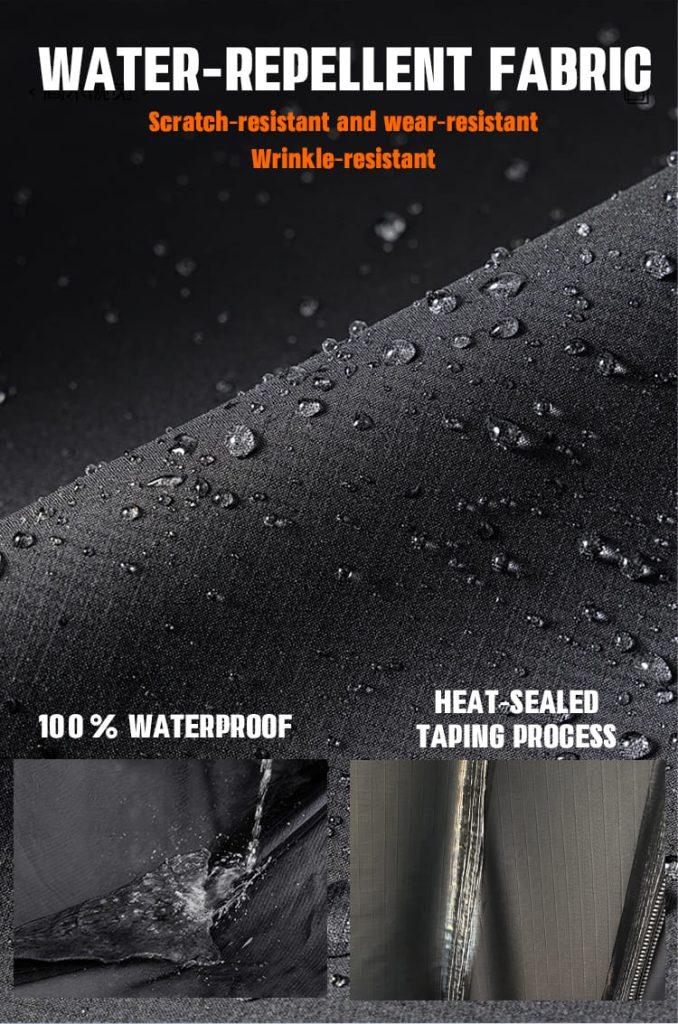
The Hydrostatic Head (HH) rating is the global standard for measuring fabric waterproofing. It indicates exactly how much water pressure a fabric can endure before water forces its way through the weave. Because the best roof top tents use canvas that is significantly thicker than standard backpacking nylon, it does not require artificially inflated numbers (like 10,000mm) to keep you dry.
Here is a breakdown of what different ratings mean for overlanding:
- Under 1500mm: Suitable for light drizzle and fair-weather weekend camping. Will eventually saturate in heavy storms.
- 2000mm – 3000mm: The industry sweet spot. Easily handles torrential, sustained rain while allowing the poly-cotton canvas to remain breathable.
- Over 3000mm (Rainflies): Often found on the separate polyester rainfly overhanging the tent, providing an impenetrable first line of defense.
Does rain affect rooftop tent durability?
Rain does not directly damage rooftop tent fabrics, but packing a tent while it is wet will severely impact its durability. Storing damp canvas inside a dark, sealed PVC cover or aluminum shell breeds toxic black mold within 48 hours, permanently destroying the fabric’s waterproof polyurethane coating.
The high-density canvas used in modern roof tents is explicitly designed to be soaked repeatedly. The danger arises exclusively during the pack-down process. If you are forced to close the tent during a morning rainstorm, the trapped moisture will immediately begin breaking down the synthetic fibers and seam tape.
To maintain the durability of your tent, you must follow strict wet-weather care protocols. If packed wet, the tent must be opened entirely within 24 to 48 hours in a dry, sunny environment. Once fully expanded, allow the canvas to dry completely before repacking. Regularly cleaning the fabric with mild soap and reapplying a UV-protectant waterproofing spray once a year will extend its life by over a decade.
Should I add a rainfly or extra cover?
You should use a rainfly on your rooftop tent, as it provides a crucial secondary barrier that absorbs the impact of heavy rain and creates an insulating air gap. However, throwing an extra tarp over the entire tent restricts airflow, severely increasing internal condensation and reducing comfort.
Nearly all premium rooftop tents come with a factory-designed rainfly. This elevated secondary roof sits a few inches above the main canvas body. The gap between the rainfly and the tent allows air to circulate, carrying away interior moisture while the fly takes the physical beating from the rain and wind.
Campers often make the mistake of throwing heavy plastic tarps over their tents during extreme weather. While a tarp stops the rain, it completely seals the tent, suffocating the occupants and causing massive internal condensation. Instead of relying on makeshift tarps, trust your tent’s factory rainfly and ensure your awning spring rods are tensioned properly to shed water.
Conclusion
Rooftop tents are meticulously engineered to thrive in adverse weather conditions. While no breathable fabric is completely waterproof, a tent boasting a 2000mm to 3000mm hydrostatic head rating will effortlessly keep you dry through severe rainstorms. The key to wet-weather overlanding is identifying the difference between a true seam leak and natural condensation, maintaining proper airflow, and ensuring your canvas is completely dry before long-term storage. By consulting a comprehensive roof top tent guide to understand your shelter’s capabilities and following basic maintenance routines, you can confidently weather any storm the trail throws your way.
About Everlead Outdoor: Engineered for the Elements
When you are miles away from civilization, the weather resistance of your shelter is non-negotiable. At Everlead Outdoor, we manufacture expedition-grade rooftop tents built specifically to withstand torrential rain and severe coastal winds. As an ISO 9001-certified OEM/ODM manufacturer, we supply global outdoor brands with premium shelters crafted from heavy-duty 280g poly-cotton canvas featuring strict 3000mm waterproof ratings and expertly tape-sealed seams.Every tent we engineer—from our aerodynamic hard shell rooftop tents to our expansive soft shells—undergoes a rigorous 100% full-unit in-house QC inspection to ensure flawless weatherproofing before it ever leaves the factory floor. Whether you are an established brand or an expanding retailer, partnering with Everlead Outdoor guarantees your customers receive dependable, storm-ready equipment designed for the harshest environments on earth.