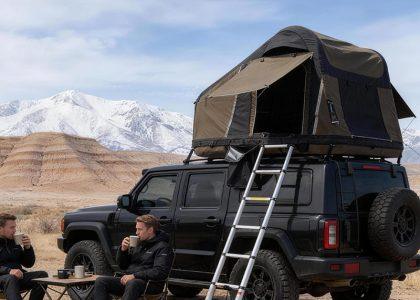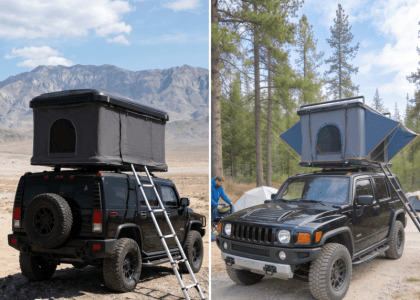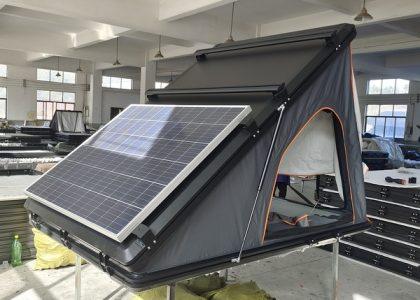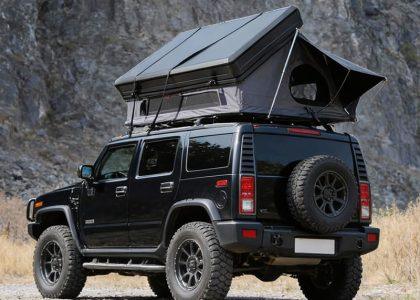
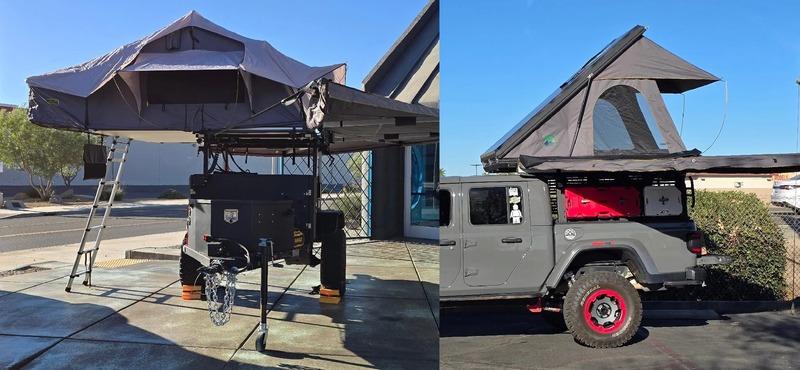
True wedge hard shell tents strictly outperform hybrid rooftop tents in setup speed and internal bedding storage, while hybrids dominate in total sleeping capacity. Your final choice depends entirely on whether you value a 15-second camp setup or a massive fold-out mattress footprint. Retailers regularly market hybrid models as offering the best of both worlds without explaining the physical compromises required to fold a heavy floor inside a rigid shell. We engineer both clamshell vs fold-out mechanicals for global outdoor brands. This guide exposes the exact structural differences between a pop up vs fold out roof tent so you can buy with confidence.
Top Differences at a Glance
- Setup Speed Winner: True Hard Shell — Heavy-duty gas struts open the wedge tent in under 15 seconds without deploying a ladder.
- Sleeping Capacity Winner: Hybrid — The fold-out design doubles the mattress footprint, comfortably sleeping three to four adults.
- Bedding Storage Winner: True Hard Shell — Leaves 3 to 4 inches of internal void space for thick sleeping bags and pillows when closed.
- Thermal Efficiency Winner: True Hard Shell — A solid, insulated aluminum floor retains body heat far better than an exposed, overhanging fabric base.
- Aerodynamics Winner: True Hard Shell — A continuous, non-folding shell profile slips through highway wind with minimal drag.
What to Know Before You Decide
Many buyers mistakenly assume a hybrid hard shell roof top tent sets up just as fast as a true wedge. To deploy a hybrid, you must release the latches, extend the ladder, use the ladder as a lever to unfold the heavy floor extension, and manually insert six metal window spring rods. Expect true pack-down time metrics closer to 5 minutes rather than 30 seconds.
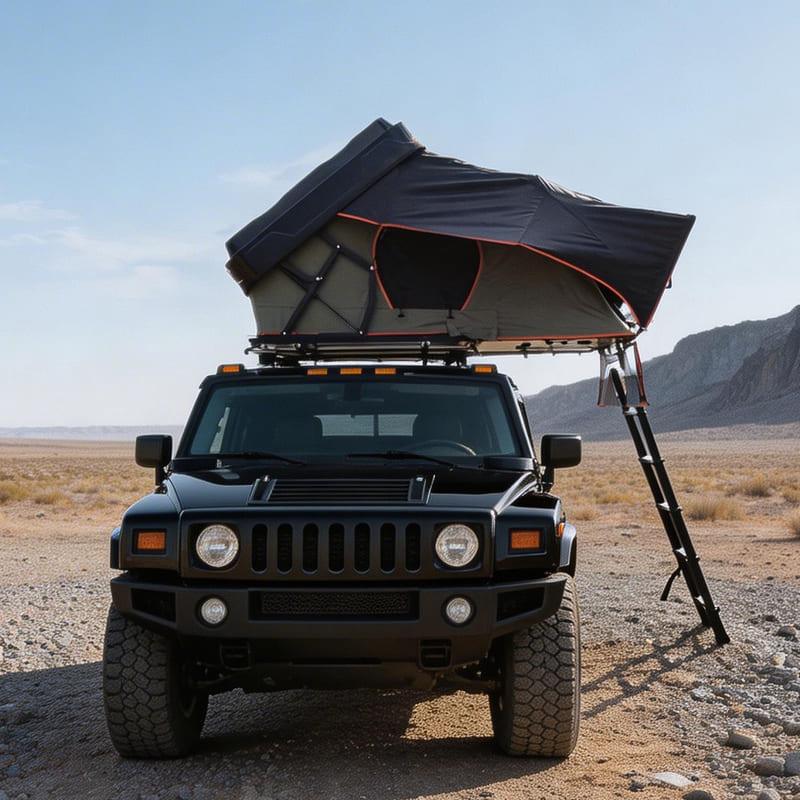
You must also account for hinge mechanical stress and storage constraints. Because the hybrid floor folds inward, it consumes the entire internal cavity, meaning you cannot leave thick sleeping bags inside when closed. Finally, the fold-out floor overhang relies entirely on the ladder for structural stability and exposes the thin fabric underside to freezing crosswinds, drastically reducing thermal retention.
| Feature | True Hard Shell (Wedge/Pop-up) | Hybrid (Fold-out Hardshell) |
| Setup Time | < 30 seconds | 3–5 minutes |
| Bedding Storage | Yes (3–4 inches clearance) | No (Must remove pillows/bags) |
| Floor Support | 100% supported by vehicle rack | 50% supported by ladder |
| Sleeping Capacity | 2 adults (approx. 50″ wide) | 3–4 adults (approx. 72″ wide) |
| Thermal Loss | Low (insulated solid floor base) | High (exposed fabric overhang) |
| Hinge Stress | Low (single rear pivot point) | High (central folding pivot) |
OEM Structural Engineering Comparison
True Setup Time
A true pop up vs fold out roof tent comparison reveals massive time discrepancies. A wedge tent requires unclasping two rear latches and letting the 600N gas struts push the roof open automatically. Total deployment takes 15 seconds. A hybrid requires unlatching the shell, extending the telescoping ladder, pulling the ladder downward to unfold the floor plate, and installing multiple tension rods. Total time averages 3 to 5 minutes.

Bedding Storage
True hard shells utilize a single solid floor plate, leaving a continuous vertical void above the mattress when closed. You can easily store two heavy sleeping bags and pillows. In practice, what most buyers discover after their first season is that a hybrid’s internal folding floor consumes that entire void space. Attempting to force the shell closed over thick bedding will permanently warp the aluminum latches.
Sleeping Footprint
Hybrids crush true hard shells in total square footage. A standard wedge maxes out at 50 inches wide, forcing two adults to sleep shoulder-to-shoulder with zero extra room for duffel bags. A hybrid roof top tent expands outward to 72 inches or more. This easily accommodates a family of four or an expansive king-sized mattress, making it vastly superior for long-term basecamp lounging.
Weight & Aerodynamics
OEM structural engineering dictates that hybrids weigh significantly more. They require both a rigid outer hardshell and a heavy-duty internal folding floor mechanism. While a slim wedge weighs 130 lbs, a hybrid regularly exceeds 160 lbs. This extreme weight pushes dangerously close to a standard crossover’s 150-pound dynamic roof limit, limiting vehicle compatibility.
Weather & Thermal Resistance
True hard shells feature an insulated aluminum base resting completely on your vehicle crossbars, blocking the wind. Hybrids suspend half the floor in mid-air. A common regret that only surfaces after purchase is realizing that freezing winter winds strip body heat directly through the unsupported floors. You must install a heavily insulated anti-condensation mat to survive late autumn temperatures in a hybrid.
Common Hybrid & Wedge Mistakes
- Leaving Bedding in a Hybrid: Buyers misunderstand the folding mechanics and leave their sleeping bags inside. Consequently, they crush the internal hinges and snap the shell latches when pulling the roof down. Always remove all sleeping bags and pillows before closing a hybrid model.
- Ignoring the Dynamic Roof Limit: Shoppers assume all hard shell tents weigh the same. Consequently, they mount a 170-pound hybrid on a 150-pound rated roof, causing structural vehicle damage during off-road driving. Strictly calculate the tent’s weight plus your 20-pound crossbars before purchasing.
- Setting an Improper Ladder Angle: Campers rush the hybrid setup and leave the ladder completely vertical. Consequently, the fold-out floor sags under human weight, warping the central hinges permanently. Lock the ladder at exactly 75 degrees to ensure it bears the overhang weight properly.
- Closing with Wet Canvas: Users fold the hybrid floor inward during a rainstorm and leave it packed for weeks. Consequently, they trap moisture inside the dark shell, breeding toxic mold within 48 hours. Open the tent immediately upon arriving home to let the canvas dry completely.
Troubleshooting
| Problem | Likely Cause | Solution |
| Hybrid shell latches won’t close | Thick bedding left on the folding floor. | Remove all sleeping bags and pillows before initiating the fold-down sequence. |
| Fold-out floor feels unstable | Ladder not locked firmly into the tracks. | Ensure every telescoping ladder pin clicks securely into place before applying weight. |
| Draft coming through the floor | Unsupported fabric overhang exposed to wind. | Install an insulated anti-condensation mat directly beneath the foam mattress. |
| Window spring rods snapping | Attempting to fold the tent with rods still inserted. | Remove and stow all tension rods before levering the floor upward. |
| Water pooling on wedge roof | Vehicle parked completely flat on the campsite. | Park on a slight 2-degree incline so rain flows backward off the hard shell tent. |
Frequently Asked Questions
Does a hybrid hard shell roof top tent set up as fast as a wedge?
No. While a wedge takes exactly 15 seconds to pop open, a hybrid takes 3 to 5 minutes. You must manually deploy the ladder, unfold the heavy floor extension, and insert the metal window awnings before the tent is usable.
Can you leave sleeping bags inside a closed hybrid tent?
Usually, no. The fold-out floor mechanism folds inward, occupying the interior void space. Attempting to force the hard shell closed over thick bedding will permanently warp the aluminum hinges and destroy the heavy-duty latches.
Is the overhanging floor on a fold out rooftop tent safe?
Yes, provided you deploy the ladder deployment correctly. The ladder acts as the primary structural support pillar for the overhang. It must be locked securely at a 75-degree angle on firm ground to support two adults.
Why are hybrid rooftop tents heavier than standard hard shells?
Hybrids combine the heavy components of two different designs. They utilize a thick fiberglass or aluminum upper shell for aerodynamics, plus the heavy internal aluminum folding base plate required to double the sleeping footprint.
Do hybrid tents suffer from condensation more than pop-up tents?
Yes. Hybrids have larger internal volumes and rely heavily on the canvas walls rather than insulated solid shell panels. You must keep the upper side vents open to let exhaled breath escape, otherwise, condensation will soak your mattress.
About Everlead Outdoor
Understanding the precise mechanical limitations of folding floors versus solid wedges requires decades of hands-on structural testing. Everlead Outdoor is your reliable partner in manufacturing excellence. Based in China, we are an ISO 9001-certified OEM/ODM partner providing end-to-end production solutions for premium outdoor brands worldwide. With over 10 years of dedicated experience and a strict 100% full-unit in-house QC inspection pledge, we engineer high-performance roof top tents and vehicle awnings that your customers can trust in the harshest conditions.
Final Verdict
Evaluating a hard shell vs fold out rooftop tent forces you to weigh setup convenience against interior volume. Choose a true wedge hard shell if you move camp every single day and demand instant deployment. Choose a hybrid if you set up basecamp for multiple days and require the massive sleeping footprint to accommodate your family. Verify your vehicle’s dynamic roof limit before committing to a heavy hybrid. Explore our complete OEM manufacturing catalog today to see how we engineer the strongest tents in the overlanding industry.