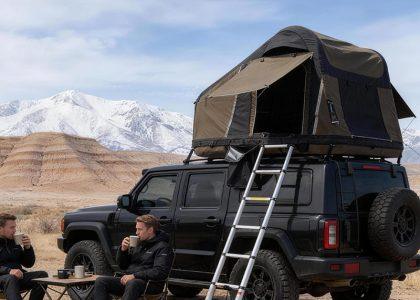
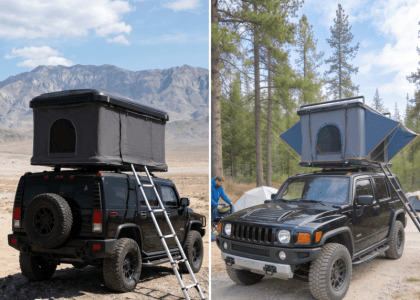
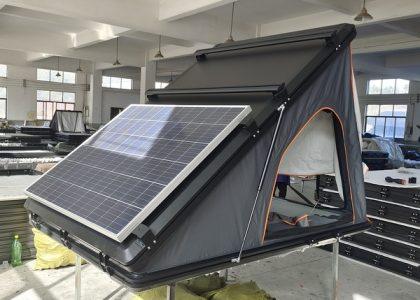
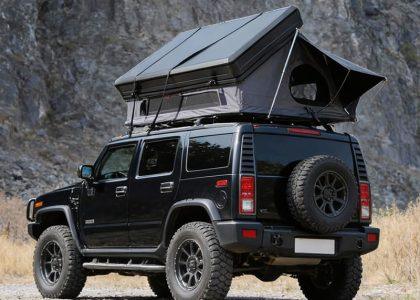
When selecting a roof rack for a rooftop tent, the most critical factor is ensuring your system’s dynamic load rating exceeds the combined weight of your tent and the rack itself. Beyond weight capacity, you must evaluate crossbar spacing, the profile of the mounting surface, and how the rack distributes load across your vehicle.
Selecting the wrong rack system can lead to structural damage to your vehicle, voided insurance claims, and dangerous handling dynamics at highway speeds.
The “Lowest Denominator” Weight Rule
Your vehicle has multiple weight limits, and your true carrying capacity is always dictated by the weakest link in the chain. You must identify the specific limits for your vehicle’s roof structure (found in the owner’s manual), the factory roof rails (if equipped), and the aftermarket crossbars or platform rack.
If your aftermarket crossbars are rated for 220 lbs, but your vehicle’s roof is only rated for 150 lbs, your absolute maximum limit is 150 lbs.
Dynamic vs. Static Load Ratings
Understanding the difference between dynamic and static load ratings is non-negotiable when mounting a rooftop tent.
- Dynamic Load Rating: This is the maximum weight your roof and rack can safely support while the vehicle is in motion. Acceleration, braking, cornering, and wind resistance multiply the forces applied to your roof. Your total dynamic load is calculated by adding the weight of the tent, the roof rack itself, and any permanently mounted accessories.
- Static Load Rating: This is the maximum weight your system can support when the vehicle is parked. Static capacity is typically three to five times higher than dynamic capacity. This higher stationary limit is what allows the roof to safely support the tent plus the weight of the occupants sleeping inside.
Types of Roof Rack Systems
The type of rack you choose dictates not only how much weight you can carry but also how easily the tent can be mounted.
1. Factory Crossbars (Generally Not Recommended)
Most factory-installed crossbars are thin, arched for aerodynamics, and possess low dynamic load ratings (often under 100 lbs). Because a hard shell rooftop tent requires a flat mounting surface, curved factory bars can cause the tent base to bow or stress the mounting hardware.
2. Heavy-Duty Aftermarket Crossbars
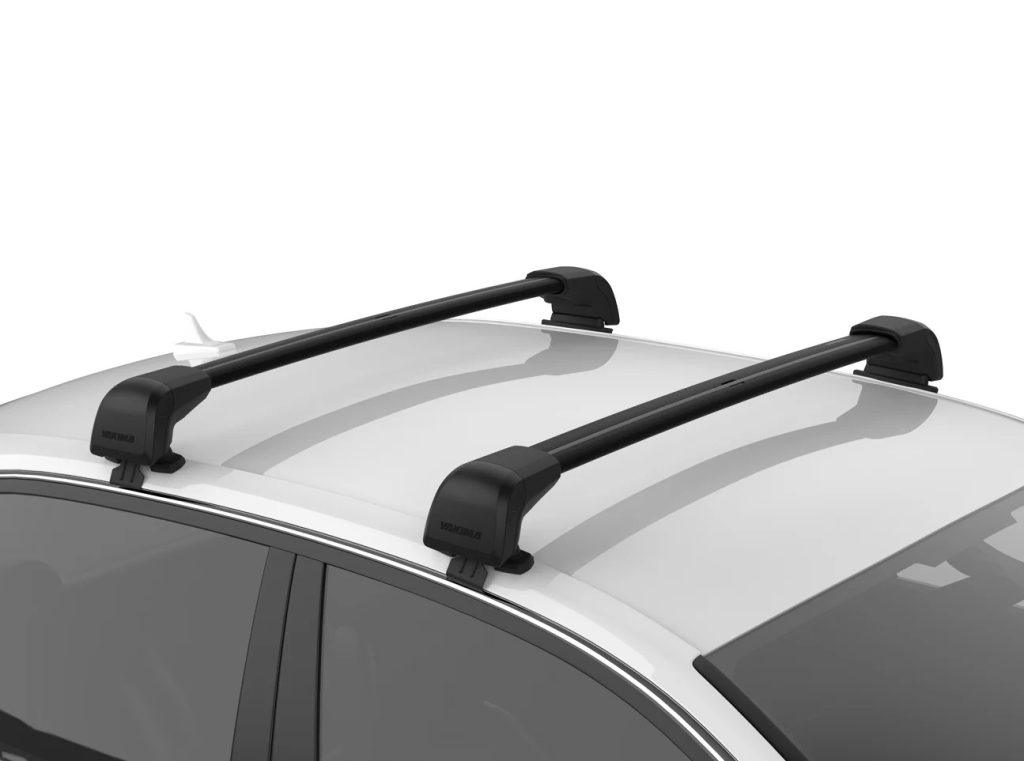
Upgrading to a pair of heavy-duty, flat aftermarket crossbars is the standard approach for most rooftop tents. They provide a level mounting surface and often feature T-slots for secure hardware attachment. Most rooftop tents only require two properly spaced crossbars to function safely.
3. Platform Racks
Slatted platform racks offer exceptional weight distribution and accessory mounting options. However, they carry a significant weight penalty. A heavy-duty platform rack can weigh between 70 and 90 lbs. If your vehicle has a 165 lb dynamic roof limit, bolting on an 80 lb platform rack leaves you with only 85 lbs for the tent itself—ruling out almost every hard shell model on the market.
4. Truck Bed Racks
For pickup owners, bed racks bypass the vehicle’s roof entirely. Because bed racks mount directly to the truck’s bed rails, they offer massive dynamic capacities—often ranging from 500 to 1,000 lbs. This allows for the installation of the largest, heaviest rooftop tents without approaching safety limits.
Crossbar Spacing and Support Requirements
Even with the correct weight capacity, the physical layout of your rack must match the tent’s structural requirements.
- Minimum Spacing: Crossbars must be spaced adequately to prevent the tent from flexing at highway speeds. For many hard shell tents, crossbars must be spaced at least 30 inches apart longitudinally.
- Channel Alignment: The mounting tracks on the underside of the tent must align with your crossbars. On some platform racks, the crossbars run front-to-back or feature raised perimeter edges (basket style) that interfere with standard tent clamps.
About Everlead Outdoor
Everlead Outdoor is a dedicated OEM and ODM manufacturing partner specializing in the high-volume production of premium roof top tents and vehicle awnings. Because high dynamic load ratings are difficult to achieve on standard SUVs, Everlead helps global brands keep tent weights low by utilizing aviation-grade T6 aluminum for robust, lightweight frame fabrication.
Operating from an ISO 9001:2015-certified facility in Dongguan, China, Everlead adheres to strict 6S management protocols. Unlike manufacturers that rely on batch sampling, the factory guarantees a 100% full-unit in-house inspection on every dispatch, ensuring repeatable consistency for major export markets.
Submit your Tech Pack to our manufacturing specialists for a detailed, non-binding proposal on your next custom roof top tent project.