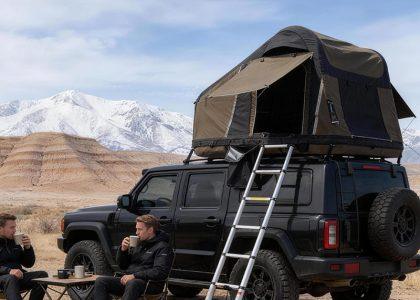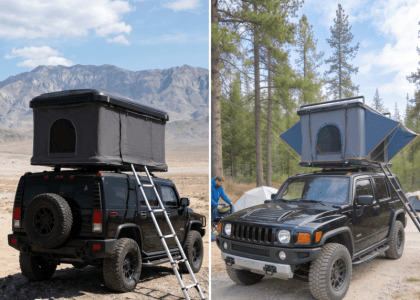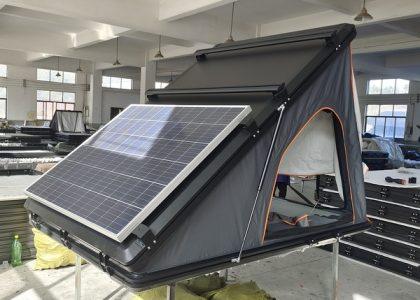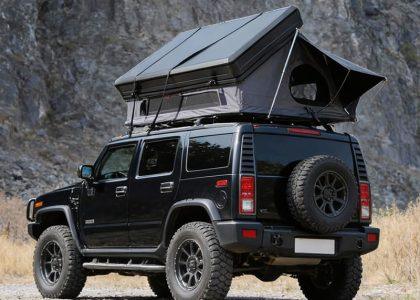
The average China to Canada rooftop tent shipping cost ranges from $450 to $850 CAD for a single unit via LCL sea freight to Vancouver, or approximately $1,200 to $1,800 CAD for expedited Air Freight delivery. The exact final invoice depends on the cubic meter (CBM) volume of your specific model and whether you utilize DDP shipping terms to bypass local port handling fees. Accurately calculating your dimensional weight and applying the correct customs codes prevents expensive delays at Canadian border checkpoints.
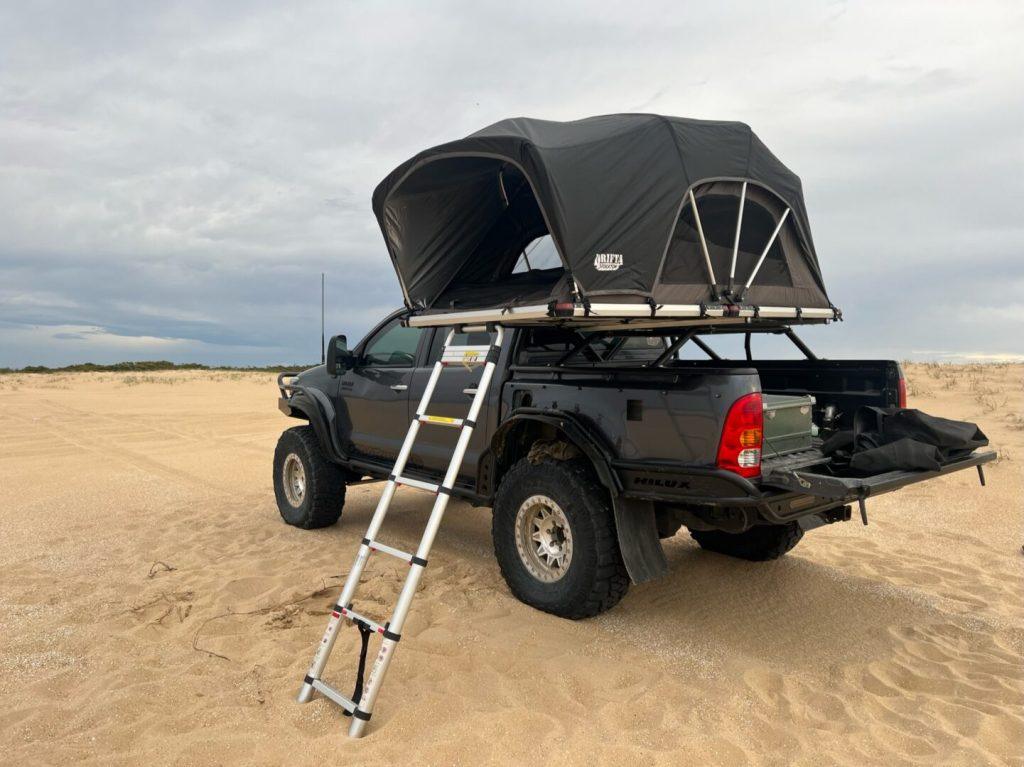
Quick-Reference Summary
- HS Code 6306.22: Apply this exact Harmonized System code for synthetic camping tents to determine your correct CBSA import tariffs.
- Hard Shell RTT CBM: Expect a standard 2-person aluminum wedge tent crate to occupy roughly 1.5 to 2.2 Cubic Meters (CBM), establishing your baseline LCL freight cost.
- DDP Shipping: Choose Delivered Duty Paid terms for single-unit orders to lock in a guaranteed door-to-door delivery rate without surprise port fees.
- LCL vs. FCL: Order at least 15 tents to make a 20ft Full Container Load (FCL) financially viable, drastically lowering the per-unit shipping price.
- Liftgate Requirement: Budget an extra $100 to $150 CAD for final-mile liftgate residential delivery, as standard Canadian couriers reject 150lb crates.
What to Know Before You Decide
Before initiating an order to import rooftop tent to Canada, buyers must verify if the international freight math actually yields savings. Individual overlanders frequently worry that final-mile freight charges will erase the discount of buying direct from an overseas Roof Top Tent Manufacturer. B2B retailers must also account for specific Canada customs duty on rooftop tents.
As an OEM manufacturer shipping hundreds of units annually, field experience consistently shows that importing via FOB leaves B2B buyers exposed to fluctuating Vancouver port storage fees, whereas booking full DDP shipping guarantees a predictable landed cost.
| Expense Factor | Import Direct (1 Unit LCL) | Buy Local (Canadian Retail) |
| Base Product Price | $1,200 – $1,600 | $3,500 – $4,800 |
| Sea Freight Cost | $450 – $850 | $0 (Baked into retail price) |
| CBSA Import Duties | 17% – 18% (Based on HS Code) | $0 (Paid by retailer) |
| GST/PST Payment | Calculated by CBSA at entry | Paid at final checkout |
| Customs Clearance | Handled by your freight broker | N/A |
| Final-Mile Freight | $100 – $200 (Liftgate required) | $150 – $300 (Domestic delivery) |
3 Exact Rooftop Tent Shipping Cost Scenarios
To accurately project your China to Canada rooftop tent shipping cost, you must calculate the exact dimensional weight. A standard Hard Shell Roof Top Tents wooden shipping crate measures approximately 2.2m x 1.4m x 0.35m, generating roughly 1.07 CBM. We will use this baseline to outline exactly what you will pay based on current 2026 freight logistics.
Scenario A: 1 Sample Unit via Air Freight
Cost: $1,200 – $1,800 CAD
Transit Time: 7 – 12 days
Airlines charge strictly by volumetric weight. A 160lb tent encased in protective packaging triggers massive dimensional penalties. This route provides incredibly fast transit time but rarely makes economic sense for individual buyers. B2B retailers only utilize air freight when they desperately require a factory prototype for immediate marketing shoots.
Scenario B: 1 Unit via LCL Sea Freight to Vancouver
Cost: $450 – $850 CAD
Transit Time: 25 – 40 days
Less-than-Container Load (LCL) pricing revolves entirely around cubic volume. At roughly $150 to $200 CAD per CBM, the base ocean rate appears low. However, mandatory port destination fees in Vancouver and specialized final-mile delivery to your driveway will quickly double that initial base quote. This is the standard method for shipping RTT from China to Canada for single consumers.
Scenario C: Bulk B2B Order via 20ft FCL
Cost: $2,000 – $2,800 CAD Total ($100 – $140 per tent)
Transit Time: 20 – 30 days
A standard 20-foot container holds approximately 20 to 25 hard shell tents. B2B retailers route these directly into major logistics hubs like the Vancouver port or Toronto port. Distributing the flat container fee across multiple units provides the absolute lowest rooftop tent sea freight rates available, maximizing retail profit margins.
As a manufacturer routing high volumes of hard shell tents to the Toronto port, a common regret that only surfaces after purchase is when buyers fail to provide their freight forwarder with HS code 6306.22, losing a full week to CBSA inspections compared to those who declare it properly.
Common Mistakes
1. Ignoring Form B3-3 documentation: This mistake stems from assuming the ocean carrier files Canadian customs paperwork automatically. Consequently, the CBSA holds your cargo in a Vancouver warehouse, accruing daily $50 storage penalties. You must hire a licensed customs broker or select DDP shipping terms to handle Form B3-3 filing properly.
2. Using the wrong customs classification: Buyers cause this by declaring the cargo as generic “auto parts” on the commercial invoice to avoid high taxes. The CBSA eventually audits the shipment and applies punitive tariffs. Explicitly list HS code 6306.22 for synthetic camping tents to ensure strict legal compliance.
3. Miscalculating hard shell RTT CBM: This happens when buyers use the raw product dimensions instead of the exterior wooden crate dimensions for freight quotes. The freight forwarder issues a costly chargeback before loading the vessel. Ask your manufacturer for the exact shipping crate exterior measurements to calculate accurate volumetric weight.
4. Underestimating final-mile delivery constraints: Consumers cause this by assuming a standard postal truck will drop the 160lb tent at their garage. The local dispatcher refuses delivery because standard trucks lack heavy-duty ramps. You must pre-book specialized LTL freight with mandatory liftgate residential delivery services.
Troubleshooting
| Problem | Likely Cause | Solution |
| Shipment held at Vancouver port | Missing Form B3-3 or unpaid GST/PST. | Contact your customs broker immediately to submit the required tax payments to the CBSA. |
| Surprise $300 invoice upon arrival | You imported the tent under FOB terms. | Pay the destination terminal handling charges; use DDP terms for future single-unit orders. |
| LTL carrier missed delivery date | Truck lacked a motorized liftgate for the heavy crate. | Call the dispatcher to reschedule, explicitly requesting liftgate residential delivery. |
| Air Freight quote exceeds $2,500 | Forwarder calculated cost based on extreme dimensional weight. | Reject the air quote and book standard LCL sea freight to save over $1,500 CAD. |
| Tent delayed leaving Shenzhen | LCL cargo missed the weekly container consolidation window. | Track the vessel via your freight forwarder and wait for the next scheduled departure. |
FAQ
Will the shipping cost from China exceed the retail price of buying locally?
No. Even with a $600 to $800 CAD shipping fee and 18% import duty, buying directly from a premium manufacturer often yields a landed cost of $2,400 CAD. Comparable premium aluminum wedge tents retail in Canada for over $3,800 CAD, leaving a substantial financial advantage.
How do I avoid hidden CBSA customs fees and surprise port charges in Canada?
You avoid surprise port fees by instructing your manufacturer to ship the unit under DDP (Delivered Duty Paid) terms. This forces the shipper to pre-calculate and pre-pay all ocean freight, Terminal Handling Charges (THC), and Canada customs duty on rooftop tents before the cargo leaves Asia.
Does it make economic sense to order a single tent via LCL or Air Freight?
For single units, LCL shipping cost for tents provides the only economically viable path, averaging under $850 CAD for door-to-door delivery. Air freight easily exceeds $1,500 CAD due to the volumetric weight of the crate, negating the financial benefit of importing entirely.
Do soft shell tents cost less to ship than hard shell models?
Yes. Soft Shell Roof Top Tents fold completely in half, drastically reducing their final packaging footprint. This lower cubic meter (CBM) volume directly translates to cheaper LCL sea freight rates compared to full-length aluminum hard shells.
How long does door-to-door delivery take from China to Toronto?
Expect a 35 to 45 day transit time for door-to-door delivery to Eastern Canada. The ocean vessel requires roughly 25 days to reach Vancouver, followed by 5 days for CBSA customs clearance, and another 7 to 10 days for cross-country rail or truck freight to Toronto.
About Everlead Outdoor
When navigating complex international logistics and Canadian import tariffs, partnering with an experienced manufacturer eliminates costly border delays. Everlead Outdoor is your ISO 9001-certified OEM/ODM partner, delivering your project on time, on budget, and to the highest global quality standards. We specialize in professional-grade, custom-designed solutions for outdoor brands and retailers worldwide, backed by over 10 years of manufacturing expertise.
From T6 aluminum fabrication to high-performance fabrics, we manage complete production lines that require strict quality management. We maintain a non-negotiable standard of a 100% in-house QC inspection for every final unit dispatched globally. We utilize established logistics partnerships to handle all worldwide shipping, offering flexible Incoterms like FOB, CIF, and DDP to ensure reliable delivery directly to your Canadian dock.
Final Verdict
You secure the best China to Canada rooftop tent shipping cost by accurately calculating your exact CBM and selecting DDP freight terms for single-unit imports. Always verify that your commercial invoice explicitly lists HS code 6306.22 to ensure the CBSA applies the correct import tariffs. Review our Roof Top Tent Guide today to lock in an accurate specification sheet and avoid surprise dimensional weight penalties during your next freight booking.