Executive Summary
[North American 4x4 Distributor]
       │
       ▼ (Challenge: Cosmetic Variances & Hardware Installation Flaws from Incumbent OEM)
[Everlead Outdoor: Specification Audit & DFM Checkpoint Mapping]
       │
       ▼ (Reference Sample Validation & Locked Bill of Materials)
[Standardized Production: ISO 9001:2015 & 6S Controlled Assembly Lines]
       │
       ▼ (Quality Assurance: 100% Final-Unit Functional & Cosmetic Inspection)
[Global Logistics: FOB/CIF/DDP Direct Port & Warehouse Delivery]
       │
       ▼ (Outcome: Destination-Side Defect Risk Mitigated; Repeatable Supply Baseline)
- Client Entity: An established North American outdoor and 4×4 vehicle accessories distributor.
- Core Challenge: Overcoming finished-unit quality drift, inconsistent hardware torquing, cosmetic blemishes, and weak transit packaging associated with their previous manufacturing partner.
- Everlead OEM/ODM Solution: Executed a structured supplier transition program, including a comprehensive technical specification audit, reference sample benchmark validation, 6S assembly line controls, and non-negotiable 100% final-unit QC inspection.
- Business Outcome: Established an approved production and inspection standard that enabled the distributor to move forward with an alternative OEM supply program, eliminating the need for secondary destination-side receiving inspections.
Project at a Glance
| Parameter | Project Specification |
| Client Location | North America (Regional 4×4 & Overlanding Distributor) |
| Project Category | OEM Supplier Transition & Quality-Control Standardization |
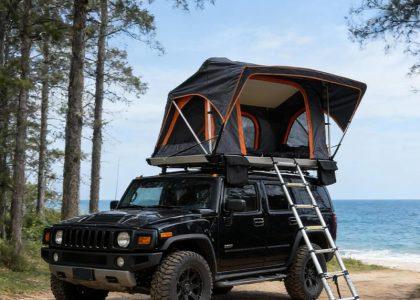
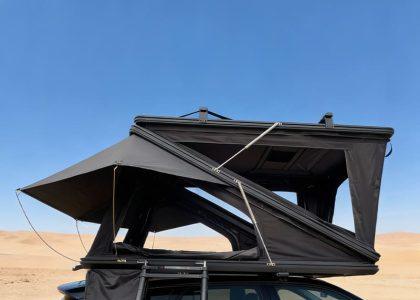
| Product Type | Hard Shell Roof Top Tents |
| Primary Materials | Aviation-grade T6 aluminum frame, aluminum honeycomb shell, stainless hardware |
| Key Customizations | Custom powder-coat finish, branded hardware integration, drop-tested export cartons |
| Quality Framework | ISO 9001:2015 certified, 6S shop-floor methodology, 100% full-unit final inspection |
| Production Timeline | Sample validation: 4–6 weeks | Mass production run: 8–12 weeks |
| Logistics Incoterms | Flexible FOB, CIF, and DDP direct-to-warehouse delivery options |
| Commercial Scope | Initial transition run of [Verified Order Quantity] units |
Client Background
The client is an established North American distributor specializing in vehicle-supported camping gear, suspension upgrades, and off-road accessories. Operating through a nationwide network of independent 4×4 upfitters and direct-to-consumer digital channels, the company relies heavily on brand reputation for premium, field-ready reliability.
The Problem: Supplier Inconsistency & Rising Inspection Costs
The distributor previously sourced vehicle tents from an incumbent Asian factory. While initial sample runs were acceptable, sustained commercial production revealed critical manufacturing variations. As production volumes scaled, inconsistencies across finished units eroded dealer confidence and increased administrative friction.
The distributor faced several recurring manufacturing issues:
- Cosmetic Surface Flaws: Irregularities in exterior shell powder coating, minor surface abrasions, and inconsistent joint caulking across production batches.
- Hardware & Assembly Tolerances: Misaligned gas-strut mounting plates, variable fastener torque settings, and subtle alignment issues during closure.
- Branding Drift: Variations in badge alignment, logo printing clarity, and internal textile labeling across consecutive production cycles.
- Fragile Export Packaging: Substandard exterior cartons and inadequate corner buffering that resulted in cosmetic damage during intermodal ocean and domestic LTL transit.
- Costly Destination Rework: The distributor was forced to stage, unbox, and conduct secondary receiving inspections at their North American distribution hub before releasing inventory to dealers.
Root Manufacturing Requirements
To justify a supplier transition, the distributor established strict technical acceptance benchmarks for any prospective hard shell rooftop tent manufacturer:
- Standardized Production Workflows: Full implementation of certified quality management systems to guarantee that unit #100 matches unit #1 in fit, finish, and performance.
- Explicit Component Traceability: A locked Bill of Materials (BOM) specifying fastener tensile grades, gas strut force ratings, and coating thickness tolerances.
- 100% In-House Inspection Verification: Elimination of random AQL statistical sampling in favor of end-to-end individual unit testing prior to boxing.
- Transit-Proof Export Packaging: High-density honeycomb carton construction capable of passing international drop testing without component movement.
The Everlead OEM Solution
With over 10 years of manufacturing expertise as an ISO 9001:2015 certified roof top tent OEM manufacturer, Everlead Outdoor deployed a structured, 8-stage transition roadmap designed to restore quality consistency and streamline procurement.
[1. Specification Audit] ──> [2. Reference Prototyping] ──> [3. 6S Mass Production] ──> [4. 100% Unit QC]
   (BOM & DFM Alignment)       (4–6 Weeks Validation)         (Locked Fixtures & Jigs)     (Zero-Defect Audit)
1. Specification Audit & DFM Mapping
Everlead’s engineering team reviewed the client’s existing product drawings, CAD files, and historic failure reports. A comprehensive Design for Manufacturability (DFM) review identified geometric stress points in the frame profile, optimized hinge load distributions, and drafted a standardized manufacturing checklist.
2. Critical Inspection Point (CIP) Definition
Everlead established formal quality gates across the production floor, dividing the assembly into defined inspection stages:
- Incoming Raw Materials (IQC): Verifying T6 aluminum thickness, canvas tensile strength, and hardware plating resistance.
- Sub-Assembly (IPQC): Checking welded frame squareness, continuous adhesive bead width, and gas strut mounting bracket torque.
- Final Assembly (FQC): Evaluating complete operational cycling, canvas tension, and weather-seal compression.
Prototype & Reference Sample Validation
Prior to mass production authorization, Everlead built a benchmark reference sample within a 4–6 week development window:
- Precision Tooling Jigs: Fabricated custom alignment jigs to guarantee identical bracket positioning and hinge symmetry across all units.
- Hardware Standardization: Standardized all critical structural fasteners to corrosion-resistant 304 stainless steel with specified torque limits.
- Client Benchmark Sign-Off: The physical prototype was dispatched to North America for technical sign-off, providing a locked physical standard against which all future production units would be audited.
Controlled Mass Production & 6S Methodology
Upon formal sample approval, production moved to Everlead’s dedicated assembly lines:
- 6S Shop-Floor Management: Assembly cells were organized under strict 6S protocols (Sort, Set in order, Shine, Standardize, Sustain, Safety) to eliminate tool cross-contamination, protect painted surfaces from swarf scratching, and ensure consistent line workflow.
- Traceable Component Batches: Raw materials, fabric lots, and strut shipments were cataloged with lot tracking numbers to preserve supply chain transparency.
- Manufacturing Lead Time: The initial production run of [Verified Order Quantity] units was completed within the planned 8–12 week manufacturing window.
100% Final-Unit Quality Control
Unlike facilities that rely on random AQL batch sampling (e.g., inspecting only 5–10% of a container), Everlead Outdoor enforces a non-negotiable 100% in-house quality inspection protocol for every finished unit:
┌─────────────────────────────────────────────────────────────────────────┐
│                      100% FINAL QC INSPECTION MATRIX                    │
├──────────────────────────┬──────────────────────────┬───────────────────┤
│ Mechanical Cycling       │ Weatherproof Sealing     │ Cosmetic Finish   │
│ Full manual deployment   │ Continuous compression   │ High-lumen surface│
│ & strut balance check.   │ audit on perimeter seals.│ inspection for    │
│                          │                          │ coating defects.  │
└──────────────────────────┴──────────────────────────┴───────────────────┘
- Functional Cycling: Every tent is fully deployed and collapsed on the test stand to verify gas strut balance, hinge alignment, and secure latch engagement.
- Perimeter Seal Verification: Silicone rubber gaskets are inspected under compression to ensure 100% continuous contact against water and dust ingress.
- Aesthetic Surface Inspection: T6 aluminum shells are examined under high-lumen inspection lamps to detect and eliminate any surface scratches, orange-peel powder defects, or misaligned badges.
- Hardware & Accessory Checklist: Packing personnel conduct a strict checklist audit for every included component—including mounting tracks, brackets, bolts, and telescopic ladders.
Packaging, Container Staging & Logistics
To resolve the client’s previous freight damage issues, Everlead upgraded the export packaging architecture:
- Reinforced Export Packaging: Tents were encased in heavy-duty 5-ply corrugated export cartons supported by custom-molded high-density EPE foam end-caps and corner protectors.
- Drop-Test Compliance: The packaging design successfully passed international standard drop testing, ensuring interior components remain immobilized during handling.
- Flexible Logistics Management: Handled ocean freight consolidation, customs documentation, and container dispatch under [Incoterm Used: FOB / CIF / DDP], delivering inventory smoothly to the client’s receiving facility.
Results & Commercial Outcome
The OEM supplier transition program achieved its operational and strategic objectives:
- Approved Production Standard: The project established an approved production and inspection standard that enabled the distributor to move forward with an alternative OEM supply program.
- Quality Consistency: [Verified QC Improvement] in unit-to-unit cosmetic finish, structural alignment, and hardware installation accuracy across the entire manufacturing run.
- Elimination of Secondary Inspection: Standardized 100% factory-gate QC enabled the client to cross-dock incoming containers directly to dealer channels without incurring secondary North American labor costs.
- Supply Program Continuation: Based on initial run performance, the distributor finalized [Verified Reorder Information] for ongoing seasonal replenishment.
Before vs. After Supplier Transition
| Manufacturing Parameter | Incumbent Factory Performance | Everlead OEM Supply Program |
| Quality Control Method | Random batch sampling (AQL) | Mandatory 100% in-house individual unit testing |
| Assembly Repeatability | Variable torque; minor bracket misalignment | Standardized assembly jigs and locked torque tolerances |
| Surface Finish Standard | Inconsistent coating; frequent surface blemishes | High-lumen cosmetic audit under 6S floor controls |
| Packaging Robustness | Standard single-wall carton; loose foam buffers | Reinforced 5-ply cartons with custom-molded EPE end-caps |
| Receiving Workflow | Required destination-side unboxing & sorting | Direct-to-dealer cross-docking without secondary inspection |
| Documentation & BOM | Undocumented part changes; loose tolerances | Formally locked CAD specs, DFM audits, and traceable BOMs |
Key Takeaways for B2B Sourcing Managers
- Supplier Transitions Require Strict Benchmarking: Establishing a locked physical reference sample prevents misunderstandings and aligns quality expectations before mass manufacturing.
- 100% QC Lowers Total Landed Costs: Investing in single-unit factory inspection drastically reduces destination-side inspection overhead, warranty claims, and reverse logistics costs.
- Packaging is a Functional Component: Heavy, oversized camping products require engineered export packaging to protect margins against intermodal freight damage.
Frequently Asked Questions (FAQ)
What is the process for executing a rooftop tent supplier transition? A supplier transition begins with an engineering audit of existing CAD files and failure logs, followed by DFM optimization, reference sample validation, formal specification locking, and trial batch manufacturing under 100% QC protocols.
How does 100% final-unit QC differ from standard AQL batch sampling? Standard AQL sampling tests only a small percentage of a production run, allowing minor defects to slip through undetected. Everlead’s 100% QC protocol manually tests the mechanics, weather seals, cosmetics, and accessories of every single unit before packaging.
What lead times should distributors anticipate during an OEM supplier transition? Distributors should budget 4 to 6 weeks for reference sample fabrication and validation, followed by 8 to 12 weeks for mass production, plus regional ocean freight transit times.
Can Everlead accommodate existing proprietary tooling and custom designs? Yes. Everlead operates as a full OEM/ODM partner capable of working from existing client CAD files, adapting custom aluminum extrusion dies, or engineering proprietary designs from scratch.
Standardize Your OEM Supply Chain with Everlead Outdoor
Are you experiencing quality drift or packaging failures with your current manufacturing partner? Everlead Outdoor provides ISO 9001-certified OEM/ODM manufacturing solutions for outdoor brands, overlanding companies, and regional distributors worldwide.
- Direct RFQ Email: [email protected]
- Phone / WhatsApp: +86 13726240980
- Corporate Portal: everleadoutdoor.com
- Technical Sourcing Guide: Explore our comprehensive Roof Top Tent Guide for manufacturing parameters.