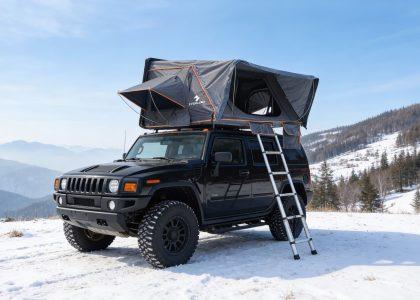
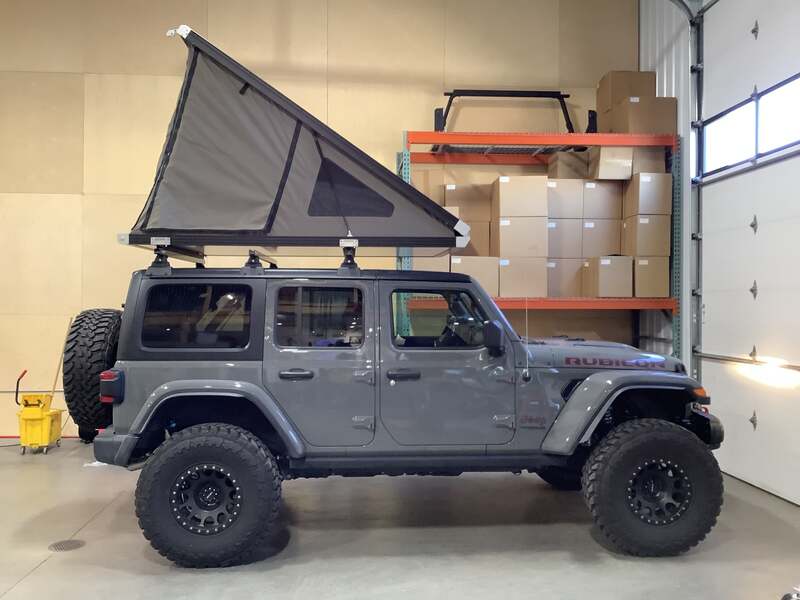
The Jeep Wrangler hardtop is a structural paradox. It provides excellent weather protection, yet its fiberglass composition (SMC – Sheet Molded Compound) is not inherently designed for high-point loads. As the Chief Product Engineer at Everlead Outdoor, I frequently field questions from B2B distributors regarding structural failures on Jeep roofs.
The problem is rarely the tent. The problem is the interface between the tent and the vehicle.
This technical analysis covers the engineering requirements for mounting Roof Top Tents for Jeep platforms, specifically the Wrangler (JK, JL) and the Gladiator. We will look at load dynamics, material specifications, and the CNC-machined solutions we manufacture to mitigate structural risks.
The Physics of Roof Loading: Dynamic vs. Static
Before discussing specific tent models, we must clarify the most misunderstood metric in the aftermarket industry: the dynamic roof load rating jeep owners must adhere to.
Dynamic Load (In Motion)
This is the force exerted on the roof structure while the vehicle is moving. When a Jeep hits a washboard road or a rock crawl obstacle, the G-forces effectively multiply the weight of the roof payload.
- The Limit: The stock Wrangler hardtop generally has a manufacturer-rated dynamic limit of near zero without a rack system. Aftermarket gutter racks typically rate this at roughly 45kg to 50kg (100 lbs) per bar.
- The Engineering Reality: If a tent weighs 75kg, two gutter bars are often insufficient for aggressive off-roading. The stress concentration can fracture the fiberglass rain gutter.
Static Load (Stationary)
This is the weight capacity when the vehicle is parked.
- The Limit: Generally 300kg+ (660 lbs).
- The Calculation: Tent Weight + Occupant Weight + Bedding.
- Our Testing: In the Everlead testing facility, our base plates are static load tested to 350kg to ensure zero deformation.
For the best rooftop tent for jeep wrangler unlimited builds, we recommend systems that transfer load away from the fiberglass or use our specialized wide-footprint clamps to distribute pressure.
Material Science: Why We Specify 6063-T5 Aluminum
In my 15 years designing outdoor equipment, I have seen too many trading companies sell tents made with recycled 6061 alloy or thin-walled steel that rusts. At Everlead, we operate our own aluminum extrusion lines.
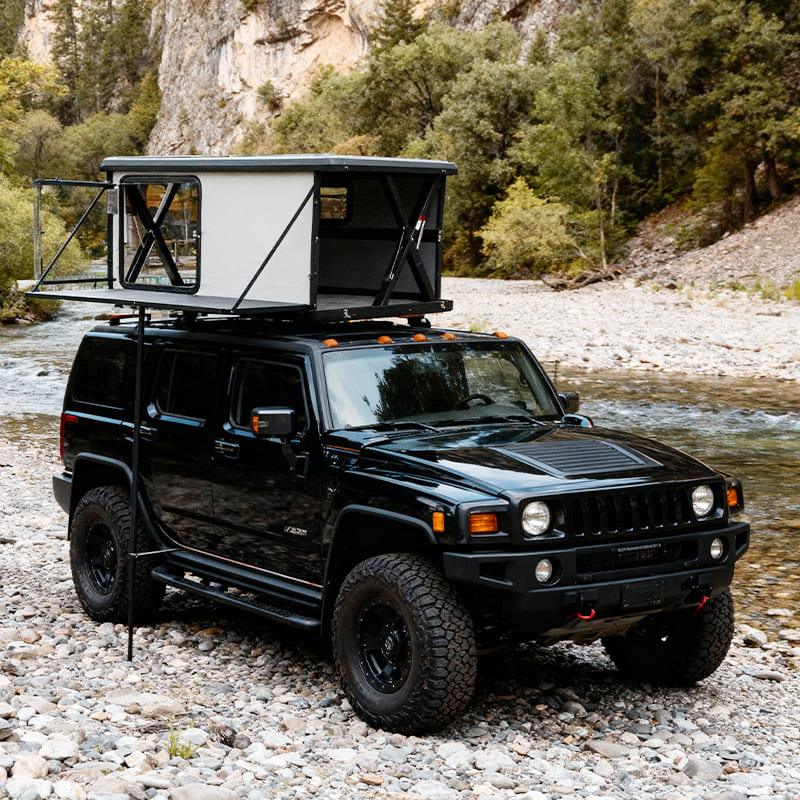
For our Hard Shell Roof Top Tent, we strictly use 6063-T5 aviation-grade aluminum.
Why 6063-T5?
- Tensile Strength: The T5 tempering process (cooled from an elevated temperature shaping process and then artificially aged) gives the alloy the necessary yield strength to resist impact from low-hanging branches—a common hazard for Jeepers.
- Corrosion Resistance: This alloy accepts anodization better than 6061. We apply a 15-micron anodized layer to prevent oxidation, even in coastal salt-air environments.
- Honeycomb Base Construction: We sandwich an aluminum honeycomb core between two aluminum sheets. This provides a high strength-to-weight ratio, essential for keeping the center of gravity low on a lifted Jeep.
The Mounting Solution: CNC-Machined Gutter Brackets
The primary pain point for Wrangler owners is drilling. Nobody wants to drill holes in a $2,000 hardtop. However, standard universal clamps often have a narrow contact patch, which creates stress risers on the fiberglass rain gutter.
Our Solution: The Wide-Stance Clamp
We engineered specific no-drill roof tent mounting brackets for our Jeep clients.
- Fabrication: machined via CNC from a solid block of aluminum, not stamped steel.
- Load Distribution: We increased the clamping surface area by 40% compared to standard market brackets. This wider footprint distributes the downward force over a larger section of the rain gutter, significantly reducing the risk of fiberglass micro-cracking.
- Interface: We bond a high-density rubber pad to the clamp face. This increases the coefficient of friction, preventing the rack from sliding backward under wind load, while protecting the hardtop finish.
Fabric Engineering: Poly-Cotton vs. Oxford
Many budget manufacturers use Oxford cloth (polyester) because it is cheap and lightweight. As an engineer, I advise against Oxford cloth for serious overland expeditions. It functions like a plastic bag: it keeps water out, but it traps moisture in.
We specify a 280g or 320g Poly-cotton Ripstop Canvas for our premium lines.
Moisture Management (Dew Point)
When sleeping in a Jeep in cold environments, human respiration generates significant humidity.
- Oxford Cloth: Condensation forms rapidly on the inner walls, dripping onto the bedding.
- Poly-Cotton: The cotton fibers absorb and wick moisture, allowing it to evaporate through the breathable membrane. This manages the dew point effectively.
Waterproofing Metrics
We do not rely on supplier claims. We test every batch of canvas in our on-site lab.
- Hydrostatic Head: Our canvas is rated at PU3000mm+. This means a 3-meter column of water can sit on the fabric without leaking.
- Seam Sealing: We use double-stitched seams with heat-welded PU tape to ensure zero ingress during heavy storms.
Solutions for the Jeep Gladiator
The Gladiator presents a different challenge: the bed length. The 5-foot bed is too short for most standard tents unless mounted high, which increases drag.
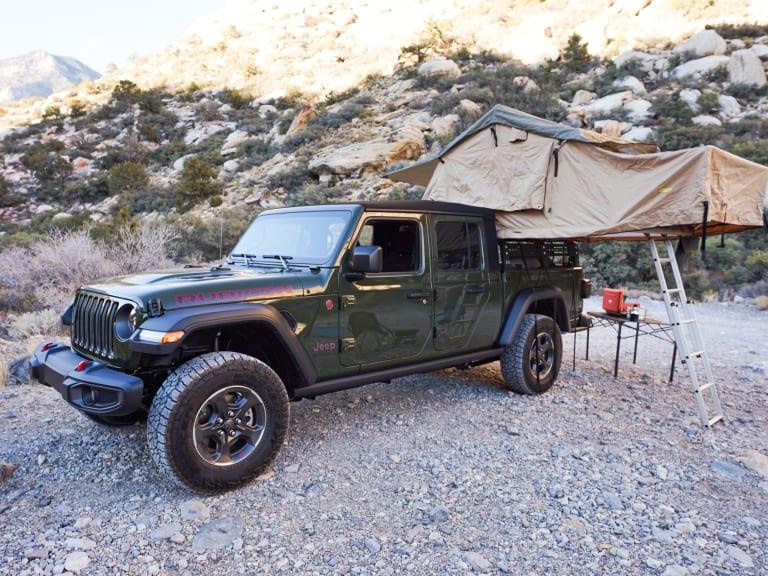
The Bed Rack Configuration
For a jeep gladiator bed rack tent setup, we recommend our side-opening Soft Shell Roof Top Tent.
- Folded Footprint: Our soft shell models fold down to a compact size (approx. 120cm x 140cm), fitting perfectly over a Gladiator bed rack without overhanging the rear bumper or interfering with the roof panels.
- Weight: At approximately 55kg, these units are light enough to be supported by mid-height bed racks without affecting the vehicle’s suspension sag.
- Annex Integration: The high mounting point of a bed rack is ideal for deploying a lower annex room, creating a private changing area.
Aerodynamics and Wind Resistance
Jeeps are shaped like bricks. Adding a tent usually makes wind noise unbearable. We addressed this in our aerodynamic modeling.
Wind Tunnel Testing
We subject our prototype shells to Grade 7 wind resistance tests (wind speeds of 18–20 m/s).
- Profile Design: Our hard shell wedge designs feature a leading-edge angle calculated to deflect air over the top surface rather than trapping it.
- Noise Reduction: By using T-slot channels integrated into the aluminum frame rather than protruding bolts, we reduce turbulent airflow noise (whistling) at highway speeds.
If you are setting up a base camp, pairing the tent with a Car Awning provides necessary UV protection. Our awnings attach directly to the tent’s T-slot frame, maintaining structural rigidity.
Conclusion: Partnering with the Factory
The Jeep market demands durability. A cracked hardtop or a bent tent frame will destroy a brand’s reputation instantly.
At Everlead Outdoor, we are not a trading company acting as a middleman. We are the factory. We control the metallurgy, the stitching, and the assembly.
B2B Opportunity: OEM/ODM Services
For off-road shops, distributors, and brand owners looking to launch a private-label line of Roof Top Tents for Jeep, we offer full OEM/ODM capabilities.
- Custom Molds: We can CNC machine custom shell designs to differentiate your product from generic models.
- Branding: Laser-etched logos on aluminum bodies and custom fabric colorways to match Jeep factory colors (e.g., Sarge Green, Sting-Gray).
Contact our engineering team today to discuss wholesale specifications and request our latest catalog.