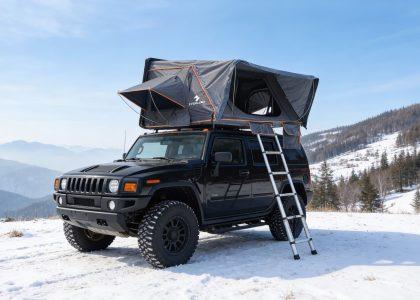
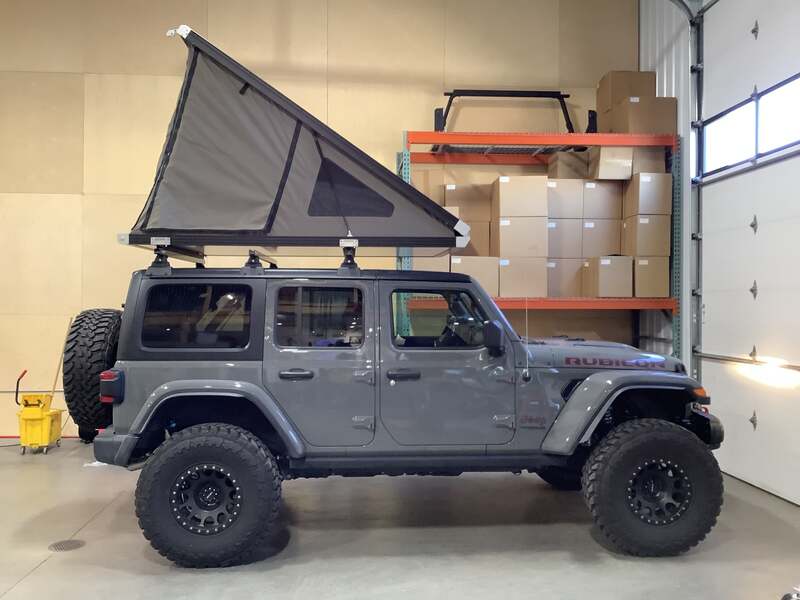
The Jeep Wrangler is the most capable 4×4 platform on the market, but it presents a specific engineering challenge for roof top tents (RTTs): the fiberglass hardtop.
I have spent 15 years overseeing the structural design of outdoor equipment. At Everlead Outdoor, we don’t just sketch designs; we destroy prototypes in our testing facility to find their breaking points. A recurring issue we see in the US market is Wrangler owners mounting heavy tents on stock rain gutters or factory crossbars, leading to stress fractures in the fiberglass or mounting failure on the trail.
This guide analyzes the physics of mounting a roof top tent for Jeep Wrangler platforms (JK, JL, and Gladiator), breaking down load ratings and structural integrity requirements.
Understanding Load Ratings: Static vs. Dynamic
Before selecting a tent, you must understand the two critical weight ratings. Confusing these leads to structural failure.
1. Dynamic Weight Capacity (The “Moving” Load)
This is the maximum weight the vehicle’s roof structure can support while the vehicle is in motion on the highway or trail.
- The Constraint: For a standard Jeep Wrangler hardtop without reinforcement, this is often rated as low as 0 lbs by the manufacturer (strictly speaking, Jeep advises against roof loads on the hardtop itself without a rack system). Aftermarket rain gutter racks generally cap out around 85 lbs to 100 lbs.
- The Risk: Inertia. When you hit a pothole or rock, a 60kg tent exerts significantly more downward force (G-force) than its static weight.
2. Static Weight Capacity (The “Parked” Load)
This is the weight the roof can hold when the vehicle is stationary.
- The Number: Usually 3x the dynamic rating.
- The Scenario: This accounts for the tent weight + the ladder + the occupants sleeping inside.
Engineering Note: At the Everlead factory, we test our tent base rails to withstand static loads exceeding 300kg (660 lbs) to ensure safety. However, the tent’s strength is irrelevant if the vehicle’s roof fails. You need a rack system that transfers this load away from the fiberglass.
Mounting Options for Jeep Wrangler
To safely carry an RTT, you must bypass the limitations of the fiberglass shell. Here are the three mechanical solutions, ranked by structural rigidity.
1. The Backbone System (Internal Frame) – Highly Recommended
This system involves drilling through the hardtop and connecting the external roof rack directly to the vehicle’s internal roll bar (sport bar) and tub.
- Pros: Transfers load to the chassis, not the fiberglass. Increases dynamic load capacity to approx. 100kg – 120kg.
- Cons: Requires drilling; longer installation time.
- Verdict: Essential for heavy hardshell tents.
2. The Exoskeleton Rack
A steel tube cage that bolts to the windshield hinges and the rear bumper/frame, completely hovering over the hardtop.
- Pros: Zero weight on the hardtop. High load capacity.
- Cons: Increases drag coefficient significantly; wind noise; difficult to remove the hardtop panels.
3. Gutter Mounts (Rain Gutter Clamps)
- Pros: Cheap, no drilling.
- Cons: Not recommended for RTTs. The fiberglass gutter is prone to cracking under the torque of a rooftop tent in crosswinds or off-camber trails.
Best Everlead Tents for Jeep Wrangler
Once your rack system is sorted, you need to select the correct tent profile. Aerodynamics and Center of Gravity (CoG) are critical for the boxy Wrangler profile.
Hard Shell Options: For the 4-Door (Unlimited)
For the Wrangler Unlimited (4-door), the longer wheelbase provides better stability. We manufacture our shells using 6063-T5 Aircraft-Grade Aluminum. This alloy provides high tensile strength while keeping weight down.
If you are running a backbone system, our Hard Shell Roof Top Tents are the optimal choice.
- Benefits: Thin profile (reducing vertical CoG), sets up in 30 seconds.
- Durability: Our aluminum shells undergo salt-spray testing for 72 hours to ensure the hinges and latches resist corrosion, essential for coastal overlanding.
Soft Shell Options: For the 2-Door
The 2-door Wrangler has a short wheelbase, making it sensitive to weight distribution. A heavy hard shell can cause “tippiness” on steep inclines.
We recommend Soft Shell Tents for 2-door models.
- Benefits: Lighter weight (typically 45-55kg) and a smaller folded footprint that fits within the shorter roofline.
- Structure: We use 25mm aluminum poles with reinforced nylon joints, tested to withstand Force 7 winds in our manufacturing wind tunnel.
Why Weight Matters for Off-Roading
As an engineer, I cannot stress this enough: Mass dictates handling. Adding 70kg to the roof of a lifted Jeep raises the Center of Gravity.
- Roll Angle: A higher CoG reduces the angle at which the vehicle will tip over.
- Suspension Cycle: Heavy roof loads increase body roll. If you are running stock suspension, the added sway can be dangerous at highway speeds.
Recommendation: If your tent weighs over 60kg, upgrade your sway bars or shocks to handle the increased dampening requirements.
Installation Tips from the Factory Floor
We include standard mounting hardware with every unit, but proper installation is the variable we cannot control. Follow these protocols:
- Use Threadlocker: Vibrations from Mud-Terrain tires loosen bolts. Apply Blue Loctite (medium strength) to all mounting bracket bolts.
- Torque Settings: Do not overtighten. Crushing the crossbar reduces its structural integrity. We recommend torquing M8 bolts to 15-20 Nm.
- Crossbar Spread: For our hard shell models, ensure the distance between your roof rack crossbars is at least 80cm (31.5 inches) to prevent the floor panel from flexing during occupancy.
Conclusion
Mounting a roof top tent for a Jeep Wrangler requires respecting the mechanical limits of the vehicle. Do not rely on the stock hardtop. Invest in a backbone system or exoskeleton, and choose a tent using high-grade aluminum or reinforced composites.
Safety is engineered, not guessed.
🛠️ Engineers’ Recommendation (B2B & Wholesale)
Are you an outfitter or dealer looking to stock RTTs specifically designed for high-stress off-road applications?
At Everlead Outdoor, we offer OEM/ODM solutions tailored to your brand. From custom 6063-T5 aluminum molds to specific fabric denier requirements, we build to your spec.
[Contact Our Engineering Team for a Quote] Let’s build equipment that survives the trail.