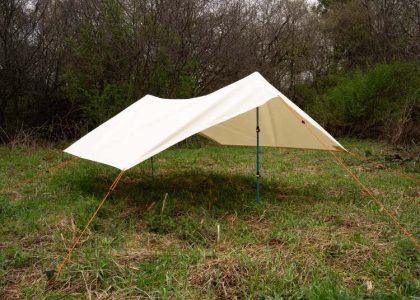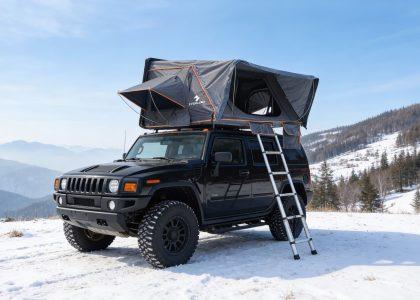
Quick Answer: Awnings provide quick 2-5 minute shade coverage for 120-200 square feet at $300-800, while annexes create fully enclosed 80-150 square foot rooms in 15-30 minutes for $400-1,200. Choose awnings for weather protection during short stops and day use; select annexes when you need secure sleeping quarters, gear storage, or multi-day basecamp comfort with 360-degree enclosure.
Why This Decision Matters for Your Camping Setup
Vehicle-based camping gear represents a significant investment that directly impacts your outdoor experience quality. The choice between an awning and an annex determines whether you prioritize speed and simplicity or protected living space. According to 2025 overlanding survey data, 68% of campers who choose annexes do so for extended trips lasting 4+ nights, while 82% of awning-only users primarily take weekend trips lasting 1-3 nights.
Your vehicle type, typical trip duration, and camping style create distinct requirements. A family of four needs approximately 100-150 square feet of additional sheltered space for comfortable camping, while solo travelers or couples often function well with 60-100 square feet. Understanding how each option delivers usable space helps match the solution to your actual outdoor living patterns.
Weather exposure in your typical camping regions plays a crucial role. Annexes provide four-wall protection against wind speeds up to 35-40 mph and maintain internal temperatures 10-15°F warmer than outside air in cold conditions. Standard awnings offer overhead coverage but leave you exposed to horizontal rain and wind from three sides.
What Exactly Is a Camping Awning?
How does a vehicle awning actually work?
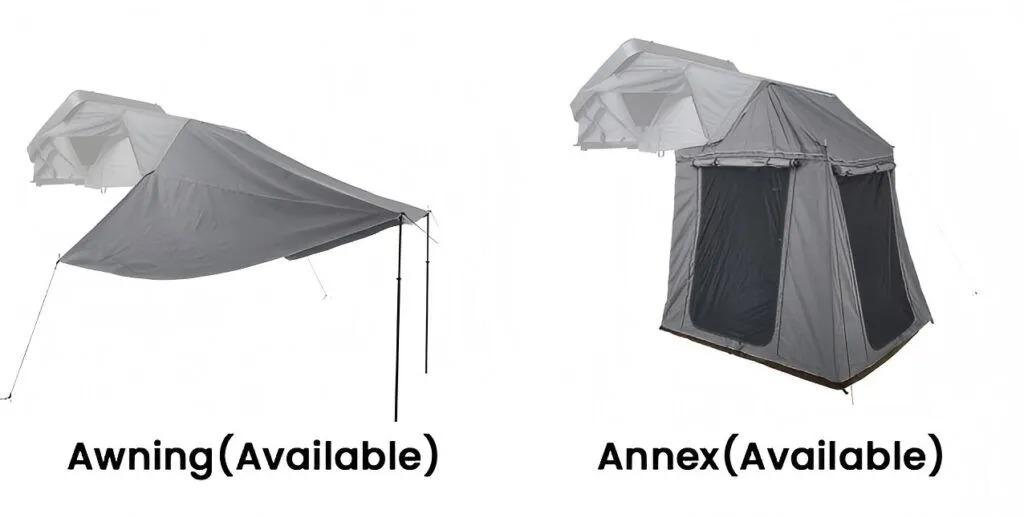
A vehicle awning mounts to your roof rack, side rails, or specialized brackets and deploys outward to create overhead shade. Modern retractable awnings extend 6.5-8 feet from your vehicle and span 6-13 feet in length depending on the model. The mechanism uses either manual pull-out operation requiring 2-5 minutes for setup, or electric motors that deploy in 30-60 seconds via remote control. Premium models from manufacturers include integrated LED light strips drawing 12-36 watts and reinforced 280-320gsm PU-coated ripstop polyester rated for 2,000-3,000mm waterproof protection.
What are the main types of awnings available?
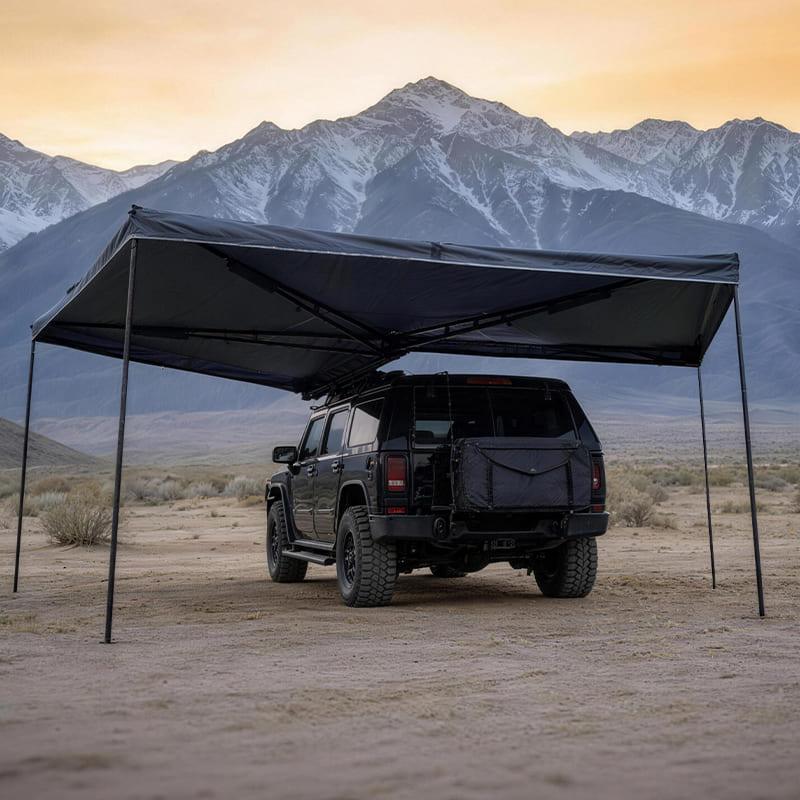
Straight side awnings mount perpendicular to your vehicle and create a simple rectangular shade zone. These models cost $300-600 for quality units and work best for cookout areas or quick shade during fuel stops. Batwing and 270-degree wraparound awnings extend coverage around your vehicle’s corner, providing 180-220 square feet of coverage and selling for $600-1,100. These designs excel for group camping where multiple people gather around the vehicle. Automatic roll-out awnings with electric motors add $200-400 to the base price but reduce deployment time by 75% compared to manual systems, making them ideal for frequent daily travelers.
What Exactly Is a Camping Annex?
How does an annex differ from a simple tent attachment?
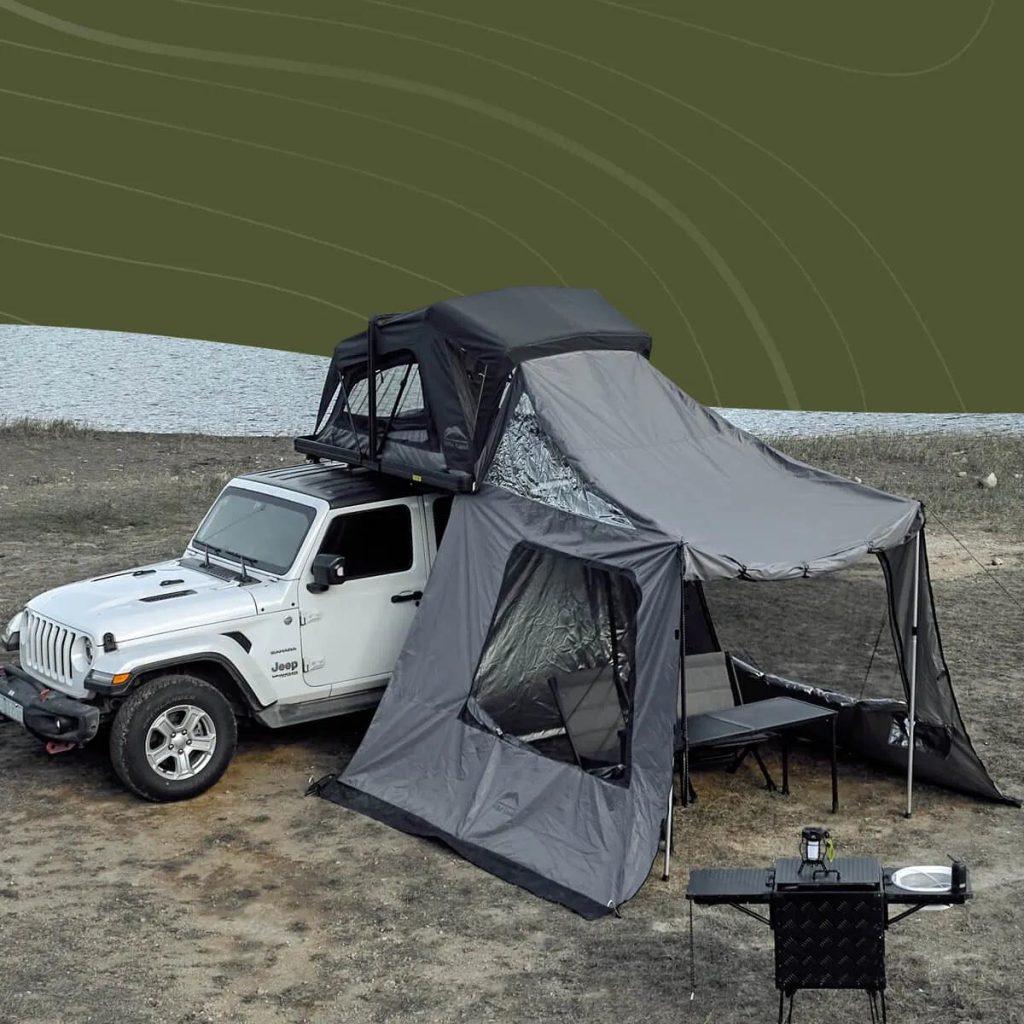
An annex specifically integrates with your roof top tent or vehicle awning to create an enclosed room that extends your sheltered living space. Unlike freestanding tents that require separate ground setup, annexes attach directly to your existing awning frame using zippers, hook-and-loop fasteners, or rail systems. This integration means you access the annex directly from your elevated sleeping platform or through your awning coverage without stepping outside into weather. Quality annexes use 210-280gsm polyester with 3,000-5,000mm waterproof ratings and full-perimeter zippers that create genuine rooms rather than simple shade extensions.
What can you actually use an annex room for?
Annexes function as secure changing rooms, gear storage areas, or additional sleeping quarters for 1-2 extra people when equipped with floor inserts. The enclosed space keeps camping equipment, coolers, and cooking gear protected from overnight condensation, morning dew, and opportunistic wildlife. Families with young children gain a contained play area measuring 6×8 feet to 8×10 feet where kids stay visible but protected from sun exposure during midday heat. Annexes with removable floor panels allow you to create mud rooms for removing dirty boots and wet gear before entering your main sleeping area, keeping your primary tent clean during multi-day trips.
Setup Time and Effort: Real-World Comparison
How long does each option actually take to deploy?
Standard 180-degree awnings require 2-5 minutes for one person to pull out, secure support legs, and stake guy lines in calm conditions. Wind speeds above 15 mph add 3-5 minutes as you properly tension and stake the system. Electric awnings reduce active deployment to 30-90 seconds but you still need 2-3 minutes to position support legs and stabilize the structure. Full annex room installation adds 10-20 minutes to your awning deployment time as you zip walls into place, insert floor panels, and properly stake the perimeter with 8-12 stakes depending on model size.
Which setup works better for frequent camp moves?
Overlanders who relocate daily or every other day strongly favor awning-only configurations. Breaking down a basic awning requires 3-5 minutes, while annexes add 10-15 minutes of wall removal and folding even with practice. If you move camp more than twice per week, the cumulative time difference reaches 2-3 hours per trip. Weekend warriors making Friday-to-Sunday trips find annex setup worthwhile because the 25-30 minute initial investment provides 48+ hours of protected space. Extended travelers staying 4-7 nights in one location report the setup time becomes negligible compared to the daily usability benefits.
Weather Protection: Which Handles Your Conditions?
How do awnings perform in rain and wind?
Awnings excel at vertical rain protection when properly angled at 10-15 degrees from horizontal, channeling water away from your cooking and sitting area. However, wind-driven rain penetrates from the three open sides in conditions above 20 mph winds. Manufacturers rate quality awnings for wind resistance up to 25-30 mph when properly staked, but practical usability drops significantly above 15 mph as horizontal rain and blowing debris make the space uncomfortable. The 2025 camping gear field tests show awnings maintain dry zones in rainfall up to 1.5 inches per hour when winds stay below 12 mph, but coverage effectiveness drops 60-70% when winds exceed 18 mph.
What weather conditions require an annex?
Annexes become essential when overnight temperatures drop below 50°F and you need protected space for evening activities. The enclosed walls reduce heat loss and create 10-15°F warmer internal temperatures compared to open air, allowing comfortable cooking and socializing when outside conditions turn cold. Desert and coastal camping in areas with sustained winds above 20 mph requires annex enclosure to create usable living space – open awnings simply flutter and provide no meaningful comfort in these conditions. Monsoon season camping or tropical environments with daily afternoon thunderstorms demand full enclosure, as horizontal rain and multi-directional wind make awning-only setups nearly useless for 4-6 hours during active weather.
Space Efficiency: Usable Square Footage Analysis
How much functional space does each option provide?
A typical 6.5-foot projection awning on a 10-foot vehicle creates approximately 65 square feet of overhead coverage, but only 40-50 square feet functions as truly usable space once you account for drip lines and wind intrusion zones. This accommodates 2-4 camping chairs and a compact cooking table measuring 4×2 feet. Adding an 8×8 foot annex room creates an additional 64 square feet of fully enclosed, weather-protected space where you can stand upright and organize gear on tables or storage systems. The combined awning plus annex configuration delivers 104-114 total sheltered square feet, meeting the 100-150 square foot target for family camping comfort.
Does the enclosed space justify the weight penalty?
Annex rooms add 15-35 pounds to your roof load depending on size and construction quality. Premium models using lightweight ripstop fabric with aluminum poles weigh 18-25 pounds for an 8×8 configuration, while heavy-duty canvas versions reach 30-35 pounds. When you factor that annexes replace the need for separate ground tents (typically 8-15 pounds) plus separate gear storage solutions, the net weight increase often totals only 10-20 pounds. For roof top tent campers already carrying 120-160 pounds of sleeping platform, adding 15-25 pounds for an annex represents a 12-20% increase in roof weight, which falls within safe limits for vehicles rated for 150-200 pound dynamic roof loads.
Cost Analysis: Initial Investment and Long-Term Value
What should you actually budget for quality gear?
Entry-level vehicle awnings from reputable manufacturers start at $300-400 for basic 6.5-foot manual models with standard 280gsm fabric. Mid-range awnings with LED lighting, aluminum cases, and 8-foot projection cost $500-700, while premium 270-degree or electric models reach $800-1,200. Standalone annex rooms designed to attach to these awnings range from $400-600 for basic enclosures to $800-1,200 for expedition-grade units with sewn-in floors, multiple windows, and reinforced stress points. A complete awning-plus-annex system from quality manufacturers totals $1,200-2,000 depending on features selected.
How does the cost compare to alternative shelter solutions?
A standalone 4-person ground tent rated for 3-season use costs $200-500, while premium 4-season expedition tents reach $600-1,200. Adding a separate dining canopy for cooking and gear storage adds another $150-400, bringing comparable ground-based camping shelter to $550-900 for budget setups or $1,000-1,600 for premium configurations. Vehicle-mounted systems eliminate ground setup on rocky or wet terrain and integrate with your elevated sleeping platform, providing functional advantages that ground gear cannot match. When calculated over 5-7 years of regular use (the typical lifespan of quality camping gear), the $300-600 price premium for integrated vehicle systems amounts to $50-100 annually for significantly enhanced convenience and weather protection.
Which Setup Matches Your Camping Style?
When should you choose awning-only configuration?
Solo travelers and couples who primarily camp 1-3 nights per trip gain maximum benefit from awning-only setups. The 2-5 minute deployment makes spontaneous stops practical, and the $300-800 investment delivers excellent value for creating weather-protected cooking and relaxation zones. Desert and dry-climate campers who face minimal rain and low humidity find awnings provide sufficient coverage 85-90% of the time. Weekend warriors who arrive Friday evening and depart Sunday morning avoid spending 30+ minutes on elaborate setup and teardown, instead using that time for actual outdoor activities.
When does an annex become worth the investment?
Families with children ages 2-10 need secure, enclosed play space where kids stay protected and contained during camp time. The fully zipped perimeter creates boundaries while providing weather protection that makes camping with young children practical even in marginal conditions. Extended overlanders spending 4+ consecutive nights per location benefit from proper gear organization and changing rooms that keep equipment dry and accessible. Cold-weather and shoulder-season campers (spring and fall in temperate climates) require the 10-15°F temperature improvement and wind protection that only four-wall enclosure delivers for comfortable evening hours. Photography and outdoor enthusiasts who carry $2,000-5,000 in sensitive camera, drone, and electronic equipment need secure, weather-sealed storage that annexes provide but open awnings cannot.
Frequently Asked Questions
Can you add an annex to any vehicle awning?
Most quality awnings accept annex attachments through universal mounting systems, but you must verify compatibility before purchasing. Awnings with 6mm or 8mm rail channels accept the majority of aftermarket annex rooms using sliding beading or rope channels. Some manufacturers use proprietary connection systems requiring matched-brand components. Measure your awning’s projection distance (typically 6.5-8 feet) and verify the annex room dimensions allow proper fit without leaving gaps. Generic annexes fit 80-85% of awning models, while vehicle-specific designs guarantee perfect integration but cost 20-30% more at $600-900 versus $400-600 for universal models.
How do annexes handle condensation and ventilation?
Quality annex rooms include mesh windows on 2-4 walls providing 200-400 square inches of ventilation area while keeping insects out. Roof vents measuring 12×12 to 18×18 inches allow hot air to escape and reduce internal condensation by 60-70% compared to fully sealed enclosures. In cold weather camping below 45°F, expect moderate condensation on interior walls during overnight hours unless you maintain cross-ventilation through partially opened windows. Using moisture-absorbing products or running a small 12V fan drawing 3-5 watts significantly reduces condensation buildup. Sewn-in floors with bathtub-style edges rising 4-6 inches prevent ground moisture intrusion while maintaining internal humidity control.
What roof load rating do you need for awning and annex systems?
Your vehicle requires a minimum 150-pound dynamic roof load rating to safely support a roof top tent (120-160 pounds) plus awning (25-45 pounds) plus annex (15-35 pounds). Many SUVs and trucks rate for 150-200 pounds dynamic load, while some compact vehicles limit to 100-120 pounds and cannot safely support the combined system. Static load ratings (vehicle parked with engine off) typically allow 2-3 times the dynamic rating, meaning a 150-pound dynamic rating often permits 300-400 pounds static load. Always verify your specific vehicle’s roof load capacity in the owner’s manual before adding camping gear, as exceeding limits compromises both safety and insurance coverage.
Do you need different stakes for sand versus hard ground?
Desert sand camping requires specialized 12-18 inch sand stakes or deadman anchors that bury horizontally to create holding power in loose substrate. Standard 8-10 inch tent stakes pull out of sand with minimal force and fail to secure your shelter properly. Rocky or hard-packed ground demands forged steel or aluminum stakes measuring 10-12 inches with sharp points and hex heads for hammer driving. Quality annex kits include 12-16 stakes appropriate for mixed terrain, but experienced campers carry terrain-specific stake sets for their primary camping environments. Budget $25-45 for a dedicated 10-pack of sand stakes or $30-50 for hardened steel stakes rated for rocky conditions.
How long do awnings and annexes typically last?
UV exposure determines the functional lifespan of fabric camping gear more than any other factor. Awnings used in high-UV environments like desert Southwest locations or tropical coastal areas show fabric degradation after 4-6 years of regular weekend use (40-60 camping days annually). Annexes receive less direct sun exposure and typically last 6-8 years under similar usage patterns. Fabric waterproof coatings require reapplication every 2-3 years using products like Nikwax or Granger’s to maintain 3,000-5,000mm ratings as polyurethane coatings naturally degrade. Hardware components including zippers, poles, and mounting brackets last 8-12 years with proper maintenance, often outlasting fabric elements by 50-100%. Store gear clean and completely dry to prevent mold growth, which can destroy fabric in a single season if left unchecked.
Can annexes work with roof top tents instead of awnings?
Dedicated roof top tent annexes mount directly to tent platforms and create ground-level rooms measuring 6×6 to 8×8 feet without requiring a separate awning. These designs use the tent’s overhang or dedicated mounting rails and sell for $400-800 depending on features. Some models create enclosed changing rooms directly beneath your elevated sleeping platform, while others extend outward to create separate living quarters. This configuration works exceptionally well for families where parents sleep in the roof top tent and children use the annex room with sleeping pads or cots. The combined setup provides 100-120 square feet of total sheltered space using a single integrated system priced at $1,800-2,800 for both components.