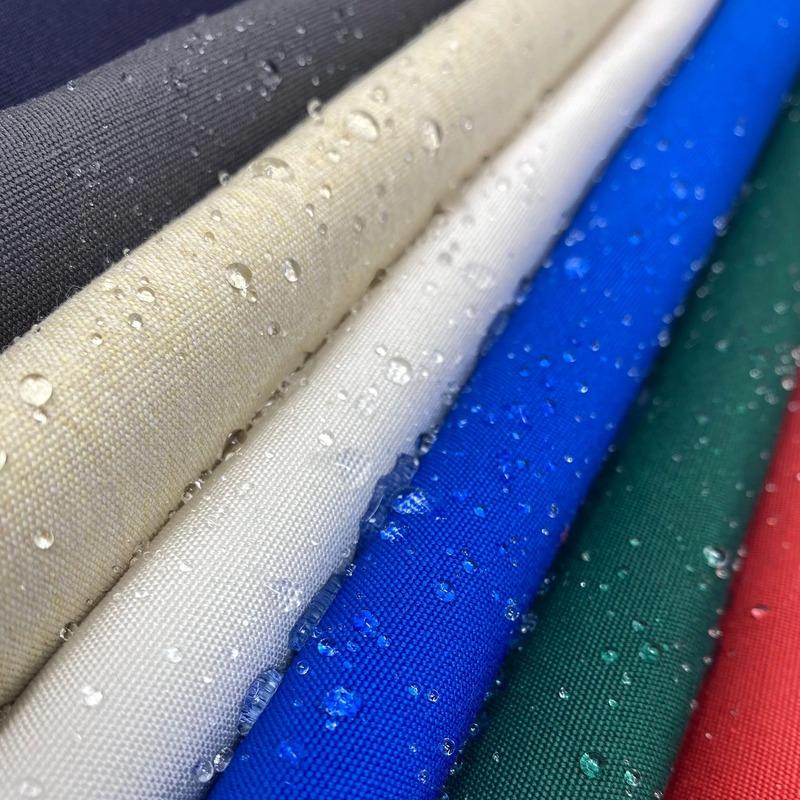
The fabric is the shield. It takes the daily beating from UV radiation, torrential rain, bird droppings, and tree sap. Choosing the right awning material fabric is not about finding the “best” one; it is about matching the material’s properties—specifically Waterproof Rating, UV Stability, and Breathability—to your specific application.
When investing in an awning—whether for a patio, a storefront, or an overland rig—most buyers obsess over the frame: Is it aluminum? Is it powder-coated? While structural integrity is vital, an awning is only as good as the fabric that covers it.
This guide breaks down the science of outdoor textiles, comparing the industry giants (Acrylic and Vinyl) against the overlanding standard (Poly-Cotton Ripstop) to help you make the right choice.
What are the Main Types of Awning Fabrics?
The four primary awning fabrics are Vinyl-Laminated Polyester (heavy-duty waterproof), Solution-Dyed Acrylic (breathable and fade-resistant), Coated Polyester (budget-friendly lightweight), and Poly-Cotton Ripstop (durable blend for camping). Each serves a specific purpose depending on whether the awning is stationary or mobile.
1. Solution-Dyed Acrylic (The Residential Gold Standard)
If you walk into a high-end fabric store, this is what they will recommend for a house.
- Properties: It is woven, meaning it has texture and “breathes.” Air can pass through the fibers, preventing hot air from getting trapped under the awning.
- Best For: Residential patios and retractable deck awnings where aesthetics and cooling are priorities.
2. Vinyl-Laminated Polyester (PVC)
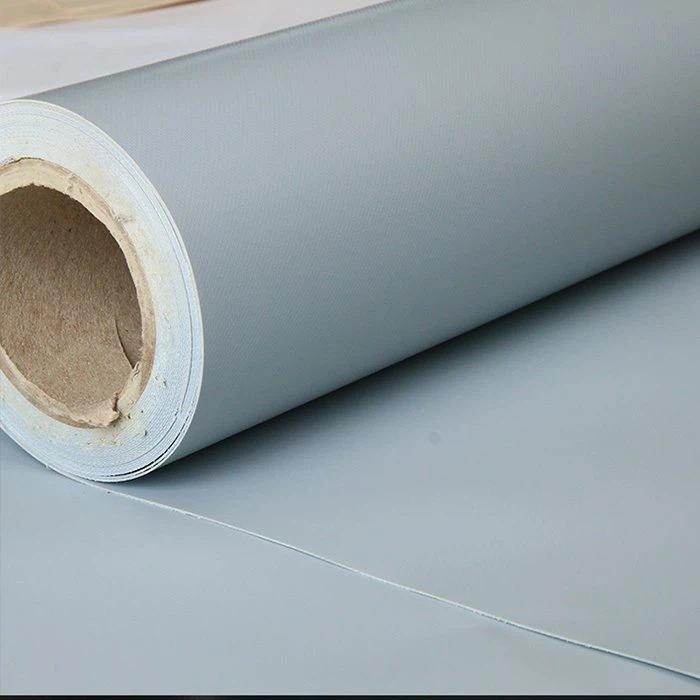
Often referred to as “Vinyl,” this is essentially a polyester mesh sandwiched between layers of PVC.
- Properties: It has a plastic-like feel. It is 100% waterproof and easy to wipe clean, but it is heavy and lacks breathability. Under a vinyl awning, heat can build up quickly.
- Best For: Commercial storefronts and rainy climates where absolute waterproofing trumps comfort.
3. Poly-Cotton Ripstop (The Overlander’s Choice)
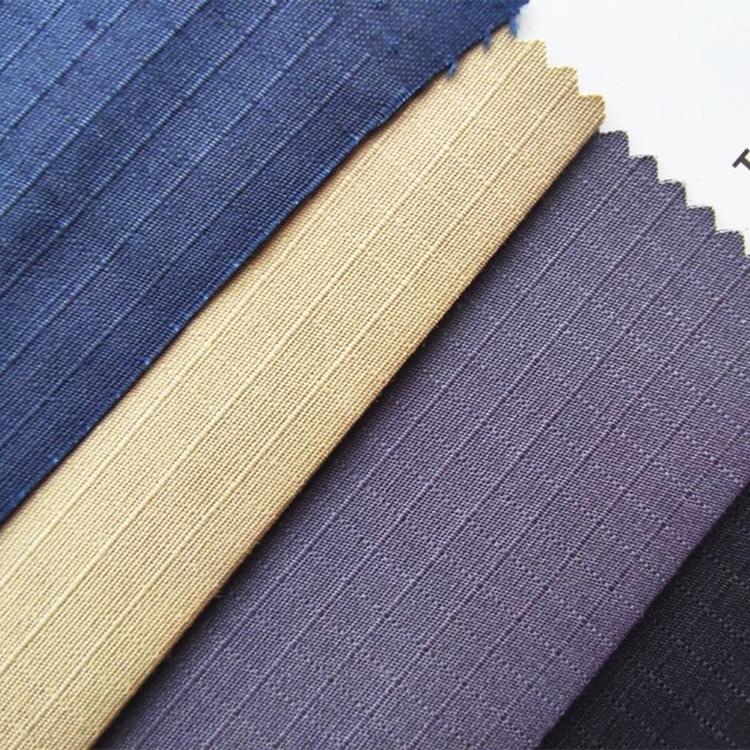
A hybrid material that blends the natural breathability of cotton with the tensile strength of polyester, reinforced with a “grid” weave.
- Properties: Rugged, tactile, and quiet in the wind. It usually features a waterproof coating on the underside.
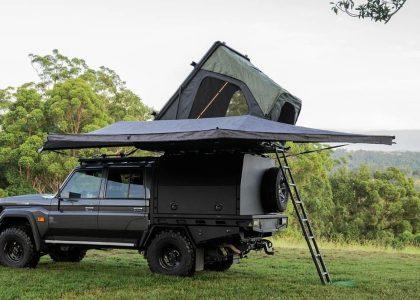
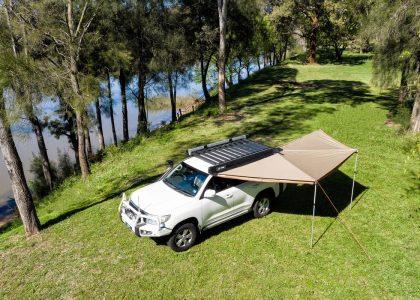
- Best For: Vehicle awnings, rooftop tents, and rugged outdoor camping gear.
Solution-Dyed vs. Piece-Dyed: Why Does It Matter?
Solution-dying adds color to the liquid polymer before the fiber is extruded, meaning the color runs all the way through the thread. Piece-dying adds color to the surface of the finished fabric. Solution-dyed fabrics typically last 5–10 years without fading, whereas piece-dyed fabrics may fade within 2 years.
To understand the difference, use the “Carrot vs. Radish” analogy:
- Solution-Dyed is like a Carrot: If you cut a carrot, it is orange on the outside and orange on the inside. The color is part of the fiber’s DNA. Even as the surface wears down from UV friction, the color remains vibrant.
- Piece-Dyed is like a Radish: It is red on the outside but white on the inside. The color is just a surface layer. Once the sun bleaches that top layer, the white core shows through, and the fabric looks old and washed out.
For any awning exposed to direct sunlight, always insist on Solution-Dyed fibers.
What is the Best Fabric for Vehicle Awnings?
For vehicle awnings and rooftop tents, Poly-Cotton Ripstop (280G–320G) is the industry standard. Unlike residential acrylic, Ripstop is engineered to withstand highway speeds, snagging from branches, and heavy rain. It combines the breathability of cotton with the strength of polyester, backed by a PU coating for waterproofing.
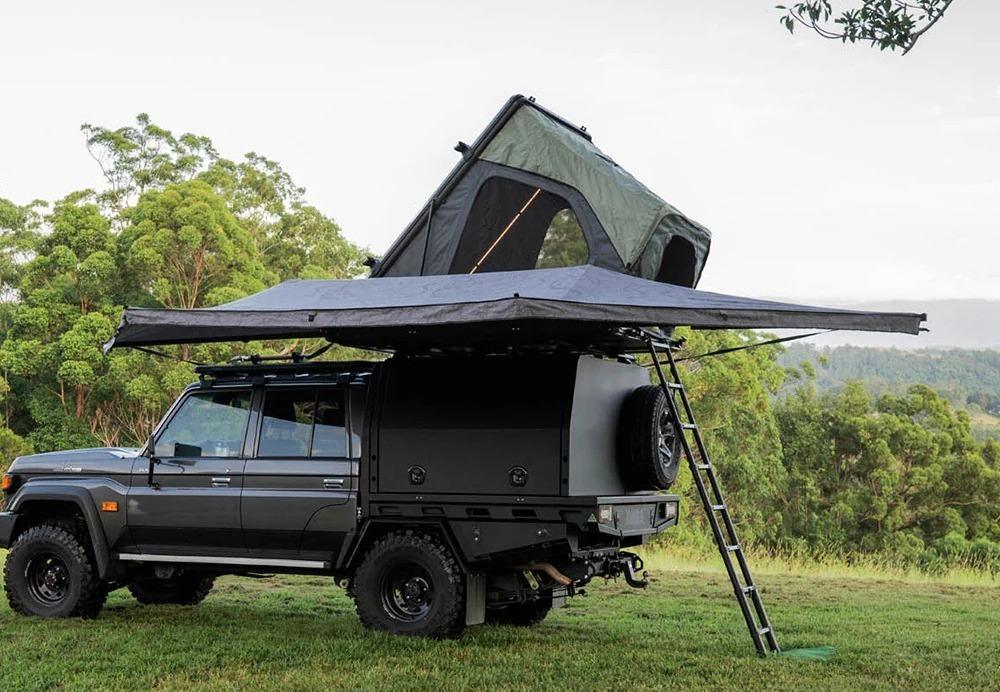
Why don’t we use patio Acrylic for cars? Because Acrylic, while pretty, doesn’t handle abrasion well. If you brush your truck against a tree branch, Acrylic might tear.
The “Ripstop” Advantage:
Ripstop fabric has a distinctive grid pattern woven into it using thicker reinforcement threads. If a sharp object punctures the awning, the tear will stop once it hits one of these grid lines. This prevents a small hole from becoming a catastrophic rip during a storm.
Understanding Technical Specs: Denier, GSM, and Coatings
When reading a spec sheet, three metrics determine the quality of the fabric.
1. GSM (Grams per Square Meter)
This measures the weight and density of the fabric.
- Lightweight (Oxford): ~150g. Good for sunshades, but flaps loudly in the wind.
- Heavy Duty (Canvas): 280g – 320g. This is the “sweet spot” for high-quality vehicle awnings. It is thick enough to block heat and light but light enough to roll up easily.
2. Denier (D)
This measures the thickness of the individual fibers.
- 420D: Standard for entry-level gear.
- 600D: Heavy-duty. A higher denier generally means better resistance to wear and tear.
3. Hydrostatic Head (Waterproof Rating)
This measures how much water pressure the fabric can hold before leaking.
- Water Repellent: < 800mm (Fine for light drizzle).
- Waterproof: 2000mm – 3000mm. For an awning to be truly reliable in a storm, look for a rating above 2000mm. This is usually achieved by applying a PU (Polyurethane) coating to the underside of the canvas.
Comparison Table: Choosing the Right Material
| Feature | Solution-Dyed Acrylic | Vinyl (PVC) | Poly-Cotton Ripstop |
| Best Application | Home Patios | Commercial Shops | Vehicle/Camping |
| Waterproofing | Water Resistant | 100% Waterproof | Waterproof (PU Coated) |
| Breathability | High (Coolest) | None (Traps Heat) | Moderate (Balanced) |
| Abrasion Resistance | Medium | High | Very High |
| Fade Resistance | Excellent (10 Years) | Good (5-7 Years) | Good (Depends on Dye) |
| Cost | $$$ | $$ | $$ |
Conclusion
The “perfect” fabric depends entirely on where you plan to pitch it. For a permanent installation on your home, Solution-Dyed Acrylic offers the best aesthetics and cooling. For commercial durability, Vinyl is king. However, for the rugged demands of the outdoors—specifically for Vehicle Awnings and Rooftop Tents—nothing beats the balanced performance of Poly-Cotton Ripstop. It offers the toughness required for the trail with the waterproofing needed for the storm.
Engineering Excellence with Everlead Outdoor
At Everlead Outdoor, we don’t just select fabrics; we engineer them for the extremes. As a leading OEM/ODM Manufacturer of camping gear, we specialize in Heavy-Duty Poly-Cotton Ripstop (280G and 320G) designed specifically for global outdoor brands.
- Lab-Tested Durability: Our fabrics undergo rigorous Hydrostatic Head testing (>3000mm) and ISO Color Fastness testing to ensure they withstand years of abuse.
- Custom Coatings: We apply advanced PU and anti-mold coatings to solve the common issues of rot and leakage.
- Precision Manufacturing: From the weave to the stitch, our production line ensures that your brand’s awnings are built to lead the market.
Partner with Everlead Outdoor to bring premium, scientifically proven fabric solutions to your customers.