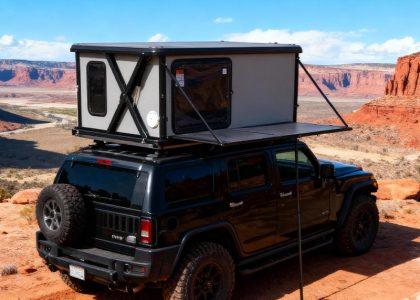
Waking up above the tree line, coffee in hand, watching the sunrise from a platform mounted to your vehicle — that’s the promise of the roof top tent lifestyle. And it’s real. But so is spending $3,000 on a setup that doesn’t fit your truck, kills your fuel economy, and makes you dread every drive between campsites.
The problem isn’t a lack of information — it’s that most guides are glorified product lists. They’ll tell you hard shells deploy faster than soft shells, list five tents with affiliate links, and call it a day. They skip the things that actually trip up buyers: vehicle load ratings, the real cost of ownership, seasonal limitations, and whether an RTT even suits how you actually camp.
This guide is different. Whether you’re completely new to roof top tents or narrowing down your final shortlist, you’ll find clear, practical answers to every question that matters — and a few you haven’t thought to ask yet.
Quick Answer
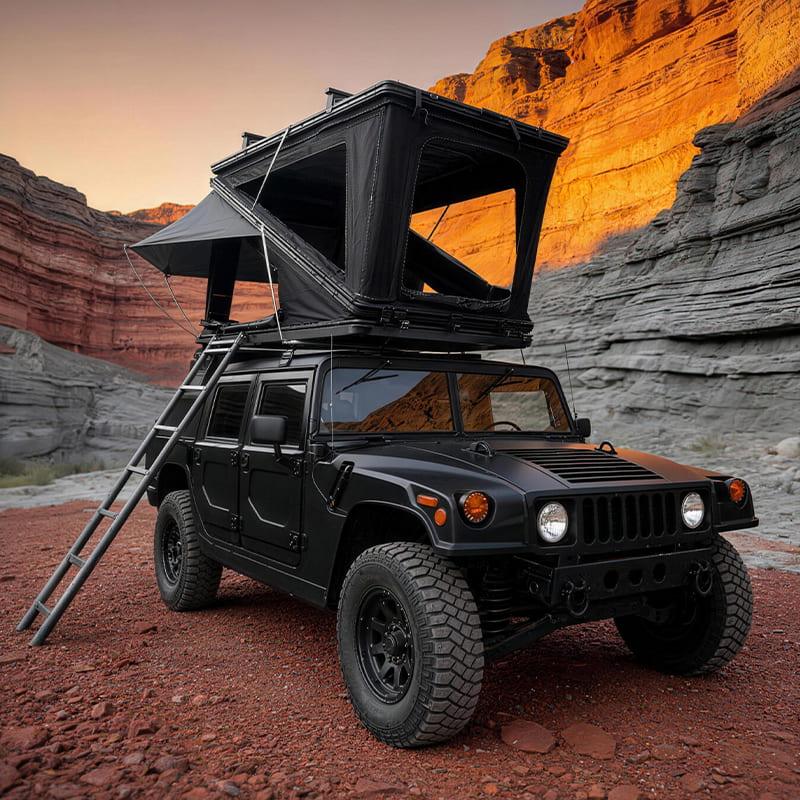
A roof top tent (RTT) is a self-contained sleeping shelter that mounts to a vehicle’s roof rack or crossbars. Available in soft shell and hard shell styles, they elevate campers off the ground for faster setup, better comfort, and more flexible campsite options. Before buying, the single most critical check is your vehicle’s dynamic roof load rating — not the static rating — which determines what your vehicle can safely carry while driving.
Key Takeaways
- Hard shell tents deploy in under 2 minutes; soft shells offer more interior space at a lower price point.
- Your vehicle’s dynamic roof load rating — not the static rating — is the number that actually limits which tent you can safely use.
- Expect a 7–17% fuel economy penalty. The impact is worst at highway speeds with bulky soft shells.
- A roof rack is not optional — budget $300–$1,200+ for the right platform before you price tents.
- The right tent is defined by your camping pattern (nightly mover vs. base camper), not brand prestige.
- Total cost of ownership over 3 years typically runs $3,500–$7,000+ — significantly more than the sticker price alone.
1. What Is a Roof Top Tent — And Is It Actually Worth It?
Before spending serious money, it’s worth being honest about both sides of the RTT equation. These are genuinely impressive pieces of gear, but they’re not the right choice for every camper.
The Real Advantages
- Setup in 1–5 minutes vs. 20–40 minutes for a quality ground tent
- Elevated sleeping position — away from rocks, roots, insects, and ground moisture
- Built-in foam mattress on most models (no sleeping pad required)
- Works on almost any terrain — you’re limited by where you can drive, not where you can pitch
- Your entire sleep system stays assembled on the vehicle between trips
The Honest Drawbacks
- Significant upfront cost — quality setups start around $1,500 and easily exceed $5,000
- Permanent fuel economy penalty while mounted, even when you’re not camping
- You cannot drive away from camp and leave the tent set up — it moves with the vehicle
- Adds height to your vehicle — many standard garages become inaccessible
- Higher center of gravity affects handling, particularly on rough terrain
💡 Who benefits most from an RTT? Overlanders and road-trippers who move camp frequently and want fast, comfortable setup at each stop. If you stay at one site for 5+ nights, a ground tent or dedicated camp setup is usually more practical and cost-effective.
2. The 5 Types of Roof Top Tents Explained
Most guides treat this as a binary hard shell vs. soft shell choice. In reality, there are five distinct categories — each with meaningful trade-offs.
| Type | Setup Time | Packed Weight | Interior Space | Price Range | Best For |
|---|---|---|---|---|---|
| Soft Shell (Fold-out) | 3–5 min | 55–110 lbs | Most spacious | $900–$2,500 | Budget buyers, base campers |
| Hard Shell (Clamshell) | 1–2 min | 100–170 lbs | Compact | $2,000–$4,500 | Daily drivers, frequent movers |
| Hard Shell (Pop-up) | Under 1 min | 90–160 lbs | Moderate | $2,500–$5,000+ | Speed priority, premium users |
| Hybrid | 2–3 min | 80–130 lbs | Good | $2,000–$4,000 | Balance of size & aerodynamics |
| Inflatable | 3–5 min | 50–90 lbs | Variable | $1,500–$3,500 | Weight-sensitive builds |
Inflatable RTTs remain a niche category but are growing for weight-constrained platforms like the Toyota RAV4 and Ford Bronco Sport, where every pound of dynamic load capacity matters.
3. Vehicle Compatibility — The Most Misunderstood Part of Buying an RTT
This is where most buyers make expensive mistakes — and where most guides fail them. The question isn’t simply “does my car have a roof rack?” There’s a precise number that determines whether your vehicle can safely carry a roof top tent while driving, and it’s rarely the one people check first.
Static vs. Dynamic Load Rating: The Crucial Difference
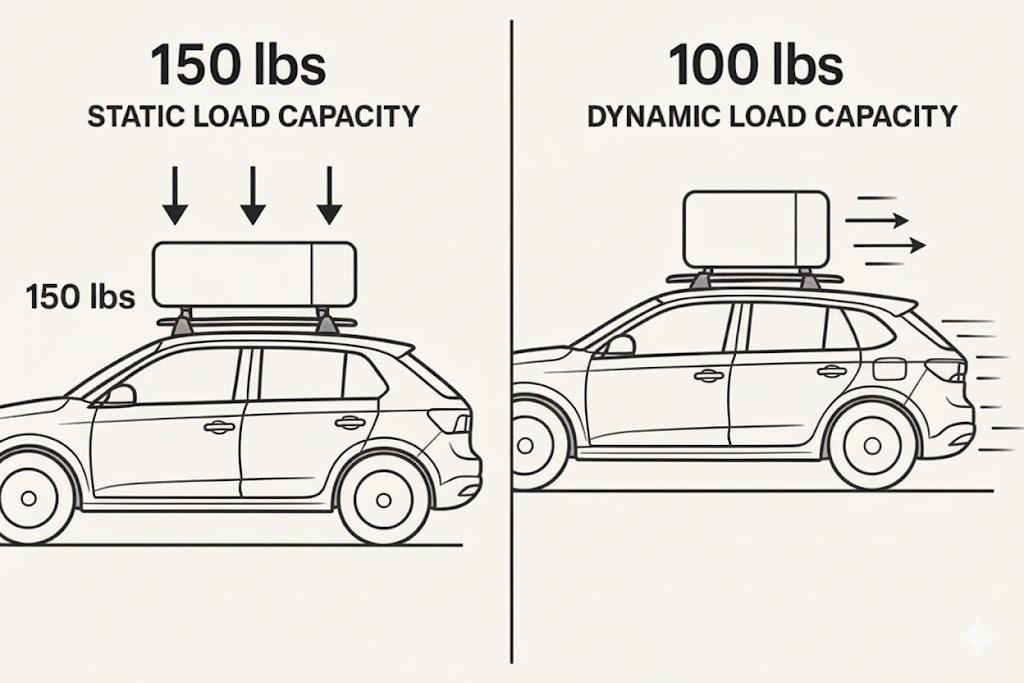
Static load rating is the weight your roof can support while the vehicle is parked — typically 400–700 lbs, often printed on a sticker inside your door jamb.
Dynamic load rating is the weight your roof can carry while driving, accounting for road vibration, cornering forces, and impacts. This is typically 30–50% of the static rating — and it’s the number that actually matters for an RTT.
A vehicle with a 440 lb static rating may only have a 165 lb dynamic rating. Add a 120 lb tent, a 40 lb rack, and gear, and you’re already at or over the limit before anyone climbs in.
How to Find Your Vehicle’s Dynamic Rating
- Check your owner’s manual under “Roof Load” or “Roof Rack Capacity”
- Call your vehicle manufacturer’s customer service line with your VIN
- Check the rack manufacturer’s compatibility guide — quality brands like Thule and Rhino-Rack publish vehicle-specific ratings
- Add up: rack weight + tent weight + any gear stored inside the tent
Common Vehicle Load Ratings at a Glance
| Vehicle | Approx. Dynamic Roof Rating | Notes |
|---|---|---|
| Toyota Tacoma (2016+) | 165 lbs | Most RTTs require a bed rack or tailgate mount |
| Toyota 4Runner (2010+) | 165 lbs | Popular RTT platform; aftermarket rack required |
| Jeep Wrangler JL (2018+) | 330 lbs | Strong capacity; check specific trim |
| Ford Bronco (2021+) | 150 lbs | Tight limit; weight-sensitive rack critical |
| Toyota RAV4 (2019+) | 165 lbs | Lighter hard shells or inflatable recommended |
| Ford F-150 (2021+) | 150–250 lbs | Varies by trim; bed rack often better option |
These figures are approximate. Always verify with your specific model year and trim.
4. Roof Rack Systems — Your Foundation Matters More Than Your Tent
An RTT is only as good as what it’s mounted to. Buying a premium tent and mounting it to an under-spec rack is like putting performance tires on a car with worn suspension — the weakest link defines the experience.
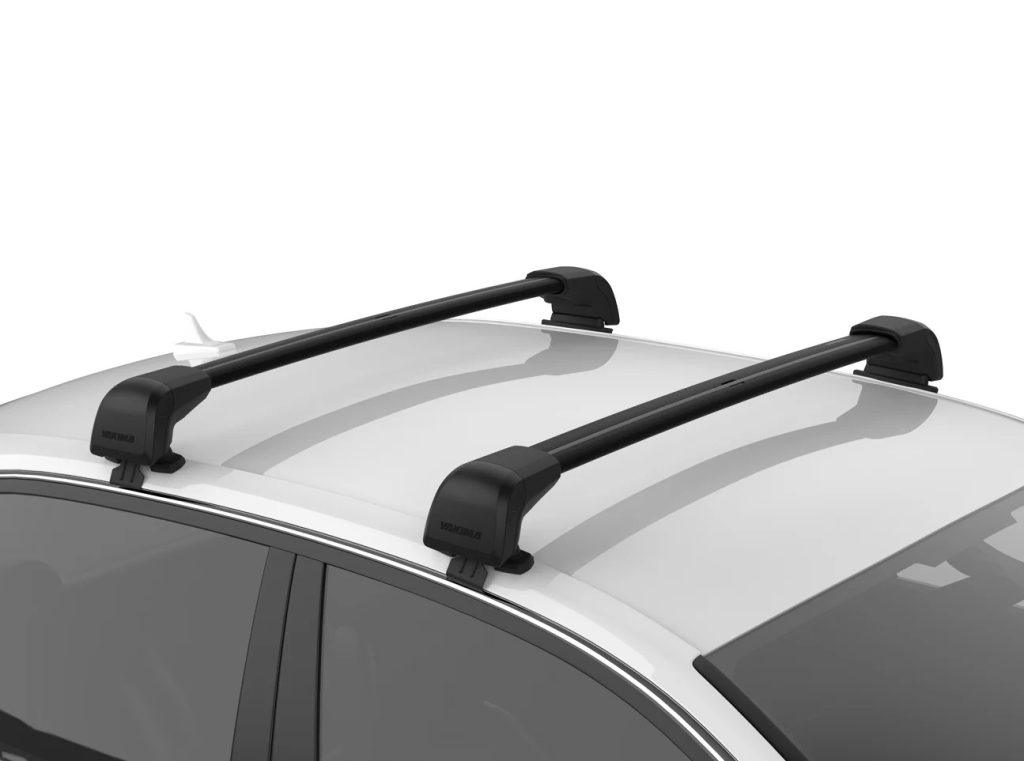
The Three Main Rack Types
- Platform racks (bed racks / full roof platforms): Maximum mounting area and load capacity. Best for heavier tents and multiple accessories. Higher cost ($500–$1,200).
- Crossbar systems (Thule, Yakima, Rhino-Rack): Bolt to existing factory anchor points. More affordable ($300–$700). Compatible with most hard shells under 100 lbs.
- Truck bed racks: For pickup owners — moves the tent to the bed, preserving roof clearance and improving aerodynamics. Often the best choice for Tacoma and F-150 owners.
The Garage Clearance Problem Nobody Mentions
A standard US garage door is 7 feet (84 inches) high. A mid-size SUV like a 4Runner sits at roughly 70 inches stock. Add a 4-inch rack and a 10-inch packed hard shell tent and you’re at 84 inches — exactly at the limit. A soft shell pushes you over it.
Measure your packed setup height before buying. Many RTT owners end up parking in the driveway permanently — which is fine if you plan for it, but a nasty surprise if you don’t.
5. The True Cost of a Roof Top Tent (3-Year Ownership Breakdown)
The sticker price is only the beginning. Here’s the full financial picture most buyers miss:
| Cost Component | Budget Setup | Mid-Range Setup | Premium Setup |
|---|---|---|---|
| Tent | $900–$1,400 | $2,000–$3,000 | $3,500–$5,000+ |
| Roof / bed rack | $300–$500 | $500–$800 | $800–$1,200 |
| Installation (if professional) | $0–$150 | $150–$250 | $200–$350 |
| Fuel penalty (est. 3 yrs / 15k mi/yr) | $600–$900 | $600–$900 | $600–$900 |
| Maintenance & minor repairs | $50–$150 | $100–$250 | $100–$300 |
| 3-Year Total (estimated) | $1,850–$3,100 | $3,350–$5,200 | $5,200–$7,750 |
The fuel penalty estimate assumes 15,000 miles per year at a 10% average efficiency reduction. At $3.50/gallon with a vehicle averaging 25 MPG, that’s roughly $210/year in additional fuel costs — not catastrophic, but real money over time.
The offset: Dispersed camping on BLM and National Forest land is free. A camper spending $40/night at paid campgrounds 20 nights per year saves $800 annually — a meaningful return that closes the gap within a few years for frequent users.
6. How to Choose the Right RTT for Your Camping Style
Every spec sheet looks different, but the buying decision comes down to three honest questions about how you actually camp.
Question 1: How Often Do You Move Camp?
- Moving daily or every other day → Prioritize fast setup. A hard shell clamshell is worth every extra dollar.
- Base camping (3+ nights in one spot) → Setup speed matters less. A soft shell gives you more space for less money.
Question 2: How Many People Are Sleeping In It?
- Solo or couple → A standard 2-person tent (48″ × 96″ sleeping area) is ideal. Don’t pay for extra width you won’t use.
- Family with kids → Look at 3-person extended tents (60″+ wide) or annex attachments. Annex rooms add ground-level sleeping that dramatically expands capacity without requiring a second vehicle.
Question 3: What Climate and Season Do You Camp In?
- 3-season (spring/summer/fall) → Most tents qualify. Focus on ventilation and waterproofing (3,000mm+ hydrostatic head).
- Cold weather / snow → Look for insulated tent bodies, dedicated heater ports, reinforced snow poles, and condensation management.
- Desert / summer heat → Prioritize cross-ventilation, mesh panels, light-colored tent fabric, and A/C port compatibility.
7. Installation, Setup, and the Fuel Economy Reality
Installing Your RTT
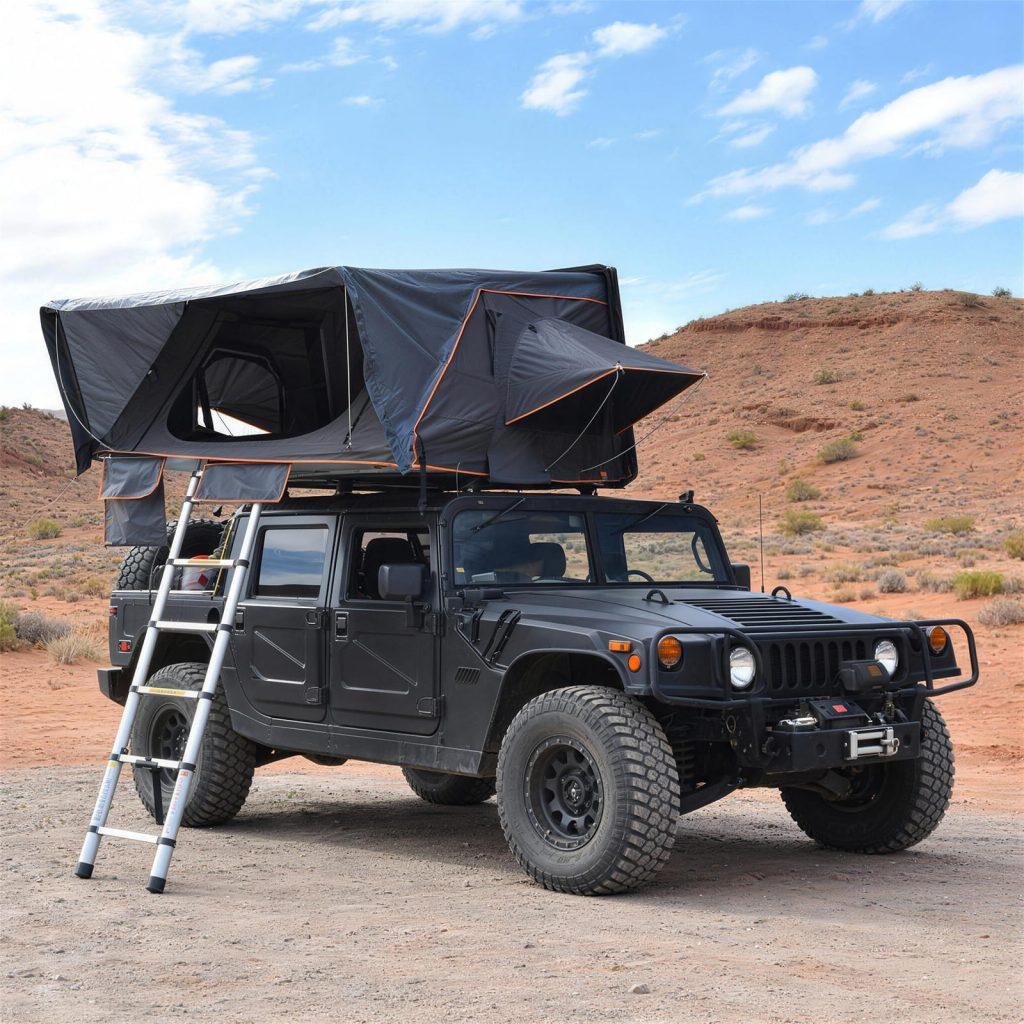
Most RTTs mount via a universal T-slot or bolt pattern that attaches to crossbars or rack rails. The process is manageable as a two-person job — larger tents can weigh 100+ lbs — and typically takes 1–2 hours with basic tools.
Professional installation is worth considering if your rack requires drilling, you’re mounting on a custom truck bed rack, or the tent weighs over 100 lbs. Expect $150–$350 at an outfitter.
The Fuel Economy Impact — Actual Numbers
| Tent Type | City Driving Impact | Highway (65 mph) | Highway (75 mph) |
|---|---|---|---|
| Soft shell (packed, upright) | 3–5% | 10–14% | 15–17% |
| Hard shell (standard clamshell) | 1–3% | 5–8% | 9–12% |
| Hard shell (wedge, aerodynamic) | 1–2% | 4–7% | 7–10% |
Speed amplifies the penalty dramatically. On road trips, routing on slower highways where practical can save $8–$15 per 400-mile stretch. If you commute in your vehicle and camp fewer than 20 nights per year, removing the tent and rack between trips pays off quickly — most quality crossbar systems come off in 15 minutes.
8. Four-Season Use — What You Actually Need for Cold, Heat, and Rain
Waterproofing: What the Numbers Mean
Hydrostatic head (HH) measures how much water pressure a fabric can resist before leaking:
- 1,500mm HH — Minimum acceptable. Fine for light, brief rain.
- 3,000mm HH — Good for moderate sustained rain. Standard on quality RTTs.
- 5,000mm HH — Excellent. Handles heavy rain and wet snow without issue.
For year-round use in wet climates (Pacific Northwest, Northern Europe), target 3,000mm+ on both the rainfly and the tent floor.
Condensation Management
Condensation is the most common complaint from new RTT owners — especially in humid or cold conditions. Two people sleeping in an enclosed space exhale enough moisture to coat the interior surfaces by morning.
How to manage it effectively:
- Crack at least one roof vent when sleeping, even in cold weather — airflow is the primary solution
- Look for tents with dedicated condensation channels that route moisture to the exterior
- Wipe down interior surfaces before closing a hard shell for travel
- In persistently humid climates, a cotton canvas inner liner absorbs moisture better than synthetic fabrics
Cold Weather Features That Actually Matter
- Insulated floor panel (1–2″ foam base on some models)
- Dedicated heater port — never use combustion heaters without proper ventilation
- Reinforced snow poles on soft shells (standard poles can bow under wet snow load)
- Full-coverage rainfly extending to the ladder to eliminate gap exposure at the entry point
9. Where Can You Actually Camp With a Roof Top Tent?
Knowing where you can legally use your RTT — and finding the best spots — is what determines how much value you extract from the investment.
Land Types and Rules at a Glance
| Land Type | RTT Camping? | Key Rules |
|---|---|---|
| BLM Land | ✅ Yes (dispersed) | Free for up to 14 days; must be 200 ft from water sources |
| National Forests | ✅ Yes (dispersed) | Most areas allow it; some require free fire permits |
| National Parks | ⚠️ Designated sites only | Must use designated campgrounds; no dispersed camping |
| State Parks | ⚠️ Varies by state | Call ahead — many require designated sites with hookups |
| Private Campgrounds | ✅ Usually yes | Some charge extra for “oversize” vehicle setups |
| International (NZ, AU, EU) | ✅ Widely accepted | Freedom camping laws vary by country and region |
Apps for Finding the Best Spots
- iOverlander — Community-reported overlanding camps with verified vehicle access info
- FreeRoam — Dedicated to free camping on public land; shows BLM and National Forest boundaries
- The Dyrt — Comprehensive database of paid and free sites with detailed user reviews
- Gaia GPS — Topographic maps with public/private land overlay; essential for dispersed camping route planning
- Park4Night — The best resource for Europe and international RTT travel
Final Word
A roof top tent done right is one of the most satisfying upgrades in overlanding. Done wrong — with a mismatched vehicle, an undersized rack, or unrealistic expectations about cost and fuel economy — it’s an expensive lesson.
The framework is straightforward: start with your vehicle’s dynamic roof load rating, build your rack system around it, choose a tent type that matches your camping rhythm rather than your Instagram feed, and account honestly for the full cost of ownership before you commit.
Do that, and the only surprise left is how good it feels to wake up six feet off the ground, watching the sunrise from wherever the road took you the night before.
About Everlead Outdoor
Everlead Outdoor specializes in premium outdoor camping gear, with over 10 years of focused manufacturing experience in roof top tents, vehicle awnings, instant tents, and inflatable tents. As a reliable Chinese supplier, we make it easy for brands to get started with low MOQs from just 1 piece, position our products in the luxury car camping space—pairing high-quality roof top tents with stylish vehicle awnings for elevated, comfortable outdoor adventures—and back every tent with 100% full-unit quality inspection before it ships. We offer complete OEM and ODM support, including custom design, branding, and dependable global delivery, serving customers mainly in the US, Europe, and Australia. Please contact us if you’re looking for a trusted partner for your outdoor gear line.
Frequently Asked Questions
Is an RTT better than a camper trailer for overlanding?
It depends entirely on your trip pattern. An RTT’s core advantage is mobility — your sleep system goes wherever the vehicle goes, including trails no trailer can follow. A camper trailer offers more comfort and standing room but requires dedicated parking, can’t access tight terrain, and adds hookup/unhook time to every stop. If your trips run 5+ nights at a fixed site, a trailer makes sense. If you move camp frequently and drive technical terrain, an RTT wins.
Is buying a used RTT worth the risk? What should I check?
Used RTTs can be excellent value, but the risk concentrates in a few areas. Inspect the canvas or fiberglass shell for cracks, check that hinges open and close smoothly, run the zippers the full length to confirm they bite cleanly, and look for delamination in the waterproof coating — hold a flashlight flush against the fabric in a dark environment and check for light bleed-through. Hard shell tents carry lower used risk than soft shells, since canvas aging on soft shells is difficult to reverse. Never buy from a seller who won’t let you fully deploy the tent before purchase.
Can I still take my vehicle through an automatic car wash with an RTT mounted?
Automatic car washes are effectively off the table — the roller brushes and high-pressure jets accelerate wear on hinges, seals, and zippers. Hand washing is fine, but avoid directing a pressure washer at seam lines. Hard shell models can be hand washed normally. For soft shells, either remove the tent or drape it before washing the vehicle body beneath.
How do I handle RTT camping in extreme desert heat?
It gets hot, but it’s manageable. Dark canvas in direct sun can run 15–20°F hotter inside than outside ambient temperature. The fixes: choose a light-colored or tan tent, look for full mesh inner liner options, and if the tent has an A/C port, a small portable unit makes a meaningful difference. Park with the tent opening facing shade or into the prevailing breeze. Aluminum hard shell exteriors actually dissipate heat faster than canvas, making them a better choice for desert use than most people assume.
How often does the waterproof coating need to be reapplied — and how do I know when it’s time?
Expect to reapply every 3–5 years, though usage frequency and storage conditions matter significantly. The test is simple: pour a small amount of water on the tent fabric. If it beads and rolls off, you’re fine. If it spreads and soaks in, the DWR (durable water repellent) coating has degraded. Restoration is straightforward — clean the fabric, let it dry fully, apply a spray-on DWR treatment like Nikwax or Gear Aid, then tumble dry on low heat to reactivate the coating. No professional service needed.
What’s the right way to store an RTT during long periods of non-use?
The most common mistake is leaving the tent closed and damp in a sealed garage. Always confirm the canvas is completely dry before closing — moisture sealed inside breeds mold fast. Hard shells can stay mounted on the vehicle with a UV-protective cover fitted. Soft shells are better removed for long-term storage, laid flat to prevent hinge and support pole deformation under sustained compression. Regardless of tent type, open and air it out every 2–3 months during extended storage.
Will installing an RTT void my vehicle warranty?
An RTT installation doesn’t automatically void a vehicle warranty, but any damage caused by exceeding the manufacturer’s specified roof load limit won’t be covered. If the installation requires drilling into the roof or body, the risk increases substantially. Using manufacturer-approved crossbar systems designed for your specific vehicle — such as vehicle-fit kits from Thule or Yakima — minimizes exposure. If you’re unsure, ask your dealership in writing before installing, so there’s a clear record of what was discussed.