The roof top tent market has exploded. There are now well over 100 brands competing for your money, most “best of” guides recycle the same five names with minor variations, and the question that actually matters — which tent for which buyer — is almost never answered clearly. If you’re still deciding whether an RTT is right for you at all, start with our complete roof top tent guide first. If you’re ready to buy and just need the right model, you’re in the right place.
The real problem isn’t a shortage of options. It’s that a tent perfect for a solo overlander moving camp every night is a frustrating choice for a family spending a week at one site. Yet most roundups hand both buyers the same “best overall” pick and call it done.
This guide is built differently. Picks are organized by price tier and buyer profile, not just brand prestige. We cover what happens to these tents after two or three seasons — the detail no launch-day review can tell you. And we give vehicle-specific guidance that goes beyond “check your roof load rating.”
Quick Answer
The iKamper Skycamp 3.0 Mini is the best roof top tent for most buyers — fast deployment, excellent build quality, and a proven track record. For budget buyers, the Smittybilt Gen2 Overlander delivers real value under $1,200. For families, the Thule Approach M offers the most livable soft shell on the market.
Key Takeaways
- The iKamper Skycamp 3.0 Mini and Roofnest Falcon 3 EVO lead the hard shell category; the Thule Approach M leads for soft shell.
- Your camping pattern — how often you move camp — matters more than brand reputation when choosing a tent type.
- The budget tier ($900–$1,500) has legitimate options, but mattress quality, canvas longevity, and post-sale support are where corners get cut.
- Mattress thickness varies from 1.8 inches to 3.5 inches across the market — one of the top post-purchase complaint categories that most guides ignore entirely.
- Warranty and brand longevity matter as much as specs, especially for newer or China-based manufacturers entering the market.
- Vehicle compatibility must be verified before purchase — popular platforms like the Tacoma and Bronco have well-known fit constraints that limit your options.
1. How We Evaluated These Tents
Picking a roof top tent based on specs alone misses the real-world experience — how intuitive the deployment actually is at 10 PM after a long drive, how the mattress feels on night three, and whether the rainfly holds up in a genuine downpour rather than a light drizzle.
Our evaluation criteria, weighted by importance:
| Criteria | What We Assessed |
|---|---|
| Setup & takedown | Real deployment time, solo vs. two-person, latching ease |
| Build quality | Hardware precision, hinge durability, fabric weight and coating |
| Mattress quality | Thickness, foam density, comfort after multiple nights |
| Weather performance | Waterproofing rating, condensation management, wind stability |
| Aerodynamics | Packed profile height, noise at highway speed, fuel impact |
| Long-term durability | Owner reports at 2–3 years, known failure points, warranty response |
Tents were evaluated across a range of conditions — cold alpine environments, high-humidity coastal settings, and dry desert use — because a tent that performs well in one climate can fail predictably in another.
2. Quick Picks — Best Roof Top Tent by Category
For readers who want a direct answer before diving into the detail:
| Category | Top Pick | Price | Why It Wins |
|---|---|---|---|
| Best Overall | iKamper Skycamp 3.0 Mini | ~$3,299 | Fast deployment, compact packed profile, premium mattress, proven 3+ year track record |
| Best Hard Shell | Roofnest Falcon 3 EVO | ~$3,595 | Lowest aerodynamic profile in class, whisper-quiet at highway speed, excellent hinge system |
| Best Soft Shell | Thule Approach M | ~$2,500 | Most livable interior in its class, 3-inch mattress, excellent weatherproofing, strong warranty |
| Best Budget | Smittybilt Gen2 Overlander | ~$1,099 | Genuine value, durable canvas, functional 2.5-inch mattress — best entry point in the market |
| Best for Families | iKamper Skycamp 3.0 | ~$3,999 | 63-inch wide platform, 2.5-inch memory foam mattress, annex compatibility |
3. The Budget Tier ($900–$1,500) — What You Actually Get
Most guides treat budget RTTs as a brief footnote — “here’s a cheap option if you can’t afford the good stuff.” That’s not useful. The real question is: which budget tents are legitimate, and what are you actually trading away?
The Legitimate Budget Picks
Smittybilt Gen2 Overlander (~$1,099) The most consistently recommended entry-level tent in the overlanding community, and for good reason. The 600D ripstop polyester canvas handles rain better than its price suggests, the 2.5-inch foam mattress is functional for most sleepers, and the aluminum frame is solid. The trade-offs are real: setup takes 8–10 minutes vs. 90 seconds on a hard shell, the packed profile adds meaningful height and drag, and the zippers require more deliberate care to last.
Right for you if: You’re new to RTT camping and want to test the lifestyle before committing $3,000+. You base camp and move rarely. You camp 10–15 nights per year.
Wrong for you if: You’re a daily-driver overlander, commute in the vehicle, or camp in sustained heavy rain.
Topoak Galaxy 1.0 (~$1,299) A Chinese-manufactured hard shell that punches above its price point in specs — aluminum shell, 2.4-inch mattress, under-2-minute setup — but requires more scrutiny. Build tolerances are looser than premium brands, and warranty support depends heavily on the distributor. That said, for buyers who want hard shell speed without a $3,000 commitment, it’s a credible option when purchased from a US-based distributor with a clear return policy.
Right for you if: You want hard shell convenience on a tight budget and are comfortable with slightly more setup variability.
Wrong for you if: You travel internationally or in extreme conditions where warranty service matters.
What the Budget Tier Actually Costs You
| Feature | Budget ($900–$1,500) | Mid-Range ($1,500–$3,000) |
|---|---|---|
| Mattress thickness | 1.8–2.5 inches | 2.5–3.5 inches |
| Canvas weight | 280–320g/m² | 320–600g/m² |
| Setup time (soft shell) | 6–10 min | 4–6 min |
| Hardware precision | Functional | Tight tolerances |
| Warranty | 1 year (variable) | 2–5 years |
| Post-sale support | Inconsistent | Reliable |
The mattress gap is where budget buyers most often feel regret. A 1.8-inch pad over a rigid platform is noticeably different from a 3-inch foam mattress on night four of a trip. If you’re camping more than 20 nights per year, spending the extra $500–$800 for the mid-range tier is almost always the right financial decision.
4. The Mid-Range Tier ($1,500–$3,000) — The Sweet Spot for Most Buyers
This is where the market gets genuinely interesting — and where most purchase decisions should land. The jump from budget to mid-range delivers real, noticeable improvements in daily usability, not just marginal spec upgrades.
Thule Approach M (~$2,500) — Best Soft Shell in Class The Approach M is the soft shell to beat in 2026. The 3-inch mattress is the thickest in its price tier, the 600g/m² polyester canvas handles sustained rain without issue, and the Thule build quality — backed by a 5-year warranty with genuine customer service — sets a reliability standard the rest of the tier struggles to match. Interior dimensions (83″ × 55″) give couples genuine room to move. The trade-off: packed height of 12 inches and a 10-minute full setup. If setup speed is your priority, look at hard shells. If livability and trust are your priority, this is your tent.
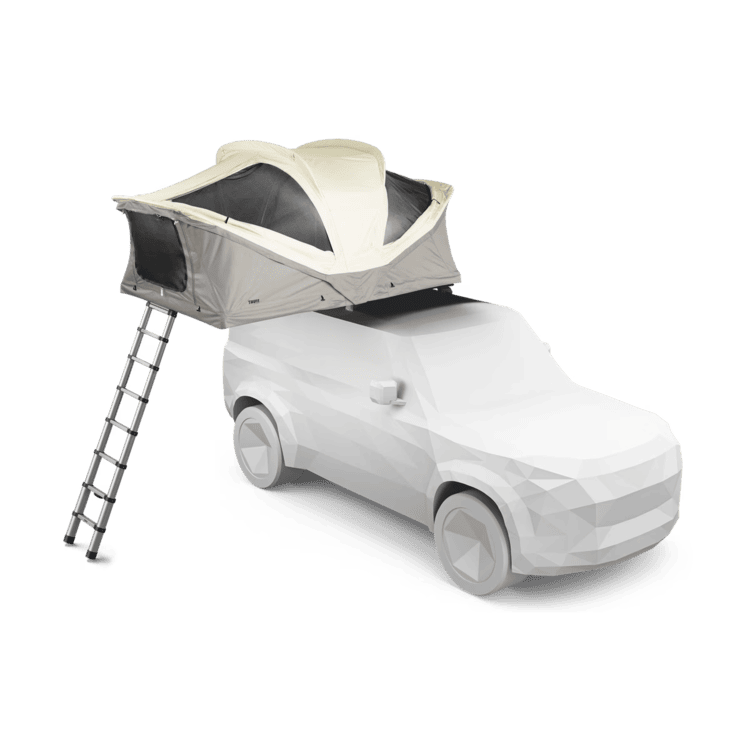
Yakima SkyRise HD Medium (~$1,800) A credible mid-range soft shell with a lower entry price than the Thule. The 3-inch high-density foam mattress is legitimately comfortable, and the integrated LED lighting and organizer pockets show thoughtful design. Setup runs 6–8 minutes. It’s a solid performer, but Yakima’s warranty support lags behind Thule’s, and the canvas coating has shown degradation in some multi-year owner reports. Worth considering if the Thule is out of budget.
Roofnest Condor 2 (~$2,795) The best hard shell in the mid-range tier. Setup is genuinely under 60 seconds, the aerodynamic profile keeps fuel economy impact minimal, and the Colorado-based company’s warranty and customer service track record is among the best in the market. The interior space (48″ × 96″) suits couples well. The 2.5-inch mattress is the one meaningful step down from the Thule’s soft shell comfort.
| Model | Type | Weight | Mattress | Setup Time | Best For |
|---|---|---|---|---|---|
| Thule Approach M | Soft shell | 132 lbs | 3 inches | 8–10 min | Couples, base campers |
| Yakima SkyRise HD M | Soft shell | 118 lbs | 3 inches | 6–8 min | Budget-conscious couples |
| Roofnest Condor 2 | Hard shell | 155 lbs | 2.5 inches | Under 60 sec | Frequent movers, daily drivers |
5. The Premium Tier ($3,000+) — When the Price Is Actually Justified
Spending $3,000+ on a roof top tent is a significant commitment. The honest question is: what do you actually get for the premium, and when does it translate to a meaningfully better experience rather than just a more expensive one?
iKamper Skycamp 3.0 Mini (~$3,299) — Best Overall The Skycamp 3.0 Mini is the benchmark hard shell for most buyers. It fits vehicles as small as a Mini Cooper (dynamic load requirement of just 165 lbs), deploys in under 90 seconds, packs to a 9-inch profile, and includes a 2.5-inch memory foam mattress that holds its shape after years of use. The Korean-manufactured build quality is consistently excellent — tolerances are tight, hinges operate smoothly after three-plus seasons, and iKamper’s warranty service has a strong reputation among long-term owners.
The Mini’s 48″ × 96″ sleeping area is ideal for couples. If you need more width for a family, the full Skycamp 3.0 (63″ wide, ~$3,999) is the next step up.
Roofnest Falcon 3 EVO (~$3,595) — Best Hard Shell If aerodynamics and highway performance are the priority, the Falcon 3 EVO is the class leader. Its packed profile is the lowest of any production hard shell RTT, it generates virtually no wind noise at 75 mph, and the Colorado-engineered construction is backed by what is consistently rated the best warranty program in the US market — a lifetime structural warranty with responsive customer service. The 2.5-inch mattress is comfortable, though not quite at the level of the thicker soft shell options.
James Baroud Odyssey (~$4,200+) For buyers who camp in true four-season conditions, the Odyssey is in a category of its own. French-manufactured with aviation-grade aluminum, a 3.5-inch mattress, and integrated ventilation designed for condensation management in cold weather, it’s the tent serious cold-weather overlanders consistently choose. It’s not the right choice for a casual summer camper — the price and weight (190 lbs) reflect its purpose.
Is the Premium Tier Worth It?
| Mid-Range ($1,500–$3,000) | Premium ($3,000+) | |
|---|---|---|
| Setup time | 60 sec – 10 min | 30–90 seconds |
| Mattress quality | Good (2.5–3 inch) | Excellent (2.5–3.5 inch memory foam) |
| Aerodynamics | Moderate | Best in class |
| Longevity (3+ years) | Good with care | Excellent, minimal degradation |
| Warranty | 2–3 years | 3 years – lifetime |
| Best for | Most buyers | Daily drivers, frequent travelers, four-season use |
Worth paying premium if: You commute in the vehicle (fuel penalty compounds over years), move camp more than 30 nights per year, or need four-season reliability. Not worth it if: You camp 10–15 nights per year in mild weather — a mid-range tent serves this use case fully.
6. Hard Shell vs. Soft Shell — The Decision That Shapes Everything Else
Before comparing specific models, this fundamental choice needs to be made correctly. Getting it wrong is the most common buyer mistake.
| Factor | Hard Shell | Soft Shell |
|---|---|---|
| Setup time | 30 sec – 2 min | 4–10 min |
| Packed aerodynamics | Low profile, less drag | Taller, more highway noise |
| Interior space | Compact | Roomier at same price point |
| Price for equivalent quality | 20–40% more | More affordable |
| Mattress options | Usually 2–2.5 inches standard | Often 3 inches+ |
| Long-term durability | Aluminum shell highly durable | Canvas degrades faster, needs re-coating |
| Best climate | All conditions | 3-season; cold weather manageable with add-ons |
Choose a hard shell if: You move camp frequently, commute in your vehicle between trips, or prioritize minimizing fuel economy impact. The speed and aerodynamics justify the cost premium for regular users.
Choose a soft shell if: You base camp for multiple nights at a time, want more interior space for the money, or are testing RTT camping before a larger investment. The Thule Approach M proves that a soft shell can be an excellent long-term choice — it’s not a compromise, it’s a different tool for a different pattern.
7. Best Roof Top Tent by Vehicle
This is the section most buying guides skip entirely, or handle with a single generic paragraph about roof load ratings. Here’s the vehicle-specific guidance that actually helps.
| Vehicle | Dynamic Load Limit | Recommended Type | Top Pick | Key Notes |
|---|---|---|---|---|
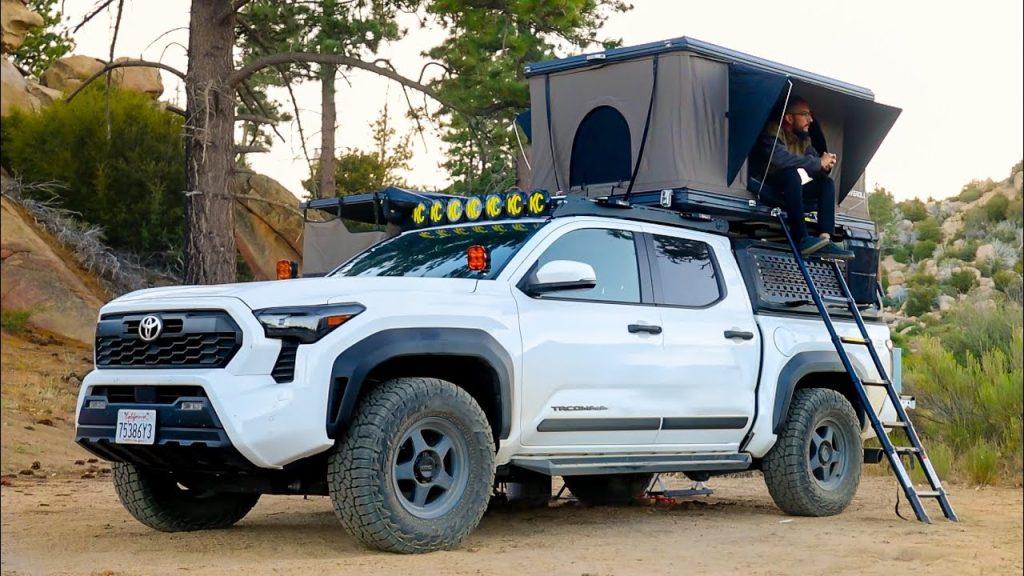
| Toyota Tacoma (2016+) | ~165 lbs | Hard shell or bed rack | iKamper Skycamp Mini | Roof limit is tight; bed rack removes the constraint entirely |
| Toyota 4Runner (2010+) | ~165 lbs | Hard shell | Roofnest Condor 2 | Aftermarket rack required; allow 30–40 lbs for rack weight |
| Jeep Wrangler JL | ~330 lbs | Either | iKamper Skycamp 3.0 | Best RTT platform in the market; most options available |
| Ford Bronco (2021+) | ~150 lbs | Lightweight hard shell | iKamper Skycamp Mini | Extremely tight limit; avoid soft shells over 100 lbs |
| Toyota RAV4 (2019+) | ~165 lbs | Lightweight hard shell or inflatable | Topoak Galaxy 1.0 | Low limit rules out most soft shells |
| Ford F-150 (2021+) | 150–250 lbs (trim-dependent) | Bed rack preferred | Any with bed rack | Bed rack eliminates roof load concern; best option for F-150 |
The Tacoma situation deserves a specific note. The truck’s 165 lb dynamic limit sounds workable, but once you factor in a quality crossbar rack (40–50 lbs), you’re left with only 115–125 lbs for the tent itself — which eliminates most soft shells and heavier hard shells. A bed rack is the most practical solution for Tacoma owners who want maximum tent options without compromising safety.
8. Mattress Quality Compared — The Detail Every Guide Skips
The mattress is what you actually sleep on every night. It’s one of the top post-purchase complaint categories, and it’s one of the last things most buying guides address with any depth.
| Model | Mattress Thickness | Foam Type | Comfort Rating | Upgrade Available? |
|---|---|---|---|---|
| James Baroud Odyssey | 3.5 inches | High-density + memory foam | Excellent | No (already premium) |
| Thule Approach M | 3.0 inches | High-density foam | Very Good | No |
| Yakima SkyRise HD | 3.0 inches | High-density foam | Very Good | No |
| iKamper Skycamp 3.0 | 2.5 inches | Memory foam | Good | Yes (aftermarket toppers) |
| Roofnest Falcon 3 EVO | 2.5 inches | High-density foam | Good | Yes |
| Roofnest Condor 2 | 2.5 inches | High-density foam | Good | Yes |
| Smittybilt Gen2 Overlander | 2.5 inches | Standard foam | Functional | No (replace with aftermarket) |
| Topoak Galaxy 1.0 | 2.4 inches | Standard foam | Acceptable | No |
The practical threshold: A 2.5-inch high-density foam mattress is comfortable for most people for 1–3 nights. Beyond that, the difference between 2.5 inches and 3+ inches becomes noticeable, especially for side sleepers. If your trips regularly run 4+ nights, prioritize mattress thickness as a selection criterion, not an afterthought.
A $50–$80 aftermarket memory foam topper can meaningfully improve comfort on tents with thinner included mattresses — this is a common solution among owners of iKamper and Roofnest models.
9. Long-Term Ownership — Durability and Warranty Reality
Launch-day reviews can’t tell you what happens after two seasons of real use. Here’s what multi-year owners consistently report across the major brands.
What Fails First — By Component
Canvas and fabric (soft shells): The DWR waterproof coating on soft shell fabrics typically needs reapplication at the 3–4 year mark with regular use. Cheaper fabrics (below 320g/m²) show delamination earlier. Zippers are the most frequent point of failure on budget tents — the fix is regular lubrication with zipper wax, but tents using lower-grade zipper hardware simply don’t last as long.
Hinges and hardware (hard shells): Premium brands (iKamper, Roofnest, James Baroud) use stainless steel or anodized aluminum hardware that handles repeated deployment without play developing in the mechanism. Budget hard shells often develop hinge slop within 2 seasons, which doesn’t make the tent unsafe but creates an imprecise, rattle-prone closure.
Mattress compression: Standard foam compresses noticeably over 3–5 years of regular use. Memory foam holds its shape significantly longer. This is one of the less-discussed reasons the premium mattresses in higher-tier tents justify their cost over a 5-year ownership horizon.
Brand Warranty and Support — Honest Assessment
| Brand | Warranty | Support Quality | Notes |
|---|---|---|---|
| Roofnest | Lifetime structural | Excellent | Colorado-based; responsive, parts available |
| iKamper | 3 years | Very Good | Korean HQ; US distributor responsive |
| Thule | 5 years | Very Good | Large brand infrastructure; straightforward claims |
| James Baroud | 5 years | Good | France-based; US support through distributors |
| Yakima | 3 years | Good | Large brand; support quality varies by region |
| Smittybilt | 1 year | Fair | Basic warranty; parts availability inconsistent |
| Topoak / Budget brands | 1 year | Variable | Distributor-dependent; verify before purchase |
The key insight: Warranty length is less important than warranty quality. A 1-year warranty from Roofnest with responsive, well-stocked support is worth more than a 3-year warranty from a brand where claiming it requires shipping to overseas headquarters and waiting 6–8 weeks for parts.
Final Word
The best roof top tent isn’t the one with the most Instagram impressions or the longest spec sheet — it’s the one that fits how you actually camp, what your vehicle can carry, and how much realistic use it’ll see over the next five years.
For most buyers: the iKamper Skycamp 3.0 Mini if you move camp frequently, the Thule Approach M if you prioritize space and comfort at a fixed site, and the Smittybilt Gen2 Overlander if you’re starting out and want to learn the lifestyle before committing to a premium purchase.
Get the vehicle compatibility right first, factor in the full cost of ownership, and the tent choice becomes straightforward.
About the Gear Behind This Guide
Many of the roof top tents reviewed here are built by OEM manufacturers in China — the same supply chain that produces gear sold under well-known Western brand names at a significant markup.
Everlead Outdoor is one of those manufacturers. With over 10 years of experience producing premium roof top tents, vehicle awnings, and inflatable tents, we supply brands selling into the US, Europe, and Australia — and we’re now accessible directly to buyers and emerging brands alike.
What that means practically: factory-direct pricing on the same quality tier as the premium picks in this guide, full OEM/ODM support if you’re building your own outdoor brand, and a low minimum order starting from a single unit.
Every tent ships after a 100% full-unit quality inspection — the same standard we hold for our retail brand partners.
If you’re sourcing gear for a brand or looking for a reliable manufacturing partner, contact us to discuss your requirements.
Frequently Asked Questions
What is the best roof top tent for a Toyota Tacoma?
The iKamper Skycamp 3.0 Mini is the best roof-mounted option for a Tacoma — it weighs 120 lbs and works within the truck’s 165 lb dynamic load limit when paired with a lightweight rack. For Tacoma owners who want more flexibility in tent choice, a truck bed rack removes the roof load constraint entirely and opens up the full market.
Is a $1,000 roof top tent worth buying, or should I save up?
It depends on how often you camp. If you’re testing RTT camping for the first time or camp fewer than 15 nights per year, the Smittybilt Gen2 Overlander at ~$1,099 is a legitimate starting point. If you camp 20+ nights per year and move camp frequently, the mid-range tier will pay for itself in comfort and usability within a season or two.
Which roof top tents are actually made in the USA?
Roofnest designs and assembles its tents in Colorado and is the most credibly American-made option in the market. Most other major brands — including iKamper (South Korea), James Baroud (France), and Thule (Sweden) — are designed and manufactured outside the US, though they maintain US-based distribution and warranty support.
What’s the best roof top tent for two adults and a child?
The iKamper Skycamp 3.0 (full size, not Mini) at 63 inches wide is the most practical hard shell for a family of three. For soft shell options, the Thule Approach M with an annex room attachment creates ground-level sleeping space that works well for a child. The annex approach keeps the main tent as a parent bedroom while giving kids their own space at ground level.
Are Chinese-brand roof top tents worth buying?
Some are, with conditions. Brands like Topoak that sell through established US distributors with clear return policies and local warranty support can offer genuine value — particularly in the hard shell category where the core mechanism is less dependent on fabric quality than soft shells. Avoid purchasing direct from overseas sellers with no US warranty presence. The risk isn’t the initial quality — it’s what happens when something goes wrong two years in.
How long does a quality roof top tent last?
A premium RTT (iKamper, Roofnest, James Baroud) used regularly — 30–50 nights per year — should provide 8–12 years of reliable service with basic maintenance: annual canvas waterproofing treatment, zipper lubrication, and hinge inspection. Budget tents used at the same frequency typically show meaningful degradation at the 3–4 year mark, particularly in canvas and zipper quality.
Which roof top tent has the most comfortable mattress?
The James Baroud Odyssey’s 3.5-inch memory foam mattress is the best standard mattress in the market, though the $4,200+ price reflects it. At a more accessible price point, the Thule Approach M and Yakima SkyRise HD both offer genuine 3-inch high-density foam that most sleepers find comfortable for multi-night trips without modification.