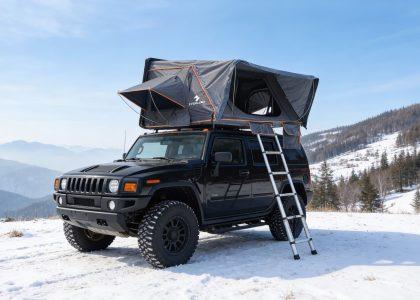
“It’s just a tent on top of a car. Why does it cost as much as a used Honda Civic?”
If you are shopping for a rooftop tent (RTT) in 2026, you have likely asked this question. When you can buy a perfectly good 4-person ground tent for $200, seeing a price tag of $3,500 for a hard-shell RTT can feel like highway robbery.
As a manufacturer who sees the raw invoices for aluminum, canvas, and gas struts every day, I am here to debunk the myths about RTT pricing.
The Thesis is simple: A rooftop tent is not “camping gear”; it is an automotive accessory. You are not paying for nylon and poles; you are paying for an engineered structure capable of withstanding 70mph highway winds, UV radiation, and dynamic vehicle loads.
In this insider’s breakdown, we open the factory doors to explain exactly where your money goes—from the Bill of Materials (BOM) to the hidden logistics fees.
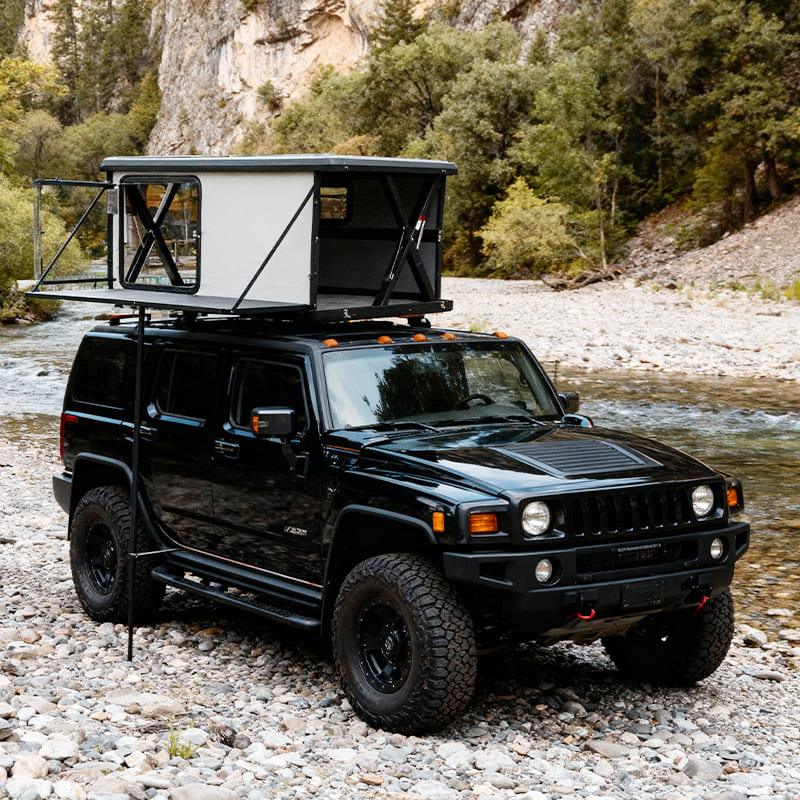
The “Camping Gear” vs. “Car Parts” Misconception
The biggest mistake buyers make is comparing an RTT to a ground tent.
- A Ground Tent is a static structure. You set it up, and it sits there. If it fails, you get wet.
- A Rooftop Tent is a dynamic structure bolted to a 2-ton metal box moving at 70mph (110km/h). It must withstand hurricane-force wind shear, constant vibration from potholes, and emergency braking forces.
If an RTT fails on the highway, it doesn’t just leak—it causes a multi-car accident.
Therefore, the high cost is largely due to Liability Engineering. We cannot use cheap plastic connectors or thin fiberglass poles. We must use 304 Stainless Steel hardware, aircraft-grade aluminum mounting tracks, and redundant locking mechanisms. You are paying for the assurance that the tent stays on the roof.
The BOM Breakdown: Where does the money actually go?
Let’s look at the Bill of Materials (BOM). This is the raw cost to build the unit. To the untrained eye, a $1,000 “Budget Tent” and a $3,000 “Premium Tent” look identical in photos. But inside? They are different species.
| Component | Budget Tent Spec (Cheap) | Premium Tent Spec (Expensive) |
| Shell Material | Recycled ABS / Thin Fiberglass | Aluminum Honeycomb (Aviation Grade) |
| Fabric | 420D Oxford (Thin, ~$4/yard) | 320g Poly-Cotton Canvas (~$12/yard) |
| Floor Base | Hollow or Styrofoam filled | EPE Insulation + Aluminum Frame |
| Gas Struts | Generic (No Warranty) | STABILUS (German Brand) |
| Hinges | Zinc Alloy (Brittle) | 304 Stainless Steel (Forged) |
The Shell Cost:
The shell is the single most expensive component. Budget brands use recycled ABS plastic which becomes brittle in the cold. Premium brands use Aluminum Honeycomb. While Aluminum is significantly more expensive to source and manufacture, it offers superior durability and repairability.
Want to know why the shell material matters so much? Read our engineering deep dive: Aluminum vs. Fiberglass Roof Tents: Which Shell Lasts Longer?
The “White Label” Myth: Are all Chinese tents the same?
A common objection we hear is: “I saw this exact same looking tent on Alibaba for $500!”
No, you saw the outer shape of that tent.
OEM Factories (like Everlead) operate on QC Tiers.
- Tier C Production: A brand asks for the “lowest possible price.” We use the standard mold but fill it with thinner fiberglass, use “leftover” fabric batches (color variance), and install generic zinc hinges.
- Tier A Production: A premium brand asks for “highest durability.” We use the same mold shape, but we inject high-grade virgin plastic or aluminum, stitch it with heavy 320g canvas, use YKK zippers, and salt-spray test every metal bracket.
The look is the same. The performance is not. The “Alibaba special” is almost always a Tier C leftover.
Logistics: The Hidden Price Driver
This is the boring part that kills the margin: Shipping.
You can ship a t-shirt for $5. You cannot ship a 180lb, 7-foot-long crate via FedEx or UPS. Rooftop tents are classified as Oversized LTL (Less-Than-Truckload) Freight.
- Factory to Port: $50/unit
- Ocean Freight: $150-$300/unit (depending on fuel prices)
- Port to Warehouse: $50/unit
- Warehouse to Customer (Last Mile): $200-$400/unit
Before the tent even has a price tag, it has accrued $500+ in pure shipping costs. Budget brands try to hide this by using cheaper materials to offset the shipping. Premium brands add it to the MSRP, resulting in a higher sticker price but a better product.
The 5-Year Math: Cheap vs. Premium Tents
Finally, let’s look at the Total Cost of Ownership (TCO).
Scenario A: The Budget Shopper
You buy a $1,200 tent.
- Year 2: The zippers bust (Repair: $100).
- Year 3: The ABS shell cracks in the winter. It leaks. You trash it.
- Resale Value: $0.
- Total Cost: $1,300 for 3 years of use.
Scenario B: The Investment Shopper
You buy a $3,000 Aluminum Honeycomb tent.
- Year 8: It has some dents, but works perfectly.
- Resale: You sell it for $1,800 (Premium tents hold value like Toyotas).
- Total Cost: $1,200 for 8 years of use.
In the long run, the “expensive” tent is actually cheaper per night of sleep.
Conclusion
High prices in the rooftop tent market aren’t just a “Brand Tax.” They are the cost of sleeping comfortably in a hurricane versus sleeping in a wet plastic bag. They are the cost of ensuring the tent doesn’t fly off your roof on the highway.
When you pay for a premium tent, you are paying for Virgin Aluminum, German Gas Struts, and Tier A Quality Control.
About Everlead Outdoor
At Everlead Outdoor, we specialize in “Tier A” manufacturing. We don’t race to the bottom on price; we race to the top on specs. We help global brands build tents that justify their premium price tags through superior engineering and material sourcing.
Not sure which specs define a premium tent in 2026? Check out our flagship guide: Best Roof Top Tents of 2026: A Guide to Manufacturer Quality and Specifications.