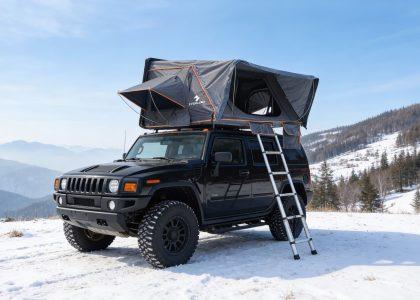
The sticker shock is real: you can buy a reliable ground tent for $200, yet a quality rooftop tent (RTT) often starts at $2,000 and can easily climb to $4,000. Rooftop tents are expensive because they are engineered as automotive accessories rather than simple camping gear, requiring heavy-duty materials like aviation-grade aluminum and UV-resistant canvas to withstand highway wind speeds and dynamic vehicle loads. Beyond the raw materials, the price reflects the complex logistics of shipping oversized freight and the rigorous safety testing required for vehicle-mounted structures.
Below is a detailed breakdown of the factors driving these costs and whether the investment is justified for your travel style.
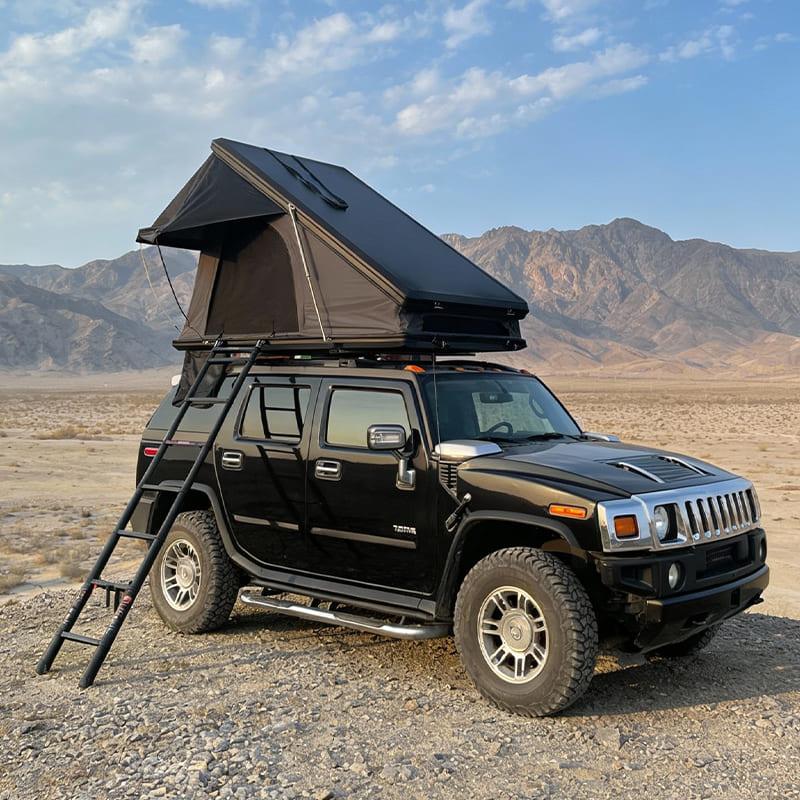
Table of Contents
- How does material quality differ between ground tents and rooftop tents?
- What role do engineering and safety standards play in the price?
- Why are shipping and logistics costs so high for rooftop tents?
- Are hard shell tents more expensive to manufacture than soft shells?
- Do rooftop tents hold their value better than traditional tents?
- Is the high upfront cost worth it compared to other travel accommodations?
How does material quality differ between ground tents and rooftop tents?
Rooftop tents utilize heavy-duty, architectural-grade materials designed for longevity, such as 280g-320g Poly-Cotton Ripstop canvas and marine-grade stainless steel hardware, whereas ground tents typically use lightweight, inexpensive nylon or polyester. This difference is critical because an RTT stays mounted on your vehicle year-round, exposed to UV radiation and road grime, while a ground tent is packed away after use.
The Fabric Factor
- Ground Tents: usually made from 70D or 190T Polyester. It is thin, lightweight, and degrades quickly under constant sunlight.
- Rooftop Tents: Constructed from heavy Poly-Cotton Canvas. This material is breathable (reducing condensation), quieter in the wind, and significantly thicker to resist tearing.
The Structural Base
The floor of a ground tent is a thin sheet of polyethylene. The floor of a rooftop tent is a complex sandwich panel, often consisting of aluminum sheets bonded to an insulating foam core. This structure must support the weight of two or three adults without flexing, requiring expensive raw materials like aluminum honeycomb or welded alloy frames.
What role do engineering and safety standards play in the price?
Unlike ground tents, rooftop tents must be engineered to withstand aerodynamic forces at highway speeds of 70+ mph and severe weather conditions, requiring extensive R&D budgets and safety testing that drive up the final retail price. A failure in a ground tent means you get wet; a failure in a rooftop tent could cause a traffic accident or structural damage to your vehicle.
Engineering Challenges
Manufacturers invest heavily in “Liability Engineering.” Every component, from the mounting brackets to the gas struts, must be rated for high stress.
- Wind Shear: The tent shell must remain aerodynamic and secure while driving into strong headwinds.
- Dynamic Load: The mounting rails must handle the vibration and bouncing of the vehicle off-road without shearing off.
Testing Protocols
Reputable brands conduct wind tunnel testing and long-term vibration analysis to ensure the mounting hardware doesn’t fatigue over time. This level of rigorous testing is virtually non-existent in the budget ground tent market.
Why are shipping and logistics costs so high for rooftop tents?
Rooftop tents are classified as “Oversized Freight” due to their weight (100-200 lbs) and dimensions, meaning they cannot be shipped via standard couriers like FedEx or UPS, necessitating expensive LTL (Less-Than-Truckload) truck delivery. This “last mile” delivery cost is often built into the product’s MSRP, accounting for $200 to $500 of the final price tag.
The Supply Chain Markup
- Factory to Port: The sheer volume of the boxes limits how many units fit in a shipping container, raising the per-unit ocean freight cost.
- Warehousing: Storing hundreds of car-sized boxes requires massive warehouse space, increasing overhead for retailers.
- Specialized Handling: Moving these units often requires forklifts and pallet jacks, preventing automated sorting and increasing labor costs.
Are hard shell tents more expensive to manufacture than soft shells?
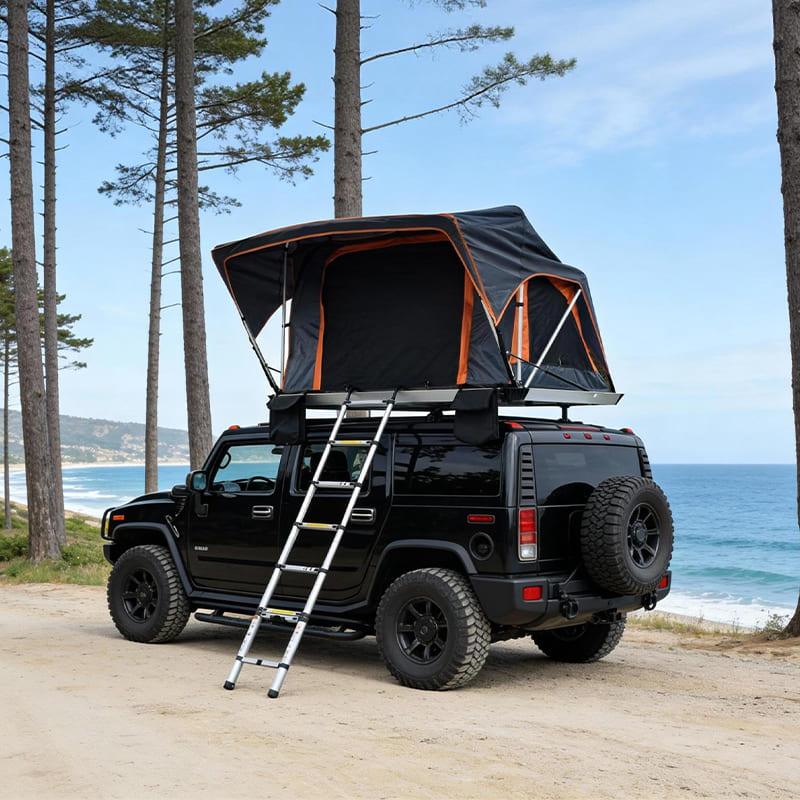
Yes, hard shell tents are significantly more expensive because they require complex molds (fiberglass or ABS) or precision aluminum fabrication, whereas soft shell tents rely primarily on sewing labor and simple aluminum tubing. The initial tooling cost for a single hard shell mold can exceed $50,000, a cost that must be amortized over the production run.
Comparison: Hard Shell vs. Soft Shell Manufacturing
| Feature | Soft Shell RTT | Hard Shell RTT |
| Primary Material | Canvas & Aluminum Tubes | Fiberglass, ABS, or Aluminum Plate |
| Manufacturing Process | Sewing & Assembly | Injection Molding or CNC Bending |
| Assembly Time | High Labor / Low Tech | High Tech / Precision Assembly |
| Durability | Medium (Cover wears out) | High (Shell protects fabric) |
| Price Tier | Entry Level ($1,000 – $2,000) | Premium ($2,500 – $4,500) |
Hard shell tents also typically include expensive gas strut mechanisms (often imported from Germany) to allow for the “30-second setup,” further increasing the bill of materials.
Do rooftop tents hold their value better than traditional tents?
High-quality rooftop tents maintain a high resale value, often retaining 50-70% of their original price after several years of use, whereas used ground tents have almost zero resale market value. This durability turns the purchase into an asset rather than a disposable expense, similar to buying a vehicle accessory like a roof box or bull bar.
The Second-Hand Market
Because RTTs are built with industrial-grade materials, they are repairable. If a zipper breaks or a hinge bends, it can usually be fixed. This longevity supports a robust used market.
- Demand: The demand for RTTs often outstrips supply, keeping used prices high.
- Longevity: A 5-year-old aluminum hard shell tent often functions just as well as a brand new one, making it a safe purchase for second-hand buyers.
Is the high upfront cost worth it compared to other travel accommodations?
For frequent travelers, a rooftop tent pays for itself within 15-20 trips by eliminating hotel or RV rental costs, offering a return on investment that justifies the high initial purchase price. While the upfront cost is steep, the “cost-per-night” drops significantly the more you use it.
Cost Breakdown Scenario
- Hotel Traveler: 20 nights/year @ $150/night = $3,000 per year.
- RTT Traveler: One-time cost of $3,000 + minor campsite fees.
By the second year, the RTT owner is effectively traveling for free compared to the hotel traveler. Furthermore, the RTT offers the freedom to camp in dispersed (free) locations that hotels cannot reach.
Conclusion
The high price of rooftop tents is not arbitrary; it is a reflection of manufacturing reality. You are paying for automotive-grade engineering, specialized freight logistics, and industrial materials capable of surviving highway speeds and severe weather. While a ground tent is a temporary shelter, a rooftop tent is a durable vehicle modification designed for years of service.
For weekend warriors, the cost may be hard to justify. But for overlanders and frequent campers, the durability, convenience, and resale value make it a sound financial investment in outdoor freedom.
About Everlead Outdoor
Everlead Outdoor is a premier OEM/ODM Manufacturer of high-performance camping gear, specializing in hard-shell rooftop tents and vehicle awnings. We understand the cost drivers because we control the manufacturing process from start to finish.
By utilizing advanced Aluminum Honeycomb technology and in-house sourcing for 320g Poly-Cotton Canvas, we help global brands deliver premium quality without the unnecessary markups associated with inefficient supply chains. Whether you are looking for rugged durability or aerodynamic efficiency, our engineering team ensures every dollar spent translates into field-tested performance.
Contact our team for OEM/ODM inquiries.