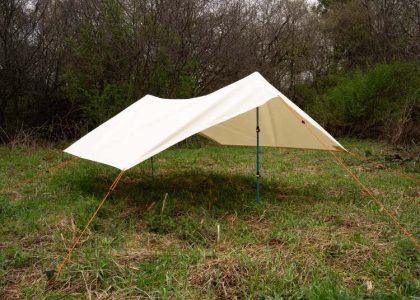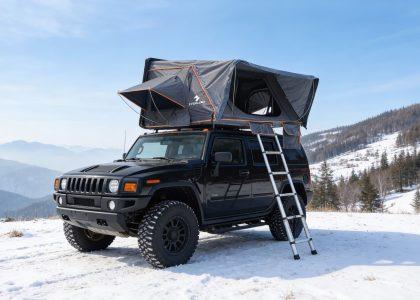
You arrive at your campsite, the sun is setting, and you have already deployed your vehicle awning to catch the last bit of shade. Now comes the critical decision for the night: do you pitch a traditional dome tent on the ground nearby, or do you zip a set of walls onto your awning to create an instant cabin?
This is the “Shelter Dilemma” that every overlander eventually faces.
While an Awning Room (or Annex) offers superior integration with your vehicle for weather-proof access to gear, a traditional Ground Tent remains the better choice for “Basecamp” travelers who need to drive their vehicle daily without breaking down their entire shelter.
In this guide, we analyze the mobility, weather sealing, and real-world utility of both systems to help you decide which shelter belongs in your rig.
What is the difference between a Ground Tent and an Awning Tent?
The distinction lies in structural independence. A Ground Tent is a standalone shelter supported by its own pole structure that can be pitched anywhere, whereas an Awning Tent (or Annex) is a set of fabric walls that hangs from your vehicle-mounted awning, relying on the vehicle’s roof rack for structural support.
- The Ground Tent: This is the classic camping staple. Whether it’s an instant pop-up or a technical pole tent, it sits apart from your vehicle. It is an independent “bedroom” that you can place 10 feet or 100 feet away from your truck.
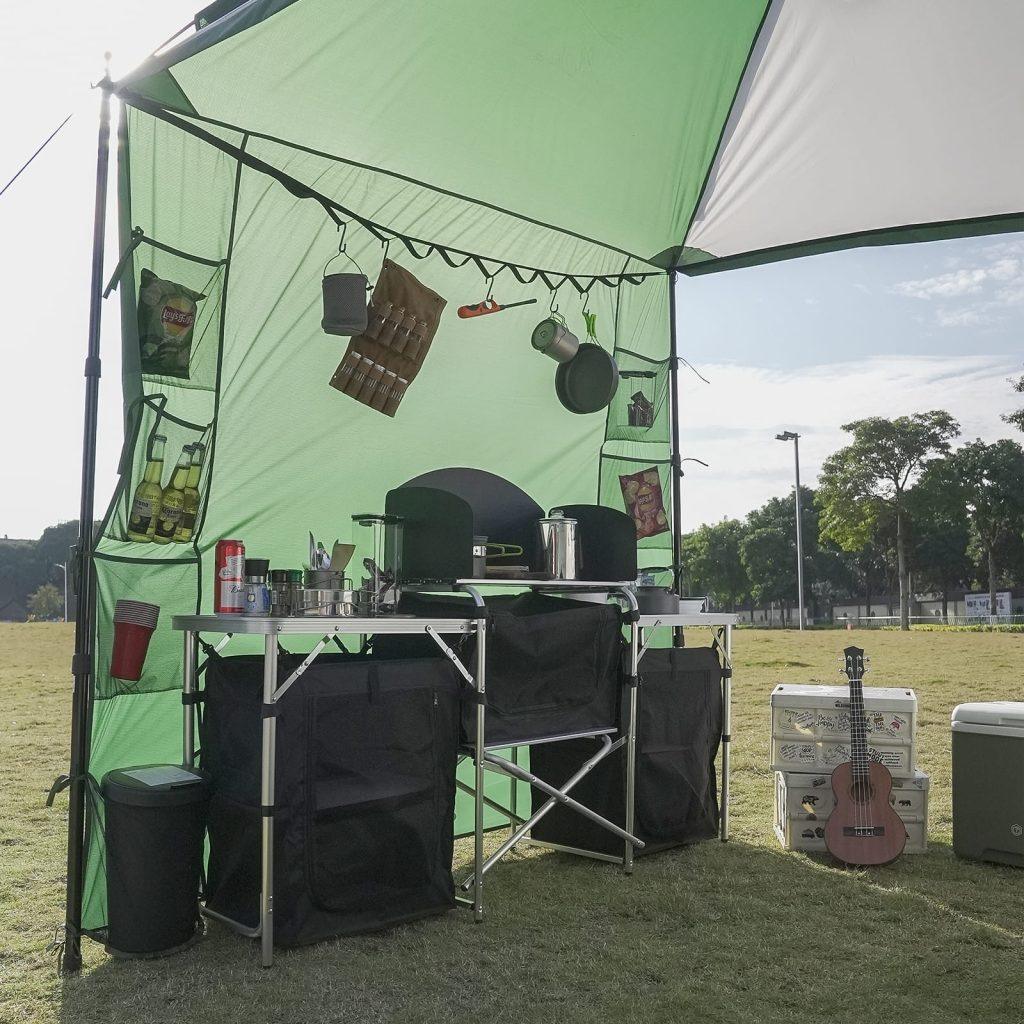
- The Awning Tent: Often called an “Annex” or “Add-on Room,” this system transforms your existing vehicle awning into a fully enclosed 4-walled room. It effectively turns your patio into a living space, utilizing the awning’s frame as the roof.
The Mobility Test: What happens when you need to drive?
The biggest drawback of an Awning Tent is that it tethers your shelter to your vehicle; if you want to leave camp to explore a trail or buy groceries, you must completely dismantle your camp, unlike a Ground Tent which can stay pitched.
This brings us to the “Basecamp Rule”:
- Choose a Ground Tent if you plan to stay in one location for multiple days while using your vehicle for day trips. You can leave your sleeping gear set up, drive away to hike or fish, and return to a ready-made camp.
- Choose an Awning Room if you are “Overlanding” (moving to a new campsite every single day). Since you have to pack up your rooftop tent and gear anyway, taking down the awning walls is just part of the morning departure routine.
Weather & Bugs: Which shelter offers a better seal?
Ground Tents generally offer a superior seal against insects and heavy rain because they are a single sealed unit, whereas Awning Tents often have “gaps” underneath the vehicle chassis or near the wheel arches where wind and mosquitoes can intrude.

The engineering challenge with Awning Rooms is the vehicle connection. Because cars have irregular shapes (wheel wells, sliders, bumpers), hanging a square wall against a curved truck creates gaps.
- The “Draft Skirt” Solution: High-quality Awning Rooms will include a “Draft Skirt”—a specialized piece of fabric that clips or magnetically attaches to the wheel well and chassis to close the gap under the vehicle. Without this, your “enclosed” room is open to the wind from underneath the truck.
Setup Reality: Is zipping on walls actually faster than pitching poles?
Surprisingly, a modern “Instant-Up” ground tent is often faster to deploy (2-3 minutes) than an Awning Room, which requires deploying the awning, locating the zippers, attaching the walls, and staking down the corners to prevent flapping.
While the Awning Room looks convenient, the process of aligning 10-foot long zippers at camp height (often requiring a step stool on lifted trucks) can be fiddly, especially in the wind.
| Feature | Instant Ground Tent | Vehicle Awning Room |
| Setup Time | 2 – 4 Minutes | 5 – 8 Minutes |
| Mobility | High (Drive away anytime) | Zero (Tethered to truck) |
| Space Type | Floor Space Only | Vertical Standing Height |
| Wind Stability | High (Aerodynamic Dome) | Medium (Vertical Boxy Walls) |
Floor vs. Floorless: Understanding the “Dirt” factor
Most Ground Tents feature a “bathtub” style sewn-in floor that guarantees waterproofness, while many Awning Rooms feature removable floors (PVC tubs) that are easier to clean but less effective at keeping out groundwater during heavy storms.
- The “Mud Room” Advantage: The superpower of the Awning Room is the ability to remove the floor. This makes it the perfect Dining Room or Kitchen. You can cook, eat, and walk in with muddy boots without worrying about ruining the tent floor.
- The Sleeping Disadvantage: Because the floor is often velcroed or clipped in (rather than sewn), heavy rain can seep in between the wall and the floor. For this reason, we recommend Awning Rooms primarily for living and Ground Tents for sleeping.
Conclusion
The choice between a tent and an awning room ultimately comes down to your camping style: Sleep vs. Live.
If you need a dedicated, weather-tight pod for sleeping guests that allows your vehicle to roam free, buy a Ground Tent.
However, if you want to expand your vehicle’s footprint to create a standing-height kitchen, changing room, or storm shelter that integrates seamlessly with your rig, the Awning Room is an unbeatable upgrade.
About Everlead Outdoor
At Everlead Outdoor, we believe a vehicle awning should be the foundation of your campsite, not just a sunshade. As a premier OEM manufacturer, we engineer our Modular Awning Systems with pre-installed, heavy-duty Vislon zippers, allowing users to transform a simple roof rack awning into a fully enclosed habitat in minutes. Our factory specializes in precision-fit annex walls and “Draft Skirt” technologies that minimize gaps, ensuring your brand delivers the most weather-proof integrated shelter on the market.
Ready to upgrade your catalog? Contact our team to discuss custom OEM specifications for awnings and annex rooms.