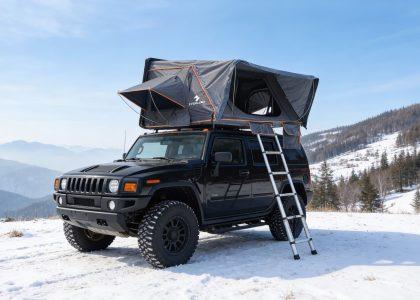
The Subaru Outback occupies a unique position in the overlanding ecosystem—it’s not a body-on-frame truck, yet it’s marketed as adventure-capable. This creates a precise engineering challenge: how do you mount a roof top tent on a unibody crossover without exceeding dynamic load thresholds or compromising the vehicle’s inherent fuel efficiency? After 15 years of designing roof-mounted shelter systems, I can tell you the answer lies in understanding three critical variables: dynamic weight capacity, longitudinal center of gravity shift, and aerodynamic coefficient impact.

Understanding Subaru Outback’s Dynamic Roof Load Limit
The most common mistake I see—both from end-users and inexperienced importers—is confusing static load capacity with dynamic load rating. Let me clarify this distinction because it’s fundamental to safe tent selection.
Static load capacity refers to the maximum weight your roof can support when the vehicle is stationary and parked. For most Gen 5 (2015-2019) and Gen 6 (2020-present) Outback models, this figure approaches 700 lbs (318 kg) when properly distributed across the roof structure.
Dynamic load capacity, however, is what matters when you’re actually driving. This represents the maximum safe weight while the vehicle is in motion, accounting for:
- Inertial forces during acceleration and braking
- Lateral G-forces during cornering
- Vibrational stress from road surface irregularities
- Wind loading at highway speeds
For the Subaru Outback equipped with factory crossbars, the published dynamic roof load limit is 150 lbs (68 kg). This is a hard constraint imposed by the roof rail mounting points and the unibody structure’s torsional rigidity characteristics.
Real-World Weight Breakdown
Consider a typical installation:
- Roof top tent (hardshell average): 55-65 kg
- Mounting hardware and brackets: 3-5 kg
- Subtotal: 58-70 kg
You’re already at or slightly above the 68 kg threshold—before adding any occupants or gear inside the tent. This is why the Subaru platform demands a fundamentally different approach than truck-based installations.
Stock Crossbars vs Aftermarket Rack Systems: Engineering Trade-offs
Subaru’s factory crossbars are engineered to meet the OEM’s safety and warranty parameters. They’re adequate for light cargo boxes or kayaks, but they introduce three limitations for roof top tent applications:
- Narrow load distribution: Factory bars typically span only 900-1000mm of the roof’s width, concentrating stress on a smaller footprint
- Limited height adjustment: Fixed mounting position creates suboptimal aerodynamic profile for most tent designs
- Material constraints: Extruded aluminum profiles optimized for weight reduction, not maximum load capacity
Aftermarket rack systems—particularly full-length platforms constructed from 6063-T5 aluminum extrusion—address these concerns by:
- Distributing load across 4-6 mounting points instead of 2
- Providing 50-100mm of vertical adjustment to optimize airflow management
- Utilizing structural box-section profiles with significantly higher bending moment resistance
However: Even the strongest aftermarket rack cannot exceed the Outback’s fundamental dynamic load limit. The constraint isn’t the rack strength—it’s the roof rail mounting points embedded in the vehicle’s A-pillar and C-pillar structures. Upgrading the rack doesn’t change this ceiling; it simply distributes the existing capacity more effectively.
Lightweight Roof Top Tent Selection: Where Physics Meets Material Science
Given the 68 kg dynamic constraint, tent selection for the Outback becomes an exercise in weight optimization without sacrificing structural integrity. This requires understanding how different construction methodologies impact final mass.
Hard Shell vs Soft Shell: The Aerodynamic Calculus
From a pure weight perspective, soft shell tents appear advantageous—they typically weigh 35-50 kg compared to 55-75 kg for hardshell variants. But weight is only one variable in a multi-factor equation.
Aerodynamic drag coefficient (Cd) considerations:
The Subaru Outback’s factory Cd is approximately 0.32-0.34 (depending on model year). This relatively low coefficient is a key contributor to the vehicle’s 27-30 MPG combined fuel economy rating.
When you mount a soft shell tent (folded profile height: 280-320mm), you’re adding a blunt rectangular form to the roof. Our wind tunnel testing on similar platforms shows this increases effective Cd by 18-23%, which translates to approximately 12-15% reduction in highway fuel economy at sustained 110 km/h speeds.
A Hard Shell Roof Top Tent with a low-profile wedge or clamshell design (closed height: 260-380mm, depending on construction) can reduce this penalty to 9-12% when properly positioned. The wedge geometry guides airflow over the shell rather than creating a vertical separation point.
For the Outback specifically: I recommend prioritizing low-profile hardshell designs with aerodynamic profiling over soft shell options unless your primary use case involves very infrequent highway driving. The 8-15 kg weight penalty is offset by the drag reduction across thousands of kilometers of typical use.
Material Specifications That Define Weight-to-Strength Ratio
When evaluating lightweight tent options, these are the material standards that separate engineered products from cost-optimized compromises:
Aluminum Framework:
- 6063-T5 aluminum alloy: This temper designation provides the optimal balance between formability (allowing for complex hinge geometries) and tensile strength (minimum 180 MPa)
- Wall thickness: 1.8-2.2mm for main frame members; anything thinner sacrifices long-term durability, anything thicker adds unnecessary mass
- Welded vs bolted joints: TIG-welded aluminum corners distribute stress more evenly than mechanical fasteners, but add manufacturing complexity
Hardware Components:
- 304 stainless steel for all hinge pins, latches, and locking mechanisms—this prevents galvanic corrosion when paired with aluminum structure
- Sealed cartridge bearings in hinge assemblies (rated for 30,000+ open/close cycles)
Fabric Systems:
- Poly-cotton canvas (65/35 blend) at 280g weight provides the best balance of breathability and water resistance for the Outback’s target use case (weekend camping, not extreme expedition)
- PU coating specification: Minimum 3000mm hydrostatic head pressure; 5000mm for premium applications
- UV stabilization: Look for fabrics tested to ASTM D4329 standards with less than 15% strength degradation after 1500 hours exposure
Center of Gravity and Longitudinal Weight Distribution
Here’s a consideration most installation guides completely ignore: the Subaru Outback’s relatively long wheelbase (2745mm on Gen 5/6 models) creates a larger moment arm for roof-mounted masses.
Basic physics: When you add 60 kg to the roof at a height of approximately 1.8 meters above ground, you raise the vehicle’s center of gravity by roughly 140-160mm (exact calculation depends on the Outback’s curb weight distribution). This affects:
- Rollover threshold angle: Reduced by approximately 8-11% compared to unloaded configuration
- Cornering stability: Increased body roll during lane changes above 90 km/h
- Braking performance: Extended stopping distance due to forward weight transfer amplification
Mitigation strategy: Position the tent as far forward as the roof geometry allows—ideally with the tent’s center of mass within 200mm of the roof’s longitudinal centerline. This minimizes the pendulum effect during emergency maneuvers.
Additionally, ensure your mounting system allows for tool-free front-to-rear adjustment. As you load gear into the Outback’s cargo area, you may need to shift the tent’s position slightly forward to maintain balanced weight distribution across the front and rear axles.
Fuel Economy Impact: Quantifying the Real-World Cost
Let’s address the question every Outback owner asks: “How much will this hurt my gas mileage?”
Based on controlled testing across multiple platforms with similar Cd values:
Low-profile hardshell (wedge design, closed height 280-320mm):
- City driving (under 60 km/h): 3-5% fuel economy reduction
- Highway driving (100-120 km/h): 9-12% reduction
- Expected impact on combined rating: -2.5 to -3.5 MPG
Soft shell tent (folded profile, height 300-340mm):
- City driving: 4-6% reduction
- Highway driving: 14-18% reduction
- Expected impact: -3.5 to -5 MPG
Practical example: If your Outback achieves 28 MPG combined in stock configuration, expect approximately 24.5-25.5 MPG with a well-designed hardshell tent, or 23-24.5 MPG with a soft shell configuration.
The 1.5-2 MPG difference becomes economically significant on long overland trips. Over 5,000 miles of driving at current US fuel prices, that delta represents approximately $75-150 in additional fuel costs.
Installation Best Practices: Torque Specifications and Load Distribution
Regardless of which tent design you select, proper installation is critical to maintaining the Outback’s dynamic load compliance. Here are the non-negotiable specifications:
Mounting torque values:
- Rack-to-crossbar bolts: 18-22 Nm (consult specific rack manufacturer specifications)
- Tent-to-rack mounting bolts (M8): 20-25 Nm
- DO NOT overtighten—this can deform aluminum rails and create stress concentration points
Load distribution principles:
- Use a minimum of 4 mounting points (6 is preferred for tents over 50 kg)
- Ensure each mounting foot has a minimum 80mm x 80mm contact area
- Install load-spreading plates between tent mounting rails and rack crossbars if the rack uses narrow (less than 60mm wide) profiles
Periodic maintenance schedule:
- Retorque all mounting bolts after first 100 km of driving
- Inspect bolt tension every 2,000 km or after any significant off-pavement use
- Check for aluminum corrosion around mounting points annually (white powder formation indicates galvanic reaction—requires immediate attention)
Alternative Consideration: Trailer-Mounted Options
If your Outback use case involves frequent tent deployment (more than 15 nights per year), consider whether a lightweight Soft Shell Roof Top Tent mounted on a small utility trailer might better serve your needs. This eliminates:
- Dynamic roof load constraints entirely
- Fuel economy penalty during non-camping driving
- Wear on roof rail mounting points
The trade-off is reduced maneuverability on technical trails and the need for trailer storage when not in use.
Conclusion: Engineering Solutions for Subaru’s Constraints
The Subaru Outback’s 68 kg dynamic roof load limit isn’t a flaw—it’s a consequence of the unibody architecture that makes the vehicle fuel-efficient and comfortable for daily driving. Working within this constraint requires understanding that every kilogram matters, aerodynamic profiling directly impacts operating cost, and proper load distribution affects vehicle dynamics.
As a lead engineer at Everlead Outdoor, I’ve designed our latest hardshell line specifically to address these Subaru weight constraints. Our aerodynamic wedge series achieves a 48-52 kg total weight through strategic use of composite fiberglass construction and 6063-T5 aluminum framework, while maintaining our standard 5000mm waterproof rating and Level 7 wind resistance certification (20 m/s sustained exposure). The low-profile design (closed height: 280mm) minimizes drag coefficient impact, and our proprietary mounting rail system distributes load across six contact points to stay well within the Outback’s dynamic capacity envelope.
For B2B partners and OEM collaborators: We manufacture under ISO 9001:2015 protocols with 100% full-unit inspection, and can develop custom lightweight tent platforms optimized for specific crossover platforms. Our flexible MOQ structure allows market testing with orders as small as 10 units, scaling to container-level production with verified 8-12 week lead times. Contact our engineering team at [email protected] or +86 13726240980 (WhatsApp) to discuss Subaru-specific weight optimization and aerodynamic profiling solutions.