Buying a roof top tent (RTT) is not just a purchase; it’s an investment in your freedom. But standing at the crossroads between a sleek Hard Shell and a classic Soft Shell can be paralyzing.
On one hand, you have the rugged, “pop-up-and-go” efficiency of the hard shell. On the other, the sprawling, family-friendly spaciousness of the soft shell.
The internet is full of opinions from weekend warriors, but what about the view from the factory floor? As a premier Roof Top Tent Manufacturer with over a decade of engineering experience, we see beyond the canvas. We see the aerodynamics, the load ratings, and the structural longevity.
In this guide, we’re stripping away the marketing fluff. We will compare these two heavyweights round-by-round—from setup speed to roof real estate—to help you make the only decision that matters: which one is right for your adventure?
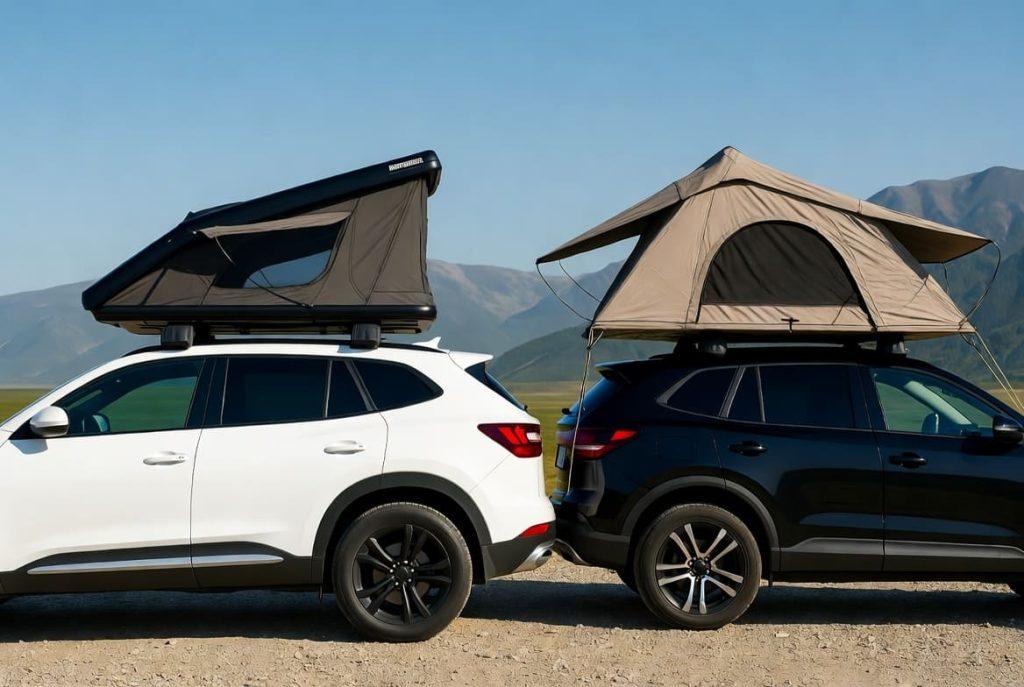
Round 1: Setup Speed & Ease of Use
The battle between “Instant Gratification” and “Some Assembly Required”.
If there is one factor that converts campers into “glampers,” it’s setup time. After a long day of driving on washboard roads, the last thing you want is a wrestling match with your shelter.
The Hard Shell Experience: The 30-Second Camp
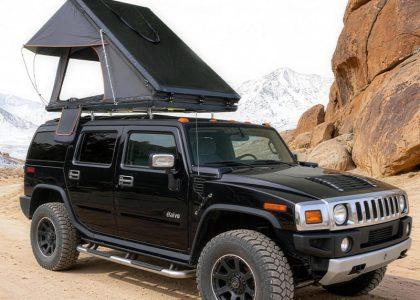
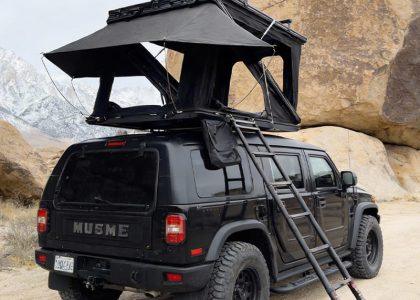
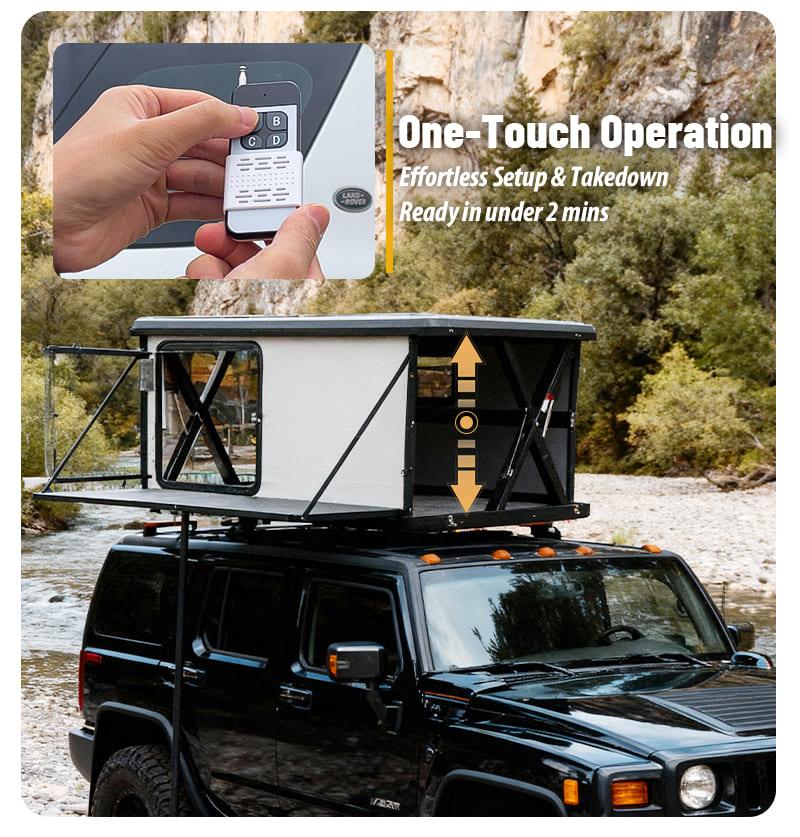
Hard shell tents are the undisputed kings of speed. Thanks to gas strut assistance or our latest electric motor systems, these tents essentially pitch themselves.
- The Process: Undo two latches, give it a gentle nudge, and watch it rise. Done.
- The Reality: You can park your car and be reading a book in bed within 60 seconds. This is a game-changer for overlanders who move camp every single day.
- Manufacturer’s Note: At Everlead, we test our gas struts for over 10,000 cycles to ensure that “pop” stays snappy for years.
The Soft Shell Experience: The Origami Project
Soft shells require a bit more manual labor. They mimic the setup of a traditional ground tent, just elevated.
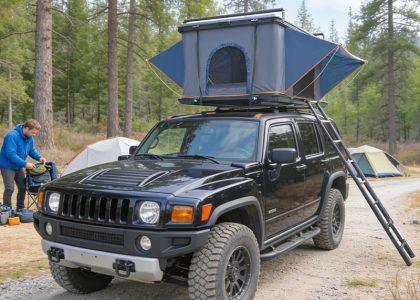
- The Process: First, you must unzip and remove the heavy PVC travel cover (which can be dirty). Then, pull the ladder to leverage the tent open. Finally, you often need to insert manual window rods (spring poles) to prop up the rainfly.
- The Reality: Expect a 3-to-5-minute setup time. It’s not difficult, but in driving rain or howling wind, those extra minutes can feel like hours.
🏆 Winner: Hard Shell (Hands down).
Round 2: Interior Living Space
Do you need a cozy bunk or a penthouse suite?
Here is where the tables turn. If Hard Shells are about speed, Soft Shells are about sheer volume.
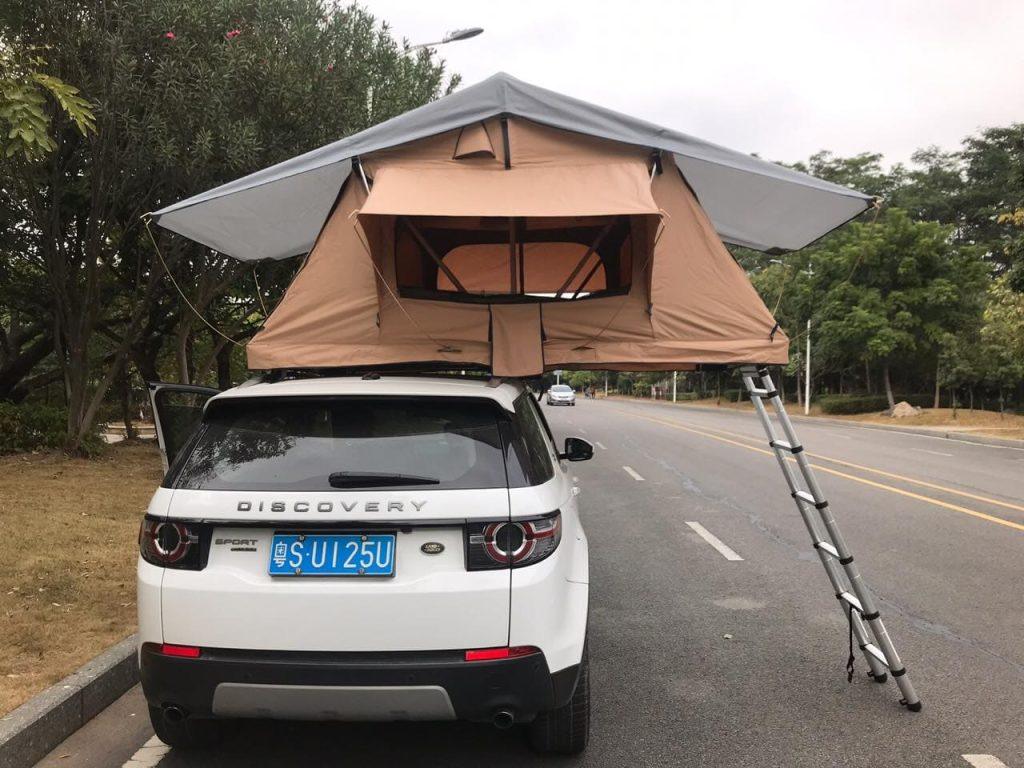
Soft Shell: The “Tardis” Effect
Soft shell tents are folded in half during travel. When you open them, they fold out beyond the footprint of your vehicle, effectively doubling the floor space.
- Capacity: This design allows for massive sleeping areas—often King-size or larger—making them the only viable option for families of 3-4 people or campers with large dogs.
- The Feel: With high peaks and vertical walls, they feel airy and spacious, like a traditional cabin tent.
Hard Shell: Fixed Boundaries
A hard shell tent’s floor plan is limited to the size of its shell (and the size of your car’s roof).
- Capacity: Most hard shells are strictly for 2 adults. While some “wedge” styles offer great headroom at the peak, the foot box can feel tighter.
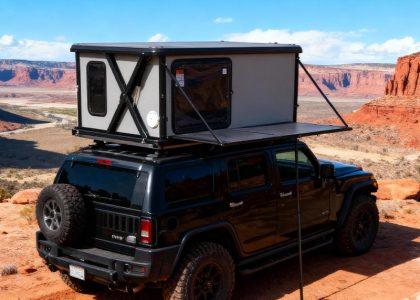
- The Exception: Our new “Fold-out Hard Shell” (Hybrid) designs are bridging this gap, but for pure square footage, the classic soft shell still reigns supreme.
🏆 Winner: Soft Shell (For families and groups).
Round 3: Roof Real Estate & Loading Capacity
The overlooked dilemma: Where do I put my kayak?
This is a critical consideration that many first-time buyers miss until it’s too late.
The “Footprint” Factor
- Soft Shell Advantage: Because they fold in half, a soft shell tent might only take up half or two-thirds of your roof rack. This leaves valuable space free for a roof cargo box, a jerry can holder, or a bike rack.
- Hard Shell Disadvantage: A traditional hard shell typically occupies the entire roof rack. Once it’s on, your roof storage is maxed out.
The “Top-Load” Solution (Everlead Special)
However, not all hard shells are created equal. This is where engineering matters.
- Aluminum vs. ABS: While ABS plastic shells are rounded and slippery, our Aluminum Hard Shell RTTs come equipped with integrated T-slot Cargo Crossbars.
- The Game Changer: This allows you to mount gear directly on top of the tent. You can carry a kayak, surfboards, or a solar panel array (up to 50kg) right on the tent shell. You can’t do that with a soft shell.
🏆 Winner: Tie. (Choose Soft Shell if you want side-by-side storage; Choose Aluminum Hard Shell if you want to stack gear on top).
Round 4: Storage & Bedding
The hidden time-killer: Making the bed.
Setup speed isn’t just about opening the tent; it’s about when you can actually go to sleep.
The “Leave-It-Inside” Factor
- Hard Shell Advantage: Most hard shell RTTs (especially wedge styles) have enough internal clearance to store your pillows, sleeping bags, and sometimes even a ladder inside the closed shell. This means when you pop the tent, your bed is already made.
- Soft Shell Reality: Because soft shells fold in half like a sandwich, leaving thick bedding inside can put stress on the hinges and prevent the cover from closing properly. You typically have to strip the bed and store sleeping bags in your car every morning.
🏆 Winner: Hard Shell. (This feature alone saves 10-15 minutes per day).
Round 5: Aerodynamics & Fuel Economy
The cost of carrying a “brick” on your roof.
Unless you drive an electric vehicle or a heavy-duty diesel truck, you will notice the impact of an RTT on your fuel gauge.
The “Brick” vs. The “Wedge”
- Soft Shells: Due to their blocky, folded shape and heavy PVC covers, soft shells act like a brick in the wind. They create significant drag and wind noise (humming/whistling) at highway speeds. Expect a fuel efficiency drop of 10-15%.
- Hard Shells: High-quality hard shells are designed with aerodynamics in mind. With profiles as slim as 18cm (7 inches) and tapered fronts, they slice through the air. The fuel penalty is often negligible, sometimes as low as 2-5%.
🏆 Winner: Hard Shell. (It saves you money at the pump in the long run).
Special Section: The “Hybrid” Evolution
Can’t decide? Look at the new middle ground.
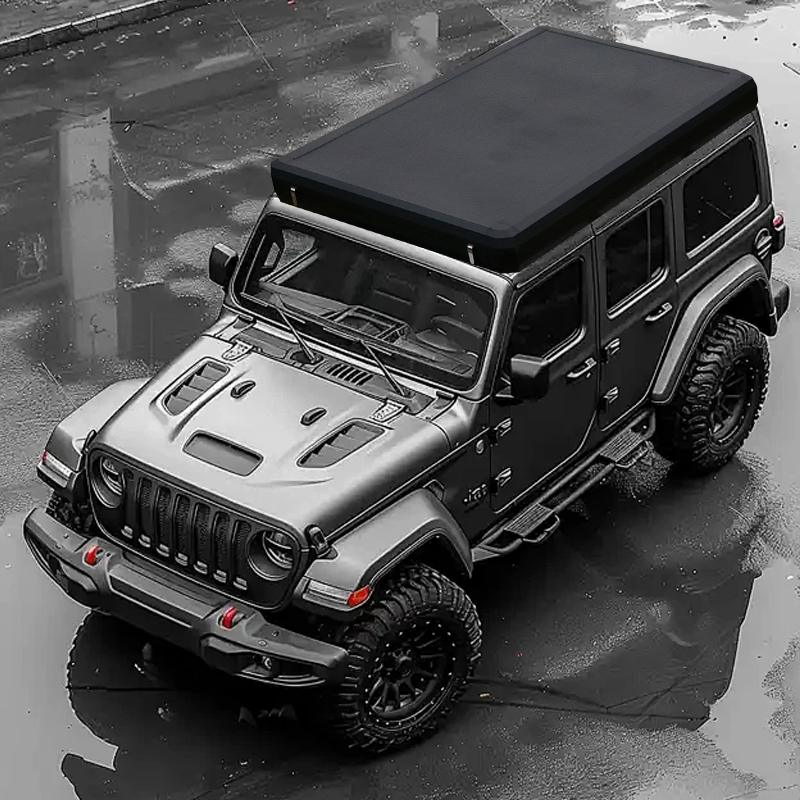
The industry is evolving. We are now seeing the rise of “Fold-out Hard Shells” (Hybrids).
- What are they? These tents have a hard cover (like a hard shell) but fold out to double their size (like a soft shell).
- The Benefit: You get the durability and aerodynamic cover of a hard shell, with the massive King-size mattress of a soft shell.
- The Trade-off: They still take a bit longer to set up than a pure pop-up hard shell, but they are faster than a traditional soft shell.
Manufacturer’s Insight: Materials Matter
Don’t just look at the shape; look at what it’s made of.
As a factory, we see many buyers focus on features but ignore materials. Here is the cheat sheet for longevity:
1. Shell Materials
- ABS Plastic: Lightweight and affordable. Great for weekenders, but can crack under heavy UV exposure over many years.
- Fiberglass: Premium finish, excellent thermal insulation (warmer in winter), and easy to repair. Used in high-end models.
- Aluminum: The gold standard for overlanding. It can take a beating from branches, supports external loads (roof bars), and lasts a lifetime.
2. Fabric Quality
Avoid cheap, shiny “Oxford” polyester if you want longevity. Look for Poly-Cotton Ripstop canvas.
- Why? It is heavier, quieter in the wind (no “plastic bag” flapping sound), and breathes much better, reducing condensation inside the tent.
Comparison Summary Table
| Feature | Hard Shell (Pop-Up) | Soft Shell (Fold-Out) | Hybrid (Fold-Out Hard) |
| Setup Time | 30-60 Seconds | 3-5 Minutes | 2-3 Minutes |
| Sleeping Capacity | 2 Adults | 3-4 People (Family) | 3-4 People |
| Bedding Storage | Excellent (Leave inside) | Poor (Must remove) | Moderate |
| Aerodynamics | Excellent (Low drag) | Poor (Boxy) | Good |
| Roof Rack Storage | Limited (Unless w/ bars) | Good (Leaves space) | Limited |
| Price Range | $$$(Premium) | $ (Entry Level) | $$ (Mid-Range) |
| Best For | Daily Travelers / Overlanders | Families / Budget Buyers | Families wanting durability |
Conclusion: Which is Right for You?
There is no “best” tent, only the best tent for your trip.
- Choose a Hard Shell If: You are a couple or solo traveler moving camp every day. You value speed, aerodynamics, and stealth. You have the budget for a long-term investment.
- Choose a Soft Shell If: You are bringing the whole family (and the dog). You tend to set up a basecamp and stay for a few days. You are on a budget or have a smaller vehicle with limited roof capacity.
The “right” choice is the one that gets you out of the driveway and into the wild with the least amount of friction.
About Everlead Outdoor
If you are a retailer or brand looking to develop your own line of high-quality roof top tents, Everlead Outdoor is your strategic manufacturing partner.
Based in Dongguan, China, we are a premier OEM/ODM factory specializing in both Hard Shell (Aluminum/ABS/Fiberglass) and Soft Shell RTTs. With ISO 9001 certified processes and a commitment to 100% full-unit inspection, we deliver the engineering precision your brand deserves.
Ready to build your product line? [Contact us today] for a factory-direct quote.