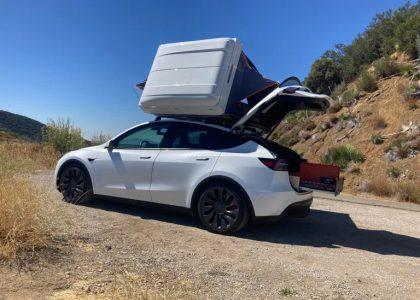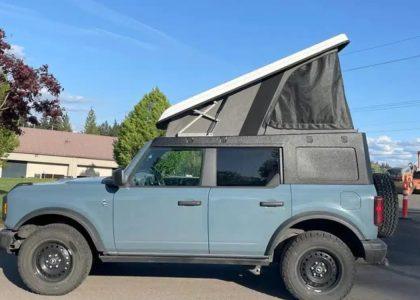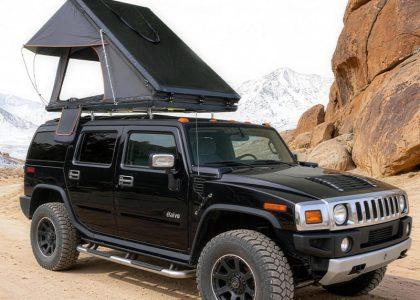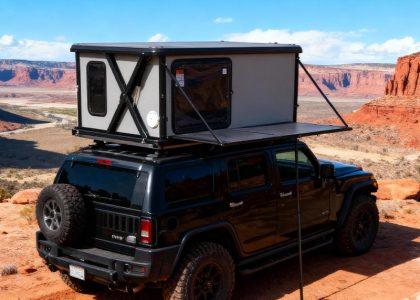
Camping with a rooftop tent raises practical questions that don’t come up with traditional ground tents—like where you’re actually allowed to sleep, how nighttime bathroom trips work, or whether pets are welcome.
The short answer is this: camping with a rooftop tent works much like car-based camping, with added flexibility, comfort, and a few unique considerations.
This guide explains where you can sleep, daily living logistics, pet suitability, noise, light, and storage so you know how rooftop tent camping works in real life.
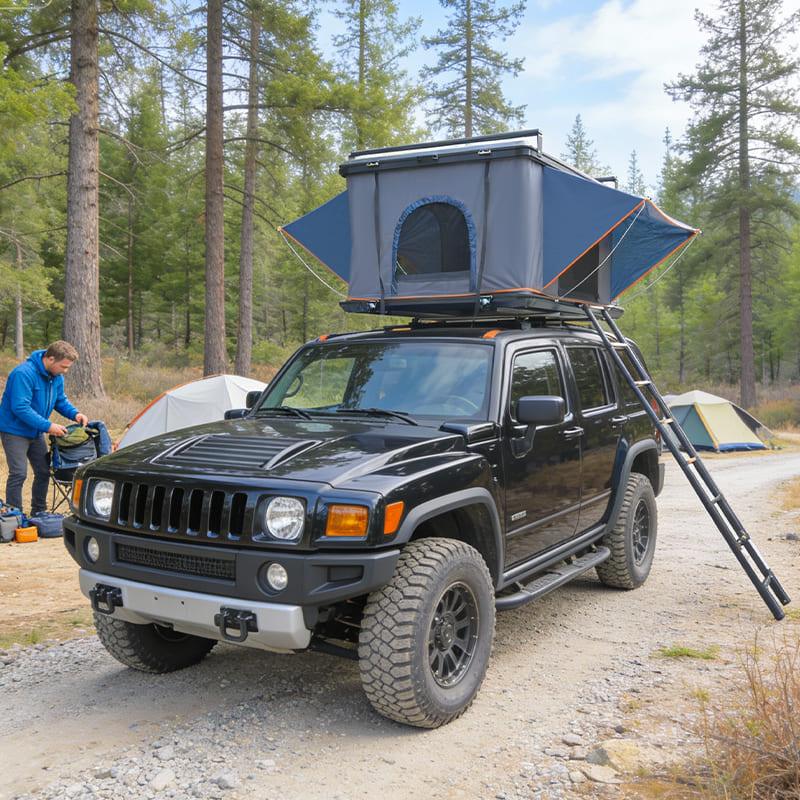
Table of Contents
- Can you sleep in a rooftop tent anywhere?
- Where do you pee when in a rooftop tent?
- Are rooftop tents allowed in RV parks?
- Are rooftop tents good for dogs?
- Are rooftop tents loud?
- Are rooftop tents dark inside?
- Can you store a rooftop tent on its side?
Can you sleep in a rooftop tent anywhere?
You cannot legally sleep in a rooftop tent everywhere, as camping rules depend on land ownership, local laws, and campground regulations. Rooftop tents follow the same rules as vehicle-based camping, meaning permission is based on where the vehicle is parked—not the tent itself.
Common places rooftop tents are allowed
- Designated campgrounds
- Dispersed camping areas
- Private land with permission
- Some overland-friendly public lands
Common restrictions
- City streets and urban areas
- No-camping zones
- Private property without consent
Always check local regulations before setting up for the night.
Where do you pee when in a rooftop tent?
Most rooftop tent users climb down the ladder and use nearby restrooms, nature, or portable toilet solutions. Rooftop tents do not include built-in bathroom systems, so nighttime planning is part of the experience.
Common nighttime solutions
- Campground restrooms
- Portable toilets or pee bottles
- Following Leave No Trace principles
Practical tips
- Keep shoes and a headlamp inside the tent
- Choose campsites with easy ladder access
- Plan before sleeping to minimize disruptions
Preparation makes nighttime trips manageable.
Are rooftop tents allowed in RV parks?
Rooftop tents are allowed in many RV parks, but acceptance varies by park policy rather than tent type. Most parks classify rooftop tents as vehicle camping, similar to truck campers or car campers.
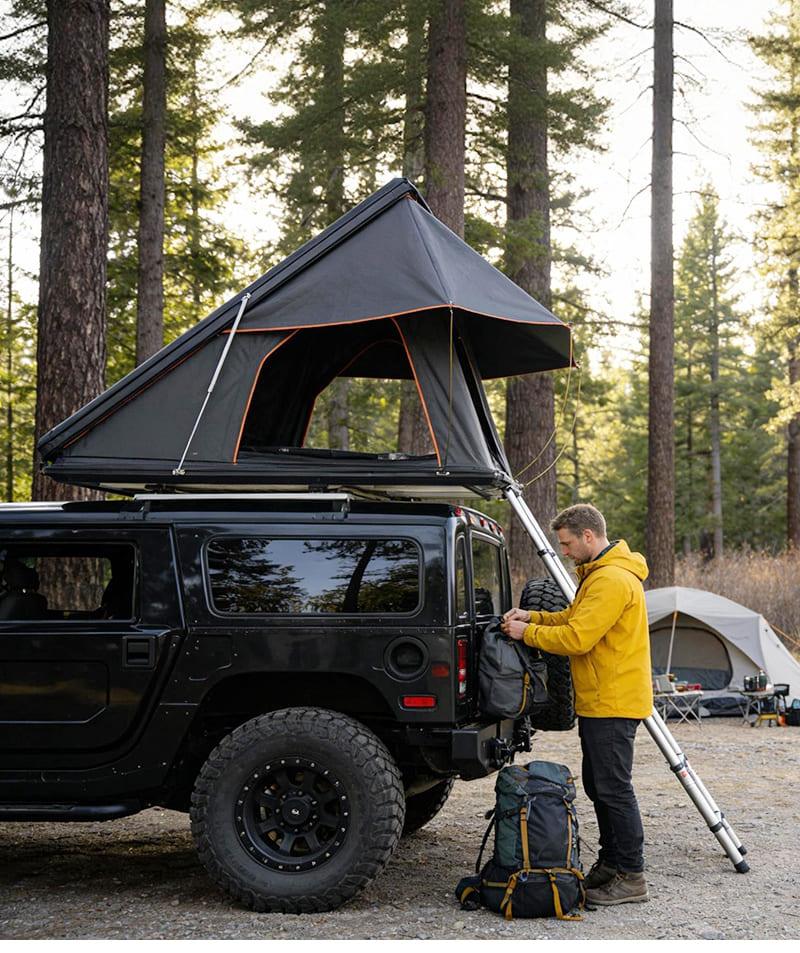
What affects acceptance
- Park rules on vehicle camping
- Requirement for self-contained units
- Size and vehicle classification
Tips for RV park stays
- Call ahead to confirm policies
- Book standard vehicle or tent sites
- Avoid blocking hookups or roadways
Policies vary, so confirmation is key.
Are rooftop tents good for dogs?
Rooftop tents can work for dogs, but they are generally better suited for small or medium breeds rather than large or aging dogs. Access, safety, and comfort depend on dog size, agility, and temperament.
Challenges for dogs
- Ladder access
- Limited interior space
- Nighttime entry and exit
Dog-friendly alternatives
- Ground tent for pets
- Sleeping dogs inside the vehicle
- Using annex rooms when available
Rooftop tents are possible with dogs—but not ideal for every pet.
Are rooftop tents loud?
Rooftop tents are not inherently loud, but noise levels depend on wind, fabric tension, and campsite conditions. Compared to ground tents, they can experience more wind exposure due to elevation.
Common noise sources
- Wind flapping fabric
- Rain on hard shells
- Vehicle movement on uneven ground
How to reduce noise
- Choose low-profile or hard-shell tents
- Park in sheltered areas
- Properly tension fabric and straps
Well-designed tents remain quiet in most conditions.
Are rooftop tents dark inside?
Most rooftop tents are moderately dark inside, but not completely blackout. Interior brightness depends on fabric thickness, window size, and whether the tent includes light-blocking panels.
Light control features
- Blackout-backed fabrics
- Zippered window covers
- Roof panels with adjustable shading
Tips for better sleep
- Close all window covers
- Use sleep masks if sensitive to light
- Park away from artificial lighting
Light control is usually sufficient for restful sleep.
Can you store a rooftop tent on its side?
Most rooftop tents should not be stored on their side unless the manufacturer explicitly allows it. Side storage can stress hinges, frames, or shells and may cause long-term structural issues.
Safe storage options
- Mounted on the vehicle
- Flat on a garage rack
- Ceiling hoist systems
When side storage may work
- Specific hard-shell designs rated for it
- Short-term storage only
Always follow manufacturer storage guidelines.
Conclusion
Camping with a rooftop tent is straightforward, flexible, and well-suited to vehicle-based travel, provided you understand where you can legally sleep and how daily logistics work. From campsite rules to pet considerations and storage, rooftop tents function best when matched with realistic expectations and good planning.
About Us: Designing Rooftop Tents for Real Camping Life
Rooftop tent camping isn’t just about sleeping—it’s about how easily a tent fits into daily travel, storage, and campsite routines.
Everlead Outdoor specializes in OEM/ODM rooftop tent manufacturing with a focus on real-world usability, storage practicality, and long-term durability. Our designs prioritize easy access, effective light control, quiet performance, and safe storage options—so rooftop tents work smoothly beyond the campsite.
With ISO 9001–certified production, in-house R&D, and 100% full-unit quality inspection, Everlead Outdoor helps outdoor brands deliver rooftop tents that are built for how people actually camp, travel, and live on the road.