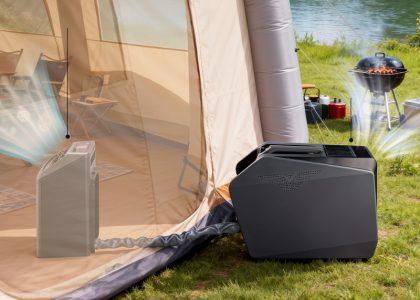
The modern camping landscape has shifted from backpacking to “vehicle-supported adventure,” and at the center of this trend is the SUV tent. An SUV tent is a specialized shelter system that physically integrates with a Sport Utility Vehicle—either by attaching to the rear hatchback to expand interior cargo space or by mounting to the roof rack for elevated sleeping—transforming a daily driver into a self-contained mobile basecamp.
For retailers and fleet managers, distinguishing between the consumer-grade “tailgate tents” and professional-grade “roof top tents” is critical for inventory planning. This guide breaks down the engineering, safety, and utility of these systems.
Table of Contents
- How does an SUV tent differ from a traditional ground tent?
- What are the two primary categories of SUV tents?
- Is it safe to sleep in an SUV tent with the engine running?
- Will a universal hatchback tent fit any SUV model?
- What material specifications define a durable SUV tent?
- Does adding an SUV tent affect vehicle performance?
How does an SUV tent differ from a traditional ground tent?
Unlike a standalone ground tent, an SUV tent features a “vehicle sleeve” or universal boot that wraps around the vehicle’s open rear hatch, allowing direct access to the cargo area without stepping outside. This integration creates a sealed environment where the vehicle’s interior can be used for sleeping or storage, while the attached tent serves as a living room or changing area.
The “One-Room” Concept
- Climate Control: By connecting to the vehicle, campers can theoretically access the vehicle’s climate control (AC/Heat), though this comes with safety caveats (see below).
- Power Access: It allows easy access to the vehicle’s 12V outlets for charging devices without running extension cords through rainfly zippers.
- Structure: While they still rely on fiberglass or aluminum poles, the vehicle itself acts as a massive anchor point, providing superior wind stability on one side compared to a freestanding dome tent.
What are the two primary categories of SUV tents?
The term “SUV Tent” technically encompasses two distinct engineering designs: “Hatchback/Tailgate Tents” which sit on the ground and attach to the rear, and “Roof Top Tents (RTTs)” which mount onto the vehicle’s roof rack system. While consumers often use the terms interchangeably, they serve vastly different demographics and performance needs.
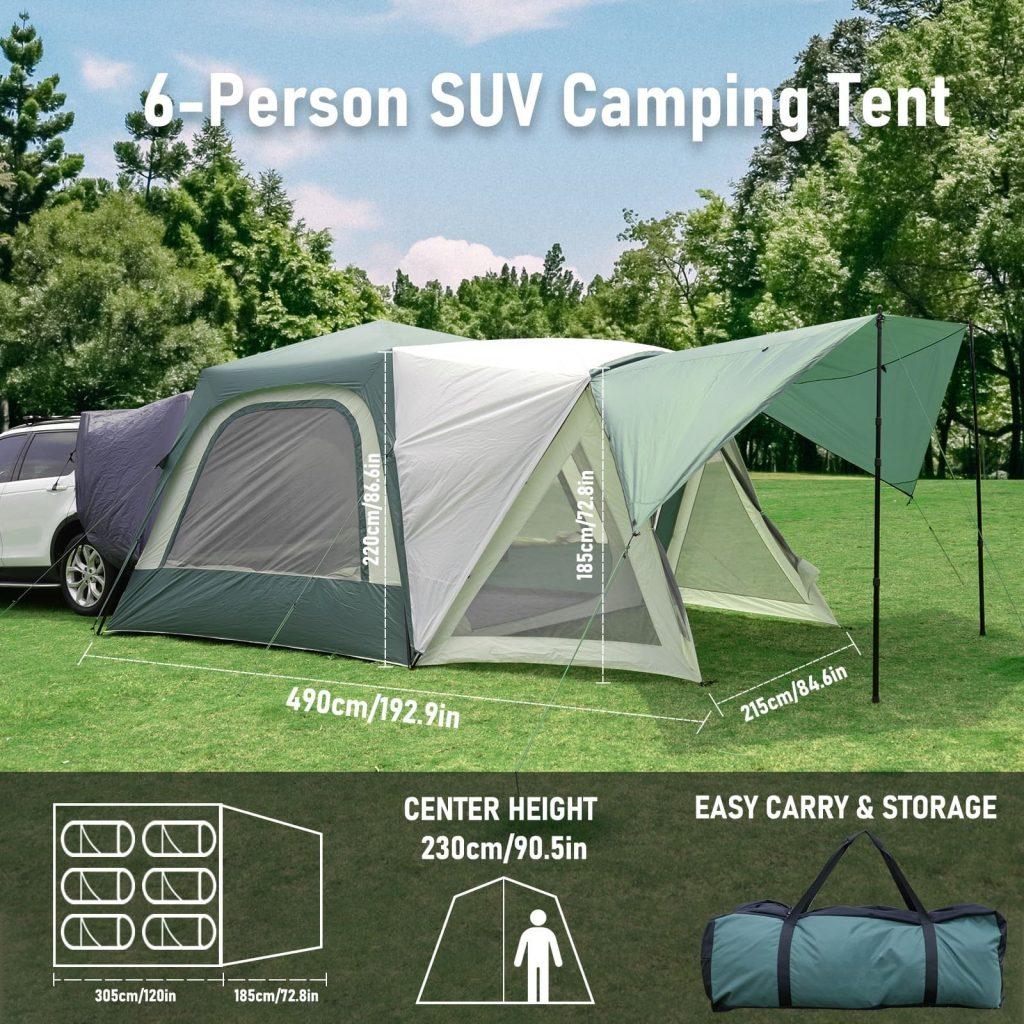
1. Hatchback (Tailgate) Tents
These are the most common “SUV Tents.” They look like standard cabin tents but have a tunnel connecting to the car.
- Pros: Lower cost, massive floor space (standing height), and ability to disconnect and drive away (if the tent is freestanding).
- Cons: Complex setup (10-20 minutes) and large footprint required.
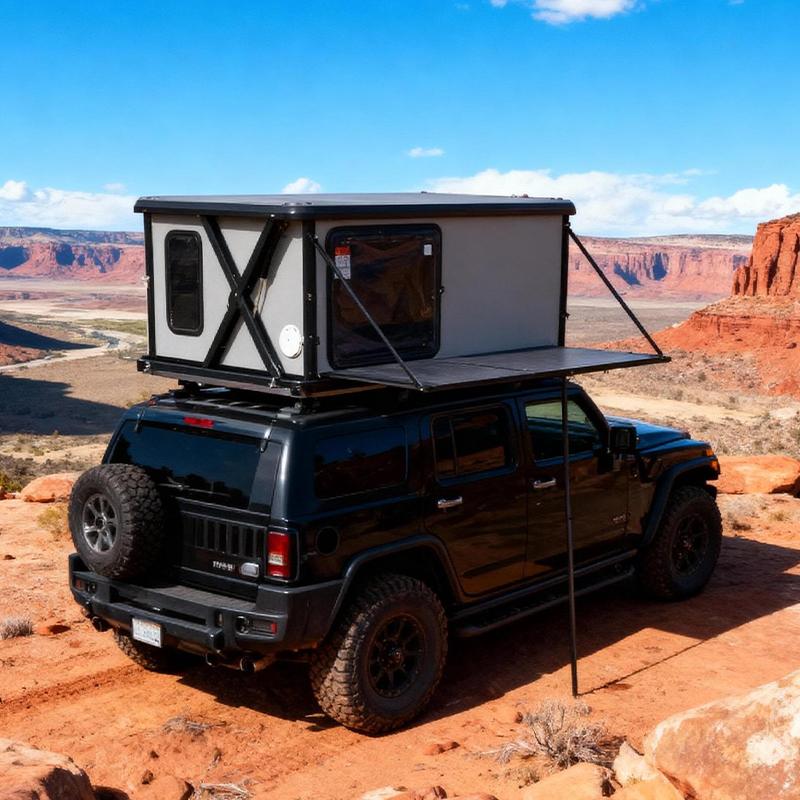
2. Roof Top Tents (RTTs)
These are the premium standard for overlanding.
- Pros: Instant setup (60 seconds for hard shells), keeps sleepers off the ground away from predators/mud, and requires zero campsite footprint.
- Cons: Higher price point and adds dynamic weight to the vehicle roof.
Is it safe to sleep in an SUV tent with the engine running?
No, you must never run the vehicle’s engine while the SUV tent is attached and the hatch is open, as Carbon Monoxide (CO) from the exhaust pipe can accumulate inside the tent’s “vehicle sleeve” and cause fatal poisoning within minutes. Even if the exhaust pipe faces away from the tent, wind shifts can draft toxic fumes into the sleeping area.
Safety Protocols
- Engine Off: The engine should only be used to warm up the vehicle before attaching the tent or connecting the sleeve.
- CO Detectors: We recommend using a battery-operated Carbon Monoxide detector inside the tent as a redundancy.
- Ventilation: Always keep the tent’s mesh windows partially open to facilitate airflow, reducing condensation and maintaining oxygen levels.
Will a universal hatchback tent fit any SUV model?
While most hatchback tents are marketed as “universal,” fitment relies on the adjustable elastic sleeve; extremely small crossovers or large vans with barn-style doors may experience gaps that compromise weatherproofing. The sleeve works like a fitted sheet, relying on tension to seal against the vehicle body.
The “Gap” Issue
- Liftgate vs. Barn Doors: Universal sleeves are designed primarily for liftgates (hatches that open up). Vehicles with side-opening doors (like the Toyota Prado or Jeep Wrangler) often struggle to get a tight seal, allowing mosquitoes or rain to enter.
- Exhaust Clearance: Ensure the tent fabric does not touch the vehicle’s hot exhaust pipe. Most quality manufacturers include spacer poles or heat-resistant fabric patches in this zone.
What material specifications define a durable SUV tent?
For maximum longevity, an SUV tent should be constructed from Ripstop Polyester or Poly-Cotton Canvas with a Hydrostatic Head (HH) rating of at least 2000mm to withstand sustained rainfall. Entry-level tents often use untreated 190T polyester, which degrades quickly under UV exposure and leaks during heavy storms.
Comparison: SUV Tent Material Grades
| Feature | Entry-Level (Retail Store) | Professional Grade (OEM/Overland) |
| Main Fabric | 190T/70D Polyester | 420D Oxford or 280g Poly-Cotton |
| Waterproof Rating | 800mm – 1200mm | 3000mm+ (PU Coating) |
| Pole Material | Fiberglass (Splinter risk) | Aluminum Alloy (High wind load) |
| Seams | Stitched only | Heat-Sealed / Tape-Sealed |
Does adding an SUV tent affect vehicle performance?
Hatchback tents have zero impact on driving performance since they are packed inside the vehicle during transit; however, Roof Top Tents add wind drag and weight, reducing fuel economy by 10-20% depending on the profile.
Dynamic vs. Static Load
- Hatchback Tents: The main constraint is internal cargo volume.
- Roof Top Tents: You must adhere to the vehicle’s dynamic roof load rating. This is the weight the roof can support while moving. Most SUVs are rated for ~165 lbs dynamic load, which accommodates most modern hard-shell tents.
Conclusion
An SUV tent is more than just a camping accessory; it is a hardware upgrade that leverages the vehicle’s inherent structure to provide safety, height, and power. Whether choosing a Hatchback Tent for family space or a Roof Top Tent for expedition mobility, the key to satisfaction lies in selecting the right material grade and understanding the fitment nuances of the specific vehicle model.
For businesses, the shift towards “vehicle-integrated” camping represents a higher-margin opportunity than traditional ground tents, as customers are willing to pay for the engineering compatibility.
About Everlead Outdoor
Everlead Outdoor is a premier OEM/ODM Manufacturer specializing in vehicle-integrated camping solutions. We bridge the gap between rugged durability and user-friendly design.
Our manufacturing expertise shines in our Custom Vehicle Sleeves and Hard Shell Roof Top Tents. We utilize Aviation-Grade Aluminum and High-Density Poly-Cotton fabrics that meet rigorous ISO 4920 waterproofing standards. We don’t just sew tents; we engineer mobile habitats designed to fit seamlessly with modern SUV aerodynamics.Looking to develop a branded line of SUV tents?Contact our team for OEM/ODM inquiries to access our catalog of wind-tunnel-tested designs.