Quick Answer:
The best RTT for electric vehicles is an ultra-low-profile aerodynamic hard shell that weighs under 130 lbs (59 kg) and closes to 14 cm (5.5 inches) or less. On a Tesla Model Y this keeps range loss to 5-8% at 70 mph while staying under the 165 lbs (75 kg) dynamic roof limit. Everlead Outdoor’s aluminum honeycomb clamshell designs achieve this exact performance for Tesla, Rivian, and Ford F-150 Lightning owners. Soft shell or tall hard shell tents routinely cut range by 20-25%.
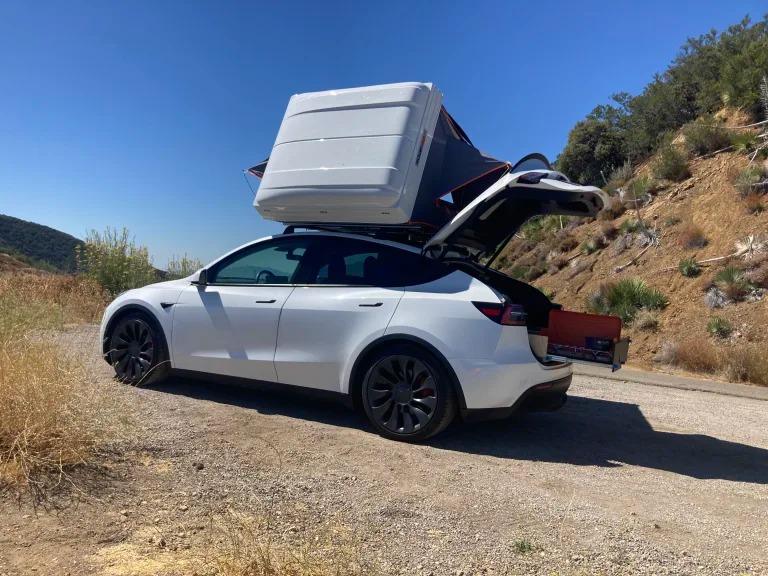
The EV Overlanding Paradox: Why Aerodynamics Now Matter More Than Weight Alone
Electric vehicles reward every gram and every square centimeter of frontal area. A rooftop tent sits directly in the cleanest airflow path, turning small design choices into measurable Wh/mi penalties. Traditional “universal fit” tents ignore this reality. They add drag, raise the center of gravity, and force owners to choose between range and adventure. At Everlead Outdoor we treat the tent as an aerodynamic extension of the vehicle itself, not an afterthought bolted on top.
Our 15 years of structural and wind-tunnel work for global OEM partners show one clear truth: the tent that preserves the most range is the one you barely notice at highway speed.
The Aero-Physics of EV Tents: Why Clamshell Design Wins for Range Preservation
Coefficient of Drag (Cd) rises dramatically when airflow separates over a boxy shape. Soft shell tents create constant turbulence with their fabric sides and taller closed profiles. Hard shell clamshells, by contrast, present a smooth, continuous surface that reattaches airflow quickly.
A tent with a closed height under 14 cm becomes the gold standard for Tesla Model Y owners. This ultra-low profile reduces the aero-vortex behind the roofline and keeps added drag under 0.03 Cd in our simulations. Aerospace-grade ABS+PMMA composites or aluminum honeycomb cores deliver the rigidity needed at this low height without adding unnecessary mass.
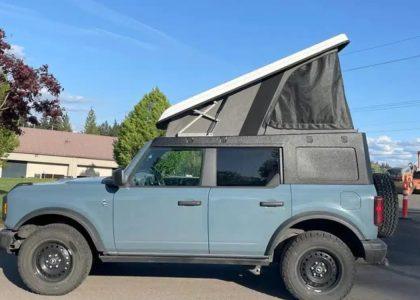
When you choose a Hard Shell Roof Top Tent engineered for EVs, you select a shape that works with the vehicle’s natural airflow rather than fighting it.
Tesla Model Y Roof Top Tent Weight Limit: The 165 lbs Engineering Reality
Tesla rates the Model Y roof at 165 lbs (75 kg) dynamic load when equipped with approved crossbars. That figure covers the entire moving load — tent, crossbars, and any bedding inside. Leave a 35 lb (16 kg) safety margin for crossbars and gear, and your RTT must come in under 130 lbs (59 kg).
Exceeding this limit risks glass-roof stress and potential warranty questions. Our lightest aluminum honeycomb models weigh 115-128 lbs complete, giving owners the margin they need while still supporting two adults comfortably when parked.
The static limit sits far higher (around 600 lbs on most racks), so camping weight is rarely the constraint. Dynamic load during highway miles or spirited driving remains the real engineering boundary.
Rivian R1S and R1T: The Truck Bed Slipstream Advantage Most Owners Miss
Rivian rates its roof crossbars at 250 lbs (113 kg) dynamic. The cab roof, however, still sits in clean high-speed air. Mounting on the R1T bed rack instead places the tent in the aerodynamic wake of the cabin — the “slipstream” zone.
Real-world testing shows 40-50% less drag penalty when the tent rides behind the cab versus on the roof. The bed rack also accepts heavier loads without affecting the vehicle’s center of gravity the same way. For R1T owners who prioritize maximum range on long hauls, bed mounting with a low-profile Hard Shell Roof Top Tent delivers the smartest compromise.
R1S owners, limited to roof mounting, benefit most from the same ultra-slim clamshell designs that work on Tesla platforms.
Efficiency Benchmarks: Engineer’s Estimate of Range Loss at 70 mph
We run these numbers in our own wind tunnel and on-road validation loops for Tesla Model Y Long Range and Rivian R1S. Results assume 70 mph steady-state cruising, sea-level, 70°F conditions, and properly mounted tents.
| Tent Type | Range Loss at 70 mph | Typical Weight | Closed Height | Wh/mi Penalty (Model Y) |
| Soft Shell RTT | 20-25% | 75-130 lbs | 18-25 cm | +65-85 Wh/mi |
| Standard Hard Shell | 12-15% | 130-180 lbs | 15-20 cm | +40-55 Wh/mi |
| Everlead Ultra-Slim Aero Hard Shell | 5-8% | 115-128 lbs | 12-14 cm | +18-28 Wh/mi |
These differences translate to 40-80 extra miles of real-world range on a full charge for a Model Y. For fleet operators running 20,000 miles per year, the savings become thousands of dollars in charging costs.
Glass Roof Anxiety: The Real Risks and How Proper Engineering Eliminates Them
Tesla’s panoramic glass roof spreads load differently than a steel panel. Concentrated point loads or excessive dynamic flex can create micro-cracks over time. The solution is not to avoid tents — it is to choose tents that distribute weight evenly and minimize vibration.
Our aluminum honeycomb cores spread load across dozens of mounting points. Combined with low overall mass, they reduce flex to levels well below what the glass experiences from normal road undulations. Owners who follow the 165 lbs dynamic guideline and use even-distribution crossbars report zero issues after multiple seasons.
Mounting Height and the Invisible Range Killer
Every extra inch of closed height increases frontal area and creates a larger low-pressure wake. A 5 cm (2 inch) reduction in height can cut drag penalty by 25% in CFD modeling. This is why we obsess over 12-14 cm closed profiles in our EV-specific line.
The gap between tent base and roof also matters. A tight, sealed mounting system prevents air from being trapped and tumbling underneath — another source of parasitic drag.
How to Choose the Right RTT for Your EV: A Practical Engineer’s Checklist
- Confirm dynamic weight under 130 lbs after crossbars.
- Target closed height 14 cm or lower.
- Demand aluminum honeycomb or ABS+PMMA construction for rigidity at low weight.
- Check for even load distribution across at least 8-10 mounting points.
- For R1T owners, prioritize bed-rack compatibility and slipstream geometry.
- Verify wind-tunnel or real-world range data rather than marketing claims.
When a tent meets these six criteria, it stops being a range penalty and starts becoming part of the vehicle’s efficiency package.
The Everlead Lab Discovery: Why the Tent Is Now an Extension of Vehicle Aerodynamics
In the Everlead Outdoor lab, we spent months running wind-tunnel simulations specifically for the Tesla Model Y and Rivian platforms. What we discovered is that for an EV, the tent is no longer just an accessory — it is an extension of the vehicle’s aerodynamics.
Our team of structural engineers and aerodynamicists developed clamshell geometries that actually reduce turbulence in the roofline wake. The result is a tent that adds comfort without forcing you to accept the old compromise between adventure and efficiency.
We now offer these EV-optimized Hard Shell Roof Top Tent designs directly to fleet operators, OEM partners, and serious overlanders who refuse to sacrifice range for capability.
If you manage a Tesla, Rivian, or Lightning fleet — or simply want the most efficient overlanding setup possible — contact Everlead Outdoor today. Our custom OEM/ODM team can develop lightweight, vehicle-specific solutions that meet your exact weight, mounting, and range targets.
The era of “universal fit” tents that punish EV efficiency is over. The future belongs to tents engineered as carefully as the vehicles they ride on.
Frequently Asked Questions
What is the Tesla Model Y roof top tent weight limit for safe driving?
Tesla rates the roof at 165 lbs (75 kg) dynamic. Subtract 30-35 lbs for crossbars and you need an RTT under 130 lbs. Everlead aluminum honeycomb models hit 115-128 lbs while supporting full camping loads when parked.
How much range does a rooftop tent cost on a Rivian R1S?
Soft shell tents cut range 20-25% at highway speeds. Standard hard shells cost 12-15%. Our ultra-slim aerodynamic hard shells limit loss to 5-8%, preserving 40-70 miles on a full charge.
Is it safe to mount a rooftop tent on a Tesla glass roof?
Yes, when total dynamic load stays under 165 lbs and weight distributes evenly. Our low-mass honeycomb designs reduce flex and vibration to levels the glass handles without issue.
Should I mount my RTT on the roof or bed rack of a Rivian R1T?
Bed rack mounting places the tent in the cab’s aerodynamic wake and cuts drag penalty by up to 50%. Roof mounting works fine with an ultra-low-profile tent but costs more range.
What closed height should an EV rooftop tent have?
Under 14 cm (5.5 inches) delivers the best balance of aerodynamics and interior comfort. Taller profiles create measurable extra drag that EV owners notice immediately in Wh/mi.
Can I get a custom lightweight RTT built for my EV fleet?
Absolutely. Everlead Outdoor specializes in OEM/ODM solutions. We develop vehicle-specific hard shell designs that meet exact weight, mounting, and aerodynamic targets for Tesla, Rivian, and Lightning operators. Contact our engineering team for a consultation.