(Stop guessing. Here is how to judge RTT build quality like an engineer.)
As we enter 2026, the rooftop tent (RTT) market has never been more crowded. A quick search yields hundreds of brands, all claiming to offer the “best” tent on the market. But as a manufacturing expert with over a decade of experience on the factory floor, I can tell you a secret: beneath the logos and marketing slogans, there are only a handful of manufacturing methods that actually matter.
The “Best” rooftop tent for 2026 is no longer defined by brand heritage, but by three specific engineering advancements: Aerodynamic Aluminum Honeycomb Shells, Heavy-Weight Poly-Cotton Canvas, and Industrial-Grade Gas Struts.
If you are looking for the absolute best gear this year—whether you are a consumer building your dream rig or a retailer sourcing inventory—ignore the hype. Instead, inspect the “Bill of Materials” (BOM). This guide will teach you how to spot true quality using the same criteria we use in the factory.
Shell Material: Why Fiberglass is Out and Aluminum is In
For 2026, the industry standard for premium hard shells has definitively shifted from heavy, UV-prone Fiberglass to Aviation-Grade Aluminum Honeycomb, which offers a 30% weight reduction and the structural rigidity to mount gear directly on top.
The Old Standard: Fiberglass & ABS
For years, Fiberglass was the norm because it is cheap to mold. However, it has significant drawbacks for the modern overlander:
- UV Degradation: Over time, sunlight causes fiberglass to yellow, crack, and become brittle.
- Weight: Thick fiberglass shells contribute to a high center of gravity, affecting vehicle handling.
- No Load Capacity: You generally cannot mount solar panels or surfboards on top of a curved fiberglass shell.
The New Gold Standard: Aluminum Honeycomb
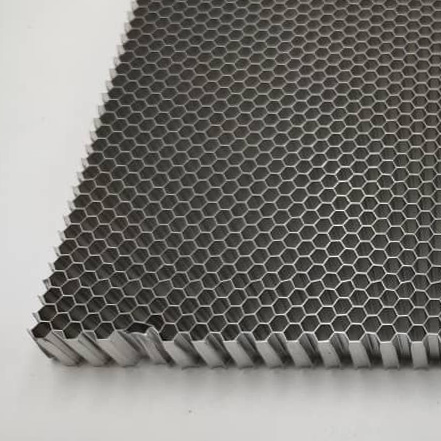
The “Best” tents of 2026 utilize an Aluminum Honeycomb Panel construction. This technology, borrowed from the aerospace industry, sandwiches a hexagonal aluminum grid between two alloy sheets.
- Result: A shell that is less than 1 inch thick but strong enough to support roof racks and cargo. It creates a “Zero-Profile” look that is crucial for aerodynamics.
Want to see the crash-test comparison? We broke down the physics and chemistry differences in our engineering deep dive: [Aluminum vs. Fiberglass: Which Shell Lasts Longer?]
Fabric Guide: Oxford vs. Canvas (The “Noise Test”)
If a tent listing mentions “420D Oxford,” it is an entry-level tent; the true “Best” tents utilize 280g-320g Poly-Cotton Ripstop Canvas, which provides superior thermal insulation and eliminates the loud “flapping” noise caused by wind.

This is the easiest way to separate a $1,000 tent from a $3,000 tent.
- The Polyester “Raincoat” Feel: Oxford Polyester (often 420D or 600D) feels like a plastic raincoat. It is lightweight, but it has zero thermal mass. In the sun, it gets hot instantly. In the wind, it crinkles and flaps loudly, making sleep difficult.
- The Canvas “Denim” Feel: Premium Poly-Cotton Canvas (measured in grams, e.g., 280g or 300g) feels like heavy denim. It is breathable, preventing condensation build-up. Most importantly, it is acoustically dead—it absorbs wind noise rather than creating it, ensuring a quiet night’s sleep.
The Mechanism: Gas Struts and Hinge Quality
The lifespan of a wedge-style tent depends entirely on its gas struts; look for branded struts (such as STABILUS) rated for high-cycle use and hinges made from 304 Stainless Steel, avoiding the cheap zinc-alloy castings found on budget models.
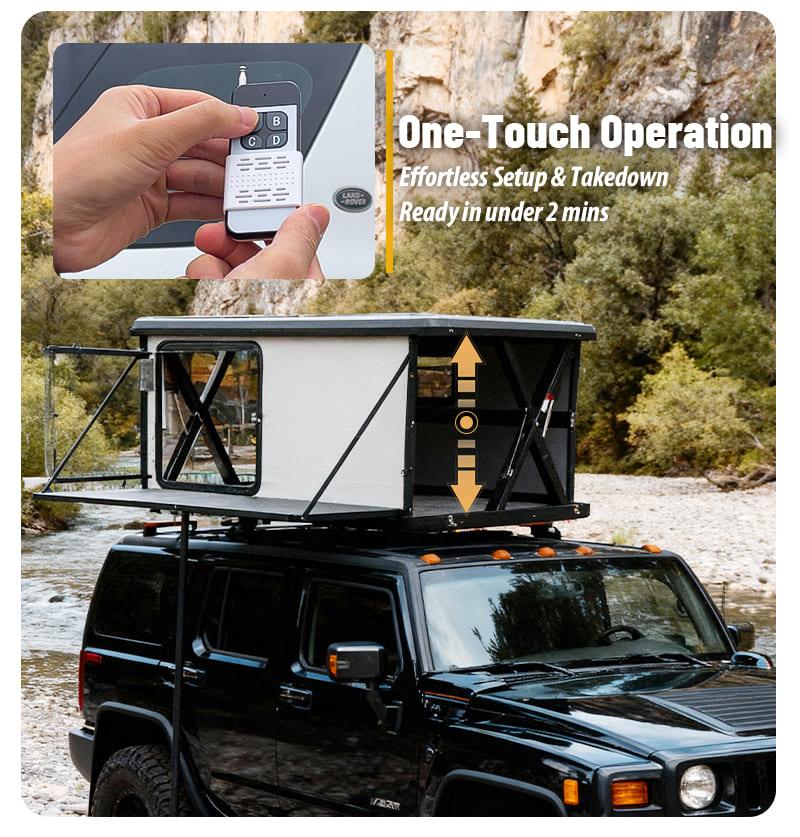
When a tent fails in the field, it is rarely the fabric that tears—it is the mechanism that seizes.
- Gas Struts: The “Best” tents use struts tuned to the specific weight of the shell (often 300N to 500N pressure). Cheap struts will lose pressure in cold weather, causing the tent to collapse on your feet.
- Hinges: Check the knuckles where the tent folds. If they look like shiny, molded grey metal (Zinc Alloy), run away. They are brittle and snap under side-load. The standard for 2026 is laser-cut Stainless Steel or Forged Aluminum.
High-quality hardware is the biggest hidden cost in manufacturing. If you are wondering why premium tents cost 3x more than budget models, we broke down the invoice costs in our factory analysis: Why Are Rooftop Tents So Expensive? A Factory Cost Analysis
Aerodynamics: The “Wedge” vs. The “Box”
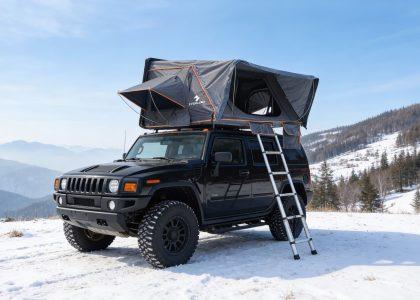
With the rise of hybrid and electric overlanding vehicles in 2026, the “Wedge Style” hard shell is statistically the best choice, offering the lowest drag coefficient to preserve fuel range compared to boxy fold-out designs.
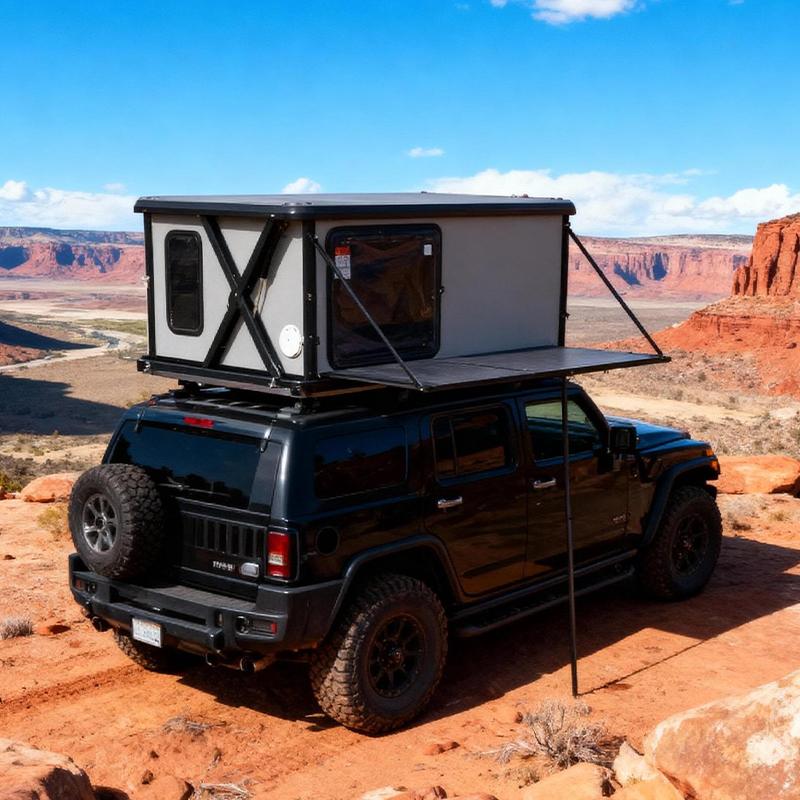
While “Fold-Out” tents offer more floor space for families, they are essentially big bricks on your roof.
- The Efficiency Choice: A Wedge tent (like the Everlead Explorer Series) acts as a wind deflector. For EV owners or those conscious of MPG, the Wedge is the only logical “Best” option. It sets up in 30 seconds and has minimal impact on highway range.
The 2026 Buyer’s Checklist: 5 Specs You Must Verify
Before you buy (or source) a tent this year, do not just look at the photos. Ask for the spec sheet and check these 5 boxes. If a tent meets all five, it is built to last.
- [ ] Shell Material: Aluminum Honeycomb (Avoid Fiberglass/ABS).
- [ ] Fabric Weight: 280g or higher Poly-Cotton Ripstop (Avoid 420D Polyester).
- [ ] Waterproof Rating: 3000mm HH (Hydrostatic Head) with heat-sealed seams.
- [ ] Hardware: 304 Stainless Steel hinges and brackets.
- [ ] Profile: Closed height under 7 inches (for aerodynamics).
Conclusion
The “Best Rooftop Tent” of 2026 isn’t about the coolest Instagram photos; it is about engineering integrity. It is the tent that doesn’t wake you up flapping in the wind, doesn’t crack under the UV sun, and doesn’t destroy your gas mileage.
By focusing on Aluminum Honeycomb shells and Poly-Cotton Canvas, you ensure that your investment will survive not just this season, but for years of exploration to come.
About Everlead Outdoor
At Everlead Outdoor, we don’t just follow the 2026 industry standards—we set them. As a premier OEM/ODM Manufacturer, we build tents for some of the world’s most respected brands.
Our manufacturing philosophy is simple: No shortcuts. We utilize Aviation-Grade Aluminum Honeycomb for our shells and source premium 320g Poly-Cotton Ripstop for our canvases. Whether you are a retailer looking to upgrade your product line or a brand seeking a manufacturing partner that understands quality, Everlead is your source for the best tents on the market.
Ready to build the best? Contact our engineering team for 2026 OEM specs and catalogs.