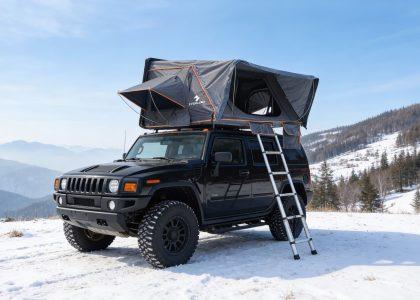
Adding a rooftop tent is one of the most popular overland modifications, but it often raises concerns about potential structural damage to the vehicle. Rooftop tents are not bad for your car, provided they are installed on a roof rack system that is explicitly rated for the tent’s weight specifications. Damage generally only occurs when users exceed the vehicle’s dynamic roof load limit or attempt to mount heavy equipment onto factory-installed crossbars that lack sufficient structural rigidity.
In this guide, we will analyze the technical impact of rooftop tents on vehicle integrity, fuel economy, and handling stability.
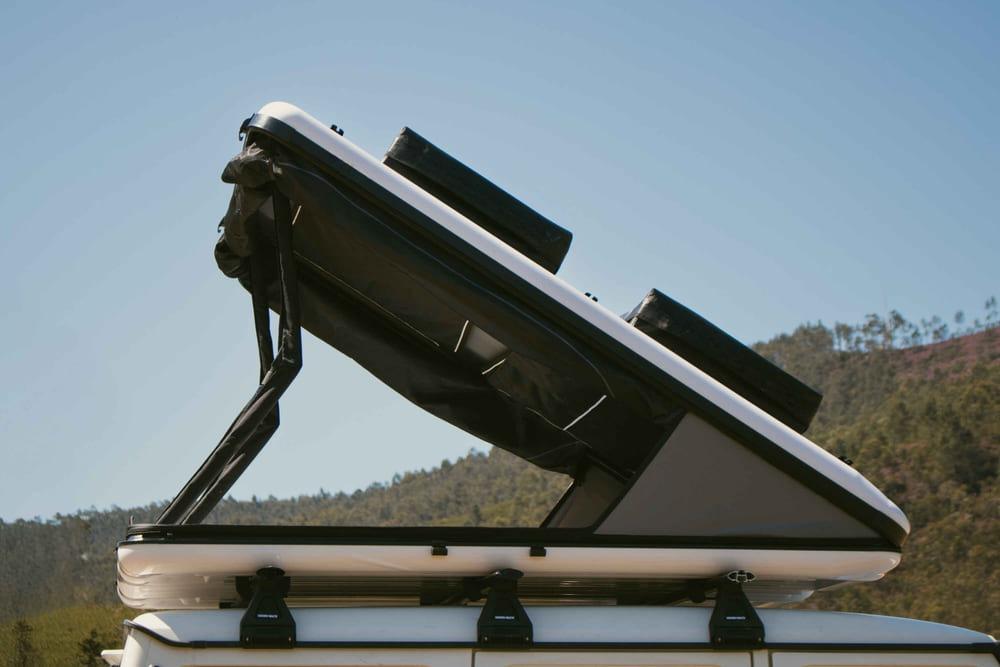
Table of Contents
- What is the difference between dynamic and static roof weight?
- Can factory roof racks safely support a rooftop tent?
- How does a rooftop tent impact fuel economy?
- Does adding a tent affect vehicle stability and handling?
- Will mounting a rooftop tent damage the car paint?
- Comparison: Which roof rack systems are safe for RTTs?
What is the difference between dynamic and static roof weight?
To prevent vehicle damage, it is critical to distinguish between the two weight ratings your vehicle possesses. Dynamic weight is the maximum load the roof can support while the car is in motion (handling braking and cornering forces), while static weight is the load capacity when the vehicle is stationary. As long as the tent weight is below the dynamic limit, the vehicle frame will safely support the occupants when parked.
Most modern SUVs and crossovers have a dynamic roof load rating between 165 lbs (75 kg) and 220 lbs (100 kg). This limit is set by the automotive manufacturer to ensure the vehicle does not become top-heavy while driving.
However, once the vehicle is parked, the weight is transferred vertically through the high-strength steel pillars of the car’s frame. This allows for a static load capacity that is typically 3 to 5 times higher than the dynamic rating. This engineering distinction is why a standard SUV can safely support a 150 lb tent plus two adults sleeping inside without any risk of crushing the roof.
Can factory roof racks safely support a rooftop tent?
In the vast majority of cases, factory-installed crossbars are not sufficient for rooftop tents and should be replaced. Factory bars are typically engineered for lightweight aerodynamic loads like skis or bicycles and often lack the structural rigidity to support the concentrated weight of a rooftop tent without bowing, snapping, or causing contact damage to the roof panel.
Factory racks usually rely on plastic feet or flexible aluminum constructions that introduce flex into the system. When a heavy dynamic load (like a tent) is placed on them, this flex can cause the rack to bounce during transit.
This vibration not only risks breaking the rack but can also cause the mounting hardware to impact the vehicle roof, leading to dents or scratches. For a safe installation, industry standards recommend an aftermarket rack system (such as Thule, Yakima, or a platform rack) that clamps directly to the vehicle’s structural frame or rain gutters.
How does a rooftop tent impact fuel economy?
Any large accessory mounted to the roof of a vehicle will increase aerodynamic drag, resulting in a reduction in fuel economy. On average, a rooftop tent can decrease fuel efficiency by 10% to 20% depending on the driving speed and the profile of the tent. Hard shell tents generally have a lower aerodynamic profile than soft shell models, resulting in a smaller penalty to your gas mileage.
The impact on fuel economy estimates is most noticeable at highway speeds where wind resistance is the primary force acting against the engine.
- Soft Shell Tents: These are often blocky and covered in a loose PVC cover, creating significant drag and wind noise.
- Hard Shell Tents: Wedge or clamshell designs are often aerodynamically shaped to deflect wind over the vehicle, minimizing the “parachute effect.”
Does adding a tent affect vehicle stability and handling?
Yes, adding weight to the highest point of the vehicle raises the center of gravity, which alters how the car handles corners and off-camber terrain. While this does not damage the car mechanically, it does increase body roll, requiring the driver to adjust their driving habits by taking corners at lower speeds to maintain safety and stability.
This is a matter of physics rather than mechanical damage. When you add 150 lbs to the roof, the vehicle acts like a lever.
Drivers should be particularly cautious in high-wind conditions or on side-slopes while off-roading. Upgrading the vehicle’s suspension to stiffer springs or heavy-duty shocks can help counteract the increased body roll and restore a factory-like driving feel.
Will mounting a rooftop tent damage the car paint?
A rooftop tent itself does not touch the vehicle’s paint; however, damage can occur during the installation process if adequate care is not taken. The most common causes of paint damage are dropping mounting hardware onto the roof or using a roof rack that sits too low, causing the tent rails to flex and rub against the roof panel when the car hits a bump.
To mitigate this, installers should:
- Use a thick blanket on the roof during the initial lift and installation.
- Ensure there is at least 2 inches of clearance between the rack and the roof.
- Use Paint Protection Film (PPF) or vinyl patches under the rack towers to prevent abrasion from road dust and micro-vibrations.
Comparison: Which roof rack systems are safe for RTTs?
Choosing the correct interface between the tent and the car is the single most important factor in preventing damage.
| Rack Type | Suitable for RTT? | Risk Level | Why? |
| Factory Crossbars | No | High | Low weight capacity; prone to flexing and failure. |
| Raised Side Rails | Maybe | Moderate | Only safe if paired with heavy-duty aftermarket crossbars. |
| Gutter Mount Racks | Yes | Low | Clamps to the strongest structural point of the vehicle frame. |
| Platform Racks | Yes (Best) | Lowest | Distributes weight evenly across a large surface area; high rigidity. |
Conclusion
Are rooftop tents bad for your car? The answer is no—but user error can be.
By adhering to dynamic weight limits and upgrading to a proper aftermarket rack system, a rooftop tent is a safe, reliable addition that will not damage the vehicle’s frame or engine. The keys to preserving the vehicle are managing the center of gravity and ensuring a rigid mounting interface.
About Everlead Outdoor
As discussed, the primary risk to a vehicle comes from excessive weight and poor aerodynamics. At Everlead Outdoor, we mitigate these risks during the manufacturing phase by utilizing Aviation-Grade T6 Aluminum for our hard shell frames.
This material choice allows us to produce tents that are significantly lighter than traditional steel-framed models, reducing the strain on the vehicle’s suspension and lowering the center of gravity. Furthermore, our proprietary shell designs are wind-tunnel tested to minimize drag, protecting the end-user’s fuel economy.